Johny Prima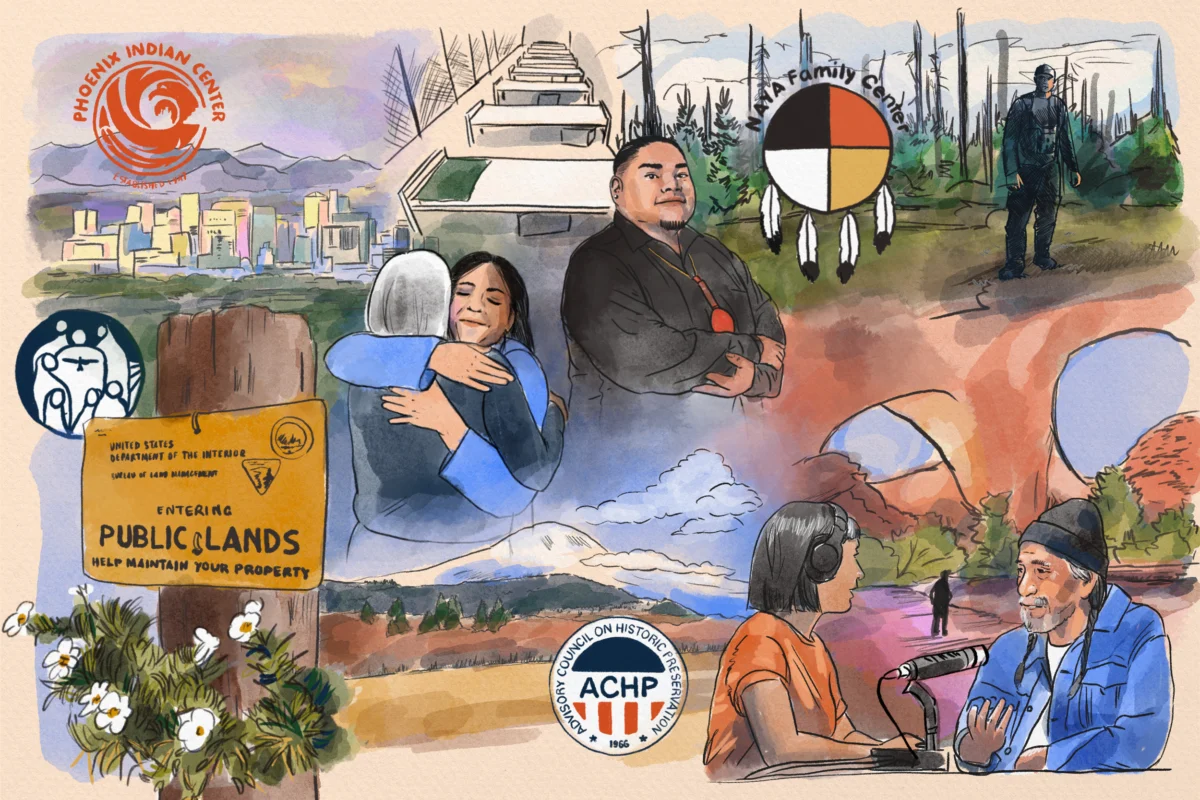
The landscape of federal land management, particularly in the vast expanses of the American West, has seen immediate and contentious shifts. Autumn Gillard, a Southern Paiute and coordinator for the Grand Staircase Escalante Intertribal Coalition, highlights the ongoing struggle to protect sacred ancestral lands. During his first term, President Donald Trump dramatically reduced the size of Grand Staircase-Escalante National Monument by half, a move that sparked widespread condemnation from conservationists and Indigenous groups alike. In response to this existential threat, the five tribes with ancestral ties to Grand Staircase-Escalante proactively formed an intertribal coalition in 2019. Their diligent efforts culminated in a new monument resource management plan, approved in January 2025 under the preceding administration, which crucially integrated Indigenous voices and traditional ecological knowledge (TEK) into its framework. This represented a significant departure from previous plans that largely excluded Indigenous perspectives. However, Republican members of Congress have swiftly moved to repeal this meticulously crafted plan, an action Gillard warns would severely undermine years of tribal advocacy and consultation, potentially eliminating any future resource management plans that honor Indigenous heritage. The proposed repeal not only threatens the ecological integrity of the monument but also risks irretrievably losing the "beautiful cultural knowledge" contributed by elders, some of whom are no longer living. Similarly, in Southern California, the Chuckwalla National Monument, established with rare bipartisan support in the final days of the Biden administration, now faces an uncertain future. Zion White, a Quechan tribal commissioner on the Chuckwalla Intertribal Commission, emphasizes that any attempt to diminish or revoke the monument’s status will be met with resolute opposition, asserting tribal sovereignty and the profound, living connection of the Quechan people to the desert Southwest. For the Quechan, the monument’s landscapes are not mere scenic vistas but vital repositories of language, songs, and sacred sites, a heritage that tribal members actively embody and transmit through generations. To deny tribes a voice in the stewardship of these lands constitutes a profound injustice to both the environment and the ancestors who fought tirelessly for Indigenous existence.

Beyond land designations, the administration’s actions are reshaping the intricate balance of environmental and resource management. Cody Desautel, a Colville citizen and President of the Intertribal Timber Council, a coalition representing some 50 tribal nations focused on forest, fire, and natural resource management, expresses significant concern over the Department of Interior’s fire reorganization. The new structure raises questions about leadership’s understanding of Indian Country’s unique needs, federal trust responsibilities, and the complexities of contracting with tribal governments. This uncertainty looms large as fire seasons intensify due to climate change, posing direct threats to tribal lands and resources. Conversely, Desautel observes a silver lining in the U.S. Forest Service, where a reduced federal workforce under new leadership has signaled a renewed objective to partner with tribes. This shift creates potential opportunities for tribes, who are well-positioned to take on greater roles in land management, with several tribal-specific legislative initiatives currently moving through Congress that aim to expand tribal co-management authorities on adjacent federal lands and foster shared stewardship agreements. This adaptability, a hallmark of Indigenous resilience, allows tribes to pivot and leverage new political realities to advance their long-term goals. However, in Alaska, the implications for natural resource management are starker. Ray Watson, an Executive Board member of the Bering Sea Interior Tribal Commission and a citizen of the Orutsararmiut Native Council, condemns the rescission of the Public Lands Rule. This Biden-era rule had elevated conservation as a primary "use" of public lands and provided clearer pathways for tribes to protect cultural sites. Without tribal consultation, the Trump administration’s reversal of this rule signals a rapid acceleration of resource extraction projects, including oil exploration in the north and the proposed construction of one of the world’s largest gold mines. Watson highlights the profound cultural and subsistence impacts of such projects, warning that expedited development without tribal input will further divide communities and erode traditional ways of life dependent on the ocean, rivers, and tundra.

The federal government’s foundational obligation of government-to-government consultation with tribal nations, a cornerstone of tribal sovereignty, has also been significantly undermined. Amelia Marchand, a Colville citizen and the first woman appointed to the Indigenous-designated seat on the Advisory Council on Historic Preservation (ACHP), experienced this firsthand. Her tenure was abruptly terminated by the Trump administration just as she championed critical initiatives, including advocating for ACHP’s involvement in the upcoming 250th anniversary of the United States and ensuring that the council’s strategic plan recognized tribal nations as "rights holders" rather than mere "stakeholders"—a fundamental distinction acknowledging their inherent sovereign authority and treaty-reserved rights. Marchand’s unceremonious dismissal left tribes without a dedicated advocate on the ACHP during a period of critical government-to-government consultations. This vacuum was later filled by John Tahsuda III, a lobbyist and former Principal Deputy Assistant Secretary for Indian Affairs in the first Trump administration, raising questions about the administration’s commitment to impartial tribal representation. Compounding these challenges, Ira Matt, Executive Director for Indigenous diplomacy and federal relations at the National Association of Tribal Historic Preservation Officers (NATHPO), details the crippling impact of federal funding freezes. In early 2025, during a broader review of diversity, equity, and inclusion (DEI) initiatives, funding for tribal historic preservation officers (THPOs) was suspended. Although federal agencies later clarified that obligations to tribes were distinct from DEI mandates, the budget cuts persisted, leading to staff departures, program disruptions, and a significant reduction in the capacity of already underfunded THPOs to respond to regulatory deadlines. This breakdown in communication and resources means that development projects, lacking tribal input, often proceed unchecked, resulting in the irreparable damage and destruction of sacred cultural sites. The intangible impacts of this loss, Matt warns, will resonate within the preservation field for generations.

Beyond policy frameworks, the administration’s actions have directly impacted the daily lives and well-being of Indigenous communities. Oscar Arana, CEO of the Native American Youth and Family Center (NAYA) in Portland, Oregon, a vital community hub serving urban Indigenous residents, paints a stark picture of reduced federal funding coinciding with surging community needs. NAYA, which provides essential services from food distribution and education to housing assistance and cultural programs, faces increasing demands for support amidst rising eviction rates, stagnant wages, and overall economic strain. The visible presence of Immigration and Customs Enforcement (ICE) in the community further exacerbates fear and stress, compelling NAYA to organize "know your rights" trainings and enhance building security. Cuts or flatlining funding in critical areas like case management, youth programs, and economic development effectively translate to significant service reductions when the cost of living and program delivery continues to climb. Arana anticipates a compounding effect, with future cuts to programs like SNAP benefits and healthcare access further straining vulnerable populations. In Phoenix, Arizona, Jolyana Begay-Kroupa, CEO of the Phoenix Indian Center, the nation’s oldest nonprofit of its kind, recounts the deeply disrespectful removal of tribal flags from a local Veterans Affairs hospital, a symbolic act that profoundly impacted Indigenous veterans and their families. Furthermore, her organization faced directives to remove "diversity and inclusion" language—specifically including "Native American"—from federal grant narratives. This forced linguistic maneuvering, though necessary to secure vital funding, underscores a troubling attempt to erase Indigenous identity from federal discourse, compelling organizations like the Phoenix Indian Center to broaden their language strategically to continue essential programs. Begay-Kroupa emphasizes a philosophy rooted in ancestral wisdom, viewing these challenges not as insurmountable obstacles but as opportunities for organizational sustainability, creative adaptation, and an unwavering commitment to serving their relatives.

The humanitarian crisis at the southern border has disproportionately affected Indigenous people from Latin America, whose distinct cultural and linguistic needs are often overlooked within the broader immigration system. Mincho Jacob, a Q’eqchi’ interpreter for the International Mayan League in Houston, Texas, reveals the overwhelming impact of the Trump administration’s immigration policies on Indigenous immigrants from countries like Guatemala and Ecuador. Houston, considered a "border city" due to its proximity to the coastal border, experiences aggressive ICE tactics, including warrantless detentions, which are legally permissible under expansive federal interpretations, despite appearing illegal. Jacob highlights the profound confusion and fear among recent arrivals, many of whom are unaware of the intricacies of U.S. asylum law. Despite asylum being a recognized legal right under both international and domestic law, the "expedited removal" process leaves no margin for error, often leading to swift deportations even after cases are dismissed by judges. This precarious legal landscape has forced community leaders to make agonizing choices, with some returning to their home countries on their own terms rather than facing uncertain detention and potential forced removal. The International Mayan League works tirelessly to provide "know your rights" trainings and crucial linguistic and cultural interpretation, helping individuals navigate a legal system utterly alien to their rural Guatemalan realities, a system where, as Jacob states, "the law is only as good as what gets enforced."

Even the long-overdue pursuit of historical justice and healing faces significant setbacks. Samuel Torres, Deputy Chief Executive Officer of the National Native American Boarding School Healing Coalition (NABS), describes the devastating impact of the Trump administration’s order to cancel over $1.5 million in National Endowment for Humanities (NEH) funding. This crucial funding was allocated for archival research and the collection of oral histories from survivors of government-run boarding schools, a bipartisan issue widely expected to garner support due to its importance for truth and accountability. The cancellation inflicted a direct wound on the progress NABS and Indian Country have made in documenting the lasting impacts of these traumatic institutions, directly affecting boarding school survivors, their descendants, and their nations. Torres, a Mexica/Nahua citizen, emphasizes that Indigenous people operate with an intergenerational mindset, looking far beyond four-year political cycles. He asserts that while these disagreements and moments of strife are painful, they do not derail progress but instead offer moments of discernment, prompting creative thinking and solidifying collective resolve. Ultimately, no single administration can dictate the meaning of Indigenous sovereignty, a concept deeply rooted in ancestral rights and an enduring vision for future generations.

In summary, the second Trump administration’s policies have initiated a period of significant upheaval for Indigenous communities, marked by policy reversals in land management, cuts to vital funding, erosion of consultation protocols, and heightened anxieties over social services and immigration. These actions underscore a broader disregard for tribal sovereignty and the federal government’s trust responsibility. Yet, through this adversity, a consistent narrative of Indigenous resilience, strategic adaptation, and an unwavering commitment to cultural continuity emerges. Tribal leaders, drawing upon generations of wisdom, are actively forming new coalitions, leveraging nascent partnerships, and preparing for sustained legal and political battles, all while maintaining an enduring focus on protecting their lands, cultures, and peoples for the generations to come. The collective resolve to uphold sovereignty and fight for what is inherently theirs remains undiminished, transforming moments of strife into renewed determination.