Johny Prima
The headwaters of the Klamath River, emerging from the ground in southern Oregon, form the lifeblood of the ancestral territory of the Klamath Tribes, an alliance encompassing the Klamath, Modoc, and Yahooskin peoples. As Chairman William Ray Jr. profoundly states, "It comes right out of the ground. I know this because I see it. I’ve lived it. And I know where it comes out of." These pristine waters converge to create the expansive Klamath Lake before giving rise to the mighty Klamath River, which carves a path through Northern California, eventually meeting the Pacific Ocean. This intricate network of waterways has historically sustained the vibrant fish populations that form the bedrock of the economies, cuisine, and traditional medicine for tribal communities throughout the entire watershed, including the Yurok Tribe, located downstream where the river embraces the ocean.
In bygone eras, salmon were not merely a food source but a sacred cornerstone, comprising as much as a third of the Klamath peoples’ diets. Chairman Ray reverently describes salmon as a species of unparalleled power, capable of navigating both fresh and saltwater, a testament to the Creator’s wisdom "for all the Indians to enjoy." The Klamath River once held the esteemed position as the world’s third-largest salmon producer, its abundance supporting a thriving Indigenous civilization. An extensive trade route, known as the Klamath Trail, traversed what is now Oregon, connecting the Klamath basin to distant communities and even reaching Celilo Falls, an ancient and now submerged international trade hub and fishery on the Columbia River. The intimate connection between the people and the fish extended to healing practices; a sick Klamath individual might seek specific fish—perhaps a c’waam or koptu from a particular bend in the lakeshore, or a certain anadromous species from the river—to consume its gills or boil its head for a potent medicinal broth. This profound relationship underscored a holistic understanding of health, environment, and spirit.
However, the dawn of the 20th century brought a catastrophic transformation to the Klamath River basin. The construction of a series of hydroelectric dams beginning in 1909 fragmented the river, irreversibly altering its flow and blocking the vital migration routes of anadromous fish like salmon and steelhead to their ancestral spawning grounds in the upper basin. The ecological integrity of the entire system crumbled, impacting not only the migratory species but also the lake-dwelling fish populations. The tribes, armed with centuries of Indigenous ecological knowledge, observed the devastating decline long before Western science confirmed the crisis. "We knew that there was something wrong beginning in the ’70s and especially the ’80s," Ray recounted. "It didn’t take Western science to tell the Indian with Indigenous knowledge that something was drastically wrong." Faced with the existential threat to their culture and sustenance, the Klamath Tribes endured emotionally fraught meetings, culminating in the heart-wrenching decision in 1986 to voluntarily cease all fishing. This act of profound sacrifice, undertaken to protect the dwindling fish populations, represented a severe blow to their cultural viability. "It hurt us," Ray emphasized, "This was another issue that pecked away at our culture, the viability of it."
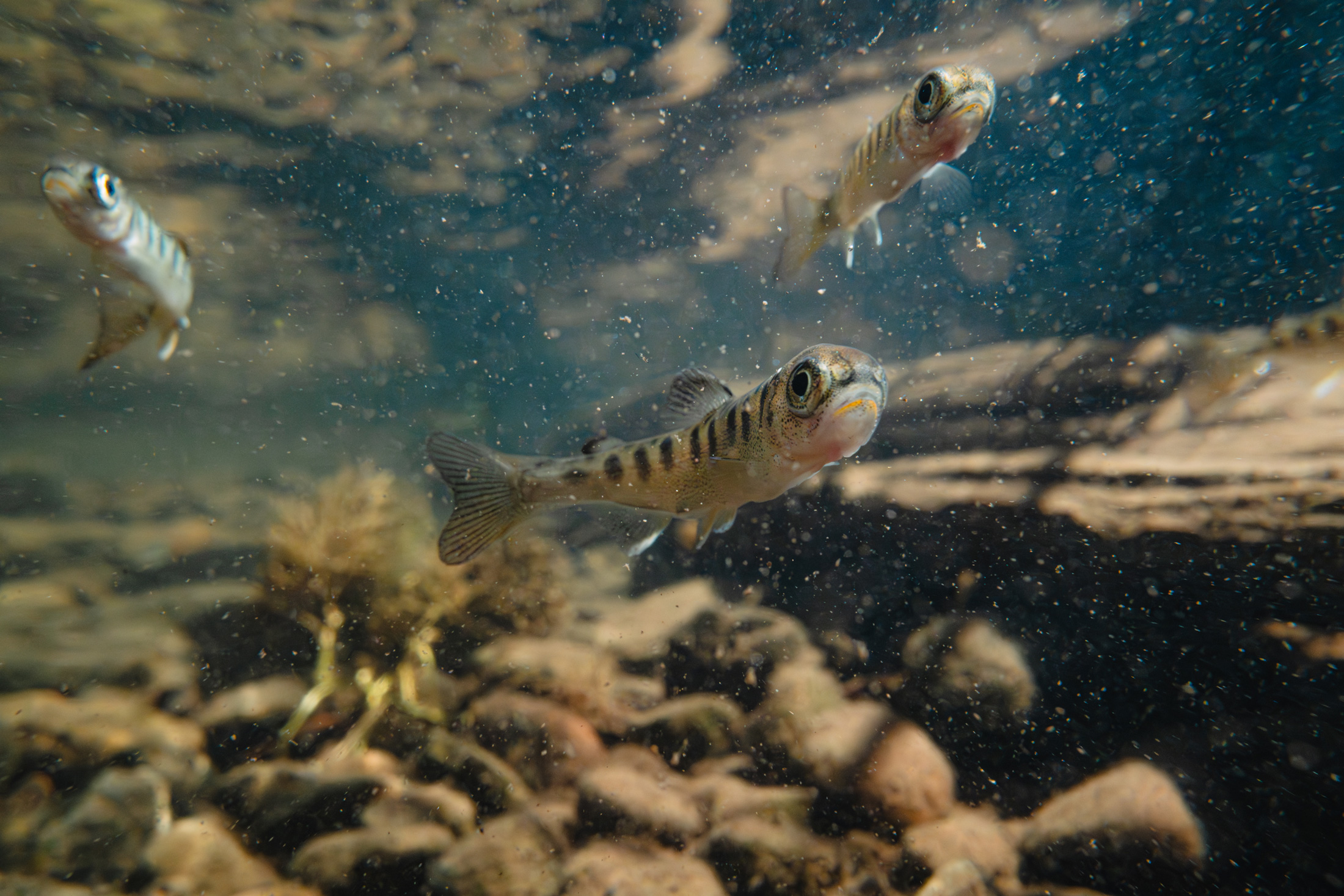
The stark reality of this cultural erosion is underscored by a poignant question Chairman Ray paraphrased from a Umatilla elder: "How can you build a tribal traditional economy on species that are endangered?" This is not an abstract query for the tribes; it translates into the devastating inability to fulfill traditional practices, such as telling an elder that they cannot retrieve a specific fish from the river to heal themselves. The weight of such a denial, and the cultural rupture it signifies, is immense.
Today, however, a new chapter of hope and restoration is unfolding for the Klamath River’s fish and the Indigenous cultures inextricably linked to them. A monumental effort culminated in October 2024 with the removal of four outdated and underperforming hydroelectric dams on the lower Klamath River—Copco 1, Copco 2, Iron Gate, and J.C. Boyle. This unprecedented undertaking, representing the largest dam removal and river restoration project in US history, immediately triggered a remarkable ecological response. Pacific lamprey, steelhead, fall Chinook salmon, and other anadromous fish, blocked for over a century, began migrating back to the upper basin with astonishing speed. By the end of the year, approximately 20 Coho salmon had journeyed as far as Oregon, a testament to the river’s inherent resilience. Jordan Ortega, an anadromous fish specialist for the Klamath Tribes, observed, "Almost all the anadromous species are responding favorably to dam removal." While two dams, Kino Dam and Link River Dam, still remain in the upper Klamath River, both are equipped with fish ladders, which, though not optimal for all species, offer a pathway for continued migration.
Amidst this promising ecological recovery, the Bureau of Indian Affairs (BIA) and the National Oceanic and Atmospheric Administration (NOAA) jointly announced a $5.9 million competitive grant opportunity for tribal salmon restoration earlier this year. The Klamath Tribes learned of this crucial funding through their Yurok relatives downstream. Chairman Ray immediately initiated calls to the governor’s office and the Oregon Department of Fish and Wildlife, with whom the Klamath Tribes had already collaborated on a comprehensive post-dam-removal plan for fish reintroduction and natural repopulation monitoring.
Yet, a significant bureaucratic hurdle quickly emerged. Ray discovered that the BIA and NOAA grant was ostensibly intended only for "salmon restoration tribes." Because salmon had been entirely extirpated from Klamath ancestral territory for over a century, the federal government did not officially classify them as a "restoration tribe," rendering them ineligible to apply. This baffling administrative decision ignited Ray’s indignation: "We’re trying to put salmon back into our territory, right? So how couldn’t we be a salmon tribe?" This incident highlighted a pervasive issue where federal classifications fail to grasp the nuanced realities of Indigenous environmental stewardship and historical injustice.

Fortunately, the deep bonds of kinship and shared purpose between the Klamath and Yurok Tribes proved stronger than bureaucratic red tape. Mike Belchik, the Yurok Tribe’s senior water policy analyst, immediately intervened. "First thing I did was contact Bureau of Indian Affairs and said, ‘Can you add Klamath Tribes to the list?’" Belchik recounted. Although the BIA stated it was too late in the process to amend the official list (and did not clarify its criteria for "salmon restoration tribes" beyond prioritizing "certain hatcheries that raise stocks of Pacific salmon"), the Yurok Tribe devised an ingenious solution. They applied for the grant themselves and invited the Klamath Tribes to participate as a sub-grantee. The BIA ultimately awarded the grant jointly to the Yurok Tribe, the Klamath Tribes, and the Oregon Department of Fish and Wildlife, with the Yurok Tribe acting as a pass-through entity, channeling the funds directly to the Klamath Tribes and providing administrative support.
This act of inter-tribal solidarity powerfully refutes any perception of the Yurok and Klamath Tribes as rivals in water rights, a narrative sometimes perpetuated by external observers. While both tribes advocate for water resources, the Yurok for lower basin salmon and the Klamath for species like c’waam and koptu upstream, their underlying vision is one of ecological unity. "Our council, our leadership, pledged to help the Klamath Tribes in any way they could," Belchik affirmed. "We made a promise to them. When this funding opportunity came up, that’s who we thought of." He underscored the mutual benefit: an expanded run of spring Chinook salmon would enrich the entire basin. "We have pushed, as have the Klamath Tribes, for the treatment of the entire basin as an ecosystem of which all parts are important," Belchik explained, emphasizing the heartfelt commitment to making this vision a reality.
The $5.9 million grant is now fueling critical restoration efforts, particularly the expansion and deployment of remote site incubators. As Jordan Ortega detailed, these innovative devices are sets of panels, roughly the size of a natural salmon redd (nest), placed in the water to simulate ideal conditions for thousands of fertilized eggs. They offer crucial protection from predation and environmental threats, significantly increasing hatch success rates. The strategic goal is to distribute these incubators across a diverse range of thermal and flow regimes, thereby maximizing "life-history diversity"—a crucial evolutionary strategy for Chinook salmon that ensures resilience by allowing different individuals to employ varied approaches to achieve the same reproductive goal.
The natural response of the salmon to dam removal has already exceeded scientific expectations. Typically, only about 5% of salmon venture beyond their natal spawning grounds. However, out of an estimated 60,000 to 70,000 returning fish, an astonishing 13,000 migrated past the former dam sites into newly accessible upstream habitats. "So we’re talking about a much larger fraction than you typically see in the literature," Ortega noted, indicating the immense potential for natural repopulation. Early trials with 10,000 fertilized eggs from the Trinity River Hatchery, incubated in remote site units, yielded an impressive hatch-success rate exceeding 99%.

Just last month, a deeply symbolic milestone was achieved: the first spring Chinook salmon in over a century returned to the upper basin. While most returning salmon thus far have been fall-run Chinook, the springers, renowned for their exceptional flavor and unique life cycle, typically have smaller, more localized populations, primarily concentrated in the lower basin’s Trinity and Salmon Rivers. These "springers" require a more targeted boost to re-establish themselves in the upper reaches, precisely the role the incubators are designed to fulfill.
Chairman Ray also highlighted the historical denial by many non-Native locals that salmon ever populated the upper basin. "There’s a lot of naysayers all over the place saying that we trucked them around the dams and that they were never here. Well, they’re here," Ray declared, noting the undeniable evidence. He also observed a striking irony: non-Native individuals, who once denied salmon’s historical presence, are now expressing excitement about fishing them. "They said, ‘Do you know how awesome it is to have these salmon back? We can’t wait to fish them.’ Well, wait a minute. Let’s back up here a minute. This is a treaty protected resources under the Treaty of 1864," Ray asserted, reminding everyone of the legal and historical context. "We’re the one that’s been harmed here." The return of the fish, Ray concluded, is a "blessing by Creator, because now it’s undeniable."
While enthusiasm for the fish’s return is widespread, Phil Milburn, a wildlife biologist at the Oregon Department of Fish and Wildlife, cautioned that discussions about harvest are "probably years away." The immediate and paramount goal remains the robust re-establishment of these species in Oregon. The Klamath Tribes plan to install new remote site incubators next year, with adult spring Chinook expected to return from these efforts as early as 2030, marking a significant step towards sustainable populations.
Chairman Ray underscored that the Klamath watershed’s unique opportunity for restoration is partly due to the absence of a large municipality within its upper reaches, offering a rare chance for comprehensive ecological healing. "There’s an opportunity for us to set a new standard, to show America that we can restore, as humans, a watershed that’s been degraded for the last 100-plus years," he proclaimed. He expressed immense pride that Indigenous nations are at the forefront of this monumental effort, demonstrating the power of traditional ecological knowledge combined with modern conservation strategies. "There’s a lot of positive things going on, and we’re fighting like heck," Ray affirmed, conveying the urgency and dedication required. "We have to be very speedy. We have to have all cylinders going." The Klamath River restoration stands as a powerful testament to tribal sovereignty, environmental justice, and the enduring resilience of both nature and Indigenous cultures in the face of historical adversity.