Roger Danuarta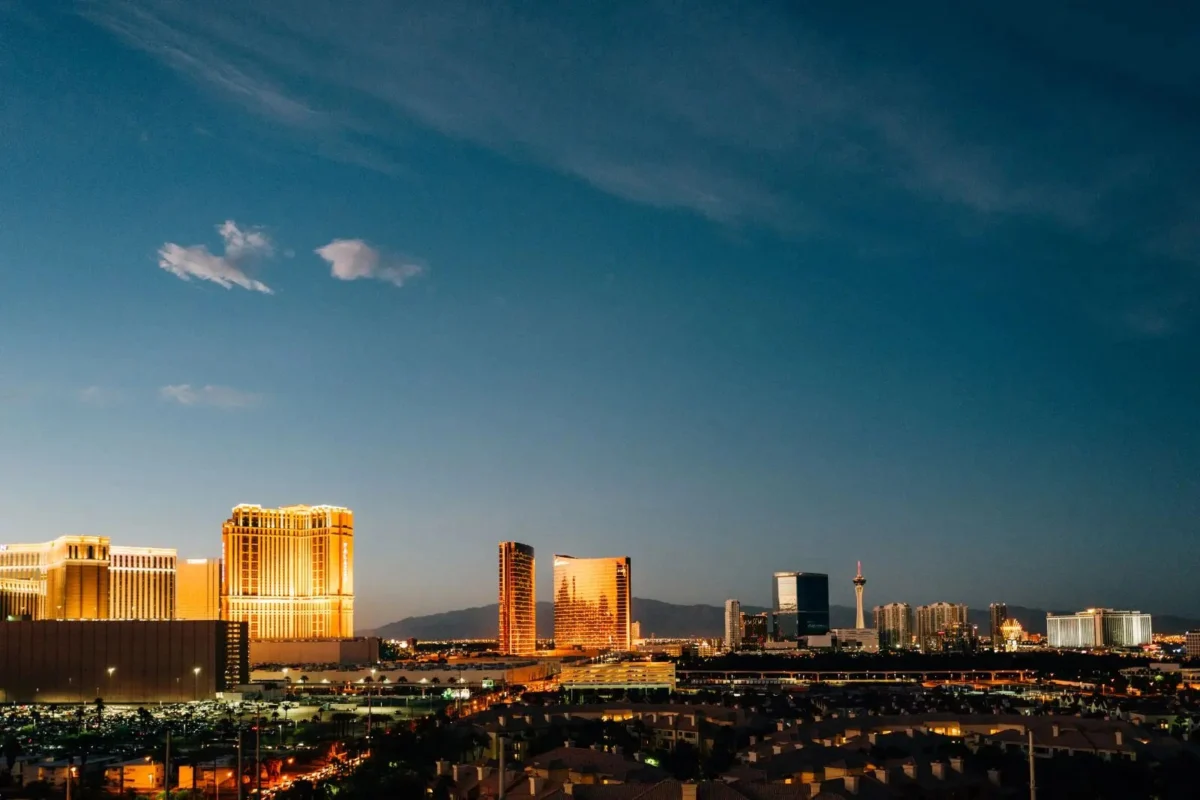
Nevada, long perceived as a leading voice for conciliation and aggressive urban water conservation amidst the escalating crisis of the Colorado River, has initiated a lawsuit against the federal government, a move that has sent ripples of surprise across the seven basin states. For decades, the Silver State, particularly the burgeoning Las Vegas metropolitan area, home to two-thirds of its population and the engine of its economy, has championed an ethos of efficient water management. Local authorities have implemented pioneering conservation programs, ranging from extensive water reuse facilities to stringent restrictions on new turf and decorative fountains, successfully reducing the region’s per capita water use by an impressive 58 percent over approximately two decades. In the complex, often fractious, interstate negotiations over the dwindling Colorado River, Nevada representatives have consistently positioned themselves as pragmatic bridge-builders, often referring to their unique geopolitical standing as the "middle basin" between the river’s upper and lower divisions.
The unexpected legal challenge comes in the wake of the federal government’s unveiling of a new, interim management plan for the river earlier this month. Most experts and stakeholders had anticipated that Arizona, which faces the most substantial immediate reductions under the new framework, would be the first to litigate over its critical water supplies. Therefore, it struck many Colorado River observers as a significant departure when Nevada became the inaugural state to file suit against the federal plan this week. Anne Castle, former chair of the Upper Colorado River Commission and a respected authority on the river, articulated the widespread sentiment, stating, "I expected that there would be litigation, but it was surprising to me that Nevada fired the first shot."
This lawsuit follows more than two arduous years of intense, yet ultimately unsuccessful, negotiations among the seven Colorado River Basin states and the federal government. Their collective failure to forge a long-term agreement before the current operational guidelines for the river expire in October has compelled the U.S. Department of the Interior, primarily through its Bureau of Reclamation, to unilaterally impose its own plan. The federal strategy predominantly relies on curtailments in water usage among the Lower Basin states—Arizona, Nevada, and California—to stabilize rapidly depleting water levels in the river’s two largest reservoirs, Lake Mead and Lake Powell. These colossal impoundments, critical for storing water, regulating flow, and generating hydroelectric power, have been draining at an alarming rate due to chronic overuse and a historic, multi-decadal drought intensified by accelerating climate change. The dwindling water depths now pose an imminent threat to the continued operation of hydropower facilities and the fundamental structural integrity of the dams themselves, potentially within a matter of months without decisive intervention.
Nevada’s core contention is that the federal government’s plan unfairly and illegally burdens it with an disproportionate share of these necessary cuts. The state argues that, under a worst-case interpretation of the plan’s operational implications, the Las Vegas area could face an unimaginable 71 percent reduction in its water supply. Such a drastic scenario, the state asserts, represents an unacceptable and existential risk to its largest population center and primary economic engine, jeopardizing everything from its vital tourism industry to daily municipal needs. Nevada claims this potential outcome stems from a fundamental misreading of existing water law and alleges that the federal government failed to adequately consider crucial alternative strategies that could avert such catastrophic cuts.
Experts acknowledge that this dire 71 percent scenario, while a valid interpretation of the plan’s extreme possibilities, is contingent upon several factors. It could materialize if reservoir levels continue their precipitous decline and if Nevada were unable to renegotiate or extend agreements with Arizona and California to absorb a greater share of the cuts beyond 2028. Currently, these three Lower Basin states operate under an agreement, integrated into the federal plan, that is designed to manage shortages through 2028. However, should that agreement lapse without renewal, the federal government would revert to implementing cuts based on the complex hierarchy of pre-existing water rights and agreements, which would initially impact Arizona most severely, but then progressively lean on Nevada and California as shortage conditions deepen. The federal plan itself was developed through a decision-making process mandated by the National Environmental Policy Act (NEPA), which requires federal agencies to solicit public input and thoroughly assess the environmental and socioeconomic ramifications of major decisions.
At first glance, this lawsuit appears to contradict Nevada’s carefully cultivated image as the river’s principal conciliator, consistently advocating for consensus among the seven basin states and the 30 federally recognized tribal nations, many of whom possess substantial senior water rights but have historically been excluded from formal interstate negotiations. John Entsminger, Nevada’s lead negotiator on Colorado River issues, has repeatedly underscored the state’s preference for dialogue, famously telling a Las Vegas water conference just a week before the lawsuit was filed that negotiation and cooperation were the state’s "first, second, and third choice."

However, a deeper examination reveals that Nevada has consistently coupled its calls for collaborative solutions with a resolute warning that it would fiercely defend its water entitlements should negotiations fail. The lawsuit, viewed through this lens, becomes less surprising, especially given the state’s interpretation of the severe cuts it claims are possible under the federal plan. Unlike other basin states, where agricultural users can often cushion the impact of water curtailments by fallowing fields, Nevada’s Colorado River allocation flows almost entirely to urban areas. This unique demographic and economic reality means that any significant cut directly impacts the Las Vegas metropolitan area, posing an immediate and direct threat to its viability. John Fleck, a prominent water expert and author-in-residence at the University of New Mexico’s Utton Center, succinctly captured this perspective in a recent blog post, writing, "There is an absurdity to a plan that would require Las Vegas to cut 71%. That’s existential. Of course Nevada sued."
Furthermore, the lawsuit can be interpreted not as an abandonment of consensus but as a strategic continuation of Nevada’s advocacy for a more inclusive and innovative basin-wide agreement. With the states unable to reach a comprehensive long-term deal and the federal government proceeding with its own blueprint, Nevada is now deploying a different legal tool to advance the same fundamental argument: that a federal decision lacking full buy-in from all stakeholders and states cannot adequately accommodate their diverse needs or forge the truly innovative solutions required to sustainably manage the imperiled river system.
In its legal filing, Nevada argues that the legally mandated NEPA decision-making process that culminated in the federal plan failed to sufficiently account for the severe economic consequences for the Las Vegas area. It also contends that the process neglected to consider more creative and less draconian alternatives to such drastic water cuts, such as potential structural modifications to Glen Canyon Dam or alternative operational protocols for the entire reservoir system. Nevadans maintain that the scope of the federal review was too narrow, thereby overlooking solutions that could have averted such massive theoretical water shortages in a major metropolitan hub. Kyle Roerink, former director of the Great Basin Water Network, an advocacy group for rural Nevada water resources, questioned the depth of the federal analysis: "Nobody can deny that the federal government did a ton of modeling and scenario analyses, but in terms of where the rubber meets the road, what were all the inputs, and what were some of the other analyses that could have been done?"
The legal landscape surrounding how a court might interpret this challenge has become increasingly complex in the wake of several recent Supreme Court cases. These rulings have significantly reshaped the federal government’s responsibilities when conducting reviews under NEPA, particularly concerning decisions involving large, multifaceted infrastructure systems and resource management. The evolving precedents often scrutinize the scope of alternatives considered and the thoroughness of impact assessments, adding an element of unpredictability to Nevada’s claim.
Experts generally agree that Nevada’s lawsuit, while significant, does not represent the feared "cannonball splash" that Colorado River experts have anticipated for years. That more catastrophic legal battle would likely involve Arizona challenging the Upper Basin states—Colorado, New Mexico, Utah, and Wyoming—over whether they have met their fundamental obligations under the foundational 1922 Colorado River Compact. Such a landmark case could force federal judges to adjudicate profound and intricate questions about the very genesis of the "Law of the River" and who ultimately bears the responsibility for the river’s systemic decline. The resulting litigation could drag on for many years, potentially stripping the states of their agency and control over the river’s future. Castle describes this latter scenario as where the "really big risks are."
Nevertheless, Nevada’s lawsuit has undoubtedly injected a new layer of uncertainty into the river’s near-term operational future. While Nevada has not yet sought an immediate restraining order against the federal government, which would ask a judge to temporarily halt or vacate the plan, a favorable ruling for the state could significantly disrupt the initial two-year arrangement. This interim plan was designed to provide critical stability and keep the Lower Basin states operational in the immediate future. Jay Weiner, counsel for the Fort Yuma Quechan Indian Tribe, a senior water rights holder along the Colorado River in Arizona and California, expressed palpable concern in an interview, stating, "We are disappointed to see Nevada filing suit here, and are concerned about what the ramifications will be for the operations plans in 2027 and potentially 2028."
Despite these immediate concerns, many experts believe that this legal action, even if followed by a theoretical Arizona suit against the Upper Basin, does not sound a death knell for collaboration and negotiation on the river. The intricate web of water rights, compacts, and agreements that constitute the "Law of the River" is too complex to be entirely resolved by judicial decree alone. States in the Lower Basin may still engage in regular negotiations to share shortages while litigation proceeds, and the possibility of a comprehensive, basin-wide agreement involving all seven states and tribal nations remains a crucial and active goal if negotiations can be rekindled. As Navajo Nation Chief Counsel Bidtah Becker aptly reminded an audience at the Colorado River Water Users’ Association conference in 2024, water litigation and negotiation are not mutually exclusive processes. "You can get along and argue at the same time," she observed, "and you develop long-term relationships through that." This enduring sentiment underscores the complex, often contentious, yet ultimately interdependent nature of managing one of North America’s most vital and contested shared resources in an era of unprecedented scarcity.