Joko Susilo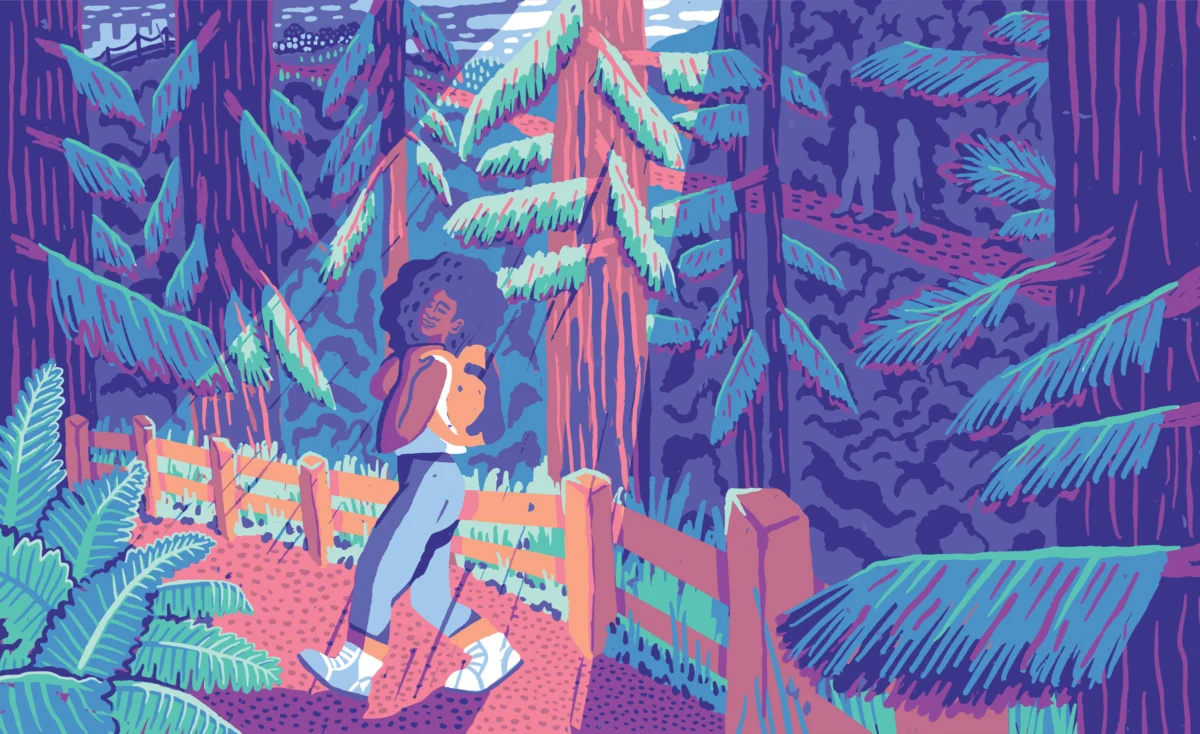
This enduring narrative was brought into sharp focus for Rue Mapp, founder of Outdoor Afro, during her childhood. At nine years old, witnessing the segment on Emmett Till in the PBS documentary series Eyes on the Prize — a harrowing account of a 14-year-old Black boy brutally lynched while visiting relatives in the Jim Crow South in 1955 — profoundly troubled her. The visceral injustice of Till’s fate, a stark reminder of racial violence, prompted a question to her father: "Dad, did you ever know of anyone who was lynched?" His chillingly casual reply, "All the time," underscored the pervasive and normalized brutality that defined an era, a response that left an indelible mark on her understanding of Black consciousness in America. This exchange ignited an early awareness of how systemic violence historically constrained Black freedom and access, particularly within outdoor settings.
The journey to reclaim and redefine outdoor spaces for Black communities involves holding multiple truths simultaneously. While the pain and peril of growing up under Jim Crow are undeniable, Mapp’s parents also forged lives of remarkable resilience and joy. After migrating to California, they cultivated a 14-acre hobby and recreation farm near Clear Lake, replete with fruit trees, a thriving garden, and a swimming pool. This private oasis in the oak-studded hills became a testament to their "can-do determination and hospitality," an outdoor refuge that offered respite and celebration. Their ability to transform land into a space of agency and resistance—tending animals, tilling soil, and sharing abundant harvests—reflects a broader, often overlooked tradition of Black engagement with nature, one rooted in self-sufficiency and community building.
Despite such powerful examples of resilience, the themes of safety and comfort remain central to contemporary Black outdoor experiences. Conversations within Outdoor Afro, an organization Mapp founded in 2009 to reconnect Black Americans with nature, frequently surface a persistent, sometimes urgent question, even at seemingly welcoming trailheads or around campfires: Will we be safe here? This query extends beyond the immediate threat of physical violence to encompass the subtle, yet potent, forms of discomfort. A lingering stare, an overtly curious or awkward question about one’s presence in a particular area—these microaggressions can create an environment of unease and exclusion, signaling that one does not truly belong.
Mapp vividly recalls a formative childhood experience in an affluent, predominantly white Oakland neighborhood park. What began as joyful exploration amidst redwood trees with her youth church group shifted dramatically as dusk approached. The palpable, heavy scrutiny cast by nearby adults, though unspoken, communicated a clear message: it was time to leave. This moment was her first profound realization that some of the most significant outdoor conversations transpire in silence, conveying boundaries and expectations without a single word.
Historically, the ability of Black individuals to simply visit a park, swim in a public pool, enjoy a beach, or have a picnic was often legally — and violently — restricted. The grim reality of "Sundown Towns," communities where Black people were expected to leave before nightfall to avoid severe repercussions, created real, geographic barriers that shaped generations of travel habits and collective memory. These enforced restrictions curtailed mobility and instilled a deep-seated caution that lingers today.
Before the Great Migration, when the vast majority of Black Americans resided in rural Southern communities, many tenaciously pursued their connection to nature, often by creating their own destinations. Places like Idlewild, Michigan; Oak Bluffs on Martha’s Vineyard; and Lincoln Hills, Colorado, emerged as vital hubs. These enclaves drew Black families from across the nation, providing safe spaces for enterprise, recreation, and community life, free from the omnipresent weight of racial discrimination. They developed robust infrastructure, including overnight inns, campgrounds, guides, outfitters, and children’s programming, demonstrating an enduring spirit of self-determination and collective flourishing.

During this era, The Negro Motorist Green Book, popularly known as The Green Book, became an indispensable travel companion for Black Americans. Created by Victor H. Green, a New York postal worker, this regularly updated guide meticulously listed safe havens along national routes, including accommodations, dining, shopping, entertainment, and outdoor destinations. Its publication ceased around 1964, following the passage of the Civil Rights Act, as its publisher optimistically believed the guide’s necessity had finally passed. However, the feelings of unwelcomeness persisted. Many families, wary of testing uncertain territory, opted to stay closer to home. As Black Americans migrated en masse to Western and Northern cities, many of the historic Black-owned enclaves faded, were sold, or disappeared through eminent domain, leaving a void in safe outdoor recreational spaces. The uncertainty over safety, particularly in remote public lands or far from one’s own community, remained a palpable concern.
The complexities of feeling unwelcome are not always solely rooted in racial prejudice, as Mapp discovered during a dove hunt in California’s sweltering Central Valley in 2020. This particular season was marked by heightened social and racial tensions nationwide. Lost and wandering through waist-high grass, surrounded by armed hunters who did not resemble her, she encountered a man whose hard, measured gaze caused goosebumps to rise. Her immediate instinct was that her Blackness was the cause of his hostility. However, with more years of public-land hunting experience, she re-evaluated that moment. She realized her initial instinct was only partially correct. The man had likely meticulously researched, risen before dawn, traveled extensively, and hiked to stake out a prime hunting spot. Her accidental intrusion into his carefully chosen ground likely elicited frustration stemming from the competitive and protective nature of the sport, rather than her race alone.
Indeed, as Mapp has continued to hunt, fish, hike, and camp on public lands, she has observed that seasoned outdoorspeople often guard their favored spots: a river stretch where fish bite, a ridge frequented by elk, or a serene Bureau of Land Management flat with a perfect morning view. These prized locations are rarely freely shared with strangers. The outdoor community can be quietly competitive, driven by a concern that too much attention will diminish a good spot. This protective attitude, while understandable within outdoor culture, can be misconstrued as coldness or hostility by newcomers, even when it doesn’t carry racial undertones. This understanding has provided a measure of grounding, clarifying that many moments of perceived unwelcomeness stem from the competitive spirit inherent in outdoor culture or genuine safety considerations, especially where firearms are present.
Yet, another dimension to the safety question transcends interactions with strangers. Growing up in Oakland, Mapp’s experience in places like Joaquin Miller Park, where hikers reflected the city’s diverse population, felt natural and right—a stark contrast to that unsettling childhood afternoon in the affluent park. This highlights how place and context profoundly shape the outdoor experience. However, venturing farther afield shifted this dynamic. At 20, mountaineering with Outward Bound, Mapp was the sole Black woman in her group. Trekking along the Pacific Crest Trail, she frequently felt a "quiet wondering" surface, a sense of isolation born from the absence of anyone who shared her history, humor, or worldview. Despite this solitude, a moment of fear pinned her to a mountainside one night, only to be overcome by her instructor’s simple, empowering advice: "trust your feet." This sparked the courage needed to continue climbing, revealing that feelings of isolation can coexist with profound support.
In many ways, Outdoor Afro is continuing the vital work of The Green Book for a new generation. Victor Green believed that Black people deserved to move through the world freely and with dignity, and he created a practical tool to realize that vision. Similarly, Outdoor Afro is building a "living map" through shared stories, experiences, and relationships, empowering individuals to navigate unfamiliar places with confidence and joy. Where previous generations passed down painful memories of exclusion, today’s opportunity lies in crafting and sharing narratives of connection, confidence, and exhilaration in nature.
Every Black person who steps onto a trail, casts a fishing line for the first time, or wakes to birdsong in a tent carries forward a powerful legacy. They embody the spirit of those who built Idlewild and Lincoln Hills, asserting their right to be present and thrive in the natural world. Each invitation, every shared trip, and every inaugural outdoor experience expands the realm of what the next generation believes is possible, fostering a more inclusive and equitable future for all in the great outdoors.