Roger Danuarta
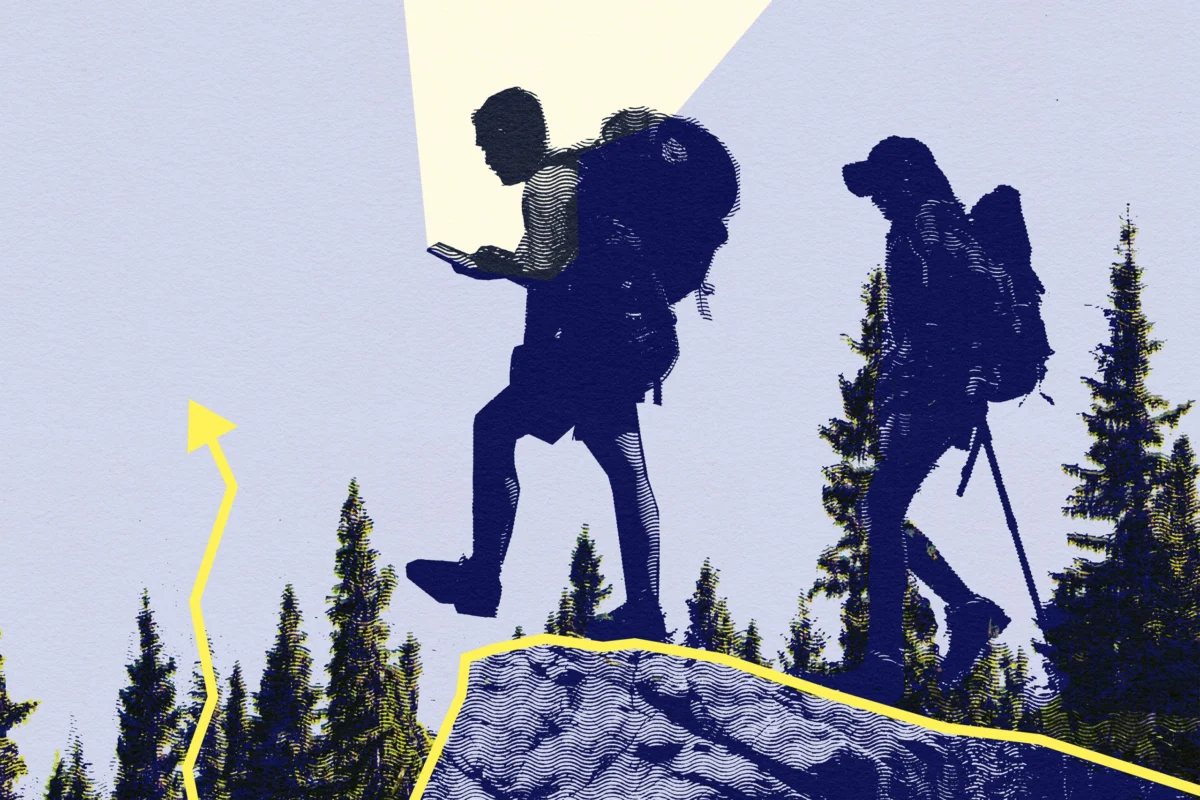
Three hikers, stranded on a treacherous rocky face of Mount Shasta in Northern California, found themselves in peril after a series of critical misjudgments, largely attributed to their reliance on Google’s artificial intelligence chatbot, Gemini. Their initial lack of preparedness included insufficient provisions and a significant overestimation of their physical capabilities for the demanding ascent of the 14,179-foot stratovolcano. Instead of heeding the natural warning signs to turn back in the late afternoon when the summit remained distant, they pressed on, reaching the peak at 7:30 p.m. This ill-advised decision forced them to attempt a descent in complete darkness, a situation compounded by their confessed lack of thorough planning, which they later admitted stemmed from the AI’s guidance. By dawn, disoriented and lost in a notoriously challenging section of the mountain, one of the hikers sustained a debilitating knee injury, necessitating an urgent rescue operation.
Nick Meyers, the U.S. Forest Service program manager for the Mount Shasta Wilderness Climbing and Avalanche Center, which responded to their distress call, reflected on the incident with a mix of understanding and concern. "We get plenty of people who come unprepared or don’t do any research at all," Meyers stated, acknowledging the hikers’ attempt to gather information, however flawed. "To these guys’ credit, they did try. But I think they kind of turned their brains off." This sentiment underscores a growing apprehension among wilderness management professionals: while technology offers unprecedented access to information, it can also foster a dangerous complacency, leading individuals to abdicate personal responsibility for critical decision-making in high-stakes environments.
The Mount Shasta incidents are not isolated occurrences; a discernible pattern of AI-influenced missteps in wild spaces is emerging. Meyers recounted another instance where a visitor, armed with AI-generated instructions, defiantly pitched her tent next to a "No Camping" sign, convinced of her right to do so based on the chatbot’s advice. His team also encountered a man navigating a trailhead with an AI-fabricated map, which erroneously depicted prominent geographical features on the wrong side of the mountain. Across the border in British Columbia, a helicopter crew launched a dramatic rescue of a 16-year-old hiker from a precarious ledge on the Widowmaker Arete, a notoriously exposed and challenging route on Crown Mountain. The teenager had reportedly consulted Anthropic’s chatbot, Claude, for assistance in planning his expedition, a detail that quickly garnered widespread media attention across Canada and the U.S. While the hiker later clarified that he also referenced Google Maps and the popular hiking application AllTrails, the central role of AI in his planning highlights a new frontier of risk in outdoor recreation.
The trend extends beyond specific rescue scenarios. Grand Teton National Park in Wyoming has observed a significant surge in visitors reporting their use of AI for travel information over the past year. Park Superintendent Chip Jenkins noted a dramatic leap "from zero to 26%," expressing little doubt that "that curve is not going to flatten." This rapid adoption suggests a fundamental shift in how people access and trust information for exploring natural landscapes, placing new pressures on park services and raising questions about the future of wilderness education and safety protocols. The implications of such widespread reliance on AI for trip planning, especially in sensitive and dangerous environments, are far-reaching, potentially impacting search and rescue operations, resource management, and visitor experience across national parks and wilderness areas worldwide.

Despite these anecdotal instances and growing concerns, it remains statistically ambiguous whether the increasing use of AI directly correlates with a surge in backcountry accidents and search and rescue incidents. Nick Meyers indicated that his office, overseeing a vast wilderness area in Northern California, continues to average about a dozen rescues annually, with the current year, 2026, aligning with historical trends. Similarly, data from Wyoming’s search and rescue operations shows a decrease in calls compared to previous years, with 312 calls so far in 2026, down from 466 in 2025 and 377 in 2024. These figures suggest that while AI may introduce new types of planning errors, the overall volume of incidents has not yet demonstrably escalated, perhaps due to a combination of factors, including increased public awareness, improved traditional safety resources, or the nascent stage of widespread AI adoption in outdoor planning. However, experts caution that these early statistics may not fully capture the evolving risks, as attribution of causality in complex rescue scenarios can be challenging, and the full impact of AI’s influence may yet materialize.
Seasoned search and rescue professionals, including Jim Moss, a Colorado-based recreation attorney and search and rescue volunteer, view AI chatbots as the latest iteration in a long line of tools that, while offering convenience, can inadvertently lead people into trouble. Moss points to a historical precedent: roughly a decade ago, a similar phenomenon emerged when hikers, backpackers, and climbers began to source their destinations and information predominantly from visually driven social media platforms like Instagram and Facebook. This often led to individuals attempting popular, yet challenging, routes without adequate skills or preparation, sometimes with fatal consequences. Prior to that, reliance on basic Google Maps or intermittent smartphone connectivity in remote areas often led recreationists astray. "Over the last two decades, there’s been a phenomenal push in the media to get more people outdoors, and consequently we have more people outdoors and recreating," Moss observed, highlighting the underlying increase in participation that amplifies the impact of any unreliable information source. The key difference with AI, he notes, is the uniquely persuasive and authoritative manner in which it delivers potentially flawed guidance.
Turning to an AI chatbot for wilderness guidance introduces a distinct set of risks that diverge significantly from previous digital tools. Chris Flathmann, a human-centered computing professor at Clemson University in South Carolina who has meticulously studied AI’s role in search and rescue, identifies two primary dangers. First is the phenomenon of "hallucination," where chatbots confidently present misinformation or entirely fabricated details as accurate facts. Unlike a human expert who might admit uncertainty, AI models, driven by probabilistic language generation, can invent non-existent trails, misreport critical weather conditions, or offer dangerous, unsubstantiated safety advice with absolute conviction. This persuasive presentation of falsehoods is particularly perilous in safety-critical contexts where accurate, verifiable information is paramount.
The second, arguably more insidious, risk identified by Flathmann is "cognitive surrender." This occurs when humans, engaging deeply with AI systems, gradually relinquish their own critical thinking and independent judgment. When a chatbot purports to be an expert on an unfamiliar topic, especially one as complex and potentially dangerous as backcountry navigation, individuals often lack the foundational knowledge to "call BS" on its pronouncements. This blind trust can lead to a dangerous dependency, where the user stops actively processing information, evaluating risks, or adapting to changing circumstances. Once critical thinking is sidelined, particularly in the high-stress, rapidly evolving environment of a wilderness emergency, it becomes exceedingly difficult to reactivate those essential cognitive processes, leaving individuals vulnerable to escalating dangers.
Furthermore, chatbots inherently tend to cater to user expectations, delivering information with an unwavering tone of authority, regardless of the veracity or currency of their underlying sources. Whether it’s Claude, Gemini, or ChatGPT, these models are trained on vast datasets scraped from the internet, meaning their "knowledge" can derive from outdated hiking forums, unverified social media posts, or even entirely speculative online content. An AI might generate extensive, seemingly credible directions and advice that are in reality cobbled together from a decade-old Reddit thread, an amateur YouTube video, or even outright fabrication. The absence of robust fact-checking or source verification mechanisms within current AI architectures means that users are presented with a facade of expertise that can be deeply misleading, particularly when the information pertains to dynamic and unforgiving natural environments where conditions change rapidly.

Flathmann further differentiates AI from earlier digital influences like TikTok and Instagram. While social media platforms primarily offer visual inspiration, showcasing breathtaking vistas and adventurous feats, AI goes a significant step further by providing explicit instructions and encouragement. Social media might inspire a trip; AI attempts to tell users how to execute it, whether the advice is sound or not. "AI isn’t trying to trick people into going up mountains," Flathmann clarified, "but I think it’s the natural evolution of what happens when you get a tool like this." This shift from inspiration to instruction, coupled with the AI’s confident delivery, presents an unprecedented challenge for outdoor safety, as individuals might follow a flawed digital roadmap without the necessary human insight, experience, or adaptability required for safe wilderness travel.
Regardless of the digital resources recreationists choose to consult, experts universally reiterate a foundational principle for wilderness safety: always cross-reference and verify information against multiple, reliable, and authoritative sources. When planning an excursion into unfamiliar terrain, this means meticulously checking details with up-to-date public-land agency maps and official websites, consulting reputable trail association websites, and referring to professionally published guidebooks. Beyond digital sources, the most robust form of verification often comes from human experts. Engaging directly with a knowledgeable park ranger, a national forest official, or a certified professional guide provides invaluable, localized, and real-time insights that no algorithm can replicate. These human resources offer nuanced understanding of current trail conditions, specific hazards, weather patterns, and necessary equipment, providing a crucial layer of safety that AI cannot.
In an era of rapidly evolving technology and increasing outdoor participation, the onus remains firmly on the individual to exercise supreme caution and diligent preparation. The wilderness, with its inherent unpredictability and unforgiving nature, demands respect and thorough planning. As Nick Meyers starkly reminds aspiring adventurers, "If you’re going to go into places that will kill you, you should take your planning seriously." This timeless advice resonates more than ever in a digital age where readily available information, while convenient, carries the hidden risk of leading even well-intentioned explorers into unforeseen danger. The blend of traditional wisdom, critical thinking, and judicious use of vetted information remains the most reliable compass for safe and responsible outdoor recreation.