Roger Danuarta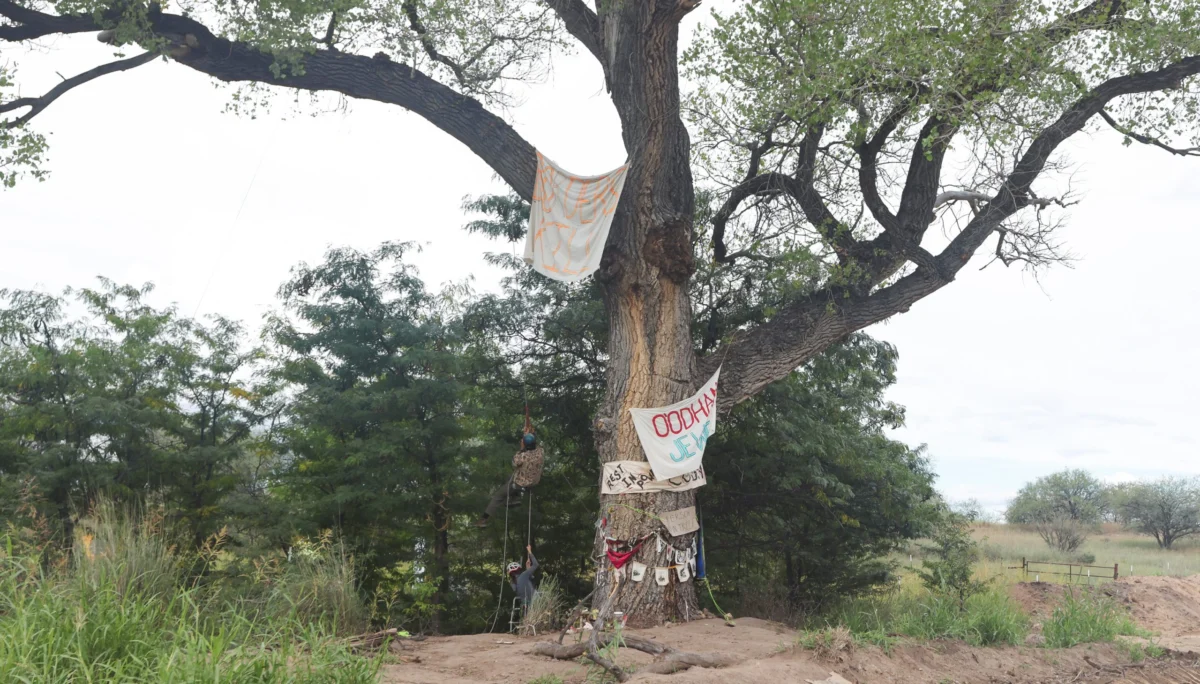
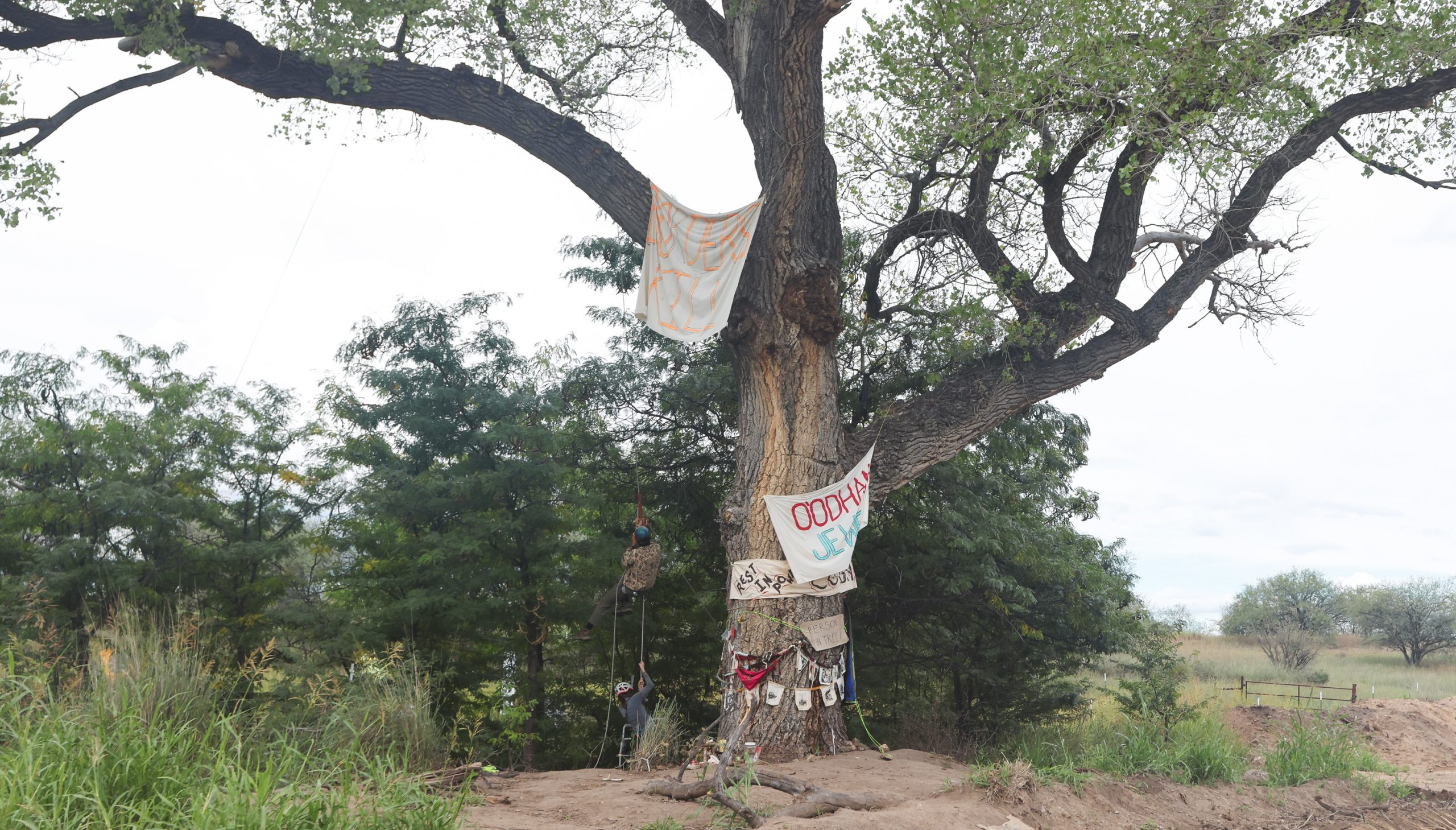
Armed Border Patrol agents launched a pre-dawn raid on a tenacious protest camp in Lochiel, a remote corner of southeast Arizona, Monday morning, clearing the path for contractors to fell the last remaining ancient cottonwood tree for a controversial double border wall. This dramatic confrontation concluded a 71-day vigil where activists had maintained a continuous presence, protecting the revered "grandmother tree" from destruction. Reports from activists on the ground indicated at least ten individuals faced arrest during the operation, which commenced around 6:30 a.m. local time. Protesters alleged that agents, some with faces obscured, disregarded demands for a warrant as they entered private property, dismantling tents and pushing individuals toward barbed wire fencing, eliciting cries of alarm captured in distressing videos circulated online. The felling of the centuries-old cottonwood, a vital ecological and cultural landmark, sparked widespread outrage among environmental advocates and Indigenous communities.
This specific cottonwood, a magnificent specimen that had stood for generations, represented not only a unique riparian habitat but also a profound symbol of resilience and heritage. It was one of several majestic trees that once defined the landscape along Border Road, a dusty track tracing the U.S.-Mexico boundary in the breathtaking San Rafael Valley, approximately 25 miles east of Nogales. Its removal underscores the ongoing tension between federal border security mandates and the imperative to protect sensitive ecosystems and cultural sites along the 1,954-mile international frontier.
U.S. Customs and Border Protection (CBP) confirmed Monday that all four cottonwood trees on federal land in Lochiel, previously designated for removal, have now been cut down. In an official statement, CBP acknowledged the importance of safeguarding the environment, wildlife, and cultural resources during border wall construction. However, the agency concurrently asserted that "illegal immigration itself poses significant environmental challenges," citing "high volumes of unauthorized crossings" as contributors to "substantial amounts of trash, pollution, and damage to natural resources, including sensitive habitats and agriculture." Despite inquiries regarding the number of arrests and the specific charges protesters face, CBP declined to provide further details, leaving questions about the legal ramifications of the morning’s events unanswered.
The sustained vigil began in earnest after three other cottonwoods were felled in June, galvanizing activists to establish a tree-sit, ensuring at least one person occupied the "grandmother tree" at all times. For over two months, a dedicated group of individuals camped on adjacent private property, maintaining an unwavering presence and rotation to protect the ancient sentinel. The activists’ commitment reflected a broader movement of land and water defenders who often employ non-violent direct action, such as tree-sitting, to physically impede destructive projects and draw public attention to environmental and social injustices.
Eyewitness accounts and social media footage painted a vivid picture of Monday’s raid. Videos posted on Instagram showed masked Border Patrol agents moving swiftly to arrest protesters. Voices could be heard screaming warnings to agents about individuals being pushed into barbed wire, illustrating the chaotic and tense nature of the confrontation. Another distant video captured the heart-wrenching moment the colossal tree crashed to the ground, accompanied by cries of anguish from those who had fought tirelessly to protect it.

Kate Scott, co-founder of the Madrean Archipelago Wildlife Center, was among the first to raise the alarm in June when she discovered contractors’ plans to clear the cottonwoods. Her initial efforts quickly garnered support, leading to the establishment of the protest camp. With the invaluable involvement of Indigenous activists, the Lochiel camp evolved into a spiritual gathering place, marked by daily sunrise prayer rituals for the land. Tragically, it was during one such sacred morning ceremony that Border Patrol agents descended upon the camp, disrupting the peaceful observance with arrests and the subsequent tree felling.
Life at the protest camp, though often quiet on the surface, was underscored by an intense dedication. During a visit to the camp in late September, the presence of Border Patrol vehicles was occasional, and construction had temporarily paused. However, Scott recalled the early days of the protest when construction crews would arrive as early as 3 a.m., their machinery creating a cacophony that shattered the pre-dawn stillness, making the area "a very, very intense place."
Just a quarter-mile east of where the "grandmother tree" once stood, the imposing reality of the border wall became starkly evident. Two parallel rows of 30-foot-tall steel panels abruptly terminated, leaving stacks of formidable barriers awaiting installation. The new wall snaked eastward across the undulating hills, disappearing into the horizon, a tangible representation of a policy designed to physically segment the landscape and disrupt natural migratory paths. The construction of these formidable barriers has been a source of ongoing contention, particularly regarding its efficacy, astronomical cost, and profound ecological footprint.

The protest camp had become a beacon for environmental and human rights defenders. On September 14, three protesters, donning elaborate bird and jaguar costumes to symbolize the endangered species native to the region, were arrested after venturing into the construction zone. These arrests, far from deterring the movement, served to amplify its message, attracting more supporters from across the country to join the Lochiel vigil. By late September, dozens of tents dotted the tall grasses of the private property, where activists were actively training in rope climbing techniques, preparing to safely occupy the wooden plank installed within the grandmother tree’s canopy.
The community supporting the protest extended beyond the immediate camp. A short distance down the road, a guest house, affectionately dubbed "Casita de la Esperanza" (House of Hope), provided essential amenities like a bathroom, beds, and refrigeration, rented from a supportive landowner. Across the international divide, in Mexico, a cottonwood on the southern side of the border displayed banners proclaiming "From MN to MX resistance is fertile" and "Chinga la Migra," demonstrating a powerful cross-border solidarity. For a week, Mexican activists mirrored their U.S. counterparts, holding their own tree-sit in a powerful display of shared commitment.
Lochiel itself is a testament to the rugged beauty and isolation of the borderlands. Reaching this remote ranching town requires navigating over ten miles of rough dirt roads winding through the expansive Coronado National Forest. Situated between the more populated towns of Nogales and Bisbee, south of Sonoita, Lochiel is characterized by scattered ranch homes on vast parcels of land. A quaint white church stands barely 100 feet from the imposing border wall, overlooked by a large white cross on a nearby hill. In areas where the 30-foot steel panels have not yet been erected, a simple barbed-wire fence, only three to four feet high, traditionally demarcates the international boundary, highlighting the dramatic shift in border infrastructure.

The legacy of the felled trees remains etched into the landscape. Along Border Road, between Casita de la Esperanza and the void where the last grandmother tree once stood, the immense trunks of two other cottonwoods lay prone on the ground. A third, Scott noted, had been dragged uphill to what she somberly referred to as a "graveyard of grandmothers." The sheer scale of these ancient giants was evident in the four-foot-deep depressions left where their root systems had anchored them for centuries. Poignantly, banners tied around the trunks by activists remained as silent testaments to their struggle, and on one of the fallen giants, bright green leaves had begun to sprout from the trunk, a defiant symbol of life and renewal amidst the destruction.
This event in Lochiel represents a microcosm of the broader national and global debate surrounding border security, environmental conservation, and Indigenous rights. The U.S.-Mexico border, often viewed through the lens of political rhetoric and migration statistics, is also a vibrant ecological corridor, a lifeline for countless species, and a cultural landscape deeply significant to many communities. The felling of the "grandmother tree" not only marks a physical loss but also signifies a symbolic blow to those who advocate for a more holistic and sustainable approach to border management, one that respects both human dignity and the irreplaceable value of the natural world. As construction of the double border wall continues, such clashes are likely to persist, forcing a reckoning with the profound and often irreversible costs of prioritizing physical barriers over ecological integrity and community voices.