Roger Danuarta
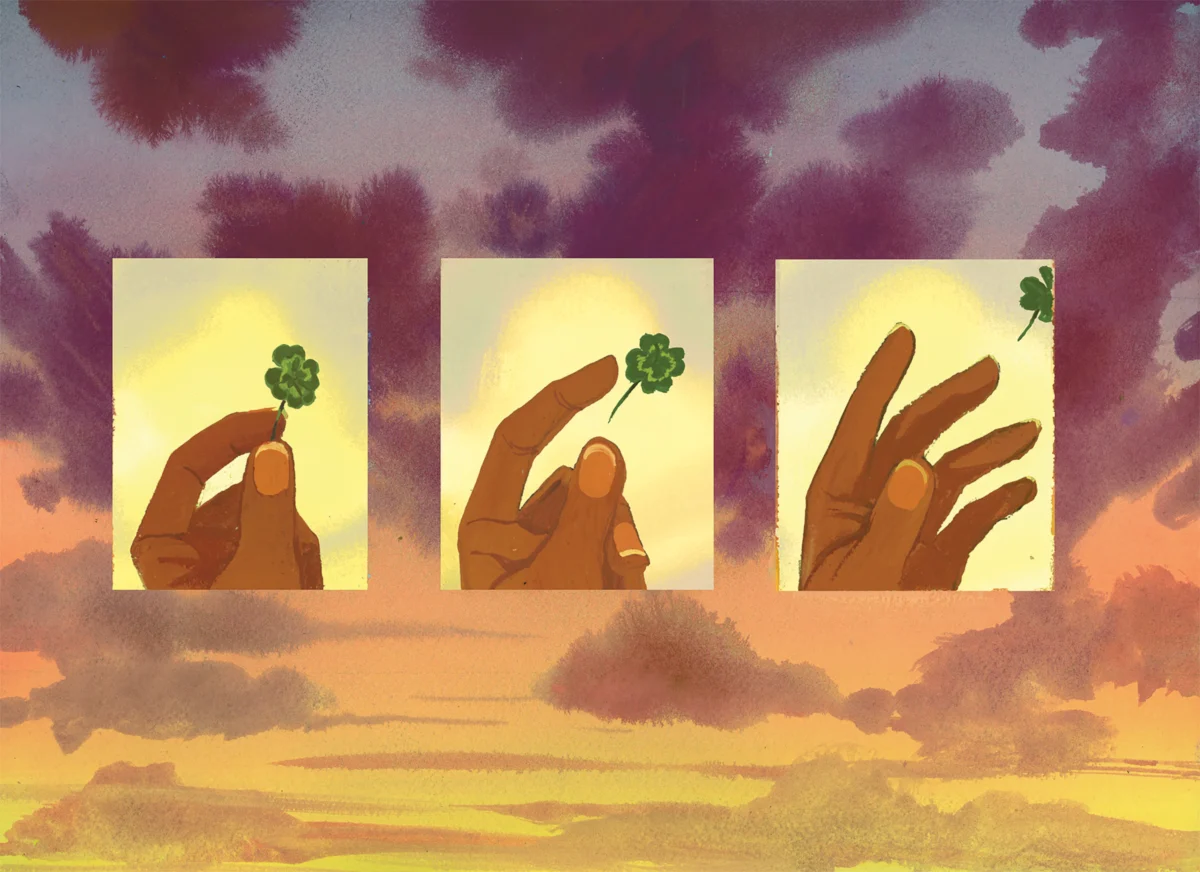
For one individual, the pursuit of hobbies has often culminated in a breadth of surface-level understanding rather than deep mastery, a self-described "jack of all trades." Yet, amidst a diverse array of interests ranging from marksmanship and knitting to intricate quilting and artisanal jelly-making, a singular, almost uncanny ability stands out: an extraordinary talent for discovering four-leaf clovers. This peculiar knack transcends mere chance, transforming an ordinary stroll across a lawn into a deliberate act of observation, yielding these botanical anomalies with surprising regularity. It is a talent that often elicits wonder and surprise, turning casual park visits into impromptu demonstrations of a unique observational skill, offering "bouquets of luck" to friends and passersby.
The science behind these elusive specimens reveals that a patch of clover is typically an interconnected network of plants, sharing roots beneath the soil. When a genetic mutation causes one stem to produce four leaves instead of the usual three, the likelihood of nearby stems exhibiting the same trait significantly increases, as if a ripple of fortune has traveled underground. This phenomenon offers a partial explanation for the consistent discovery of multiple clovers in a single area, yet it does not fully account for the discerning eye that can pinpoint them amidst a sea of green. This ability, however, is not rooted in serendipity but in a deliberate act of stopping, looking down, and truly seeing what is present in one’s immediate environment – a practice increasingly rare in an era dominated by digital distractions. The pervasive glow of screens often captures our attention, diverting our gaze from the tangible wonders of the physical world, raising questions about what moments of profound connection and subtle beauty might be overlooked.
The stark reality of modern life often sees human attention captivated by the ephemeral flicker of a phone screen, a constant stream of information that, while vast, can often be shallow. This ubiquitous digital engagement creates a pervasive "attention economy" where the focus is constantly pulled outwards, away from the immediate surroundings. In this context, the simple act of scanning a patch of grass for a four-leaf clover becomes a micro-exercise in mindfulness, a deliberate reorientation of focus that stands in sharp contrast to the default mode of contemporary existence. It highlights a broader societal challenge: how to cultivate deep attention and presence in a world engineered for distraction.
The profound impact of such focused attention became acutely apparent following a personal loss that reshaped understanding of luck and presence. At the close of summer, a beloved canine companion named Lincoln, nearly ten years old, unexpectedly passed away. Despite managing an autoimmune condition with steroids, Lincoln had lived a vibrant life, even demonstrating his spirited nature by snatching a hamburger just the day before his passing. A sudden onset of coughing and wheezing prompted an urgent visit to the Colorado State University Veterinary Hospital, a leading institution renowned for its advanced animal care. Within hours, Lincoln was diagnosed with severe pneumonia, and a mere twelve hours later, a heart-wrenching decision had to be made: euthanasia.
The experience of loss cast a profound pall, enveloping the individual in a daze of grief. The late-night journey to the hospital, the final moments spent holding a paw, kissing a head, and inhaling a familiar scent as the veterinary team administered the final injections, underscored the sudden void left by a creature whose rhythmic heartbeat had been a constant, comforting presence. The opportunity to sit alone with Lincoln’s body, holding him until his warmth faded, brought an intense wave of sorrow, initially perceived as an unbearable stroke of bad luck. This immediate reaction, however, soon gave way to a deeper, more profound realization.
Reflecting on Lincoln’s life, the narrative shifted from one of misfortune to one of immense gratitude. The serendipitous encounter that brought Lincoln into this particular life, discovered through an online advertisement, began to feel less like a random occurrence and more like a profound stroke of destiny. Out of countless dogs and myriad circumstances, their paths converged, a unique bond forged. It was akin to finding a four-leaf clover, not in the grass, but in a vibrant, living entity that offered years of unwavering companionship and unconditional affection. This relationship stood apart from human interactions, which are often laden with complex histories, expectations, misunderstandings, and obligations. With Lincoln, the connection was pure, uncomplicated, and radical in its simplicity: a creature whose love was entirely independent of daily accomplishments or societal standing, a steadfast presence nuzzled close, always there.
Dogs, by their very nature, possess an extraordinary capacity for unadulterated attention, noticing nuances that humans, conditioned by modern life, often overlook. Lincoln epitomized this sensory acuity. The subtle shifts in scent, the fleeting dart of a squirrel or rabbit, the distant sound of a delivery, or the tantalizing aroma of cooking bacon – these were the focal points of his existence. Dogs navigate the world almost entirely through this heightened state of awareness. Consequently, shared walks with Lincoln became an unconscious lesson in reclaiming this innate human capacity for observation.
Perhaps the most enduring gift Lincoln imparted was his distinctive way of engaging with the world. He subtly guided a reorientation of attention, transforming daily walks into a ritual of discovery. Through this consistent practice, the individual began to perceive the local environment anew, noting the seasonal bloom of milkvetch and fleabane, learning the names of mountain mahogany and stonecrop, identifying preferred grazing areas for antelope, and discovering star lilies and cinquefoil. Even seemingly mundane details, like a rock resembling a scowling face, or practical knowledge, such as where to avoid prickly pear or find a stream for a drink, became part of a richer, more observed reality. This deepened connection to the natural world echoes the concept of biophilia, the inherent human tendency to connect with nature and other living systems, underscoring the profound psychological and emotional benefits of such engagement.
The conventional understanding of luck often frames it as an external, unexpected event – a found penny, a winning lottery ticket, or the rare four-leaf clover. However, living with a dog like Lincoln profoundly alters this perspective. His presence was not a fleeting moment of chance but a long, sustained fortune, often unrecognized in its extraordinary ordinariness until its absence is keenly felt. The human-animal bond, extensively studied for its positive impact on mental and physical well-being, demonstrates that companion animals offer consistent emotional support, reduce stress, and encourage physical activity, embodying a pervasive, quiet form of good fortune.
In the weeks following Lincoln’s death, amidst the profound grief that saw the individual resting their head on his empty dog bed, a powerful realization emerged: Lincoln was the extraordinary within the ordinary. He had become an integral, almost architectural, part of life’s landscape, his presence so constant that it ceased to register as "luck." This insight prompts a crucial question: how many forms of profound fortune are we surrounded by daily, overlooked simply because they have become so familiar, so ingrained in the fabric of our existence, that they no longer appear remarkable?
Lincoln’s legacy lies in this profound lesson: luck is not solely about finding something rare, like a four-leaf clover hidden among countless common ones. Sometimes, luck manifests with four paws instead of four leaves, following from room to room, waiting patiently at the door, or insistently guiding one outdoors to pause and investigate a patch of sagebrush that would otherwise be passed unnoticed. He taught that being truly lucky does not mean avoiding loss, but rather recognizing and cherishing what has been given while it is still present. For years, the prevailing thought was that care was being provided for him. Yet, in retrospect, Lincoln was the true teacher, patiently imparting lessons on slowing down, paying attention, and truly appreciating the wonders that lay directly in front of oneself. Ultimately, this redefines luck not as the discovery of something rare, but as the profound realization that one has been living within a sphere of abundant good fortune all along. This perspective fosters a deeper sense of gratitude and presence, transforming the everyday into a continuous tapestry of blessings.