Rocky Georgio
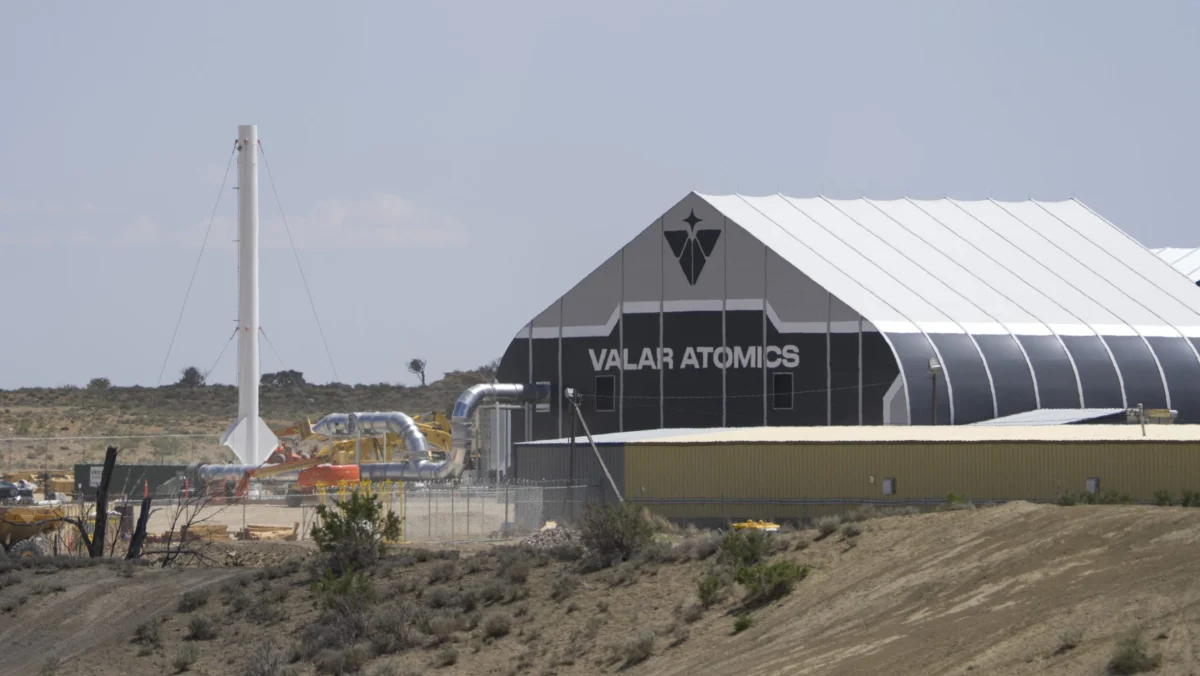
Cindy O’Neil understands the cyclical nature of industry, having witnessed her husband’s career in Carbon County’s namesake coal mines. For generations, this region of central Utah has been defined by its deep connection to energy production, a relationship that has historically come at a significant human cost. "We’ve had the coal. We’ve dealt, the whole community, with black lung," O’Neil recounted, her voice tinged with the memory of past dangers. "The explosions, the fires, and all the things that came along with it." Now, however, a new wave of industry and energy is poised to reshape the landscape near her rural home, and for O’Neil and her neighbors, it sparks even greater apprehension than the legacy of coal.
"It’s all descending, these data centers," O’Neil stated, a sentiment she frequently shares on local social media forums where she meticulously tracks emerging industrial projects. "They’re setting these things within a couple of miles of homes." Her latest concerns are centered on Valar Atomics, a nuclear startup with ambitious plans to construct a sprawling complex of 456 small modular reactors (SMRs) on extensive Bureau of Land Management territory within the county. This technology, largely unproven for commercial application in the United States, is slated to handle radioactive waste and power a variety of industrial ventures, including a significant number of data centers. Dubbed "Project Beehive," the initiative enjoys the backing of the state of Utah, which has committed a square mile of state-owned trust lands to the development.
Parallel to the Valar project, another substantial data center complex, Altigen Energy’s "Jurassic Spark," is planned for the county, encompassing hundreds of acres and featuring a massive natural gas power plant. This signifies a dramatic pivot for Carbon County, which once stood as a powerhouse in coal production. In 2006, the county’s coal mines yielded nearly 10 million tons. However, a confluence of factors, including the rise of more affordable energy alternatives like renewables and natural gas, coupled with the depletion of accessible coal seams, led to the rapid decline of this foundational economic engine. By 2023, coal mining in Carbon County had ceased entirely.

"They say everything’s left us, and if we don’t grab these table scraps we’re not going to get anything," O’Neil expressed, a sentiment that reflects the economic anxieties pervading the community. "I don’t think our county has to take the table scraps." The proposed data center developments, however, represent a departure from the county’s fossil fuel past, as neither project involves coal. The Utah Trust Lands Administration has agreed to lease a full square mile of state land to Valar Atomics for up to a century. This lease is intended to facilitate the operation of some of its SMRs, process uranium TRISO-fuel for the reactors, establish water desalination facilities, manufacture steel, refine critical minerals, and crucially, support the burgeoning data center industry. Projections from the Trust Lands Administration suggest the Valar site could generate $35 million in lease revenues over 50 years, with these funds earmarked to benefit Utah’s public schools.
During a September meeting of the Trust Lands Administration board, three Carbon County residents employed or anticipating employment with Valar spoke in favor of the project, echoing the support voiced by all three Carbon County commissioners. "It’s important that you understand that the Carbon County commissioners are committed to allowing these things to move forward," stated Commissioner Larry Jensen. He acknowledged that while some community members express opposition, the commissioners represent the "silent majority." However, Cheryl Lupo, a longtime county resident and a candidate for county commissioner, vehemently contested this assertion. She explained that during her signature-gathering campaign for the ballot, the overwhelming sentiment she encountered was one of deep opposition to both data centers and nuclear facilities. "People are up in arms," Lupo declared, describing a palpable sense of frustration and a feeling of being unheard.
The state’s embrace of Valar Atomics has been notably enthusiastic, with Governor Spencer Cox, U.S. Senator John Curtis, and other prominent Utah officials welcoming the company. Earlier this year, Valar was permitted to test its "Ward250" microreactor at the San Rafael Energy Lab in neighboring Emery County. In June, the company announced it had achieved "self-sustaining criticality," a key milestone in nuclear reactor operation. Valar also harbors plans to power a 30-megawatt nuclear-fueled AI data center in Emery County, in collaboration with the semiconductor giant Nvidia. Despite these advancements, the deployment of SMRs for commercial use in the United States remains unprecedented.
Mike Nelson, chair of the Trust Lands Administration board, acknowledged during a recent meeting that the Valar agreement presented novel challenges. "We weren’t always sure what to ask about," Nelson admitted, while still commending the nuclear startup, adding, "and probably still aren’t sure of everything to ask about because this is a first, right?" This uncertainty is amplified by Utah’s historical association with nuclear activities. Lupo shared a personal connection to the legacy of nuclear fallout, believing her mother’s premature death at age 38 was linked to downwind effects from radioactive weapons testing in Nevada during the 1950s, during which time her mother resided in Carbon County. She also attributes her grandfather’s death to similar radioactive fallout. "I will never, ever be a proponent of nuclear," Lupo stated resolutely.

Even before the Valar proposal garnered significant attention, whispers of another data center campus in Carbon County were circulating. Altigen, a company specializing in constructing natural gas power plants to serve data centers, has identified an area east of Wellington for its "Jurassic Spark" project. This ambitious development is slated to cover 1,200 acres, nearly twice the footprint of the planned Valar campus. Initial plans include a 250-megawatt gas plant, with the potential to scale up to 3 gigawatts of electricity generation, a figure approaching the entire state of Utah’s current electricity consumption. While Altigen did not respond to requests for comment, the trend of data center developers turning to natural gas is evident, driven by the immense and often unmet electricity demands of artificial intelligence servers, a challenge that has strained existing utility grids.
The Utah Legislature’s passage of SB 132 last year provided a regulatory framework for private companies with energy demands exceeding 100 megawatts to establish their own self-contained generating stations. The intent was to foster business development, particularly for data centers, without overburdening the public grid. This legislative action spurred a flurry of applications for permits to construct gas-fired power plants. However, natural gas, predominantly methane, is a potent greenhouse gas contributor to climate change and contributes to local air pollution. Furthermore, natural gas power plants are known to generate substantial amounts of heat.
Robert Davies, a physics professor at Utah State University, points out that nuclear plants can generate even more heat than natural gas plants due to their inherent inefficiency. "If you’re in a contained valley, it concentrates the problem," he explained. The Wellington area, situated in a valley bordered by the Wasatch Range to the west and the Book Cliffs to the north and east, presents precisely such a scenario. Aspen Westenskow, a lifelong resident of Carbon and Emery counties, voiced concerns about the "heat island" effect created by data centers. "They go clear all this land, the brush, the trees. What helps cool the planet down? Not flat dirt," she remarked, highlighting the environmental impact of land clearing.
Water scarcity remains a primary concern for Westenskow and many other residents in the region, where every drop of water is already allocated. Valar Atomics asserts that its reactors utilize closed-loop helium cooling systems, requiring minimal water. Similarly, data center developers have indicated their intention to employ closed-loop cooling systems with low water demands. In response to escalating resident concerns, Carbon County issued a statement on July 3rd, acknowledging the difficult economic realities faced by the region following the coal industry’s decline. This economic shift has increased the property tax burden on homeowners and remaining businesses. The statement emphasized that data centers offer a crucial opportunity to bolster the county’s tax base. The county also addressed questions surrounding non-disclosure agreements (NDAs), explaining that such agreements are often necessary to encourage companies to explore projects within Carbon County, as confidentiality is a key requirement for many businesses.

While it remains unclear if Altigen or Valar have entered into NDAs with the county, such agreements are reportedly common for companies considering business ventures in Carbon County. Oran Stainbrook, a former member of the county planning commission and economic development board, noted the prevalence of NDAs during his tenure. Although he was unaware of specific agreements pertaining to the current data center projects, Stainbrook expressed confidence that the county commissioners are acting in the best interests of the county by pursuing jobs and investment. O’Neil, however, views the situation from her home along U.S. Highway 6 with a different perspective. "You shouldn’t be hiding what you and the company are going to bring to a community," O’Neil stated firmly, "and not tell the community until it’s too late and a done deal."