Rocky Gerung
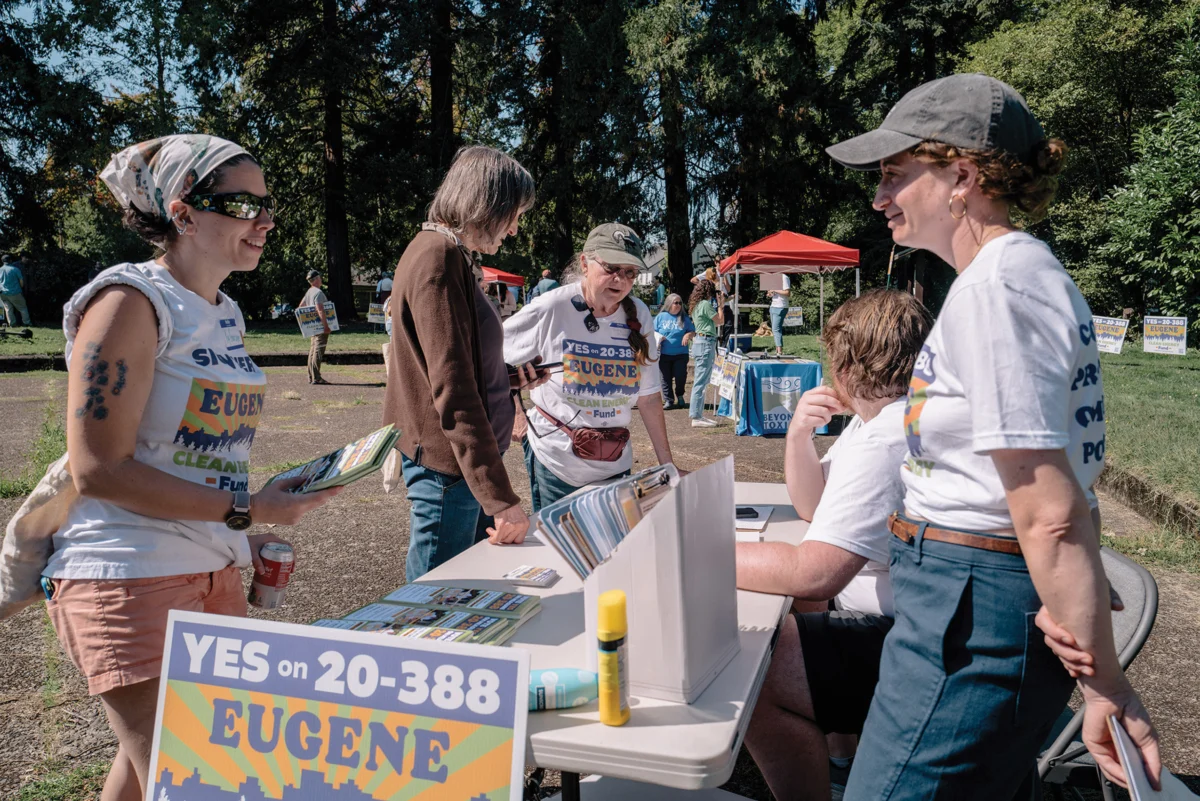
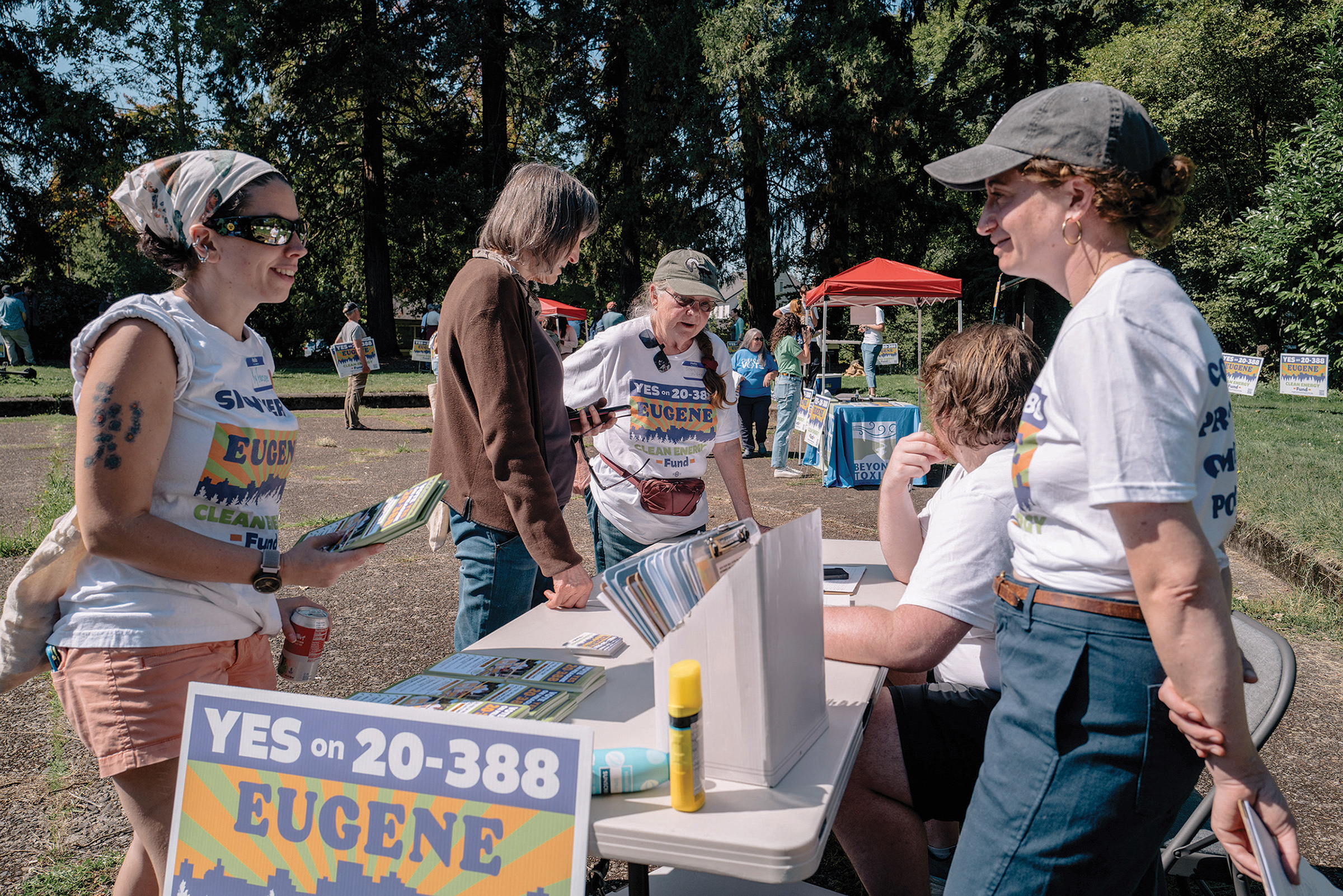
On a humid July day, a determined group of volunteers marched from the local Sierra Club office to Eugene City Hall, their chants echoing: "Climate change is here to stay, and billionaires have got to pay!" They carried five banker’s boxes overflowing with nearly 14,000 signatures, a crucial step toward placing the Eugene Clean Energy Fund on the November ballot. If approved by voters, this initiative promises to unlock millions of dollars for vital climate-resilience projects across the city.
The proposed fund would establish a mandatory 2% tax on large corporate retailers, a measure designed to tap into the revenue of major businesses while Oregon itself does not impose a statewide retail sales tax. This tax would specifically target companies generating over $1 billion in national gross profit and $500,000 within Eugene, encompassing ubiquitous retailers like Walmart and Target, e-commerce giants such as Amazon, and major financial institutions including Chase and Wells Fargo.
For many, the concept behind the Eugene Clean Energy Fund is straightforward. "In a country that has seen its first trillionaire, it is far past time to make ultra-wealthy corporations pay their fair share, so that our communities can become more livable and resilient," Aya Cockram, the campaign’s co-leader and an organizer with Breach Collective, declared to the assembled crowd outside City Hall. This sentiment underscores a growing global movement advocating for greater corporate accountability in addressing environmental and social challenges.
The Eugene Clean Energy Fund draws inspiration from a successful predecessor in Portland. The 2018 Portland Clean Energy Fund, which levies a 1% tax on large retailers, has generated over $1 billion to date. These funds have supported a wide array of initiatives, including home retrofits, urban tree planting, and the development of community solar projects. The city estimates that projects approved in 2025 alone will significantly reduce greenhouse gas emissions by an estimated 76,000 metric tons, while simultaneously improving air quality, lowering utility bills, and enhancing public green spaces.
Advocates for the Eugene measure hope it will provide the necessary financial impetus for the city to achieve its ambitious 2016 climate goal of cutting community emissions by 7.6% annually. However, recent data reveals a less optimistic trajectory, with only a 10% total reduction in emissions observed between 2014 and 2021, according to city spokesperson Marion Suitor. This shortfall highlights the critical need for dedicated funding streams to accelerate progress.
Compounding the urgency, Eugene’s sustainability office has faced budgetary constraints. A planned third full-time staffer for the office in 2026 was eliminated due to budget cuts. With the escalating costs of inflation and the diminishing availability of state and federal funding, Eugene’s financial analyst has projected an annual budget gap of $5 million, a deficit that could lead to a financial crisis if not addressed. "Any of these (climate) programs that we’re talking about, you can assume are not funded, or underfunded to the extreme right now," stated Dylan Plummer, a campaign advisor with the Oregon Sierra Club, underscoring the precarious financial state of crucial environmental initiatives.
Under the proposed structure, the Eugene Clean Energy Fund allocates 10% of its revenue to green infrastructure projects and up to 30% to clean energy-related job training and apprenticeship programs. This emphasis on workforce development has garnered support from several local labor unions, recognizing the potential for job creation and economic opportunity within the green economy.

Joel Iboa, executive director of the Oregon Just Transition Alliance, a co-leader of the campaign, pointed to recent developments like the city’s approval of an Amazon distribution center. While Amazon commits to local hiring, the substantial revenue generated by such facilities often circulates far beyond the local economy. "This is money that real people have helped make, and what we are doing is getting a small portion of that back and reinvesting it in the communities that have made that wealth possible," Iboa explained, emphasizing the fund’s aim to re-circulate economic benefits locally.
The largest portion of the fund, up to 60%, is designated for renewable energy and efficiency programs, with a crucial mandate that half of these funds directly benefit under-resourced communities. Emily Matlock, communications director for the local environmental justice organization Beyond Toxics, believes this allocation could significantly expand their work in West Eugene. This area, characterized by concentrated industrial pollution and a prevalence of low-income housing, often experiences compromised indoor air quality due to diesel fumes and industrial emissions. Many older homes in this neighborhood are poorly insulated, exacerbating energy costs for heating and cooling, particularly during extreme weather events. The fund could enable Beyond Toxics to provide essential resources like air purifiers and air conditioners to residents who would otherwise struggle to afford them.
In neighborhoods like Trainsong, situated amidst railroad tracks and industrial activity, residents grapple with the legacy of soil contamination from past industrial use. Matlock highlighted concerns that planned remediation efforts could inadvertently release toxins into homes. The Clean Energy Fund could provide critical support for homeowners to replace outdated insulation and windows, and to install energy-efficient heat pumps that actively filter the air while providing heating and cooling. This intervention could help mitigate the long-term health impacts of enduring pollution. Beyond these direct interventions, advocates envision the fund supporting pilot projects such as resilience hubs, offering community members a safe haven and essential resources during extreme weather events, and even small-scale community solar power generation initiatives. A further 5% of the fund is earmarked for future innovation, offering flexibility and the potential for cutting-edge solutions. "The sky is really the limit, and there is an opportunity for us to be on the cutting edge of the transition to green energy, and ensuring that it’s done in a way that supports our front-line communities," Plummer added, highlighting the forward-looking nature of the proposal.
The Eugene campaign is closely observing the challenges faced by its Portland counterpart. Portland’s Clean Energy Fund, initially projected to generate $30 million to $60 million annually, has instead yielded closer to $200 million per year, accumulating over $1 billion. This unexpected surplus has unfortunately led to competing demands for the funds. In August, a contentious ballot initiative aimed at diverting 25% of Portland’s Clean Energy Fund to the police department narrowly failed to secure enough signatures for the November ballot. Cherice Bock, climate policy director at 350 PDX, a group instrumental in passing Portland’s fund, expressed frustration with such proposals, stating, "This doesn’t have anything to do with climate change, and they’re not even pretending it does."

Further complicating matters in Portland, the new owner of the NBA’s Trail Blazers, billionaire Tom Dundon, has indicated he might keep the franchise in the city only if public funds are allocated for arena renovations. Mayor Keith Wilson has shown a willingness to explore using clean energy fund dollars for this purpose, with the City Council recently committing $120 million for renovations from "sources yet to be confirmed." Bock, however, questions the climate benefit of renovating an already LEED-certified facility, arguing that the perception of abundant funds is misleading. A 2023 city analysis revealed that fully funding Portland’s comprehensive climate plan would require an estimated $50 billion, underscoring the substantial gap between available resources and the scale of the climate challenge.
Eugene’s Clean Energy Fund officially qualified for the ballot on August 5th, a date that coincided with the state experiencing its worst wildfire season on record. As residents navigated days of hazardous air quality due to smoke and smog, a stark reminder of the escalating climate crisis, the ballot initiative offered a glimmer of hope. Joel Iboa reflected on this, stating, "Ballot measures like this are a love letter to the community – folks saying, ‘If no one else will do this for us, we’re going to do it for us.’" The intensifying wildfire seasons, exacerbated by extreme drought and reduced federal funding for crucial services like the Forest Service and emergency firefighting assistance, further underscore the urgency of proactive climate action and community-led solutions.