Joko Susilo
A striking dereliction of duty by federal authorities has emerged in Idaho’s pristine Sawtooth National Forest, where an unauthorized cabin, subject to a federal cease-and-desist order, continues to stand nearly two years after its discovery. This defiance of federal mandates is particularly concerning given that the individual initially cited for the structure, tech entrepreneur Michael Boren, now serves as the Undersecretary of Agriculture for Natural Resources and Environment at the U.S. Department of Agriculture (USDA), directly overseeing the very agency that issued the order: the U.S. Forest Service. The controversy casts a long shadow over the integrity of public land management and raises serious questions about conflicts of interest at the highest levels of government.
In November 2024, the U.S. Forest Service delivered a cease-and-desist letter to Galena Mines LLC, a Boise-based company formed in 2020, following the discovery of an unpermitted cabin built that fall within a remote section of the Sawtooth National Recreation Area, a specially protected segment of the larger Sawtooth National Forest. At the time, Michael Boren, a prominent figure in the tech industry and a seasoned donor to political campaigns, was listed as the sole manager of Galena Mines LLC, which holds historic mining claims within the Sawtooths. While the precise party responsible for the cabin’s construction remained unclear, its proximity to Galena Mines’ holdings drew immediate suspicion. Crucially, the Forest Service determined that the log structure was erected nearly a mile north of the company’s officially recognized patented mining claims. Consequently, the agency ordered Galena Mines and Boren not only to remove the cabin by July 1, 2025, but also to submit a comprehensive restoration plan within 45 days and complete the restoration work no later than August 1, 2025.
Kirk Flannigan, then the area ranger for the Sawtooth National Recreation Area, unequivocally articulated the Forest Service’s stance in the cease-and-desist letter: "Because there is no authorization for the surface disturbance and construction of the cabin that has occurred on [Forest Service] land, the cabin must be removed and the area restored to its natural condition." Flannigan’s letter underscored the gravity of the situation, warning that "failure to comply with this notice may result in referral of this matter to the United States Attorney for the District of Idaho for appropriate legal action or removal and impoundment of the improvements at your expense." These stern directives, designed to protect the ecological and aesthetic values of one of America’s most cherished wilderness areas, appear to have been systematically undermined.
Today, nearly two years beyond the initial enforcement action, the cabin, an unfinished log structure nestled in a clearing along a Forest Service road in the Boulder Mountains, remains conspicuously in place. Its continued presence directly contravenes federal orders, a fact recently highlighted by Aaron Murphy, co-founder of the advocacy group American Hunters and Anglers, whose organization posted compelling video footage of the cabin to its social media channels. Murphy, speaking to investigative journalists, condemned the blatant disregard for Forest Service mandates, emphasizing the erosion of public trust when such violations go unaddressed, particularly when they involve high-ranking officials.
The heart of the dispute lies in conflicting land surveys of Galena Mines’ patented claims, which grant full ownership of both surface and mineral rights, a significant departure from unpatented claims that convey only mineral rights and require ongoing federal approval for surface disturbance. In 2003, a previous owner of the claims commissioned surveyor Kim Leavitt, who concluded that the claims were situated along Germania Creek, approximately one mile north of the locations depicted on Bureau of Land Management (BLM) maps. However, a joint Forest Service and BLM survey conducted in 2004 by federal land surveyor Randall Peppersack definitively refuted Leavitt’s findings. Peppersack’s report stated, "In fact, Mr. Leavitts [sic] location is approximately 1 mile north of the original location and approximately 2000 feet lower in elevation… The location of the Dezdon Lode and Millsite are incorrectly displayed on the Leavitt Record of Survey." The BLM’s official mineral and land records database continues to show the claims in a far less accessible spot, a mile south of where the cabin was ultimately constructed.
The debate intensified in November 2020, roughly a week before Galena Mines LLC was established. Mark Phillips, a surveyor with Galena Engineering Inc., filed another survey of the lode claim and mill site with Custer County. Phillips, hired by Boren to "place survey markings on site to ascertain exact boundaries," corroborated the earlier Leavitt survey, once again placing the patented claim a mile north of the federal agencies’ documented location. This repeated discrepancy underscores the critical need for a definitive, federally recognized survey to resolve the boundary dispute.
Internal Forest Service communications, obtained by the government watchdog group Campaign for Accountability, reveal Boren’s initial reaction to the cease-and-desist order. In a November 2024 email, Ranger Flannigan updated Forest Service law enforcement officer Fallon Higgins about a meeting with Boren. Flannigan wrote that Boren "did not acknowledge any wrong doing, but basically said if he did build in the wrong place he would move the structure. He also asked about the rehabilitation plan that is mentioned in the letter." Boren further indicated that the location was verified by a local engineering firm before his purchase, suggesting that firm would bear "some financial responsibility if it is proven he is in the incorrect location." Flannigan noted Boren’s repeated assertion that "he did not want to fight." Just over a month later, on January 8, 2025, Higgins requested the cease-and-desist letter to finalize his "case report… just so everything is documented in case we need to move forward with any charges in relation to this at a later date."
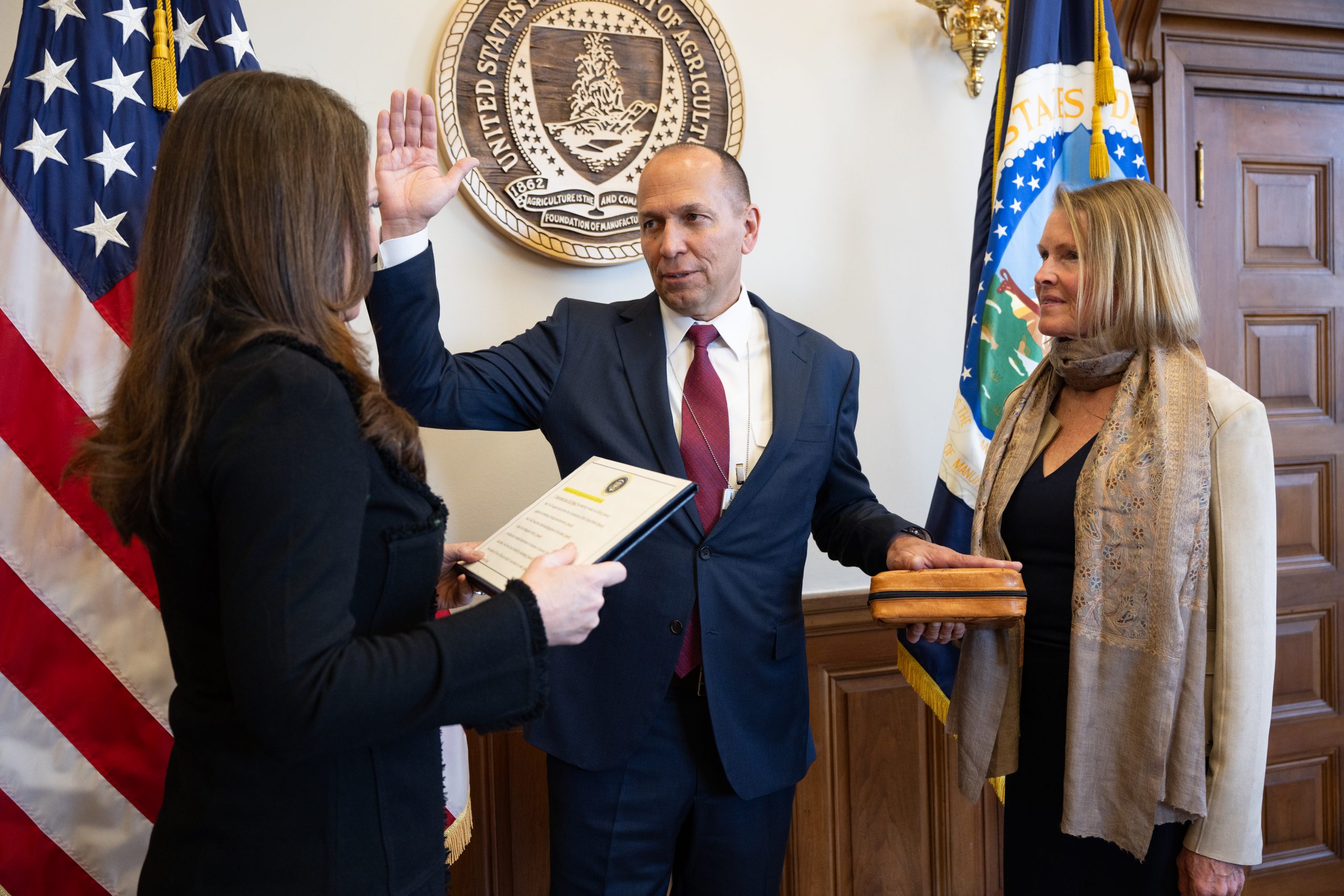
The trajectory of the case dramatically shifted just days after Higgins’ communication. In mid-January 2025, then-President-elect Donald Trump nominated Boren for the critical USDA Undersecretary post, a role that placed him in direct oversight of the Forest Service and its vast management responsibilities over approximately 193 million acres of public land, including the very Sawtooth region where the cabin stood. Boren, known for his history of disputes with public land management agencies, including the Forest Service, was officially sworn into the position in January 2026.
Since Boren’s confirmation and the Trump administration’s return to the White House, the Forest Service appears to have executed an abrupt reversal, abandoning its initial intent to enforce the demands made of Boren and Galena Mines in 2024. The USDA has largely dismissed the Forest Service’s prior assessment of the claim boundaries, instead endorsing the two independent surveys (Leavitt and Phillips) that placed the claim where the cabin was built, describing them as "official" surveys of record. A USDA spokesperson asserted that "The USFS does not conduct official land surveys of patented mining claims; it contracts the Bureau of Land Management surveyors with appropriate expertise." The spokesperson added, "To our knowledge, BLM has not conducted a survey of the relevant parcel. Mr. Peppersack’s comments do not constitute an official survey and were not recorded as such." This position directly contradicts the Forest Service’s 2024 cease-and-desist letter, which cited "official government records and surveys" placing the patent south of the cabin’s location, and Peppersack’s updated 2024 report reiterating that the Phillips survey relied on the "incorrect" Leavitt survey. Peppersack explicitly recommended "trespass notification if any improvements or other unauthorized use is commenced on these Leavitt locations."
When pressed on the Forest Service’s intention to compel Galena Mines to remove the cabin and restore the area, the USDA spokesperson unequivocally stated: "No action can be taken until an official federal survey is completed." This effectively stalls any enforcement, leaving the unauthorized structure in place indefinitely. Regarding the cabin’s purpose, the spokesperson offered a curious explanation: "backcountry skiers built the warming hut on private land for public use as needed. It has no other purpose." This assertion was made despite video evidence from American Hunters and Anglers showing the cabin door boarded over, to which the spokesperson retorted, "The hut could be used in the event of a winter emergency." The spokesperson further dismissed the American Hunters and Anglers’ video as "maliciously false and therefore libelous," a strong statement that suggests an attempt to discredit public scrutiny.
The ethical dimensions of the situation are equally troubling. In April 2025, months after his nomination, Boren signed an ethics agreement and submitted a financial disclosure, neither of which listed Galena Mines LLC. Craig Holman, a government affairs lobbyist and ethics expert at Public Citizen, emphasized that ethics rules mandate Boren disclose all outside corporate posts held within the previous two years. The USDA spokesperson maintained that Boren’s financial disclosure was "accurate" because "neither he nor his family had ownership of Galena Mines at the time of the initial financial disclosure or any subsequent time," claiming the Boren family’s ownership ceased in May 2024. This contradicts internal Forest Service emails indicating agency officials discussed the cabin issue directly with Boren in November 2024, and Idaho business records showing Boren remained the LLC’s manager until late February 2025, a month after his nomination. At that point, his daughter, Amanda Boren, assumed the management role. The Forest Service has not responded to inquiries regarding these discrepancies.
The Forest Service’s dramatic shift in posture coincides with significant leadership changes within the Sawtooth National Forest. Kirk Flannigan, the ranger who issued the cease-and-desist letter, resigned from his Forest Service post in June 2025 to become administrator of Blaine County, Idaho. Similarly, Jake Strohmeyer, the former Sawtooth National Forest supervisor and a 30-year veteran of the agency, departed in early 2025 for a position at the Idaho Department of Lands. Further, in November 2025, months before her father’s confirmation, Amanda Boren, board director of the Sawtooth Conservation and Recreation Alliance—a private property rights group on whose board her father previously served—emailed top Forest Service brass to endorse Michael Fuller, then acting area ranger, for the permanent ranger post. Her letter notably criticized Flannigan, stating, "Ranger Fuller seems to be able to get more done in 3 months with a staff of 9 people than the previous ranger was able to get done in 12 months with a staff of over 30." With Michael Boren now overseeing Fuller, Chief Tom Schultz, and every other Forest Service employee, the implications for independent oversight and enforcement of public land regulations are profound. This unfolding narrative raises critical questions about the influence of political appointments on the impartial administration of federal land laws and the protection of America’s invaluable natural heritage.