Johny Prima

A contentious legislative proposal currently before the U.S. Senate is igniting widespread alarm among Native American nations and environmental advocates, who warn that it could dismantle bedrock environmental laws and undermine tribal sovereignty at a critical juncture for both energy development and cultural preservation. The Bipartisan American Affordability and Jobs Act, a sweeping permitting reform bill introduced by senators including New Mexico Democrat Martin Heinrich and Utah Republican Mike Lee, is designed to expedite the construction of infrastructure projects like mines, wind turbines, solar arrays, and pipelines on federal lands. However, its profound implications for federal consultation processes, particularly those involving Indigenous communities, have sparked fierce opposition, with tribal leaders characterizing the legislation as an "existential threat" to their rights and ancestral heritage.
The debate gains particular urgency as Energy Fuels, a prominent mining company subsidiary, revived plans in 2024 to open the Roca Honda Uranium Mine in New Mexico. This proposed mine lies precariously close to Mount Taylor, known to at least 30 Native nations as a sacred site and a landscape of immense cultural significance. While the project received expedited permitting under the previous administration, the U.S. Forest Service announced in mid-September its intention to analyze the mine’s potential impacts under the National Environmental Policy Act (NEPA). This federal review process typically mandates comprehensive environmental assessments and, crucially, includes tribal consultation—a vital mechanism for Indigenous nations to protect cultural landscapes, wildlife, and precious water resources from industrial encroachment. The proposed permitting reform bill, however, threatens to dramatically alter the very fabric of this consultation.
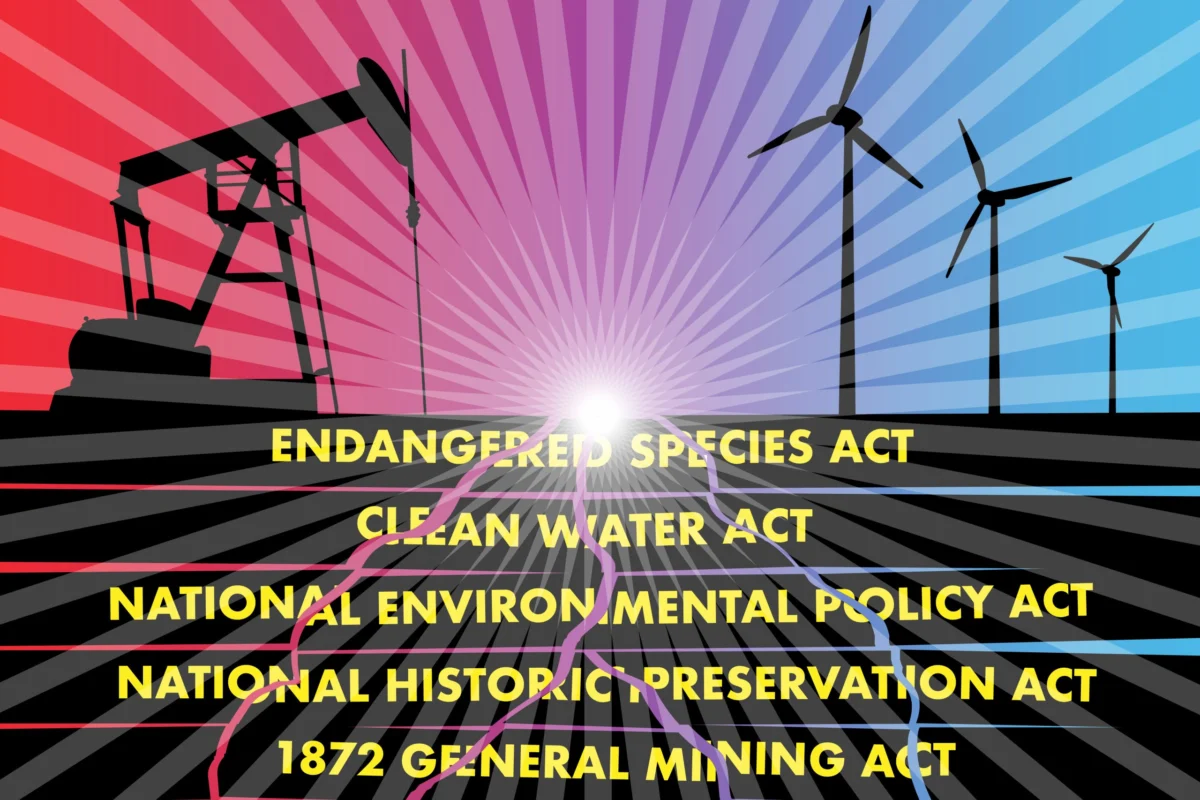
The legislation’s expansive changes extend far beyond NEPA, targeting fundamental environmental statutes such as the Endangered Species Act, the Clean Water Act, and the National Historic Preservation Act (NHPA). Proponents argue that streamlining these processes is essential to accelerate the nation’s transition to clean energy, bolster critical mineral supplies, and spur economic development. Yet, tribal leaders contend that this increased speed comes at an unacceptable cost to their inherent sovereignty and self-determination, emphasizing that they were not consulted before the bill’s introduction—a significant oversight given the bill’s direct impact on their ancestral lands and cultural resources.
Across the American West, landscapes like Mount Taylor and the greater Chaco landscape, encompassing parts of Colorado, Arizona, and Utah, stand as testament to millennia of Indigenous presence and stewardship. These areas, often situated outside reservation boundaries, rely heavily on federal laws to safeguard them from industrial development. "Many of these places are outside our reservations. Federal law is how we have a voice when a mine, a pipeline, or a transmission line is proposed that impacts our cultural resources, our sacred sites, and our communities directly," Acoma Pueblo Governor Charles Riley articulated at a national conference of tribal leaders in October, underscoring the critical role of existing legal frameworks. "This bill would take away most of that."
Under the proposed legislation, a federal agency could gain the discretionary power to forgo consultation with tribal nations regarding cultural sites threatened by projects like the Roca Honda Mine. While the Acoma Pueblo, following a settlement that led to significant project concessions, does not oppose the Roca Honda Mine, other nations such as the Navajo Nation and Isleta Pueblo staunchly resist it. The bill would also drastically shorten timelines for reviewing complex environmental documents, limiting federal agencies to considering only the impacts of mining activities on federal land, even if a project, like Roca Honda, spans both state and private lands. This fragmented approach risks overlooking cumulative impacts and further distances tribes from decision-making processes on their ancestral lands, effectively diminishing their avenues for recourse when proposed projects infringe upon their rights.

Mark Macarro (Pechanga), president of the National Congress of American Indians (NCAI), conveyed the gravity of the situation at his organization’s conference, stating, "This is one of those extreme, existential threats that’s in front of us right now." He urged senators to implement dramatic changes before the anticipated November 9 vote, warning that without such modifications, "this bill needs to be killed."
A core point of contention revolves around proposed alterations to Section 106 of the National Historic Preservation Act. This crucial provision currently mandates federal agencies to consult with tribes when a project could impact a cultural site. The bill’s proposed changes are sweeping: tribal consultation would become optional, the scope of what triggers it would narrow considerably, and cultural sites might not be considered at all if they are not formally identified before a review process commences. This shift represents a profound departure from current practice, where federal agencies bear the responsibility to identify and assess potential impacts on cultural resources.
Ira Matt (Séliš), executive director for Indigenous Diplomacy and Federal Relations for the National Association of Tribal Historic Preservation Officers (NATHPO), unequivocally labeled these proposed changes as "a direct assault on tribal sovereignty." NATHPO, alongside NCAI and other organizations, has called for the complete removal of the NHPA section from the bill. Matt elaborated that the legislation would restrict how tribes define and safeguard their cultural heritage, undermining their inherent rights to participate in decisions affecting their histories and futures. "It also places wholly unqualified federal agencies in the position of making decisions about our sacred places while threatening to assume control over tribal preservation programs developed to reflect each tribal nation’s unique knowledge and lifeways," Matt asserted. "These are not simply changes to a permitting process. They are deliberate attempts to undermine tribal self-determination."
Wesley Furlong, a senior staff attorney at the Native American Rights Fund (NARF) specializing in Section 106 reviews, described the current Section 106 process as "one of the most powerful tools" tribes possess to inform federal decision-making. Annually, state and tribal staff conduct hundreds of thousands of Section 106 reviews, many concluding without necessitating project alterations. Yet, these reviews frequently offer tribes a critical opportunity to educate federal agencies about potential damage to sacred sites and cultural landscapes, many of which remain unknown to federal authorities. Even with a review, however, protection is not guaranteed, and tribes cannot expect a specific outcome. Furlong characterized the bill’s Section 106 provisions as a "total dumpster fire and an absolute hatchet job," suggesting a clear lack of familiarity with tribal concerns or existing consultation protocols. He lamented, "Native nations are being forced to take the brunt of this ‘compromise.’ It’s permitting reform at the expense of Indian Country, tribal rights, and tribal resources."
The inherent value and occasional shortcomings of Section 106 for tribal nations were starkly illustrated during the permitting process for the 550-mile SunZia Southwest Transmission Project, designed to funnel wind energy from New Mexico to California. In 2024, tribal nations initiated legal action over insufficient tribal consultation. Courts subsequently concurred, ordering the Bureau of Land Management to redo consultations for the project, thereby enabling tribes to mitigate potential harm to cultural sites in Arizona’s San Pedro Valley, despite much of the transmission line already being constructed. This case highlights both the power of judicial review in upholding consultation requirements and the urgency of early, meaningful engagement.
Tribal advocates also express deep concern that the bill could limit federal agencies’ consideration of Indigenous knowledge by redefining the types of information agencies must consider under the Endangered Species Act. Furthermore, it shortens public comment timelines and restricts tribes’ ability to pursue NEPA violations through the courts, while lessening federal agencies’ mandate to incorporate all relevant scientific information in their decision-making. Such provisions could have tangible consequences on the ground; for instance, the Forest Service might not be required to incorporate any research published after its initial environmental impact statement for the Roca Honda Mine began.

Daniel Cordalis (Navajo Nation), a staff attorney at the Native American Rights Fund focusing on tribal water rights, explained that tribes frequently need to introduce their own data or information regarding project impacts after federal analysis has commenced. Recalling his work on the Klamath River, Cordalis noted how tribal nations had to challenge federal data governing water flow, which directly impacted salmon survival. Across the Western U.S., tribes possess unparalleled expertise in fisheries science, forestry, and hydrology, and their data often diverges from that of the federal government. "Tribes often have the best scientists doing a lot of this work," Cordalis affirmed. Yet, he criticized the bill for its lack of "recognition of the role of another sovereign government whose rights and resources may be at stake," instead of acknowledging tribes’ profound knowledge and scientific research.
These proposed changes could fundamentally marginalize tribal nations from large-scale federal projects. Moreover, a provision within the legislation dubbed "project certainty" would significantly increase the difficulty for the federal government to alter or revoke a permit once a mine, solar array, or wind project has received approval. This provision directly counters actions like the Biden administration’s 2021 halt of the Keystone XL pipeline, which had been permitted under the previous Trump administration despite fervent objections from numerous Native nations. Similarly, the Trump administration had previously sought to impede Biden-era offshore wind projects, illustrating the political volatility surrounding large-scale infrastructure and environmental permitting.
As the Senate prepared for its November 9 vote, tribal leaders, supported by a broad coalition of environmental, archaeological, and community organizations, intensified their efforts to modify the bill, urging citizens to contact their senators. In an emailed statement, a spokesperson for Senator Heinrich asserted that the senator believes the bill, as written, does not harm tribal consultation. The spokesperson contended that the bill "defends against the Trump administration’s efforts to make all Tribal consultation discretionary and eliminate consultation altogether on cultural landscapes. All of this means stronger Tribal consultation protections, lower utility bills, more good-paying jobs, and a path toward unlocking our clean energy future." This perspective highlights a fundamental ideological divide regarding the balance between expedited development and robust environmental and cultural safeguards.
However, Cordalis warned that tribal nations already operate with a limited array of legal tools to protect ancestral lands, culturally significant wildlife, and water resources, and the proposed legislation chips away at each of them. "The positive and the real good things that tribes have been able to protect over the years—probably wouldn’t be able to have been protected under this," he concluded, painting a stark picture of a future where vital Indigenous heritage and environmental safeguards could be irrevocably compromised in the pursuit of accelerated infrastructure development. The global push for critical minerals and renewable energy, while essential for addressing climate change, presents complex challenges that, without careful consideration of Indigenous rights and environmental justice, risk perpetuating historical injustices.