Joko Susilo
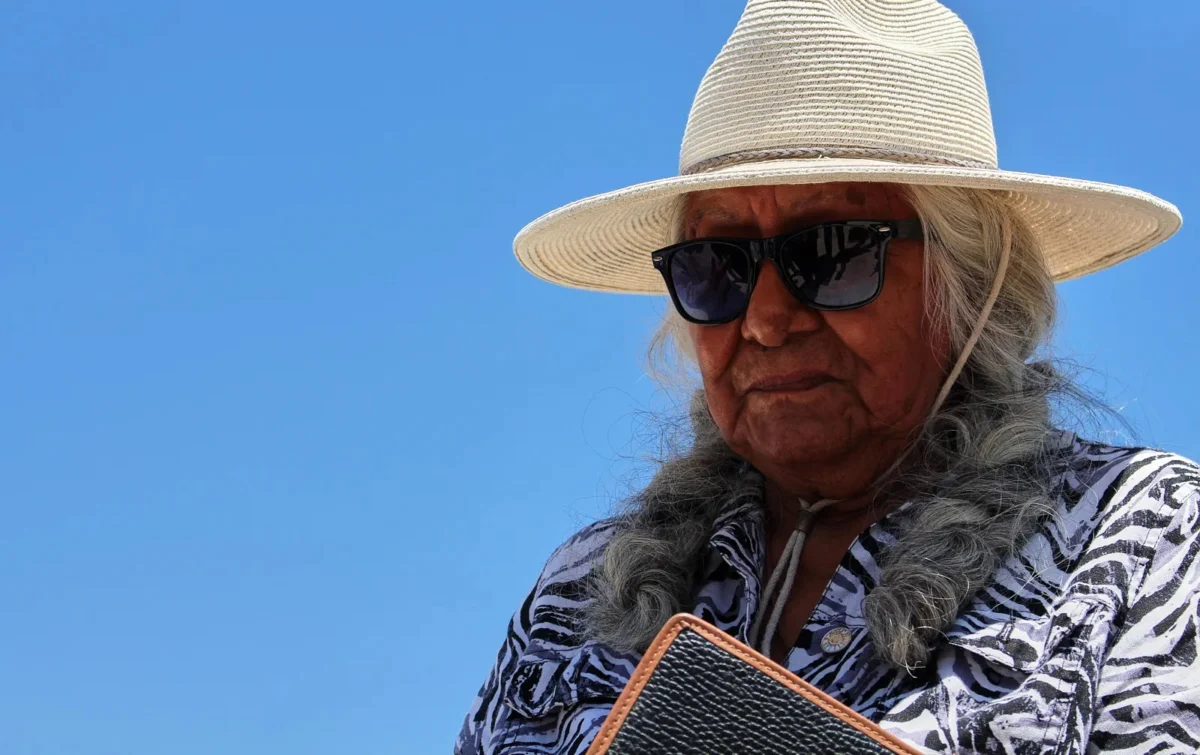
Standing near the tranquil pond at Quitobaquito Springs, Lorraine Marquez Eiler, a revered Hia-Ced O’odham elder, recounted generations of ancestral ceremonies held at this sacred site—a verdant desert oasis nestled within a national park, now slated for destruction by federal government bulldozers to make way for a new border wall. Clutching a worn photograph, Marquez Eiler shared images of her great-great grandparents and great-grandparents, who undertook arduous 50-mile treks across the unforgiving Sonoran Desert to reach these life-giving waters, known to the O’odham as A’al Vaipia. She presented this poignant testament to a gathering that included Indigenous leaders and a U.S. congressional representative on August 24, all united in condemning the relentless border wall construction. "All of my lifetime of work has been for the memories of my ancestors, of what they went through," Marquez Eiler asserted, her voice imbued with determined conviction as she spoke of her ancestral lands. "With the incoming wall, should it be disrupted? That’s just another slap in the face, as far as I’m concerned, to my ancestors. And so I ask: Why?"
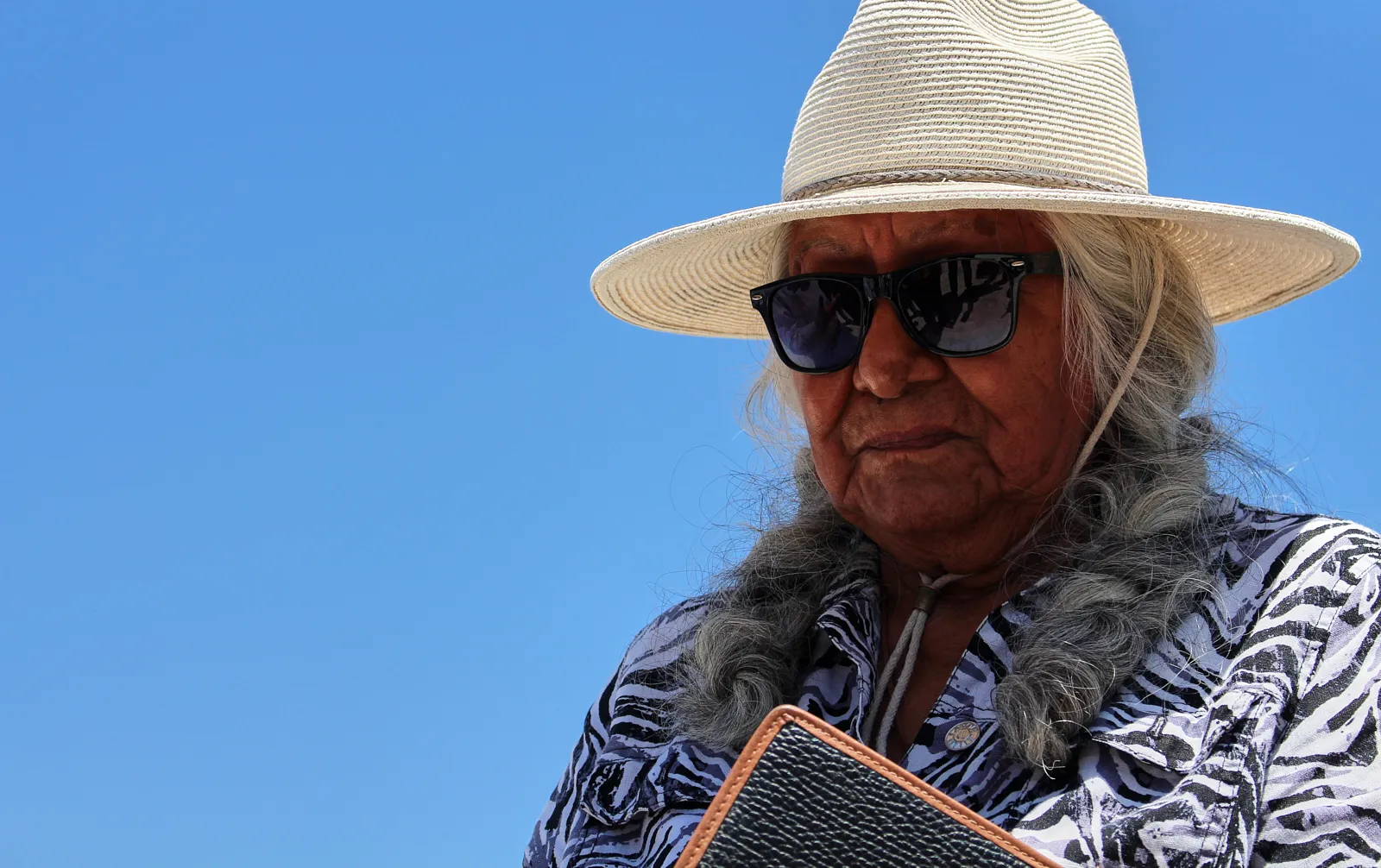
Later that day, surrounded by over 100 community members at a town hall, Marquez Eiler voiced a fervent hope that the federal government would halt the border construction, drawing parallels to a recent pause in Texas following significant public backlash. Quitobaquito Springs holds profound spiritual significance for the Hia-Ced O’odham, the Tohono O’odham, and other Indigenous peoples spanning Southern Arizona and Mexico, who have journeyed to the site for countless generations to partake in religious pilgrimages and sacred ceremonies. They now fear the spring, a vital source of life in an arid landscape, faces an existential threat of desiccation should another border wall rise on these protected lands, located approximately 30 miles west of the Tohono O’odham Nation’s main reservation.
The Tohono O’odham Nation finds itself embroiled in a two-front battle to impede border construction: one front directly on its sovereign O’odham land, where the federal government plans to erect a new 30-foot border wall, and another on adjacent federal land where a new border fence looms over Quitobaquito Springs. These ambitious projects are components of the Trump administration’s broader initiative to allocate nearly $50 billion in taxpayer funds towards an expansive border wall system. This current confrontation marks far from the first instance of tribal citizens clashing with the U.S. government over the fragmentation and desecration of their ancestral territories. Historically, the people of the Tohono O’odham Nation inhabited lands that knew no artificial boundaries, traversing freely across a vast ancestral domain.

The modern division of their nation originated with the 1854 Gadsden Purchase, an agreement between the U.S. and Mexican governments that carved out territories without any consultation or consent from the Indigenous inhabitants whose lives and lands were irrevocably split. For centuries, and continuing to this day, O’odham citizens on both sides of this imposed border have maintained their traditional right to travel across their nation, upholding familial, cultural, and spiritual ties. While they have historically collaborated with border officials on matters of crime prevention, they have consistently opposed physical barriers that sever their communities and inflict irreparable harm upon their ancestral lands. The recent escalations under the Trump administration have spurred a complex legal battle and a high-stakes standoff between federal agents and law enforcement from the Tohono O’odham Nation, underscoring a fundamental clash between tribal sovereignty and the federal government’s assertion of U.S. sovereignty.
In the Organ Pipe Cactus National Monument, home to Quitobaquito Springs and situated about 13 miles west of the Lukeville port of entry, the Trump administration has proposed a formidable 30-foot tall border fence positioned merely 150 feet from the existing barrier. Marquez Eiler’s profound concern is that this new wall will effectively cut off access to lands that have been integral to her Tribal Nation’s religious traditions for countless generations. A significant portion of the Quitobaquito lands originally belonged to a Hia-Ced O’odham family. In 1937, President Franklin Roosevelt signed a proclamation establishing the Organ Pipe Cactus National Monument, aiming to preserve a vast expanse of the Sonoran Desert. This designation was part of a broader U.S. National Park Service effort to safeguard the nation’s "ecological wonders," as stated on the agency’s website. Yet, ironically, this very protection now appears to be in direct conflict with federal border security initiatives.

Just a few miles east of the pond, the ominous presence of construction equipment belonging to federal government contractors looms, with the surrounding land already scarred by clearing operations. Cacti along the existing border bear colored strings, and a rope delineates the proposed path for the second border wall. If this line extends westward, Quitobaquito pond lies directly in its destructive trajectory. The bulldozing of cacti would not only destroy legally protected desert plants but also obliterate flora sacred to the O’odham people, who traditionally believe that plants and the earth itself embody their ancestors. The delicate ecosystem of Quitobaquito is a rare jewel in the Sonoran Desert, supporting a unique array of biodiversity, including the critically endangered Quitobaquito pupfish, the Sonoyta mud turtle, the desert caper plant, and the minuscule Quitobaquito tryonia, a springsnail found nowhere else on Earth. The construction process, particularly the extensive groundwater pumping required, poses an immediate and severe threat to the spring’s water levels, potentially driving these endemic species to extinction and devastating a crucial desert water source for all wildlife.
About 30 miles east of Quitobaquito, directly on O’odham land, the administration has also proposed replacing existing low steel fencing with a towering 30-foot barrier in three distinct areas. In June, the Tohono O’odham Nation launched a lawsuit against the Department of Homeland Security, seeking to block border wall construction on their reservation. "While the Nation values its close relationship with the Department, it has long opposed construction of a border wall on the Reservation," the lawsuit stated, emphasizing the profound devastation it would wreak. "The Nation understands that construction of the wall would entail significant devastation on the Reservation, including the destruction of mountain peaks sacred to the O’odham. It would fray the ties between O’odham communities and families on opposite sides of the border, interfere significantly with O’odham religious rituals and practices, and destroy plant and animal resources sacred to the O’odham." The tribal nation’s legal filing cited earlier instances where federal contractors, adjacent to O’odham land, had already "destroyed ancestral sites of great importance while constructing the wall." A stark example occurred in April, when a Department of Homeland Security contractor damaged the Las Playas Intaglio, a 1,000-year-old fish-shaped geoglyph in Arizona’s Cabeza Prieta National Wildlife Refuge, which traditionally pointed towards the Gulf of California. This destruction of archaeological and cultural heritage underscores the far-reaching impact of the border wall projects.

In a memorandum opposing the lawsuit, federal government attorneys contended that the Tohono O’odham Nation had failed to demonstrate that the border wall construction exceeded the federal government’s legal authority. The document underscored the U.S. government’s "preexisting right to secure the border," a claim rooted in the concept of the "Roosevelt Reservation," a 60-foot strip of federal land along the border. "While the United States has worked — and will continue to work — cooperatively with Plaintiff to promote their shared interest in border security, Plaintiff does not hold veto power over the United States’ sovereign duty to secure its borders," the memo asserted. As the courts deliberated, tribal leaders erected "No Trespassing" signs on August 7, declaring in a news release that any border wall contractors attempting to enter the Tohono O’odham Nation would be "illegally trespassing." Undeterred, in the early morning hours of August 25, contractors entered the tribal nation, escorted by approximately 20 "masked, armed" Border Patrol agents, according to a news release from the Tohono O’odham Nation, escalating tensions.
Rodney Scott, U.S. Customs and Border Protection Commissioner, later confirmed that CBP was proceeding with the federal government’s border wall construction project along the 62 miles that traverse the Tohono O’odham Nation. Scott stated that the project "will close one of the most dangerous smuggling and trafficking corridors on the Southwest border: remote desert that has facilitated decades of drug loads, migrant deaths, and cartel activity." A Department of Homeland Security spokesperson, in the same communication, clarified that "the worksites are inside the 60-foot Roosevelt Reservation," emphasizing the federal government’s perceived legal right to operate within this designated strip.

At Quitobaquito Springs, Marquez Eiler personally guided U.S. Representative Adelita Grijalva towards the pond, sharing further insights into the tribal communities’ struggle. "After standing here today, seeing this land, and directly hearing from the nation, I am more convinced than ever, this is not just a border construction project," Grijalva declared. "This is about tribal sovereignty, it’s about sacred land, it’s about history, culture and spiritual practices of the O’odham people and others." Tohono O’odham Chairman Verlon Jose and Vice Chairwoman Carla Johnson organized the visit to Quitobaquito, making a powerful stand against the Trump administration’s insistence on building a new border wall. For the Tohono O’odham and other Indigenous peoples, the land itself functions as their church, the sacred space where they conduct ceremonies and prayers, Jose explained, lamenting the federal government’s long history of desecrating O’odham sacred lands. He recalled how, when the first border fence was erected between 2019 and 2020, contractors notoriously blasted through O’odham burial sites on Monument Hill, demonstrating a profound disregard for ancestral heritage. "This is not ours to own. It is ours to protect, to protect for the people. To protect for you and I and everyone the creator has placed here on this earth," Jose articulated, encapsulating a philosophy of stewardship rather than ownership.
A few hours after their visit to Quitobaquito on August 24, the International Sonoran Desert Alliance, co-founded by Marquez Eiler, hosted a town hall in Ajo, approximately 40 miles north of the springs. There, Grijalva, Jose, and Johnson detailed their ongoing efforts to halt the construction projects, listening intently to the diverse concerns of local residents. More than 100 people packed the Ajo Plaza Rec Hall, voicing anxieties over the survival of wildlife should another construction project proceed. Beyond the Quitobaquito pupfish and Sonoyta mud turtle, the delicate balance of the desert ecosystem supports countless species that rely on uninterrupted habitats and water sources, all imperiled by fragmentation. Attendees also sharply criticized the exorbitant taxpayer cost of the border fence, exceeding $46 billion in federal funding across projects from California to Texas, arguing that such funds could be better allocated to comprehensive, humane immigration reform and local community needs. "Why do we not want a wall? Because we are not afraid of who is on the other side," stated Sara Mae Williams, Justice of the Peace in Ajo and a proud citizen of the Tohono O’odham Nation. "It’s us. It’s our people. It pains me when they try to divide us."

The following day, August 25, Rep. Grijalva, alongside other Democratic federal lawmakers representing borderlands constituencies—Reps. Veronica Escobar of Texas, and Raul Ruiz and Juan Vargas of California—sent a unified letter to the Department of Homeland Security and the Department of the Interior, explicitly opposing further wall construction. The lawmakers implored the Trump administration to cease all border wall construction "until meaningful government-to-government consultation has occurred with the Tohono O’odham Nation and Congress has received a full accounting of the project’s impacts on Tribal lands, cultural resources, and surrounding communities."
In a setback for the Tohono O’odham Nation, U.S. District Judge Richard J. Leon denied their motion for a preliminary injunction on August 14. In his written opinion, the judge stated that the Nation was "unlikely to succeed on the merits because the federal Roosevelt Reservation exists along the international border and, in any event, plaintiff has not established that construction of a border wall will indeed alter Reservation boundaries." Judge Leon acknowledged the profound significance of the international border to both the United States and the Nation. "While I have concluded that a preliminary injunction is unwarranted, I fully expect the Government in the months ahead to follow through on its guarantees of consultation and cooperation with the Nation to address the Nation’s concerns regarding border wall construction!" Despite this initial ruling, the Tohono O’odham Nation swiftly appealed Judge Leon’s decision to a higher court on August 26. The very next day, the Nation again petitioned Leon’s lower court to temporarily halt border wall construction pending the resolution of their appeal. As of September 10, Judge Leon had not responded, and the federal government affirmed its intention to vigorously contest both the injunction request and the appeal. "We will not let this destroy our sacred sites, our burial sites, our holy places, the places of our ancestors," Chairman Jose declared emphatically at the town hall, his voice resonating with an unwavering commitment. "We will not let it destroy our environment. We will not let it further divide our people. We will not let it divide our reservation." The battle for cultural preservation, environmental protection, and tribal sovereignty along the U.S.-Mexico border remains fiercely contested, with the fate of Quitobaquito Springs and the ancestral lands of the Tohono O’odham Nation hanging in the balance.