Joko Susilo
East and west of the Dalton, the landscape unfolds in a breathtaking panorama of ecological diversity, largely unbroken by human development. Here, dense black spruce forests give way to towering mountains, which in turn dissolve into the boundless, rolling expanse of Arctic tundra. This vast, intact habitat functions as a vital carbon sink, playing a crucial role in global climate regulation by sequestering immense quantities of greenhouse gases within its permafrost and vegetation. Beyond its climatic significance, this wilderness sustains an unparalleled array of wildlife, including colossal caribou herds whose migrations are among the longest on Earth, anadromous salmon species critical to marine and terrestrial ecosystems, moose, and diverse bear populations. Dozens of remote communities, home to Koyukon, Iñupiat, and Gwich’in peoples, have maintained a profound, reciprocal relationship with these animals for millennia, relying on them not merely for sustenance but as foundational elements of their cultural identity, spiritual practices, and traditional food systems.
However, a recent shift in the ownership and regulatory oversight of the highway’s corridor now threatens the delicate balance that the surrounding landscape has sustained for centuries. Decades before the Dalton Highway and the Trans-Alaska Pipeline System were constructed in the mid-1970s, the U.S. Interior Secretary, recognizing the need to protect the integrity of this critical infrastructure and the federal lands it traversed, invoked specific Public Land Orders (PLOs 5150 and 5180). These orders effectively segregated a corridor of federal land for the pipeline and road, simultaneously blocking other potentially conflicting land uses and, crucially, preventing the transfer of this land to the State of Alaska or to Alaska Native corporations. This designation ensured that the corridor remained under federal jurisdiction, subjecting any proposed developments to rigorous federal laws designed to protect historic sites, safeguard rural subsistence hunting and fishing rights, and mandate comprehensive public environmental reviews and tribal consultations—processes that often provide a crucial check on unchecked industrial expansion.
In a dramatic move in February of the previous administration, the Trump administration officially rescinded both Public Land Orders, stripping federal protection from approximately 2.1 million acres of Bureau of Land Management (BLM) property within the corridor north of the Yukon River. Seizing the opportunity, the State of Alaska, which still maintained outstanding land entitlements of approximately 5 million acres under its 1959 Statehood Act, promptly claimed two-thirds of this newly available acreage. This fundamental change in ownership paradigm has profound and immediate implications. Once land transitions from federal to state hands, the legal framework governing access, resource management, and environmental protection shifts significantly. State laws typically offer fewer layers of oversight compared to their federal counterparts, potentially streamlining industrial development at the expense of environmental safeguards. Moreover, challenging proposed projects in state court becomes a far riskier proposition for environmental groups and Indigenous communities, primarily due to the "loser pays" legal fee structure prevalent in Alaska’s state judiciary, which can impose crippling financial burdens on plaintiffs, regardless of the merit of their claims.

"This is an incredibly destabilizing moment, not just for the environment but for the communities whose lives are intricately woven into this land," warned historian Philip Wight, co-author of a recent 2024 paper analyzing development trends within the Dalton Highway corridor. A lawsuit initiated to restore the rescinded orders faced a partial dismissal, but environmental advocacy groups, undeterred, filed an appeal on August 11, vowing to continue their legal and political struggle regardless of the immediate judicial outcome. April Monroe, Native lands manager for the Tanana Chiefs Conference, a powerful consortium representing 42 tribal nations and villages that vehemently opposed the rescission of the orders, articulated the profound stakes: "The first, last, and only defense against climate crisis is intact ecosystems. The fate of the world rests on whether they can be protected." This sentiment underscores a growing global understanding that the preservation of large, undisturbed natural areas, particularly in sensitive regions like the Arctic, is paramount for biodiversity, climate stability, and human well-being.
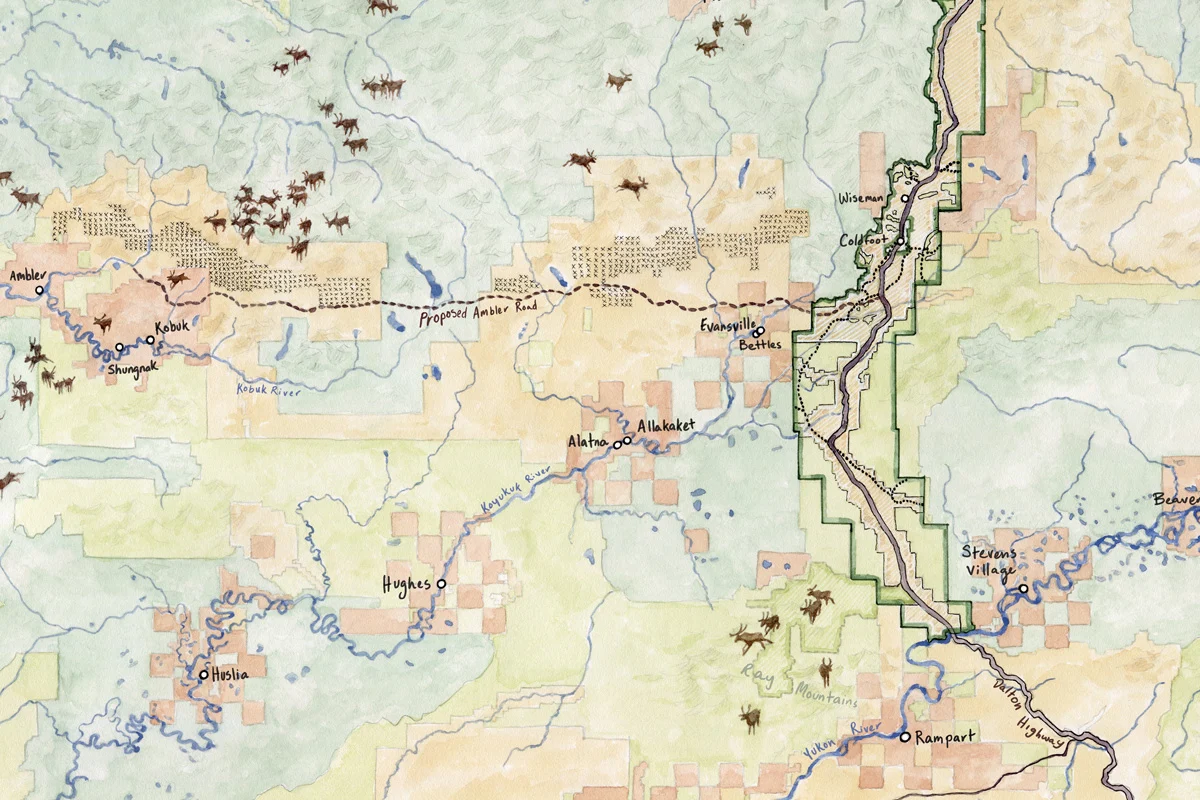
The state’s acquisition of these lands opens the door to a cascade of potential industrial developments, each carrying significant ecological and cultural risks. Alaska has long articulated ambitions to expand access north, east, and west from the Dalton Highway, aiming to unlock vast state lands and their underlying mineral resources. Crucially, the land transfer includes acreage directly in the path of the controversial Ambler Road, a proposed private industrial highway envisioned to facilitate large-scale mining operations across the southern Brooks Range. This project, if realized, would not only fragment pristine wilderness but also usher in an era of intensive resource extraction in a region currently devoid of significant industrial footprint.
The ecological consequences of such development are particularly dire for the region’s iconic wildlife. Caribou, for instance, are exquisitely sensitive to habitat fragmentation, and the Western Arctic caribou herd, a foundational species for many Indigenous communities, has already experienced a staggering 75% decline since 2003. Scientific studies suggest that the Ambler Road could critically deflect or delay the herd’s annual fall migration, a phenomenon already creeping later in the season due to accelerating climate change impacts on Arctic landscapes. Furthermore, the proposed road would traverse thousands of vital waterways, and the associated mining activities pose a direct threat to already struggling salmon runs, sheefish, and whitefish populations, which are cornerstones of both the ecosystem and the subsistence economy.
Beyond habitat disruption, the construction of the Ambler Road and other associated developments would inevitably cross vast areas of permafrost, the perpetually frozen ground that underlies much of the Arctic. Disturbing permafrost, especially through construction and altered hydrology, accelerates its thaw, a process with far-reaching implications. Thawing permafrost releases sediment and heavy metals into waterways, further contaminating critical fish habitats. It also triggers widespread land subsidence, creating unstable ground that can damage infrastructure and alter hydrological patterns. Most alarmingly, permafrost thaw releases immense stores of ancient carbon, previously locked away for millennia, into the atmosphere as potent greenhouse gases like methane and carbon dioxide, creating a dangerous positive feedback loop that intensifies global climate change.

The consolidation of the corridor’s ownership in state hands may also simplify the logistical hurdles for another colossal project: a proposed 800-mile natural gas pipeline. This ambitious pipeline would parallel the Dalton Highway, connecting the rich natural gas deposits of the North Slope to a potential export terminal on the Kenai Peninsula. While its estimated price tag, upwards of $70 billion, remains a significant financial obstacle, even incremental policy victories and jurisdictional simplifications over decades can dramatically improve the prospects of such megaprojects. If constructed, this pipeline would inevitably spur increased Arctic drilling and associated industrial development, potentially encroaching upon the embattled calving grounds of the Porcupine caribou herd, an internationally recognized transboundary herd vital to Gwich’in communities in both Alaska and Canada.
The ripple effects of these ownership changes extend directly to the food security and cultural integrity of rural residents. Habitat fragmentation, coupled with altered access rules, directly hinders the ability of both Alaska Native and non-Native rural residents to access traditional hunting and fishing grounds, thereby compromising their ability to derive protein directly from the landscape. Critically, when land is transferred out of federal jurisdiction, rural residents often lose their priority hunting and fishing rights, which are enshrined in federal law to protect subsistence practices. For example, in communities like Wiseman, local hunters previously allowed to harvest one moose each winter on nearby federal lands must now either undertake arduous journeys to remaining federal parcels or compete for limited tags in a statewide lottery, which is open to all Alaskans and, significantly, to commercial guides catering to out-of-state clients. This shift directly undermines a way of life that has sustained communities for generations.
Furthermore, the change in ownership expands the scope of human disturbance in previously protected areas. Historically, only locals engaged in subsistence activities like hunting or firewood collection were permitted to use snowmobiles within five miles of the Dalton Highway, provided they were on federal land. With the shift to state ownership, this crucial exception is lost. While Alaska has announced it will permit snowmobile travel on 10 historic routes for residents to access adjacent federal lands and is actively working on additional motorized easements, these routes and easements will now be open to all Alaskans. This broad expansion of motorized access inevitably increases pressure on the land and its wildlife, further eroding the quiet solitude and ecological integrity that define this irreplaceable Arctic ecosystem. The struggle over the Dalton Highway corridor is thus a microcosm of the global challenges facing conservation, Indigenous rights, and sustainable development in the face of escalating climate change and resource demands.