Johny Prima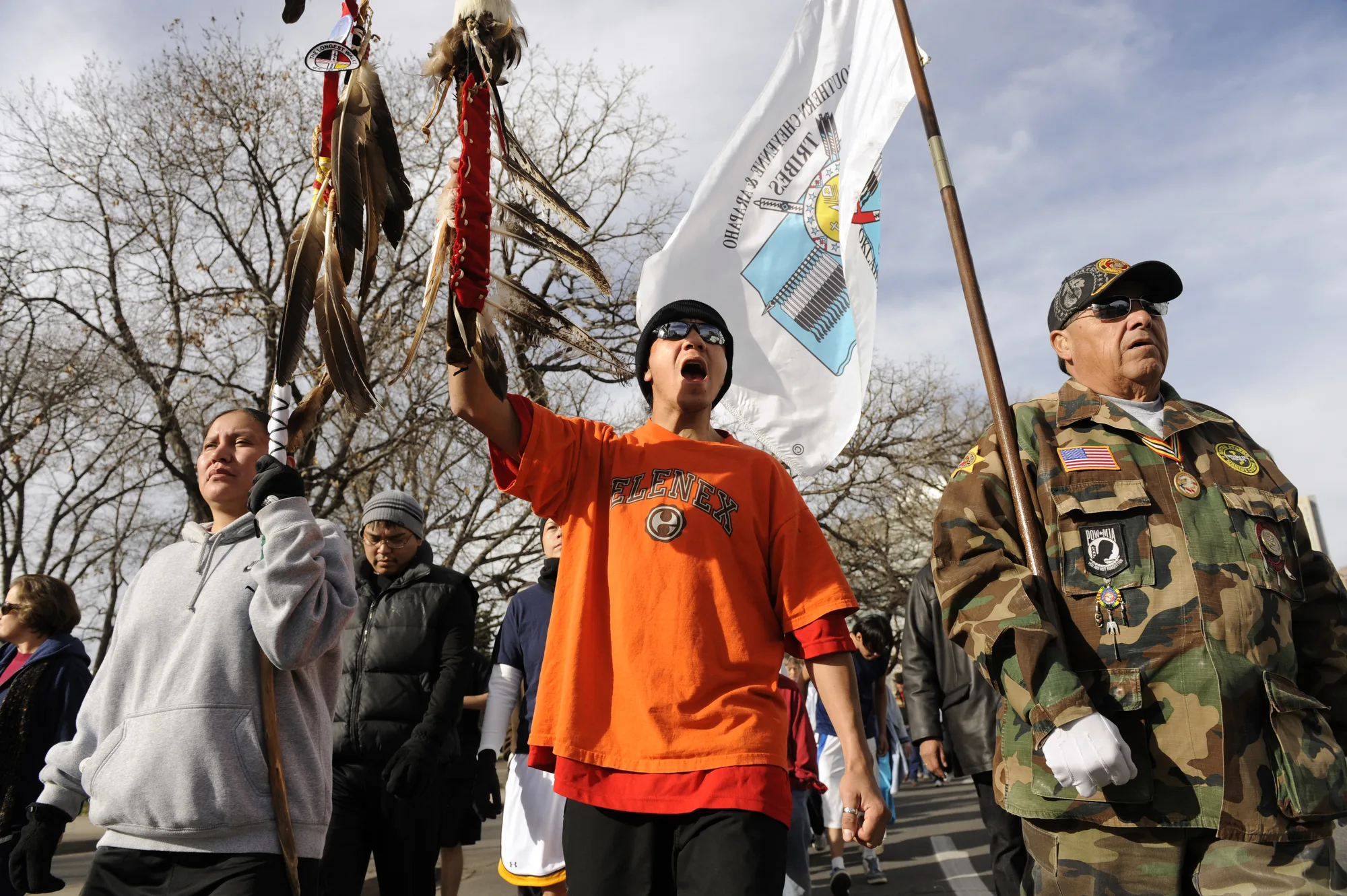
The deep, generational wounds inflicted by historical injustices demand persistent attention and care, a truth vividly illustrated each year as descendants of the Sand Creek Massacre conclude their annual Spiritual Healing Run at the imposing steps of the Colorado State Capitol. This pilgrimage to the very heart of the state’s government underscores an ongoing journey toward accountability and healing, yet for many, including this descendant, the empty pedestal on the Capitol’s west plaza symbolizes that Colorado’s most crucial step towards true reconciliation still lies ahead.
On November 29, 1864, a catastrophic act of betrayal unfolded on the banks of Sand Creek in southeastern Colorado. A peaceful encampment of Cheyenne and Arapaho people, having been assured U.S. military protection and flying both American and white flags as signs of peace, suffered a brutal, unprovoked assault by Colonel John Chivington’s Third Colorado Cavalry. In the horrific hours that followed, more than 200 lives — predominantly women, children, and elders — were mercilessly slaughtered, their bodies mutilated in a display of barbarism that shocked even contemporary observers. This atrocity, swiftly condemned as a massacre by multiple military and congressional investigations, including a damning report by the Congressional Joint Committee on the Conduct of the War, was paradoxically celebrated as a heroic victory within Colorado for decades, perpetuating a corrosive lie that seeped into the state’s foundational narrative.
For generations, this egregious distortion was concretized by a plaque on a Civil War monument standing on the Capitol grounds, which falsely listed Sand Creek as a legitimate battle. This monument, and the revisionist history it represented, stood as a stark symbol of official denial and institutionalized trauma. Now, that space awaits a profoundly necessary replacement: the "Peace Keepers" memorial. This bronze sculpture will serve as a permanent tribute to the courageous, peaceful Cheyenne and Arapaho leaders, such as Chief Black Kettle and Chief Left Hand, who steadfastly upheld the promise of peace until their final breaths. It will also honor figures of extraordinary resilience, like Medicine Woman, who miraculously survived the massacre despite sustaining eight bullet wounds, embodying the enduring spirit of her people.

In a pivotal moment of historical rectification, the Colorado Legislature and Governor Jared Polis took a critical step in 2025 by unanimously endorsing the creation of this monument. This landmark legislative action represents more than just the approval of a statue; it is a profound governmental affirmation that the unvarnished truth about Sand Creek must no longer be suppressed or sugarcoated. It marks a historic act of remembrance, a public acknowledgment of institutional betrayal, and a solemn commitment to honoring the innocent lives so cruelly extinguished. This endorsement places Colorado squarely within a global movement toward Indigenous reconciliation, recognizing that true national progress hinges on confronting and atoning for past injustices, much like efforts seen in Canada with its Truth and Reconciliation Commission or Australia’s apologies to the Stolen Generations.
Yet, as descendants and advocates know intimately, the hardest work of healing remains. Healing is not a passive process of forgetting, nor does it culminate in comfortable closure. It demands a rigorous recognition that historical trauma is not confined to the past; it echoes through generations, profoundly shaping the present. The deep soul wound of the Sand Creek Massacre continues to impact the Cheyenne and Arapaho people today, manifesting in intergenerational trauma that contributes to disparities in health, education, economic opportunity, and cultural continuity. The "Peace Keepers" memorial is therefore not merely a statue for Indigenous communities; it is an essential public space for all Coloradans to collectively confront this enduring trauma, to understand its pervasive legacy, and to actively participate in repairing the foundational trust of this state. It offers a tangible focal point for education, reflection, and the ongoing work of mending a fractured past.
The history of Sand Creek offers a powerful, immediate cautionary tale for our current global moment. The massacre itself was not an isolated incident but the culmination of a toxic mixture: rampant fear, manufactured hysteria, and the willful rejection of conscience. Chivington’s brutal attack was explicitly fueled by politicians and a sensationalist press that systematically dehumanized the tribes, replacing diplomatic engagement and treaty obligations with brute force and treachery. Governor John Evans, for example, issued proclamations that encouraged citizens to "kill and destroy" Native Americans, effectively creating a climate where such atrocities could occur.
Today, across many nations, we observe disturbingly similar dangerous conditions: escalating political division, the strategic dissemination of fear and disinformation through digital channels, and the increasing temptation to view political opponents as existential enemies to be vanquished rather than fellow citizens with whom to negotiate. When societies replace thoughtful dialogue with inflammatory demagoguery, and diplomacy with dismissal, they inadvertently lay the same perilous groundwork that allowed the Sand Creek Massacre to happen. The lessons of Sand Creek are a stark reminder of how easily a collective moral compass can be distorted under pressure, and how vital it is to safeguard democratic principles and human dignity.

The enduring narrative of the "Peace Keepers" chiefs reminds humanity that even in the face of violent dehumanization, betrayal, and imminent destruction, they consciously chose peace. Their profound sacrifice, their unwavering commitment to dialogue and coexistence, calls on all of us to champion humanity, truth, and open discourse, especially when the national and international atmosphere tempts us toward anger, polarization, and division. Their example stands as a beacon of moral courage, urging contemporary leaders and citizens alike to resist the siren call of extremism and to actively cultivate understanding.
Colorado faces a critical deadline for this profound commitment. The "Peace Keepers" memorial is slated for dedication on November 29, 2026, a date that will powerfully coincide with Colorado’s 150th anniversary of statehood. This confluence presents an unparalleled opportunity for Colorado to declare, at the highest echelons of government and civic life, precisely what kind of history it chooses to commemorate and what kind of future its citizens commit to building. It is a chance to redefine its identity, moving from a narrative of conquest to one of reconciliation and shared humanity.
The Sand Creek Massacre Memorial Committee works diligently to raise the final funds necessary for the bronze casting and installation of this vital monument. The recent securing of a generous matching gift signals a growing readiness within the broader community to stand in solidarity with this crucial endeavor. Should the state allow this pedestal to remain empty for another year, it would implicitly signal that its commitment to truth and healing remains merely theoretical, an aspiration rather than a lived reality. By actively supporting the immediate completion of the "Peace Keepers" memorial, Coloradans declare unequivocally that healing is not just a concept, but a tangible, urgent priority. This collective act will choose to fill the void of a false, violent past with a permanent, visible testament to the courage, the enduring pursuit of peace, and the resilient human spirit of the Cheyenne and Arapaho people. It is a decision that not only honors a tragic past but is absolutely essential for the future health, integrity, and profound healing of the state of Colorado.