

 Joko Susilo
As searing heatwaves and devastating wildfires ravaged the parched landscapes of the Western United States in early June, a seemingly straightforward legislative effort to bolster wildfire prevention measures found itself ensnared in a bitter partisan dispute. Wyoming Republican Senator John Barrasso’s Wildfire Prevention Act, initially garnering broad bipartisan support, aimed to empower federal land agencies to escalate forest thinning and prescribed burning operations on public lands. The bill also sought to streamline vegetation management for utility companies around critical power infrastructure, critical steps in a region increasingly vulnerable to catastrophic blazes. However, the legislation also contained provisions that had raised eyebrows among some conservationists, particularly its directive for agencies to ramp up public-land grazing as a wildfire mitigation strategy, a tactic whose effectiveness and ecological impact remain contentious. Despite these underlying questions about the optimal approach to forest management – whether intervention is always necessary, the true impact of high-intensity fires, or if "thinning" merely serves as a pretext for increased logging – the bill appeared poised for smooth passage, backed by influential Western Democrats and facing minimal resistance from mainstream environmental organizations.
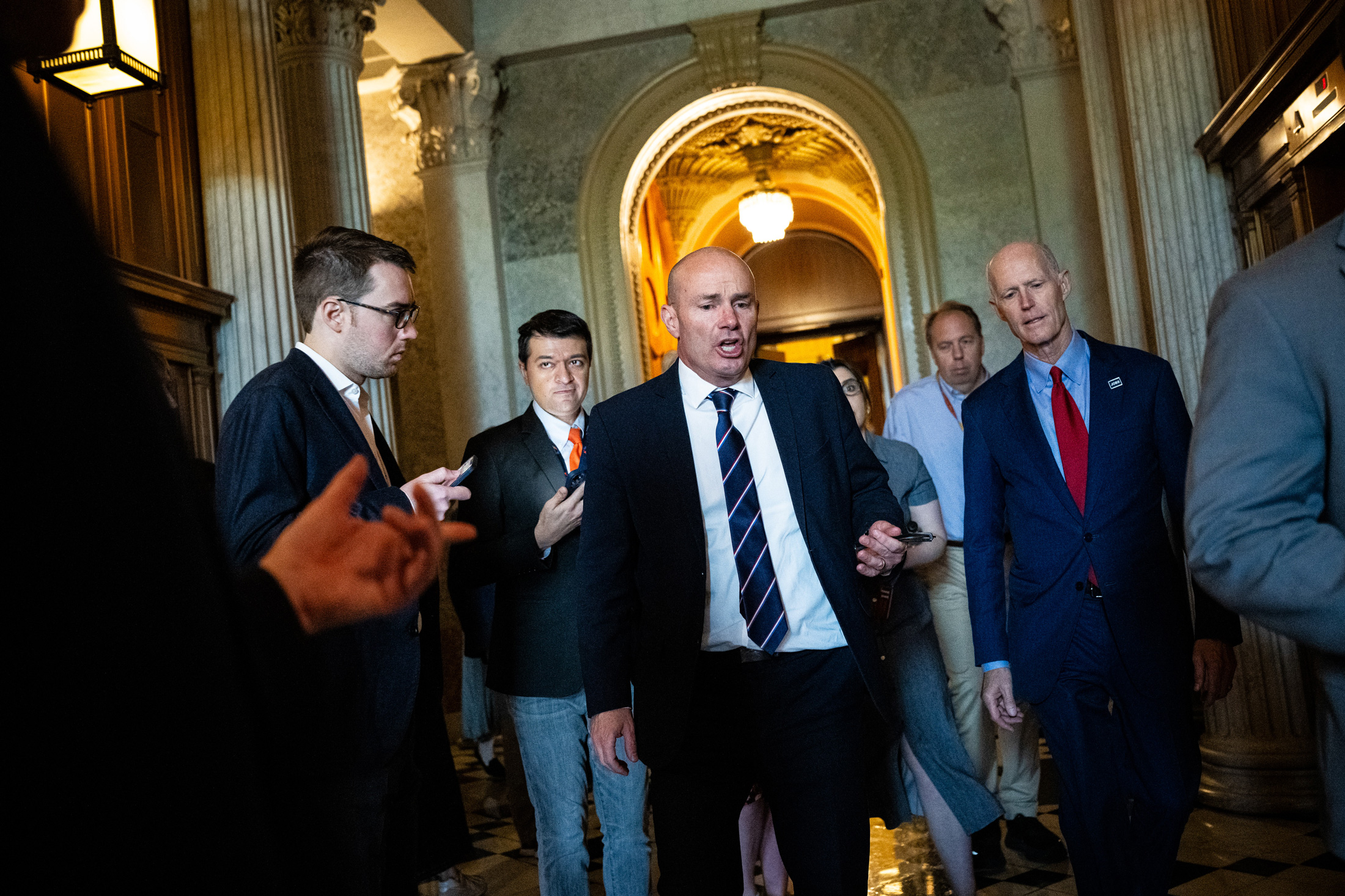
The collaborative spirit, however, dramatically fractured when Senator Mike Lee, a Republican from Utah, introduced a last-minute amendment. This eleventh-hour addition proposed the outright elimination of the 2001 Roadless Area Conservation Rule, a foundational environmental regulation protecting approximately 45 million acres of U.S. Forest Service land from new road construction and commercial logging. Furthermore, Lee’s amendment sought to prevent any similar protective measures from being implemented in the future, effectively seeking a permanent dismantling of a cornerstone of public land conservation. The unexpected move instantly shattered the fragile coalition that had supported the wildfire bill, igniting fierce opposition to both the amendment and, by extension, the entire legislative package. Senator Martin Heinrich, a New Mexico Democrat, expressed his profound disappointment during a Senate committee hearing, lamenting the transformation of a "very bipartisan-focused wildfire bill" into a "very partisan bill," accusing the legislation of becoming a "Trojan Horse for repealing the Roadless Rule."
The Roadless Area Conservation Rule, implemented in the final days of the Bill Clinton administration in 2001, represented the culmination of decades of concerted efforts to identify and safeguard forest lands largely untouched by human development. Before its enactment, the management of these vital roadless areas was often fragmented, falling under the purview of individual Forest Service offices with varying standards. The 2001 rule established a uniform, nationwide prohibition on timber harvesting, road construction, and road reconstruction within designated roadless areas, albeit with specific exceptions carved out for emergencies or critical public safety needs. Beyond its profound ecological benefits, preserving vast tracts of relatively undisturbed ecosystems, the rule also offered significant financial advantages. By 2001, the existing Forest Service road network stretched over an astonishing 386,000 miles, burdened by an estimated $8.4 billion in deferred maintenance and reconstruction costs. Expanding this network further would only exacerbate an already unsustainable fiscal deficit, making the rule a prudent measure from both environmental and economic perspectives.

Yet, the Roadless Rule’s journey has been anything but stable. In the years following its implementation, it became a political football, tossed back and forth between successive presidential administrations and subjected to numerous legal challenges in the courts. In 2005, the George W. Bush administration attempted to revoke the rule, replacing it with an "alternate roadless rule" that permitted individual states to petition the Forest Service to develop their own, often less stringent, protection standards. Colorado and Idaho notably opted to create their state-specific rules under this framework. However, the 10th Circuit Court of Appeals later reinstated the original 2001 rule, effectively nullifying the Bush-era replacement, though the state-specific rules adopted by Idaho and Colorado were allowed to remain in effect. Consequently, Senator Lee’s recent amendment, or any future administrative attempt to rescind the rule, would not directly impact the management plans governing roadless areas in Colorado and Idaho, highlighting the complex, patchwork nature of public land protections.
Despite the intensity of the debate, it is crucial to understand that inventoried roadless areas, while sharing many characteristics with designated wilderness areas, do not carry the same level of stringent protection. The Roadless Rule, in its current form, explicitly permits certain activities that would be forbidden in true wilderness. These include motorized uses of existing roads, off-highway motorized vehicle use in specifically designated zones, livestock grazing, and certain forms of energy and mineral development. This nuanced reality makes Senator Lee’s central argument — that the Roadless Rule significantly impedes effective firefighting and wildfire prevention efforts — particularly difficult to substantiate. In fact, the rule clearly contains provisions that allow for temporary road construction or reconstruction specifically for the purpose of combating active wildfires. Furthermore, it permits the cutting, removal, and sale of "generally small diameter timber" for various reasons, including the explicit objective of "reducing the likelihood of uncharacteristic wildfire," directly contradicting the claim that it prevents necessary fuel reduction.

During a recent hearing, Senator Alex Padilla, a Democrat from California, effectively countered Lee’s assertions by pointing out that a substantial 240,000 acres of inventoried roadless areas within his state alone had already undergone treatment for wildfire hazard mitigation, demonstrating that the rule does not inherently block such crucial work. Moreover, a broader analysis of federal land management priorities reveals that the capacity for vegetation management often suffers more from a lack of resources than from regulatory constraints. A study by the Center for Western Priorities found that the U.S. Forest Service treated 35% fewer acres for wildfire risk in 2025 under the Trump administration compared to 2024 under the Biden administration. This suggests that the primary impediment to aggressive thinning and fuel reduction efforts lies not in the Roadless Rule, but rather in fluctuations in Forest Service staffing and budget allocations, which saw considerable reductions during the previous administration.
Indeed, compelling evidence suggests that the Roadless Rule may actually serve as a deterrent to wildfires rather than an impediment. A seminal 2007 study by the Pacific Biodiversity Institute revealed that an overwhelming 88% of the nation’s wildfires originate from human activity, and a staggering 95% of these human-caused blazes ignite within a half-mile of a road. Roads, in essence, act as conduits, facilitating human access into remote backcountry areas and inadvertently introducing sources of ignition – from carelessly discarded cigarette butts and untended campfires to sparks from machinery and hot catalytic converters. If the objective is truly to minimize future conflagrations, then codifying and strengthening the Roadless Rule’s protections into law would logically be a more effective strategy than dismantling them, as it reduces the very vectors that introduce human-caused fires into vulnerable ecosystems.

Senator Lee’s repeated attempts to undermine the Roadless Rule appear to be part of a larger, ideologically driven campaign against public land protections, frequently aligning with the more extreme elements of conservative policy. Similar efforts to administratively repeal the Roadless Rule by the Trump administration, such as Agriculture Secretary Brooke Rollins’ move in June of the previous year, consistently met with intense public backlash. This opposition wasn’t limited to traditional environmental advocacy groups; it also drew strong condemnation from the more conservative-leaning "hook-and-bullet" community – hunters, anglers, and outdoor enthusiasts – as well as the general public, who inundated government agencies with comments overwhelmingly supporting the rule. It is noteworthy that even Project 2025, the ultra-right-wing blueprint for a potential future Trump administration, only called for repealing the portion of the Roadless Rule pertaining to Alaska’s Tongass National Forest, suggesting that Senator Lee’s broader push to eliminate the rule entirely goes even further than some conservative policy proposals.
Lee’s apparent political invulnerability in Utah, where his hardline conservative stance shields him from significant primary challenges and where a Democrat faces an uphill battle to win statewide office, may embolden him to champion such unpopular schemes. However, not all of his colleagues may enjoy the same political insulation. Representative Harriet Hageman, a Wyoming Republican who has introduced a House bill to nullify the Roadless Rule, is currently vying to replace the retiring Senator Cynthia Lummis. One of Hageman’s notable opponents in this race is Sam Mead, a fifth-generation Wyoming rancher and nephew of former Governor Matt Mead. Mead, while possessing strong conservative credentials on issues like gun rights, energy development, and fiscal responsibility, has consciously differentiated himself from his GOP rivals by actively advocating for the protection of public lands and keeping them in public hands. At a recent campaign stop, Mead articulated a "sense of helplessness" over Hageman’s past support for Mike Lee’s unsuccessful bid to sell public lands for housing, underscoring a potential vulnerability in her platform.

Whether Sam Mead can ultimately prevail in the primary election remains to be seen, but his prominent presence in the race starkly illuminates a long-standing observation about Senator Lee: for all his rhetoric about "antifa super soldiers" and "globalist democrats," Lee often positions himself as an outlier, even among rural Western conservatives. Many of these individuals, deeply connected to the land, frequently prioritize the preservation of America’s public lands over rigid partisan ideology, suggesting that Lee’s extreme views on these issues may be profoundly out of touch with the very electorate he purports to represent. The fate of the Wildfire Prevention Act, now entangled with the contentious Roadless Rule, serves as a powerful microcosm of the ongoing national struggle over land use, conservation, and the fundamental identity of the American West.







