Joko Susilo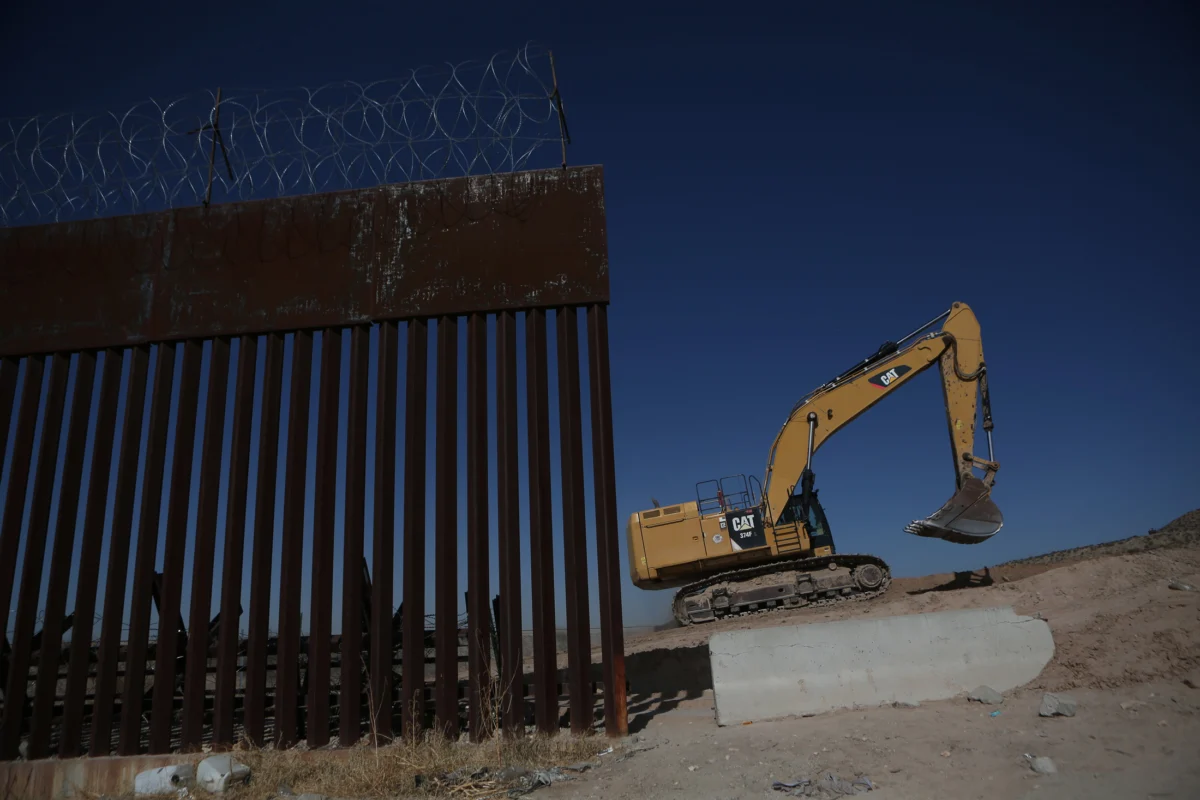
The former President, having made the completion of the border wall a central tenet of his 2024 campaign and subsequent return to office, spearheaded an aggressive push for its construction. Early in his previous term, the "One Big Beautiful Bill Act" initially earmarked a staggering $46.5 billion for the expansive project. To accelerate progress, the administration controversially waived dozens of federal contracting laws, a move that critics argued circumvented crucial environmental and ethical safeguards. This expedited process led to over $28 billion in contracts being awarded to a select group of companies, as confirmed by Customs and Border Protection (CBP).
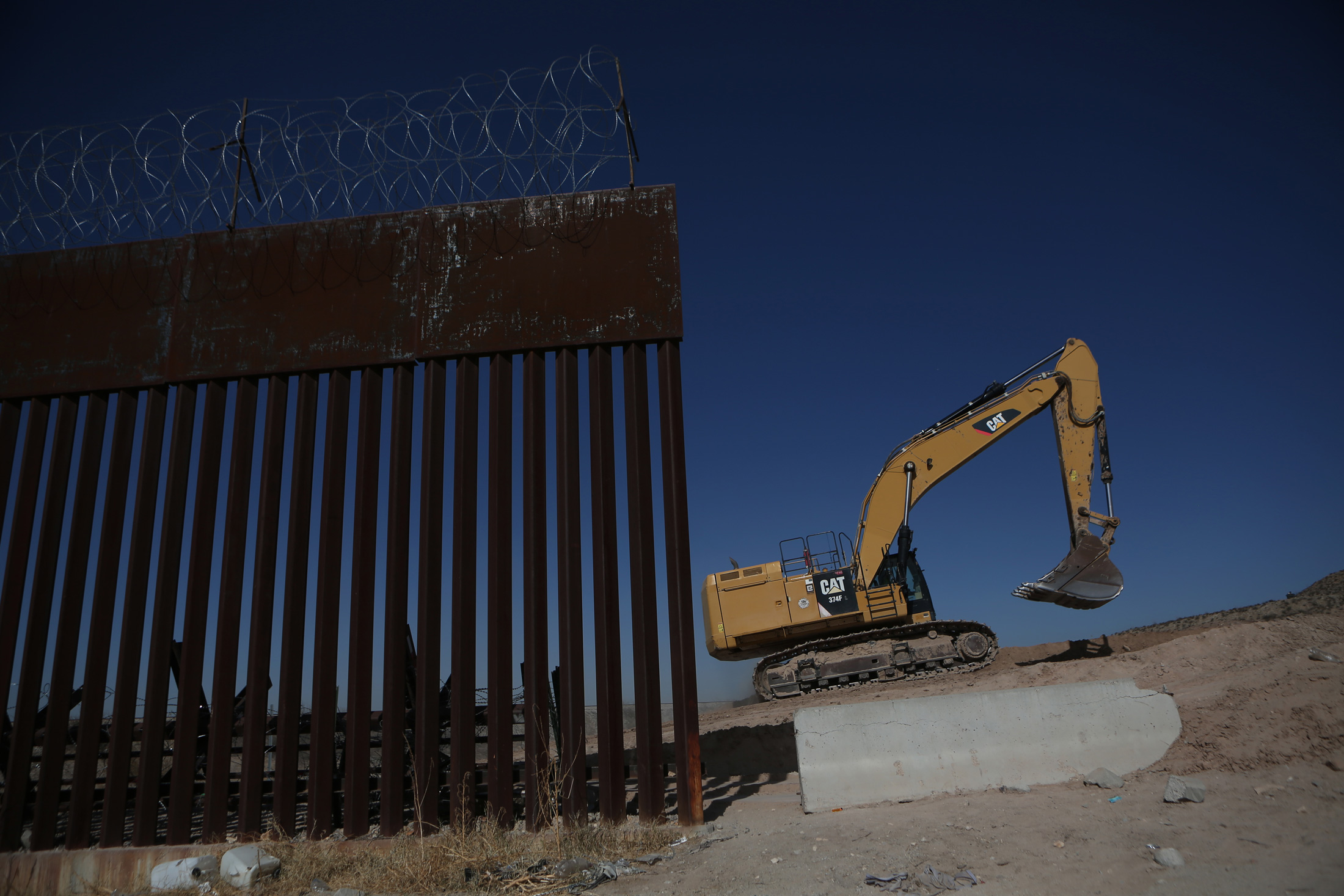
An exhaustive analysis of publicly available federal spending data reveals Barnard Construction Company and its affiliates emerged as one of the primary beneficiaries of this unprecedented infrastructure drive. The firm has secured more than $5.6 billion in federal border construction contracts since the return of the Trump administration, pushing its total border wall earnings, including previous awards, beyond the $7 billion mark. This makes Barnard a cornerstone contractor in one of the nation’s most politically charged and costly public works projects.
Adding another layer of scrutiny to these massive contracts are the significant political contributions made by the company’s leadership. Federal Election Commission records meticulously detail that company chairman Tim Barnard and his wife have channeled millions of dollars over the years into Republican candidates and causes. Notably, their contributions include more than $1 million directly supporting Trump’s presidential campaigns, raising questions about the intersection of substantial political donations and lucrative federal contracts.
These financial and contractual arrangements have triggered alarm bells among experts and competitors alike, who point to potential red flags regarding fairness and transparency in federal procurement. In May, Posillico Civil, Inc., a New York-based contractor, initiated legal action against the federal government. The lawsuit alleged that CBP disproportionately promised approximately 73% of the value of new Texas and New Mexico wall construction contracts to just two of eleven pre-approved contractors: Barnard and North Dakota-based Fisher Sand & Gravel. Fisher, a firm already mired in controversy for its private border wall work and its financial connections to "We Build the Wall," a nonprofit whose board once included former Trump strategist Steve Bannon, has itself received nearly $15 billion in border construction contracts over the years, with over $13 billion under the current administration.
Barnard Construction’s financial influence extends deeply into its home state. While its headquarters occupies a distinctive building on Bozeman’s northern periphery, the chairman’s name prominently adorns academic institutions like a science building at Montana State University, a nearby domestic violence shelter, and a southern aquatics center. The Barnards have also been significant donors to Montana conservative groups and political campaigns, contributing hundreds of thousands of dollars, cementing their status as influential figures within the state.
The company’s robust financial health is evident in its recent performance, with revenue surpassing $1 billion in 2024, positioning it among the top 150 engineering firms nationwide, according to industry publication Engineering News-Record. While Barnard has historically undertaken projects for various federal agencies, including the National Park Service, the Forest Service, and the Bureau of Reclamation, a staggering 80% of the value of its federal awards now originates from border wall contracts. This significant shift in focus underscores the company’s deep immersion in this specialized, politically driven sector. FEC records also show the Barnards’ history of donations extends to several figures who served in Trump’s cabinet, including J.D. Vance, Marco Rubio, and Ryan Zinke, further illustrating their extensive political network.
Past contracts have not been without controversy. Reporting by ProPublica previously highlighted a specific award where a $142 million contract granted to Barnard’s subsidiary, BFBC, in 2019, quietly ballooned to over $1 billion through repeated modifications. This expansion led to the firm being promised $33 million per mile for a particular section of wall construction, a figure approximately $13 million higher than the government’s standard price. This prompted Rhode Island Senator Jack Reed to demand an investigation, labeling it a "no-bid contract to an apparently politically-connected, private contractor." A subsequent Government Accountability Office (GAO) report advised the Army Corps of Engineers to re-evaluate its procurement strategy, signaling serious concerns about the contract’s integrity.
Despite these past criticisms and calls for reform, the company and the administration appear undeterred. In 2024, FEC records confirm the Barnards donated $1 million to a fundraising committee supporting Trump’s presidential campaign, alongside an additional $3,300 to a Trump political action committee. Following these contributions, federal spending records show Barnard has since secured an additional $4.54 billion in awards from CBP. Its subsidiary, BFBC, received over $260 million in Department of Defense (DoD) wall contracts, while Barnard Spencer Joint Venture, a collaboration with Arizona-based Spencer Construction, saw its contracts swell by over $75 million since their initial award in September, now totaling more than $853 million.
Charles Tiefer, an emeritus law professor at the University of Baltimore and former U.S. commissioner on wartime contracting, characterized these awards as "an enormous transfer" of public funds to a private entity, noting that "even the biggest detention facilities don’t rank with four and a half billion." Tiefer further articulated that the sheer magnitude of the Barnards’ political contributions casts serious doubt on the fairness and impartiality of the competitive bidding process. He likened it to disproportionate tipping, suggesting that "if you tip a waiter fifteen bucks, that doesn’t raise any red flags… But if you tip them 150 bucks or 300 bucks, then somebody watching may wonder what you’re getting special that you’re not supposed to be." Barnard representatives have not responded to multiple requests for comment on these allegations.

Posillico Civil, Inc.’s lawsuit reinforces these concerns, arguing that the contracting process lacked "genuine competitive opportunities." The New York-based firm specifically alleged that CBP failed to maintain a comprehensive price-comparison analysis or adequate documentation detailing its methodology for awarding such significant contracts. CBP, in response, affirmed that it does maintain documentation for its decisions but declined to disclose it, citing pending litigation. The agency maintained that "Border Wall contracts awarded are based on the contractor’s qualifications to perform the work in a timely manner and at prices deemed fair and reasonable."
While the practice of pre-approving a list of contractors is not unusual for large federal projects, it is typically not intended to eliminate competition among those pre-qualified firms. However, at least one of Barnard’s most substantial new CBP contracts—a $1.6 billion award for 112.5 miles of "secondary wall" in eastern New Mexico—was granted without competitive bidding. A CBP spokesperson justified this by citing "various factors particular to that project," while federal spending databases explicitly listed "urgency" as the reason for the lack of competition. Scott Amey, a lawyer who investigates federal contracts for the Project On Government Oversight, questioned this justification, asking, "What was so urgent that they couldn’t bid it to other contractors that are already on the pre-approved list?"
The new construction contracts awarded to Barnard and its affiliates span all four U.S. border states, encompassing projects that involve building "secondary" walls, installing advanced lighting and technology, or replacing existing barrier segments. Among the most contentious of these projects are Barnard’s two contracts in West Texas, totaling nearly $2 billion, which aim to construct just over a hundred miles of new, 30-foot steel bollard wall through the remote and ecologically sensitive Big Bend region. This area, despite being the largest Border Patrol sector along the Mexican border, consistently records some of the lowest rates of unauthorized crossings, accounting for only 1.6% of all "apprehensions" on the southern border in the current fiscal year. The Big Bend is also celebrated for its pristine public lands, including the iconic Big Bend National Park, and its border counties heavily rely on river tourism, making the proposed construction particularly disruptive.
The Department of Homeland Security’s decision to waive dozens of critical environmental and cultural regulations, including key provisions of the National Environmental Policy Act and the Endangered Species Act, has allowed for the rapid acceleration of construction through the Big Bend. This approach bypasses essential assessments of the wall’s long-term impacts on delicate ecosystems, wildlife corridors, and cultural heritage sites. Furthermore, hundreds of private landowners in the region face the prospect of having their property seized through eminent domain, uprooting generations and disrupting local economies. The plans to build the wall have met with near-universal bipartisan opposition from local communities, including law enforcement officials. In March, five county sheriffs from the region issued a joint statement urging the federal government to reconsider the construction, warning that "Major permanent infrastructure, accompanied by lighting systems, access roads, and maintenance corridors would permanently alter one of the most remote and ecologically significant border landscapes in the United States."
Barnard has also faced direct criticism from local officials for a lack of communication and cooperation. Its subcontractors began using heavy machinery to clear a county road leading to the border without consulting local authorities. Presidio County Judge Curtis Evans expressed his displeasure, telling Marfa Public Radio, "You’re not going to be able to improve a county road without commissioner court approval. I’m not pleased with them not contacting the county and going through cooperation and collaboration channels in order for everyone to be transparent."

As news of Barnard’s extensive involvement in the border wall project spread, opposition began to coalesce in Montana as well. In April, local artist and river guide Morgan Kemp organized a screening in Bozeman of the 2019 documentary The River and the Wall, which graphically illustrates the profound impacts of border wall construction in Texas. Kemp, originally from El Paso, emphasized the importance of local residents understanding that a Montana-based firm was behind these controversial projects. She articulated a broader concern, asking, "If a company that’s local is going to travel all the way down to the other side of the country and border to build something like this and take away people’s lands and access, what would stop them from doing it locally?"
Kemp reported that approximately 30 people attended the screening, many expressing surprise at the unexpected beauty and ecological tranquility of the Big Bend border region. "Most people think Texas, they think tumbleweeds, flat plains, nothing super diverse going on. It’s like, no, this is such an ecological oasis that is so important and so special," she remarked. Following the screening, attendees wrote postcards directly to the Barnards, imploring them to reconsider their contracts. Kemp recounted one particularly poignant message: "One of my favorite ones was somebody that clearly knows who the owner is, because they addressed them directly. They were like, ‘Mary and Tim, do not do this. No amount of money is worth it.’" The unfolding situation highlights a growing national debate over the economic, environmental, and ethical costs of border security infrastructure, placing Barnard Construction at its contentious forefront.