Joko Susilo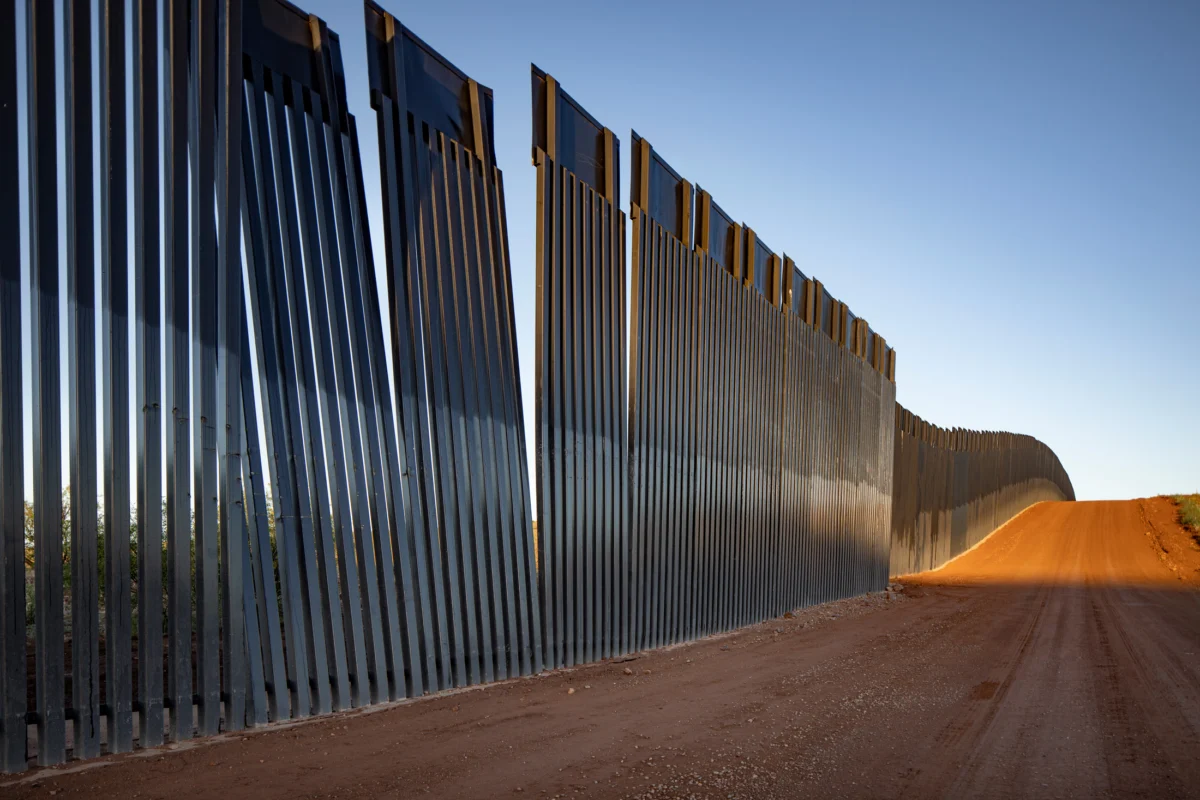
A perplexing incident in Arizona’s remote San Rafael Valley has cast a harsh spotlight on the structural integrity and oversight of the recently constructed U.S.-Mexico border wall, igniting renewed calls for accountability and transparency in the ambitious, multi-billion-dollar infrastructure project. Documentary photographer Mikal Jakubal, venturing into the rugged landscape this spring, captured images of a newly erected section of the barrier exhibiting severe damage: a cracked concrete base and at least four massive metal planks bent at distorted angles, creating conspicuous gaps. The sheer force required to mangle panels estimated to weigh up to 8,000 pounds each immediately prompted questions about the cause, with Jakubal initially speculating a collision with heavy construction equipment. However, with the construction firm reportedly having moved on, the mystery deepened around how such substantial damage could occur on a structure designed to be an impenetrable barrier.
Months after its initial discovery in early May, the compromised section remained unrepaired by early July, marked only by a solitary orange construction cone. The lack of immediate action further fueled public and journalistic scrutiny. Following inquiries from a news organization, U.S. Customs and Border Protection (CBP) confirmed that the damaged section had subsequently been repaired, reassuring that no injuries occurred during the barrier’s original construction. Yet, the agency notably sidestepped specific questions regarding the cause of the damage, deflecting responsibility by referring inquiries to Fisher Sand & Gravel, the North Dakota-based firm awarded the substantial $309 million contract to construct 27 miles of the border wall, including the segment in Arizona’s School Canyon. Repeated attempts to contact Fisher Sand & Gravel and its representatives for clarification remained unanswered, deepening the shroud of secrecy surrounding the incident.

This lack of forthrightness from both the government agency and the private contractor has exacerbated long-standing criticisms regarding the chronic absence of transparency in border wall construction. Advocates and environmental organizations argue that the opacity is not merely coincidental but a systemic consequence of a 1996 statute, originally signed into law by President Bill Clinton. This controversial legislation grants the Secretary of the Department of Homeland Security (DHS) sweeping authority to waive dozens of federal, state, and local laws to expedite border barrier construction. Critics contend that this broad power, wielded by several administrations but particularly aggressively under President Donald Trump, has fostered an environment where oversight is minimal, and the quality of construction is inherently compromised. Laiken Jordahl, a national public-lands advocate with the Center for Biological Diversity, starkly summarized this concern, stating that the waivers have "created an environment where construction is shoddy by default."
The Trump administration’s declaration of a national emergency at the border further accelerated these processes. Then-DHS Secretary Kristi Noem invoked the statute to ensure "the expeditious construction of the barriers and roads," allowing for swift execution, often through no-bid contracts. This expedited procurement process, which allowed Fisher Sand & Gravel and other contractors to secure lucrative deals without competitive bidding, is currently the subject of ongoing litigation, raising questions about fairness and potential favoritism. Crucially, the waivers also circumvented critical environmental safeguards, including the National Environmental Policy Act (NEPA). NEPA mandates rigorous assessments of the potential environmental impacts of federal projects and requires public engagement, processes deemed too time-consuming for the administration’s aggressive construction timelines. The bypassing of such vital regulatory frameworks removed a layer of scrutiny that might have identified potential design flaws, geological risks, or environmental vulnerabilities before construction commenced, contributing to the very issues now plaguing the wall’s integrity.
Fisher Sand & Gravel, founded by Gene Fisher in 1952, experienced a meteoric rise in government contracts during the Trump administrations, reportedly amassing billions. However, this financial success has been shadowed by a series of controversies concerning the quality and placement of its border wall segments. A notable example involved a privately funded, three-mile section of the wall built in Texas in 2020. This segment was constructed perilously close to the Rio Grande, prompting warnings that it was at risk of toppling. These fears materialized months later when Hurricane Hanna struck the region; floodwaters carved significant holes beneath the foundation, compromising its stability. Within a few years, parts of this privately built barrier began to visibly warp, underscoring the potential long-term failures inherent in rushed or poorly planned construction.

The problematic incidents extend beyond Fisher Sand & Gravel, painting a broader picture of systemic flaws across the entire border wall initiative. A government report, for instance, revealed that an "entire mountainside is in danger of collapse" in Arizona’s Pajarito Mountains. This critical erosion risk was attributed to another contractor, Southwest Valley Constructors, which cleared essential vegetation that had previously stabilized the slopes, demonstrating a disregard for the delicate ecological balance and geological stability of the region. Elsewhere, powerful winds, a common natural phenomenon in the borderlands, have repeatedly tested the resilience of the barrier. Sections of the border wall in California and New Mexico, constructed by various contractors, have come perilously close to collapsing under extreme gusts. In one instance near Deming, New Mexico, a viral video captured panels falling over in 2020. CBP later attributed this failure to the panels "pending additional anchoring," a detail that highlights either a severe oversight in the construction sequence or an underestimation of the environmental forces at play.
Beyond the immediate structural failures, environmental advocates continue to highlight the devastating ecological consequences of the wall’s rapid construction. The waiver of NEPA and other environmental laws allowed contractors to proceed without adequately considering the impacts on fragile desert ecosystems, critical water sources, and vital migration corridors. The San Rafael Valley, where the recent damage occurred, is a unique grassland ecosystem, while the Organ Pipe National Monument, mentioned by Jordahl, is a UNESCO Biosphere Reserve renowned for its biodiversity. The wall has fragmented habitats, disrupted ancient wildlife migration routes for species like jaguars, ocelots, and bighorn sheep, and caused irreparable damage to pristine wilderness areas. The cumulative effect of these actions raises serious questions about the long-term ecological cost of the barrier.
Ultimately, critics like Jordahl argue that the border wall functions more as "political theater" than a practical, effective deterrent to unauthorized crossings. He points to readily available evidence, such as a video he posted on X in 2023, showing where smugglers had used angle grinders to cut through the steel bollards of the wall in Organ Pipe National Monument, precisely where repair crews had recently welded them. This demonstrates a persistent cycle of damage and repair, undermining the very premise of an impenetrable barrier. Despite the monumental investment and profound environmental degradation, the wall, in many sections, fails to achieve its stated objective of stopping people from crossing, leaving a legacy of structural defects, environmental destruction, and profound public distrust in the process. The recurring issues of structural integrity, coupled with the persistent lack of transparency and the documented ecological devastation, underscore the complex and contentious legacy of the border wall project, prompting critical examination of its efficacy, cost, and long-term implications for both national security and environmental stewardship.