Roger Danuarta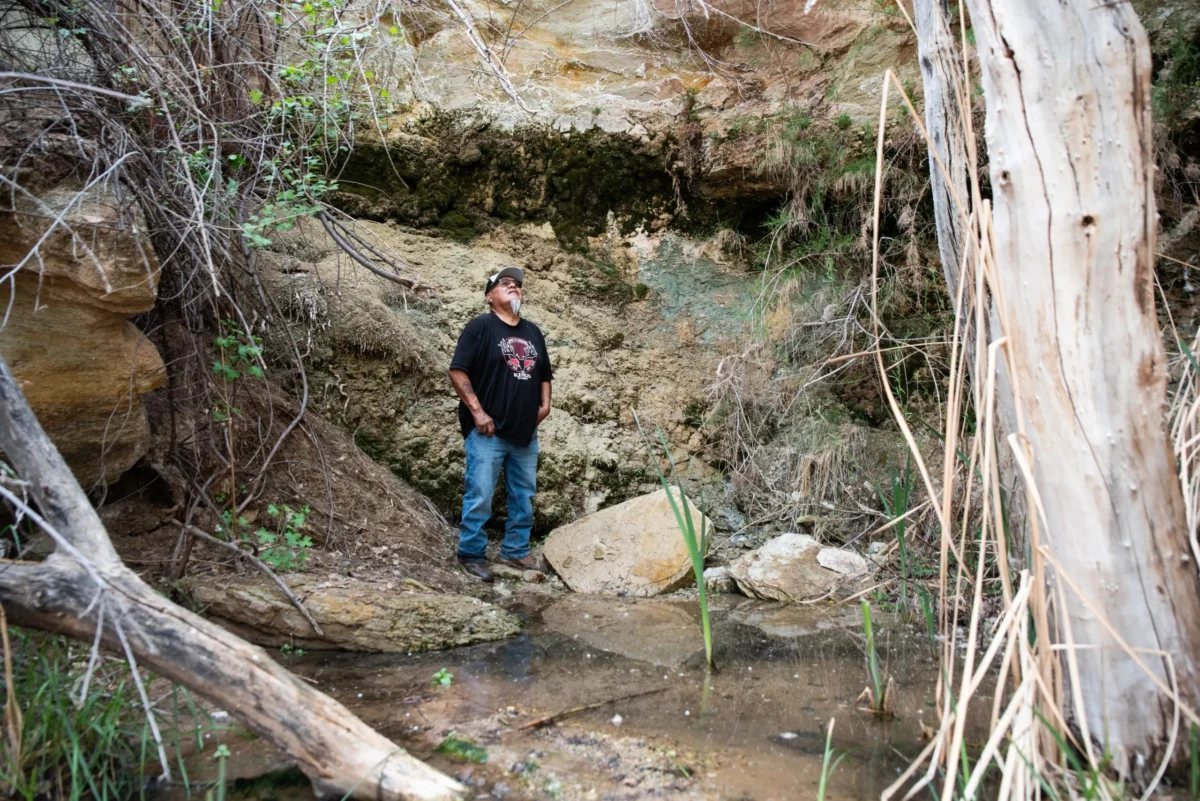
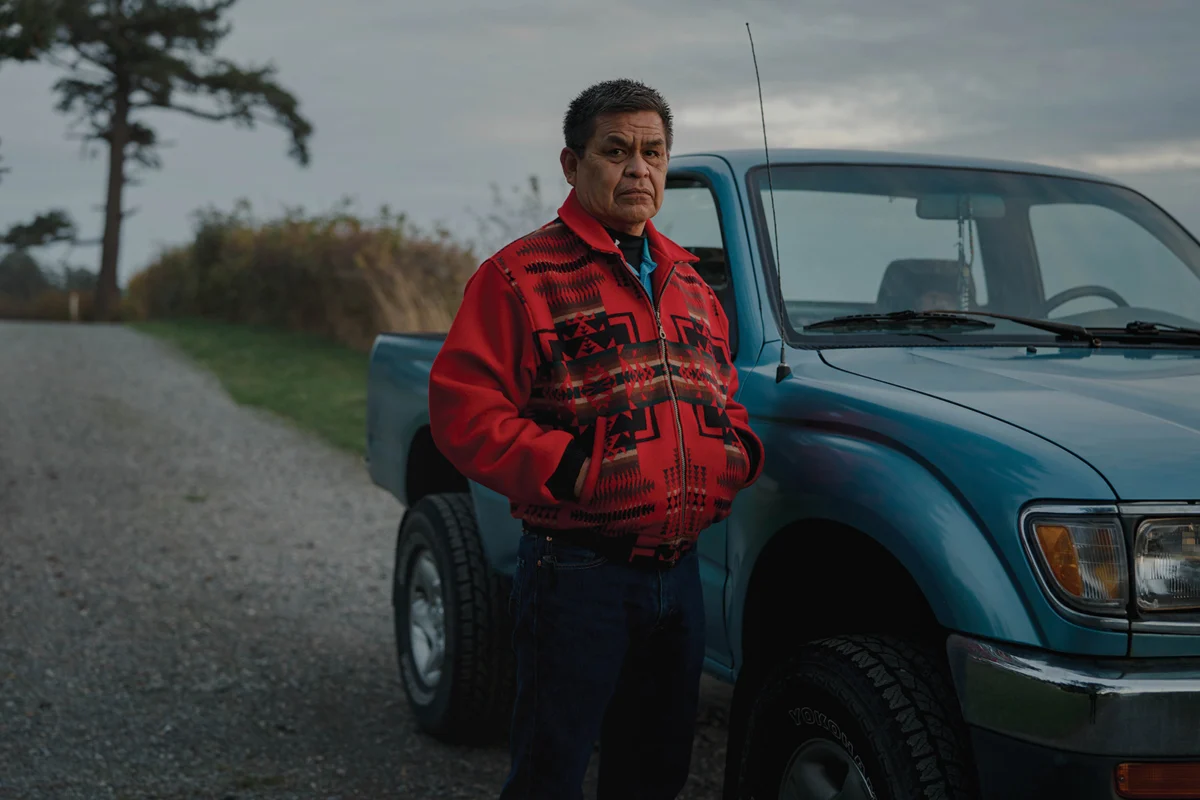
On a searing April day in White Mesa, Utah, Malcolm Lehi expertly navigated his Jeep Wrangler along a rugged dirt track, past resilient junipers and aromatic sagebrush, his quest focused on locating Entrance Spring—a vital water source deeply entwined with the ancestral lands of his Ute Mountain Ute tribe. This verdant, moss-laden spring lies mere miles from the imposing White Mesa Mill, the United States’ last operational conventional uranium mill, a facility pivotal in producing yellowcake, the foundational material for nuclear power fuel. For decades, the mill has been a lightning rod for controversy, sparking profound anxieties within the local community regarding the potential for radioactive contamination of their air and water. These concerns resonate most acutely in the White Mesa Ute Community, where approximately 200 tribal members, including Lehi, reside just five miles south of the industrial complex.
Despite assurances from state regulators and Energy Fuels, the mill’s owner since 2012, that all associated pollution remains contained, the tribal members find little solace. They carry the heavy burden of uranium’s devastating legacy across the vast expanse of the Colorado Plateau, a history that fuels their persistent questions about the potential spread of toxic waste. The pervasive distrust is such that many eschew local tap water, opting instead for bottled alternatives, a stark indicator of their profound unease.

The tribe’s long-standing concerns now gain renewed urgency amidst a concerted national push to revitalize domestic uranium production. A federal law enacted in 2024 mandates a ban on Russian uranium imports by 2028, a geopolitical move designed to bolster energy independence and national security, inadvertently placing immense pressure on domestic sources. This legislative action aligns with broader ambitions, notably former President Donald Trump’s stated goal of quadrupling U.S. nuclear energy capacity by 2050, a target that necessitates a significant increase in uranium supply. Trump’s administration further accelerated this drive by issuing executive orders prioritizing mining on federal lands and fast-tracking project approvals, exemplified by the Velvet-Wood uranium mine in Utah, which navigated federal environmental review in a mere 11 days—a process that tribal communities decried as a "rubber stamp," affording them only a week to provide input.
Achieving a quadrupling of nuclear power capacity presents formidable challenges, primarily due to the complex and often locally contentious process of constructing new reactors. However, the surging demand from data centers and the broader industrial sector, coupled with an escalating interest in nuclear power as a reliable, low-carbon energy source, has intensified the focus on this energy option. Indeed, a growing number of U.S. states are actively exploring or clearing pathways for new nuclear energy development, underscoring the strategic imperative to secure the essential raw material: uranium.
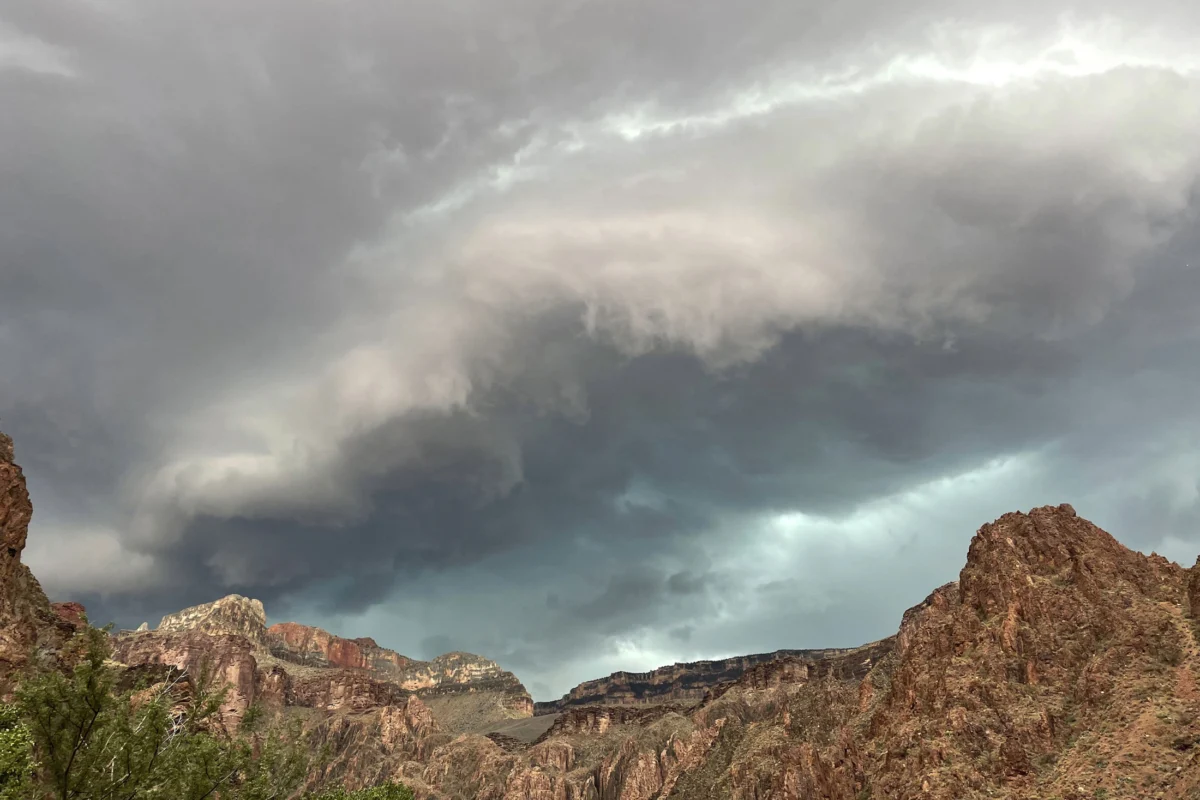
The White Mesa Mill, established in 1980 near the majestic Bears Ears National Monument in southeastern Utah, stands at the epicenter of this burgeoning uranium boom, emblematic of the inherent tensions between local Indigenous concerns and national economic imperatives. Increased demand translates into a relentless procession of trucks, laden with uranium ore, converging on the mill from regional mines, including one situated near the Grand Canyon, home to the Havasupai Tribe. These trucks traverse the sacred lands of the Navajo Nation, forging a new, albeit unwelcome, link between geographically disparate tribes. Furthermore, the mill’s announced plans to expand its waste storage facilities only amplify existing fears.

Malcolm Lehi, a former tribal council member, is a prominent voice within a burgeoning opposition movement that unites members of the Havasupai and Navajo (Diné) tribes, now connected by the very trucking routes that carry the ore across their ancestral territories. These tribes share a common apprehension: that toxic wastewater generated by uranium mining and milling operations could seep through the ground, contaminating precious drinking water sources for countless generations to come. Their collective struggle highlights a deeply rooted history of environmental injustice and broken trust.
On a crisp spring morning in White Mesa, Yolanda Badback, a Ute Mountain Ute member and a driving force behind the White Mesa Concerned Community advocacy group, watched with palpable weariness as three more uranium trucks rumbled past her open doorway, not far from the highway. "There goes another one," she murmured, her tone betraying a profound exhaustion. The mill, according to Curtis Moore, Senior Vice President of Marketing and Corporate Development at Energy Fuels, receives between 10 to 15 trucks each weekday, with the majority passing directly through the White Mesa community.
Moore acknowledges a significant uptick in the mill’s business following a quiescent period of 15 years. The White Mesa Mill produced one million pounds of yellowcake last year, and the company projects more than double that output this year. Beyond uranium processing, the mill has strategically diversified its operations, now handling radioactive waste from as far afield as Estonia and Japan. In a testament to its expanding strategic importance, the facility secured a substantial $725 million conditional loan commitment from the Defense Department, earmarked for scaling up its domestic processing of critical rare earth elements. Moore estimates this new rare earths venture alone could generate 100 permanent jobs, though he notes that while roughly half of the mill’s 105 employees are Indigenous, no more than two are believed to be members of the Ute Mountain Ute Tribe. Moore candidly admits understanding the tribal communities’ skepticism regarding uranium, acknowledging that "They’ve been lied to before."

Indeed, the historical backdrop is grim. A U.S. government-driven uranium boom, spanning from the 1940s through the 1980s and largely concentrated in the Four Corners region of Arizona, New Mexico, Utah, and Colorado, exposed countless Indigenous miners to devastating health consequences. Federal reviews later confirmed that these miners, predominantly Navajo (Diné), were deliberately kept ignorant of radiation risks, even after government scientists fully comprehended the dangers. The legacy of this period includes thousands of abandoned waste sites, which continue to leach contamination into surrounding soil and water, with over 500 such sites identified on or near the Navajo Nation alone, representing an enduring environmental catastrophe.
Moore, however, asserts that contemporary practices at the White Mesa Mill are vastly different from the mid-20th century. He states that current workers are exposed to a mere 15% to 20% of allowable radiation limits, and radiation levels outside the mill are "effectively zero." Government agencies and Energy Fuels officials maintain that no evidence links the mill to contamination of White Mesa’s primary drinking water supply, which originates from a deep aquifer safeguarded by a thick, protective rock barrier known as an aquitard. Moore even went so far as to describe it as "the perfect site for a uranium mill."
Scott Clow, environmental programs director for the Ute Mountain Ute Tribe, acknowledges that while the deep aquifer supplying drinking water does contain naturally occurring quality issues—including elevated levels of arsenic, iron, and manganese—the public drinking water undergoes filtration and is deemed safe for consumption. Adam Wingate, uranium recovery manager at the Utah Department of Environmental Quality, empathizes with local residents’ apprehension, particularly given White Mesa’s downslope position relative to the mill in terms of underground water flow. He recognizes that hearing about a plume of contamination in a shallower aquifer beneath the mill, even if it’s not their drinking water source, coupled with unusual water taste, creates a "scary spot to be in." Nonetheless, based on available evidence, Wingate concludes that locals’ "health is not at risk because of the mill."

Despite these assurances, both Lehi and Badback consistently report that the tap water in White Mesa carries a distinct sulfurous odor and often appears milky, leading most residents to avoid drinking it. "I don’t trust it," Badback declared, whose family has been at the forefront of the fight against the mill for decades. "My main goal is to shut the mill down." An annual spiritual walk and protest organized by Badback’s group has seen growing participation over the past decade, a testament to the community’s deep-seated distrust stemming from the historical trauma of uranium mining. Much of the opposition coalesces around the mill’s radioactive waste, which is currently contained in five lined tailings cells spanning 284 acres. Badback vehemently vows to resist any expansion plans, particularly those involving new tailings cells proposed a mere quarter-mile closer to the White Mesa community. Moore counters that these new cells would incorporate modern, triple-lined standards.
At a "No Kings" rally in Moab, some 80 miles north of White Mesa, Badback delivered an impassioned speech and manned an information table adorned with T-shirts proclaiming "No Uranium" and "Protect White Mesa Ute Community." In 2021, her tribe passed a formal resolution unequivocally stating that the White Mesa Mill "has had severe health impacts on the residents of White Mesa and should cease entirely." While the psychological stress endured by the community is undeniable, other direct health effects have proven challenging to definitively link to the mill.
A 2023 federal health assessment concluded that radiation levels measured at the tribe’s central White Mesa air monitor between 2013 and 2019 were unlikely to pose a threat to human health. However, the report’s authors conceded their inability to evaluate the potential impact of the mill’s radon emissions—a known cause of lung cancer—on bordering properties or residents. They recommended that the tribe undertake additional air sampling closer to the mill, especially during periods of heightened activity. In December 2021, the Environmental Protection Agency cited the mill for violating the Clean Air Act, specifically for failing to cover one of its tailings cells with liquid to mitigate radon emissions. The EPA characterized the violation as "egregious in nature and duration" and temporarily barred the mill from accepting waste from Superfund cleanup sites. State regulators confirm that the mill rectified the issue and successfully passed its most recent air quality review in 2025.

Nevertheless, a pervasive sense of unease lingers among some White Mesa residents. Badback and Lehi recount persistent chemical or rotten egg-like odors, which they firmly attribute to the mill. Badback has voiced serious concerns about air quality and elevated rates of cancer and asthma within the community, issues currently under investigation by a University of Utah health survey. Moore, however, disputes the claim of off-site odors, stating that any smells originating from the mill would not extend beyond its parking lot. Utah air quality officials confirm that the state does not conduct ambient air monitoring in White Mesa and does not regulate odors.
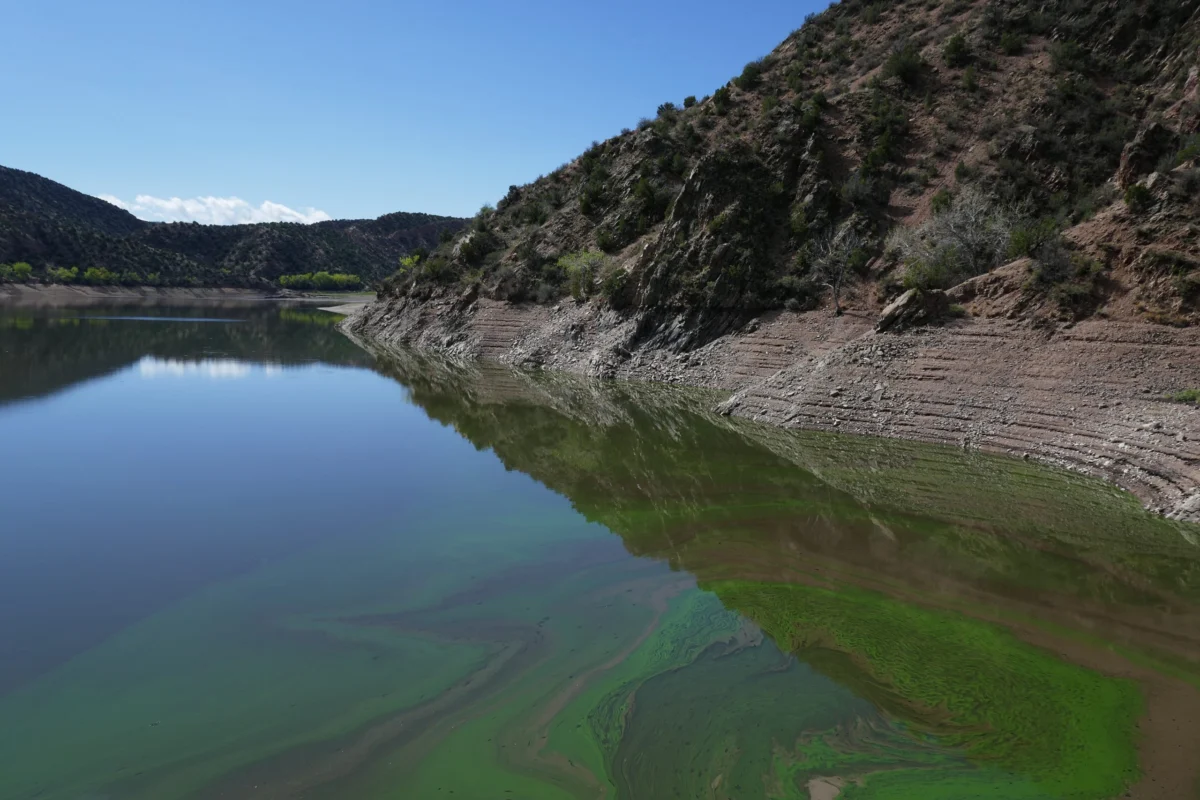
On that particular spring day, Lehi pressed on with his search for Entrance Spring, the silhouette of Sleeping Ute Mountain, a revered landmark said to embody a great warrior god of the Ute Mountain Ute Tribe, visible on the distant horizon. Along his path, he paused to point out a circle of stones, believing it to be an ancient ancestral burial site. After parking his Jeep, he descended a faint trail into a lush willow grove, eventually finding a streambed he anticipated would lead to the spring. While the tribe does not rely on Entrance Spring for drinking water, it remains a crucial point of monitoring for the tribe, the state, and the company, offering vital clues about potential leakage from the mill’s waste ponds into a less protected aquifer.
In the late 2000s, an EPA report identified elevated radionuclide contamination—atoms that emit radiation during decay—at Entrance Spring. EPA water samples, at times, revealed uranium concentrations exceeding federal drinking water standards. Subsequent fieldwork by the EPA and the U.S. Geological Survey suggested that the uranium at Entrance Spring originated not from leaking waste ponds but from dust blown off the mill’s ore storage pads. The most recent tests from 2025 showed Entrance Spring with uranium levels at 22.5 micrograms per liter (µg/L), which, while within the federal drinking standard of 30 µg/L, remains notably elevated.

Clow emphasizes that the tribe maintains vigilant oversight of all seeps and springs. "We’re concerned about the pollution of those springs," he stated, adding, "We are looking towards many generations in the future here." Clow also closely monitors the Burro Canyon Aquifer, which lies directly beneath the mill’s toxic waste cells and feeds the local springs. State official Wingate confirms that plumes of chloroform and nitrates already contaminate this aquifer, with Energy Fuels actively pumping out the contamination.
The challenge of definitively attributing contaminant increases—whether from natural causes or mill activity—is compounded by the natural presence of substances like sulfate and manganese in the local bedrock. Consequently, Clow, the company, and state officials engage in ongoing debate regarding whether the tailings ponds are leaking. What remains undisputed, however, is the inherent reality that the mill produces radioactive waste—a material that, once created, persists for tens of thousands of years, an intergenerational burden.
Lehi followed the winding stream until it culminated in a curved grotto, the very site of Entrance Spring. Water gently seeped from the rock face into a tranquil pool, offering a cool respite from the arid desert heat. He gazed with profound wonder at the dripping green moss, a descendant of medicine men, feeling an inherent duty to safeguard this landscape as his ancestors had, irrespective of whether the tribe currently utilizes this specific spring for drinking water. "Water is life," Lehi affirmed, his voice resonating with deep cultural reverence, "because that’s where we all began."