Roger Danuarta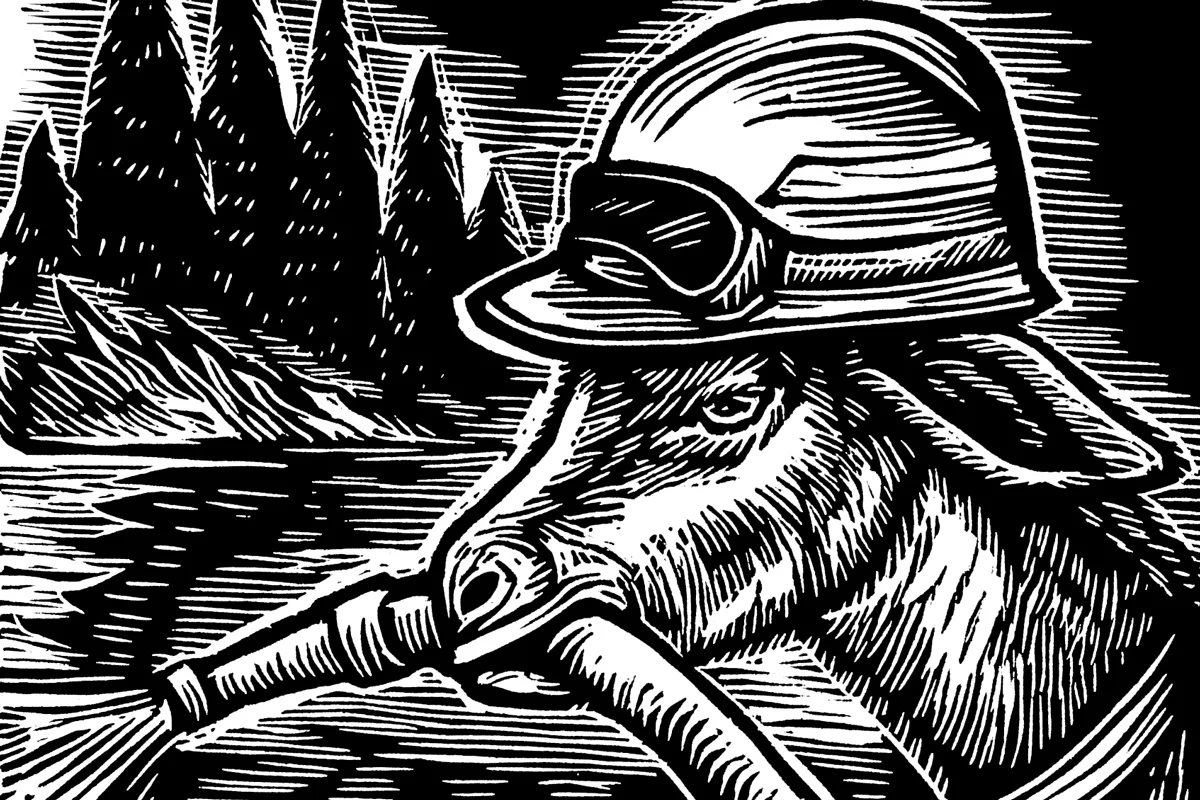
Across the diverse landscapes of the American West, from the fire-scorched peaks of Colorado to California’s mystical mountainsides and the historic plains of Montana, extraordinary tales of resilience, unexpected discoveries, and deep-seated cultural significance continue to unfold, often challenging conventional understanding and capturing the public imagination. These narratives, far from the daily political churn, spotlight the enduring spirit of both humans and animals, alongside the enigmatic undercurrents that define a region rich in natural wonder and complex history.
In the rugged terrain west of Colorado Springs, where the summer sun often bakes the land to a tinderbox, an unlikely protagonist emerged during the fierce battle against the Rock Creek Fire. In July, as seasoned firefighters from the Southern Colorado Interagency Wildland Fire Team grappled with a rapidly spreading blaze near Cheyenne Mountain State Park, a four-year-old Nigerian dwarf goat named Goldie became an unexpected beacon of morale and, remarkably, a de facto project manager. Wildland firefighting is a demanding and perilous profession, requiring immense physical stamina, mental fortitude, and an intimate knowledge of topography. The Rock Creek Fire, though ultimately contained at around five acres, threatened pristine wilderness and potentially encroaching residential areas, demanding immediate and precise action. It was amidst this high-stakes environment that Goldie, belonging to firefighter Pete Glader, demonstrated an uncanny aptitude for the task.
Goldie’s presence on the fire line was more than just a whimsical distraction; it became a genuine asset. According to Shane Coyne, superintendent of the Southern Colorado Interagency Wildland Fire Team, the nimble goat expertly navigated the steep and treacherous slopes, often pausing to emit encouraging bleats, seemingly urging on her two-legged companions as they toiled with chainsaws and dug critical fire lines. "She knew her area, and she understood the assignment," Coyne recounted, highlighting Goldie’s intuitive guidance through terrain that even experienced firefighters found challenging. Her concern for the crew was palpable, as Coyne noted, "She wanted to make sure she knew all the humans got to the fire." This extraordinary display of animal intelligence and empathy not only provided much-needed comic relief but also served as a unique form of moral support for the weary crew. The fire, which necessitated the deployment of a helpful helicopter to douse flames, was eventually brought under control, but Goldie’s contribution transcended mere anecdote. Her innate connection to the land and her human companions underscored a deeper bond, solidifying her status as the "GOAT" – Greatest Of All Time – of all goats, a playful nod to her species and her exceptional performance. Beyond her spontaneous heroism, Goldie also contributes to fire mitigation in a more sustained manner, engaging in targeted grazing to reduce fire-prone underbrush, a natural and eco-friendly method increasingly employed in fire-prone regions to manage fuel loads and protect landscapes from catastrophic blazes. This dual role exemplifies how nature, in its most charming forms, can offer innovative solutions to some of humanity’s most pressing environmental challenges.

Further west, nestled beneath the majestic peaks of California’s Siskiyou County, a more peculiar mystery recently captivated local residents and ignited fervent online speculation. Eerie, distant sounds emanating from a hillside near the small town of Weed had baffled and intrigued many, leading to a flurry of internet theories ranging from clandestine government experiments to the presence of esoteric cults. However, the true source of the "buzzing static-filled slope" proved to be both stranger and gentler than the digital rumor mill had imagined. Karrie Ann Snure, a resident of Mount Shasta, and her daughter Jordan, discovered the origin of the sonic anomaly while horseback riding off Highway 97. Their investigation led them to a remarkable sight: up to 200 solar-powered Bluetooth speakers, discreetly scattered across the hillside.
These seemingly innocuous devices, from a distance, produced a blurred, staticky white noise, but upon closer inspection, revealed themselves to be broadcasting continuous religious sermons. The revelation, initially shared by Snure on social media, quickly went viral, prompting her to track down the individual responsible for this widespread, if unconventional, public address system. The anonymous installer, whose identity and the precise location of the speakers Snure agreed to keep confidential, explained their motivation: a desire to disseminate messages of "peace, compassion, and veganism in an effort to elevate consciousness." While the method of broadcasting unsolicited spiritual and ethical tenets across a public landscape certainly raises questions about noise pollution, environmental impact, and public decorum, it surprisingly resonated with the existing cultural tapestry of the region. Mount Shasta, a stratovolcano steeped in a century-long reputation for mystical occurrences, UFO sightings, Lemurian legends, and various fringe spiritual communities, has long been a magnet for those seeking alternative paths and profound experiences. In this context, a field of talking speakers preaching kindness, however odd, almost "fits right in," as Active NorCal aptly observed. The episode served as a vivid reminder that in an age of instant information and rampant speculation, reality can often be far more nuanced and less sensational than the most elaborate online theories. As of the last report, the audio messages continued to play, leaving the local narrative enriched by another layer of delightful, undisturbed "weirdness intact."
Meanwhile, in the vast expanses of southwestern Montana, an epic journey of loyalty and perseverance unfolded, becoming the unexpected heart of a profound historical commemoration. June 25, 2026, marked the 150th anniversary of the Battle of the Little Bighorn, a pivotal moment in American history where Lakota, Northern Cheyenne, and Arapaho warriors decisively defeated soldiers of the United States 7th Cavalry, including Lt. Col. George Armstrong Custer. Known to many Indigenous peoples as the Battle of Greasy Grass, this event near present-day Crow Agency continues to hold immense historical and spiritual significance, symbolizing Indigenous resistance and the enduring strength of Native nations. To honor this sesquicentennial, the Real Bird Family, custodians of this vital history, hosted the 34th Annual Battle of the Little Bighorn Re-enactment along the Bighorn River, drawing thousands of visitors from across the nation and beyond.
Amidst the grandeur of the re-enactment, which meticulously recreated the strategic maneuvers and fierce combat of that fateful day, a humble black-and-white dog named Young Man emerged as an unforgettable symbol. Hailing from Green Grass, South Dakota, Young Man embarked on an astonishing 300-mile pilgrimage to Greasy Grass. On June 8, as Santee warriors prepared their horses for the ceremonial ride to Montana, Young Man, tied outside his family home, broke free from his lead, driven by an inexplicable determination to join them. From that moment, his journey became interwoven with the human riders. He hitched rides in horse trailers to Lame Deer camp, ran tirelessly alongside horseback riders to Busby, and continued his arduous trek all the way to Crow Agency. Along his remarkable odyssey, the riders, deeply moved by his unwavering spirit, ensured he was fed, watered, and protected, acknowledging his extraordinary commitment. By the time he reached the main camp, Young Man had attained legendary status, his story echoing through the gathering as a testament to animal loyalty and the interconnectedness of life on the plains. Buffalo’s Fire poignantly reflected on his impact, stating, "No one planned on the little rez dog becoming the unforgettable story of the 150th anniversary of Greasy Grass, but this may have been what Indian Country needed." Young Man’s perseverance, his silent commitment to accompany the Santee warriors on their journey to honor their ancestors, resonated deeply within Native communities. His epic trek, mirroring the historical migrations and resilience of Indigenous peoples, became a powerful, living embodiment of endurance and spirit, reminding everyone present that even the smallest among us can carry the most profound messages of hope and connection across vast landscapes and through significant historical moments.