Joko Susilo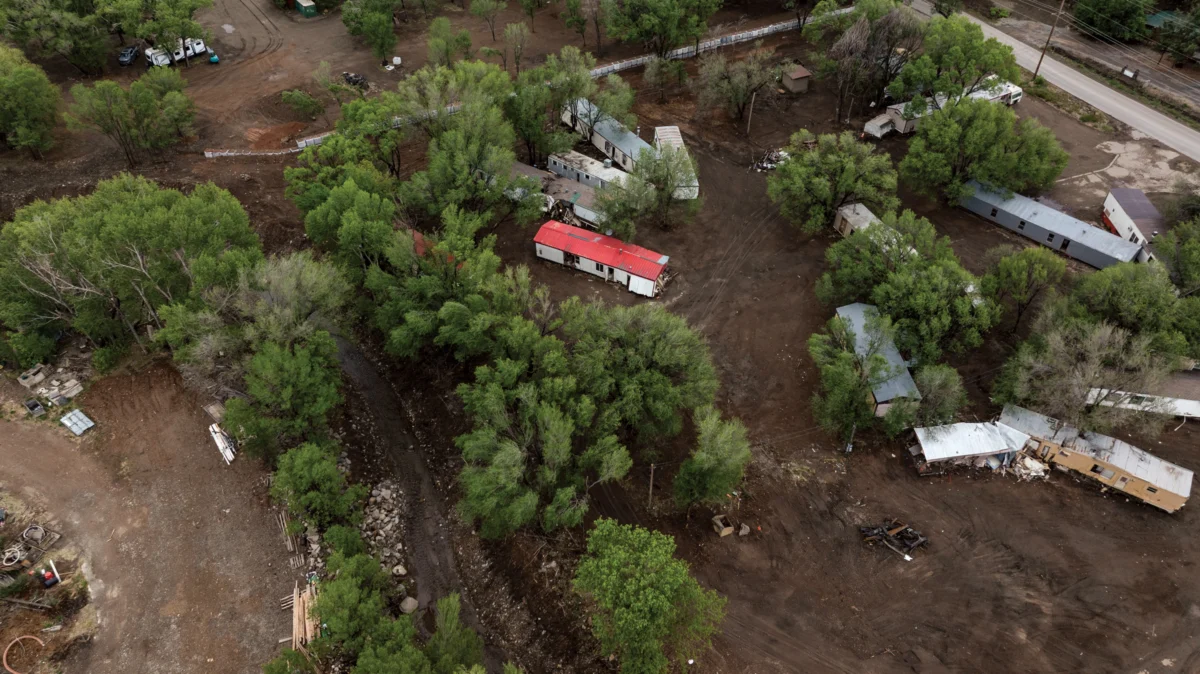
The idyllic allure of Ruidoso, New Mexico, a mountain sanctuary revered for its tranquil pine forests, skiing opportunities, and respite from the desert heat, has been irrevocably altered by a cascading series of environmental disasters, forcing a community-wide reckoning with an unprecedented climate reality. For years, Lindsay and Corey Sexton, along with their young son, envisioned their future in this tiny mountain town, a place that had long served as their weekend escape. In 2024, they realized their dream, securing a sprawling ranch house nestled along the gentle meanders of the Rio Ruidoso. Yet, the very day they prepared to finalize their purchase, two ferocious wildfires, the Salt and South Fork fires, ignited just outside Ruidoso’s perimeter, rapidly escalating into an inferno that ultimately consumed 1,400 structures across the region. Miraculously, the Sextons’ new home remained untouched by the flames. However, their brief reprieve was shattered mere hours after moving in, when a firefighter delivered a stark warning: "Y’all need to go." A flash flood, triggered by just a few inches of rain, surged towards their riverfront property, the normally placid creek now a raging torrent.
The devastating wildfires, a stark symptom of increasingly severe and prolonged drought conditions gripping the Western United States, had not only scorched vast tracts of vegetation but also seared the underlying soil. This extreme heat creates a hydrophobic layer, effectively turning the mountain slopes surrounding Ruidoso into dangerous, impermeable runways for water, mud, and debris. As New Mexico’s monsoon season intensified, the floods became a relentless menace. The Sextons, desperate to protect their investment and their family, constructed an imposing eight-foot sandbag barrier between their home and the river. Despite their valiant efforts, last July brought a catastrophic, record-setting twenty-foot wall of brown water roaring around the riverbend. In a harrowing moment, Corey Sexton bravely rescued two individuals caught in the churning waters, but could only watch in horror as a small child was tragically pulled under and swept away by the merciless current.
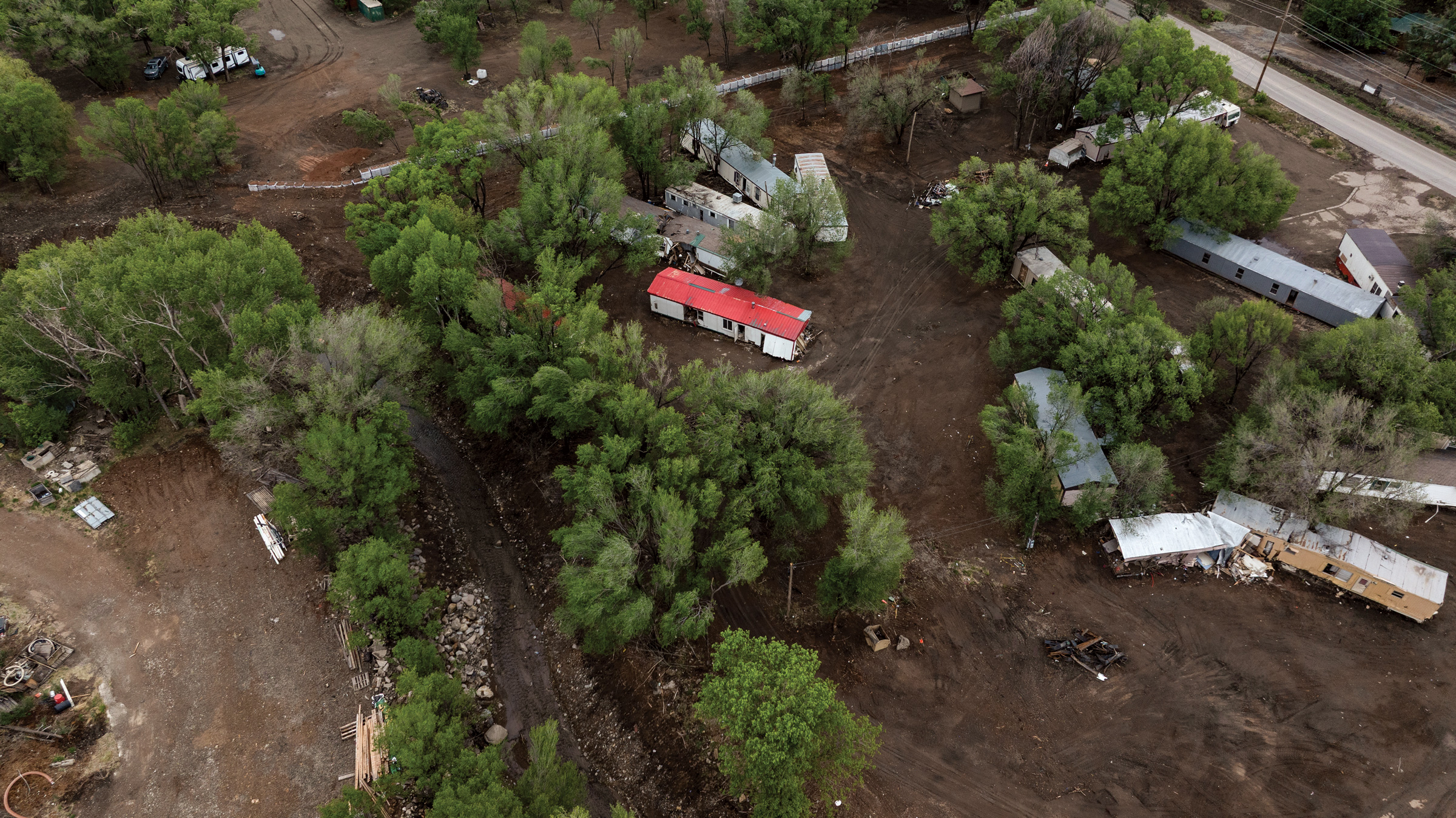
That four-year-old girl was one of three lives tragically claimed by the July 8 flood, an event that inflicted widespread damage on hundreds of homes and profoundly disrupted the lives of residents already reeling from the preceding wildfires. Experts now issue grim warnings: the danger of post-fire flooding can persist and even intensify for several years as landscapes struggle to recover. The prospect of heavier, more frequent rainfall, a predicted consequence of global climate change, threatens to unleash even more devastating deluges. The Sextons, their dream home now a source of profound anguish, desperately wish to leave. Yet, a deep sense of moral responsibility prevents them from simply selling their house to an unsuspecting family. "Somebody else buys it, and then they’re in the same predicament," Corey articulated, his gaze sweeping across a living room they had abandoned decorating. "I don’t think that anybody, honestly, should be on the river."
Local officials in Lincoln County, acutely aware of the escalating risks and the untenable cycle of disaster and rebuilding, echo the Sextons’ profound concerns. This spring, they unveiled a groundbreaking initiative: a voluntary property buyout program, spearheaded with substantial assistance from the U.S. Department of Agriculture (USDA). This ambitious plan aims to purchase at-risk properties at their pre-damage valuations, subsequently demolishing or relocating the structures. The reclaimed land will then be permanently converted into open space, designed to serve as a natural buffer against future floods, absorb rainfall, and help stabilize the vulnerable watershed. With an impressive $235 million in funding already secured, authorities optimistically hope to acquire approximately 400 properties from willing sellers – a transformative proposal poised to dramatically reshape the very fabric of this 8,000-person community.
Since the late 1980s, voluntary buyouts have emerged as a critical, albeit complex, tool in the United States, assisting tens of thousands of homeowners across all fifty states in escaping homes perpetually threatened by rising waters along riverbanks and coastlines, particularly in the wake of catastrophic events like Hurricanes Sandy and Harvey. However, Lincoln County’s initiative stands as a pioneering example, marking one of the nation’s first applications of buyouts specifically tailored to address the insidious, long-term threat of post-fire flooding. As the escalating impacts of climate change continue to exacerbate these compounding disasters across the Western U.S. and indeed, globally, Ruidoso’s proactive and innovative approach offers a compelling, albeit challenging, path forward for mountain towns and other vulnerable communities grappling with an increasingly volatile environment. This “managed retreat” strategy, while often controversial, is gaining traction worldwide as a necessary adaptation measure in the face of irreversible climate shifts.

Ruidoso, a traditionally conservative bastion, might seem an unlikely locale for leaders to embrace what some social media commentators have controversially labeled a government "land grab." Republican state representative Harlan Vincent initially harbored significant skepticism regarding the proposed buyouts. However, a rigorous analysis of the stark economic realities ultimately swayed his opinion. Prior to last summer’s devastating flood, the state of New Mexico had already allocated a staggering $100 million towards recovery efforts from the South Fork and Salt fires. Now, Ruidoso’s mayor projects that the total recovery cost could skyrocket to an astronomical one billion dollars. Even with tens of millions of dollars in federal aid pledged, it became unequivocally clear that continually rebuilding in areas demonstrably prone to recurrent flooding was fiscally irresponsible and utterly unsustainable. The long-term economic burden on taxpayers, coupled with the ongoing human suffering, necessitated a radical rethinking of the community’s relationship with its environment.
Lincoln County had already been collaborating with the USDA’s Natural Resources Conservation Service (NRCS) on critical mitigation strategies, including extensive debris removal and crucial aerial seeding efforts aimed at stabilizing burn scars. The NRCS, recognizing the unprecedented nature of Ruidoso’s predicament, also offers a pre-existing buyout program, though it had never before been deployed in the immediate aftermath of a wildfire. Crucially, Lincoln County met the stringent criteria: an urgent need to restore its devastated watershed and an imperative to protect life and property still facing imminent danger after a disaster of this magnitude. Consequently, the NRCS accepted the county’s innovative buyout proposal, agreeing to cover up to 75% of the total acquisition and conversion costs. This collaborative federal-local partnership highlights a growing recognition at higher levels of government regarding the need for more adaptive and preventative climate resilience strategies.
Local officials harbor strong hopes that a newly established state fund can bridge the remaining financial gap. This spring, Representative Vincent, alongside other forward-thinking lawmakers, successfully persuaded the New Mexico Legislature to earmark a significant $70 million for land acquisition, restoration projects, and broader disaster recovery initiatives. This fund also includes potential state matches for local governments that have secured federal emergency grants, creating a crucial financial synergy. "When you go up against Mother Nature, it’s not going to work out so good for you," Vincent sagely observed, acknowledging the futility of perpetual resistance. "We’re trying to get along with her." This sentiment reflects a growing philosophical shift from pure hazard mitigation to a more holistic approach of living with and adapting to natural processes.

Embracing this philosophy does not equate to abandoning flood-prone areas entirely. Instead, Lincoln County officials envision the buyouts as a pivotal opportunity to revitalize Ruidoso’s vital outdoor economy by strategically designating new public land. Vincent estimates that the community has already suffered losses exceeding $100 million in tourism revenue in the wake of the devastating floods. By transforming acquired riverfront properties into a new riverside park, complete with integrated water retention and safety features such as strategically placed dams and detention ponds, the county aims to not only enhance flood protection but also to actively draw visitors back to the town. "Think of the opportunities we can build around that," Vincent enthused in a January op-ed published in the Ruidoso News, painting a picture of "more places for people to walk and picnic with their families, fish in the river, and see healthy wildlife populations." This vision emphasizes not just retreat, but a strategic re-imagining of urban-natural interfaces for long-term ecological and economic benefit.
While similar buyout programs in other states have successfully facilitated the creation of new trails, restored wetlands, and vibrant parks within floodplains, such proactive and integrated land-use planning remains regrettably uncommon, according to Liz Koslov, a University of California-Los Angeles sociologist specializing in buyout studies. "A lot of the time, it just looks abandoned," she lamented, highlighting a critical flaw in many past initiatives. "What happens to land has totally been an afterthought." This lack of foresight often results in neglected parcels that can become eyesores or even pose new environmental risks. Thoughtful landscape design and ongoing management are particularly crucial in wildfire-prone regions like Ruidoso. While open space inherently provides a buffer against flood damage, if left unmanaged, overgrown vegetation can ironically accumulate, presenting new and heightened fire risks. In a community confronted by multiple, compounding hazards, simply abandoning land is demonstrably not a viable or responsible option.
One afternoon in early March, Lincoln County Manager Jason Burns navigated the winding back roads of Ruidoso, gesturing towards homes with shattered windows that visibly sagged towards the swollen river. "We’re gonna open this all up," he declared, his voice resolute, emphasizing the county’s commitment to ensuring "we don’t have more homes floating down the river." The task ahead is immense and fraught with complex human dimensions. To be eligible for the buyout program, applicants must meet stringent NRCS requirements, including U.S. citizenship and verifiable permanent access to their at-risk property. From this initial pool, the county then undertakes the challenging task of prioritizing applications. Burns and his team have meticulously categorized over a thousand vulnerable properties into five distinct tiers, based on the severity of existing damage and the projected future risk. The county’s immediate focus lies on applicants within the first two tiers – those whose homes have been completely destroyed or suffered severe, irreparable damage.

This is where the practical implementation of buyouts inevitably becomes emotionally charged and administratively intricate. At a standing-room-only public meeting in late March, residents peppered Burns with a torrent of urgent questions: How would an appraiser accurately assess the value of homes that have been utterly swept away? Would second homes, often significant investments for part-time residents, be deemed eligible? What about the numerous mobile home parks, whose displaced residents frequently do not own the land beneath their homes, raising complex questions of property rights and equitable compensation? These queries underscore the profound personal and financial stakes involved for every individual grappling with this life-altering decision.
By early May, the county had received more than 300 applications from property owners, Burns confirmed. Just over 150 of these had been deemed preliminarily eligible, and appraisers had commenced the arduous process of visiting and evaluating properties. However, the ultimate participation rate in the program remained an open and uncertain question, reflecting the deeply personal calculus each resident faces. Just across the river from the Sextons’ now-troubled property, a man named Mike Abraham walked through his backyard, which remained buried under a thick layer of silt and debris. The floodwater line reached nearly three feet on his house, a stark testament to the deluge’s power. "I’ve been through four disasters, each time trying to rebuild," he recounted, his voice heavy with resignation. "This last time has decimated me completely."
Abraham spent months after the July flood shuttling between temporary hotel accommodations and the kindness of friends. Now, he lives in the two remaining undamaged rooms of his house, devoid of heat or running water, a grim testament to his enduring hardship. Yet, despite the immense challenges, he remains unwilling to leave. The property has been a cherished part of his family for 45 years, and he has resided there for two decades, weaving a deep tapestry of memories and belonging. He holds onto the belief that with more robust mitigation infrastructure, the worst impacts of future flooding could be averted. Furthermore, he harbors a legitimate concern that a buyout, while offering financial relief, might not provide sufficient funds to acquire a new home within the Ruidoso area, where housing stock is already limited and increasingly expensive.

This concern is both widespread and entirely valid, according to Miyuki Hino, a climate adaptation researcher at the University of North Carolina at Chapel Hill. "Especially for lower-resourced households, just being handed a check is not enough to really make the move a success," she emphasized. Without careful and comprehensive consideration of what comes next – including access to affordable housing, social services, and community support networks – a buyout program, despite its good intentions, can inadvertently exacerbate existing inequalities and fracture the very community it endeavors to preserve. The emotional, social, and cultural ties to a place often far outweigh simple financial calculations.
Abraham remained unsure what it would ultimately take to convince him to relinquish his ancestral home. As they stood conversing in his damaged yard, two majestic elk wandered over, settling gracefully across the river. They watched in quiet contemplation as the animals folded their legs and lay down in the warm sun. "What price do you put on that?" Abraham asked, his voice tinged with a profound sense of loss and reverence. "What price do you put on waking up every day and seeing nothing but beautiful life?" His question resonates at the heart of the managed retreat dilemma: how does a community quantify the intangible values of home, heritage, and connection to nature, even in the face of relentless and escalating environmental threats? Ruidoso’s pioneering efforts represent a critical case study in the global struggle to adapt to a changing climate, forcing communities to confront not just the financial costs of disaster, but the profound human and cultural price of staying, or of leaving.