Joko Susilo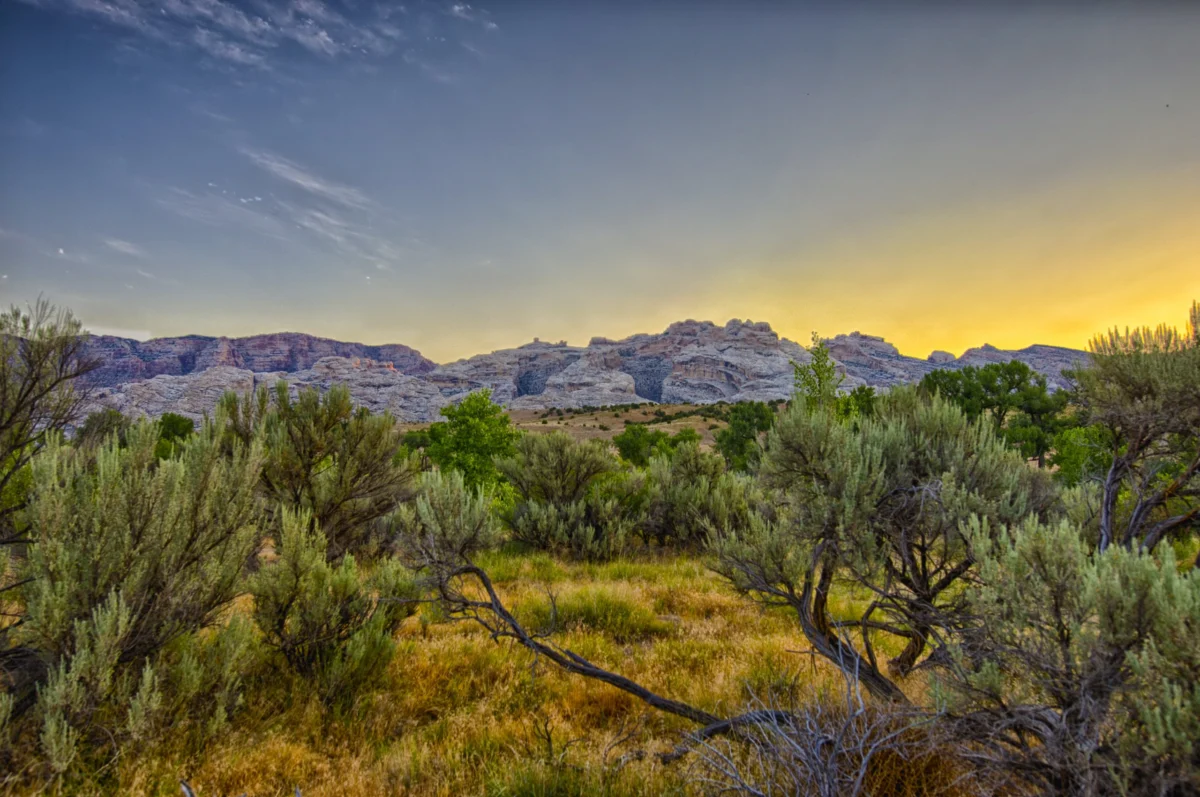
A sweeping federal decision is poised to open tens of thousands of acres across northwestern Colorado, critical habitat for North America’s largest elk herd, to extensive oil and gas development, marking the state’s most substantial fossil fuel lease sale in modern history. The Bureau of Land Management (BLM) is offering more than 100 parcels, totaling approximately 156,000 acres, for lease on June 16, encompassing vital migration corridors and winter foraging grounds relied upon by elk, pronghorn, and mule deer, routes that stretch into southern Wyoming. This expansive land offering is concentrated primarily in Moffat County, a region that proudly touts itself as the "Elk Hunting Capital of the World" and whose local economy is deeply intertwined with its thriving outdoor recreation and hunting industries.
The environmental stakes of this unprecedented sale extend far beyond big game animals. Roughly two-thirds of the leased acreage lies immediately south of Dinosaur National Monument, a revered remote park that has earned designation as an International Dark Sky Place due to its exceptionally pristine night skies. Local tourism officials in Moffat County express profound concern that the industrial activity accompanying fossil fuel extraction—including bright lights from drilling rigs, continuous flaring, and increased truck traffic—could severely compromise this hard-won designation, which is a significant draw for astrotourism and contributes to the area’s unique character. Tom Kleinschnitz, the county’s director of tourism, articulated these anxieties, emphasizing the long-term importance of preserving the pristine nature of these landscapes, not just for economic gain but for their inherent ecological and aesthetic value.
The scale and location of this record June lease sale appear to contradict established conservation directives and planning documents. It runs counter to the BLM’s own stated management strategies for Dinosaur National Monument, which typically prioritize resource protection. Furthermore, it conflicts with amendments to area plans for northwestern Colorado, approved as recently as 2024, specifically designed to strengthen habitat protections for vulnerable ungulate populations like elk and deer, as well as imperiled bird species such as the Gunnison sage-grouse. The potential ramifications for the environment, local economies, and public health are manifold, as detailed in an exhaustive 2,360-line spreadsheet compiled by the Denver-based nonprofit Rocky Mountain Wild. This analysis identifies at least 17 rare plants and endangered species whose habitats are directly threatened by the proposed fossil fuel exploration and extraction.
Among the species facing peril are the elusive black-footed ferret, the tenacious wolverine, the sensitive boreal toad, and the critically endangered Colorado pikeminnow. Threatened plant species such as the Colorado hookless cactus and Parachute penstemon also inhabit these lands. The lease sale parcels are also crucial for other species of special concern to state wildlife officers, including the Columbian sharp-tailed grouse, the greater sage-grouse, the ferruginous hawk, and the swift fox. The ecological integrity of these interconnected ecosystems, which support a rich tapestry of biodiversity, stands to be significantly fragmented and degraded by industrial development, leading to long-term population declines and potential local extinctions.

This June event is not an isolated incident but represents one of four major lease sales in Colorado since Congress passed and President Donald Trump signed the H.R. 1 legislation in 2025. This landmark bill fundamentally altered federal land management, explicitly prioritizing fossil fuel extraction over other public land uses, including recreation and conservation. The legislation mandated that federal officials conduct a minimum of four lease sales annually across nine Western states—Alaska, Colorado, Montana, New Mexico, Nevada, North Dakota, Oklahoma, Utah, and Wyoming. Critically, H.R. 1 also significantly shortened public comment periods for these sales and, perhaps most consequentially, reduced the discretion that federal land managers traditionally held over whether to offer specific acreage for lease. This policy pivot stands in stark contrast to the preceding Biden administration, which saw only six sales in Colorado over four years, offering merely hundreds of acres during that period.
Beyond environmental and land-use implications, H.R. 1 also contained provisions that slashed oil and gas royalty rates, making it more economically attractive for companies to extract fossil fuels on public lands. This reduction, however, comes at a direct cost to American taxpayers and the states where drilling occurs, as it diminishes the share of profits returned from the development of these shared natural resources. According to an analysis by Taxpayers for Common Sense, a nonpartisan watchdog organization, Colorado alone could face a staggering loss of $148 million in future revenue from production on approximately 81,000 acres that were sold in 2026. This fiscal impact highlights the complex trade-offs inherent in federal energy policy, where promoting extraction can undermine the financial benefits that public lands development typically provides to states and local communities for funding public services and infrastructure.
The aggressive push to lease tens of thousands of acres for oil and gas development also appears to be at odds with the prevailing public sentiment across the Western United States. Bipartisan polling conducted as part of Colorado College’s annual State of the Rockies Project consistently reveals that a clear majority of voters in eight Western states want their congressional representatives to prioritize conservation efforts over energy development on public lands. This reflects a growing understanding among the populace of the intrinsic value of these landscapes for recreation, wildlife, water resources, and quality of life, often outweighing the perceived short-term economic benefits of fossil fuel extraction.
Compounding these concerns is the existing landscape of federal oil and gas leases. Current fiscal 2025 statistics from the Bureau of Land Management indicate that approximately 21 million acres of public lands are already leased for oil and gas development nationwide. However, only about 12 million of these acres are actively producing fossil fuels. This significant disparity underscores a persistent concern among conservation groups: once energy companies acquire federal oil and gas leases, these parcels are legally constrained from being managed for other vital uses, such as sensitive habitat protection, wilderness preservation, or public recreation, for the entire decade-long term of the lease, even if no drilling ever occurs. Peter Hart, legal director of the Wilderness Workshop, emphasized this long-term impact, stating that "Once those leases are issued they are very hard to get rid of – they stay on the land for a long time, even if they aren’t developed," effectively locking up public lands for potential industrial use at the expense of other public values.
In response to a comprehensive 106-page comment letter submitted by the Wilderness Workshop and 17 other organizations on March 13, the Bureau of Land Management, in its environmental assessment, committed to conducting additional site-specific analyses for each parcel should a company apply for a drilling permit. The agency also reiterated throughout its extensive 646-page report that "risks are reduced through the careful review of drilling and completion plans for proposed wells by both the BLM" and Colorado’s Energy and Carbon Management Commission. Federal officials did remove four parcels and reduced a fifth, totaling approximately 4,800 acres, from the initial sale offering. This decision was attributed to a recent ruling by the Interior Board of Land Appeals and primarily concerned areas identified as high-priority habitat for the greater sage-grouse, Columbian sharp-tailed grouse, and big game. Furthermore, the environmental assessment noted that the agency would apply various stipulations to leases issued for sensitive parcels, aiming to protect animals, plants, cultural resources, and fish habitats.

However, conservation groups, who meticulously monitor the intricacies of oil and gas lease sales, argue that federal land managers now possess significantly less discretion at the permitting stage. Under the constraints of the new legislation, their ability to relocate oil and gas operations, impose additional stringent conditions of approval, or outright cancel a lease is severely limited. This diminished authority also restricts their capacity to remove parcels that were previously deferred from past sales due to the presence of sensitive species habitat. Alison Gallensky, a conservation geographer at Rocky Mountain Wild, highlighted this shift, noting that during the previous administration, the state BLM was able to use its discretion to defer inappropriate parcels due to conflicts with greater sage-grouse. "Now, they are being forced to offer a much larger sale than that one turned out to be," she added, underscoring the legislative handcuffs on federal agencies. The greater sage-grouse, in particular, is acutely sensitive to oil and gas infrastructure, which can serve as perches for winged predators, disrupting their crucial breeding behaviors even when facilities are set at a distance. Moreover, the effectiveness of protective provisions, such as requiring drilling pads to be built farther from nesting locations, hinges heavily on operator compliance and adequate federal oversight, a challenge given often-understaffed monitoring agencies.
The acreage included in the June sale also signifies a continuation of a concerning trend observed in federal oil and gas lease sales in Colorado over the past year. Historically, such sales have primarily targeted more remote parts of the state. Yet, a shift has occurred, exemplified by the September leasing of a parcel near the Aurora Reservoir, bordering a densely populated Denver suburb, for approximately $5.6 million. This particular acreage is part of the Lowry Ranch Comprehensive Area Plan, an ambitious project involving over 150 wells that, while approved by state regulators, has faced fierce opposition from nearby residents due to concerns over local impacts. Similarly, many of the over 340 individual public comments received by the agency for the June sale urged against leasing similar parcels near populated areas. Residents and environmental organizations collectively voiced alarms that emissions from new oil and gas development in these regions would exacerbate existing air pollution, particularly in areas already failing to meet federal air quality standards, leading to increased smog and potential public health issues.
The agency’s analysis for the June sale itself estimated that several parcels listed in Weld County, home to Colorado’s largest and most productive oil field, could yield up to 150 new wells. Conservation groups contend that emissions from these additional wells would inevitably worsen smog in a region already designated as a non-attainment area for national air quality standards, posing significant health risks to residents. Critics argued that the BLM’s assertion in its environmental analysis—that the lease sale "would result in no emission increase" or that emissions are not sufficiently foreseeable to require a conformity determination—is "entirely baseless." Federal officials countered in their environmental analysis that they would conduct a "project-specific emissions inventory" if companies subsequently file for drilling permits, allowing for a more thorough assessment of proposed wells, drilling schedules, and equipment.
In Moffat County, on the western slope of the Rocky Mountains, where a substantial portion of the June oil and gas lease sale is concentrated, community representatives acknowledge the delicate balance between environmental protection and economic realities. Rising grocery and gas prices are disproportionately affecting rural areas, and some residents in this sparsely populated region—where 80% of voters cast ballots for Donald Trump in 2024—rely on royalties from drilling to supplement their incomes. Kleinschnitz, the county’s tourism director, underscored this duality, noting that many involved in outfitting also manage agricultural businesses, with hunting serving as a critical component of sustaining their presence on the land. He also recognized that some residents have "benefited greatly from having those" oil and gas royalties, illustrating the complex interplay of economic livelihoods, traditional industries, and environmental stewardship that defines the ongoing debate over public lands in the American West.