Rocky Georgio
Canadian American businessman Kevin O’Leary, known for his role on the television show "Shark Tank," is spearheading an ambitious plan to establish the world’s largest Artificial Intelligence campus in Utah. The proposed "Stratos Hyperscale Data Center," also referred to as "Wonder Valley," is slated for 40,000 acres of unincorporated land in Box Elder County. O’Leary’s vision involves a significant collaboration with the military, framing the project as a matter of national security to ensure American dominance in AI development, a field he believes is crucial for future global power dynamics. The sheer scale of the proposed facility is staggering; upon completion, it would be more than double the size of Manhattan and even larger than Utah’s own Bryce Canyon National Park. The development plans include dozens of data centers, research facilities, and potentially worker housing, all designed with a modern aesthetic featuring sleek glass panels and sophisticated internal office spaces, intended to be the "sexiest, coolest construction posting in America," according to Paul Palandjian, CEO of O’Leary Digital.
However, this futuristic vision faces considerable headwinds from a significant portion of the Box Elder County populace. Resistance to large-scale data center development is not a new phenomenon in the United States, but the opposition in Box Elder County has coalesced into a potent force, indicating a potential for significant political upheaval even in the traditionally conservative state of Utah. Many residents feel a profound sense of betrayal, a sentiment that appears to transcend party lines. Stephen Otterstrom, a Salt Lake City resident and candidate for the Statehouse, has observed that outside of public officials, he has encountered no one expressing enthusiasm for the project, with most feeling blindsided and overlooked.
The core of the residents’ discontent lies not only in the addition of another data center to a state already densely populated with such facilities but also in the perceived lack of democratic deliberation in the decision-making process. O’Leary’s initial discussions about the Stratos project with Governor Spencer Cox reportedly began in January, with a public announcement of the proposal following in February. Yet, Box Elder residents were not informed of Stratos until late April, when the county commission convened its first public hearing. This timeline was exceptionally compressed, with the state’s Military Installation Development Authority (MIDA), a partner in the Stratos initiative, pushing for swift permit approvals. County commissioners themselves expressed concerns about insufficient time to adequately assess the project’s implications. Locals insisted on greater public awareness and discussion, prompting the board to temporarily postpone a decision on the data center resolution.
Despite these calls for pause, pressure from Governor Cox, who asserted Utah’s "obligation" to pursue AI development in the face of competition with China, led the commissioners to reconsider the proposal. Thousands of negative comments were submitted by Utahns, and hundreds of Box Elder residents packed a commission meeting on May 4th, vocally protesting the project. The commissioners ultimately retreated to continue the meeting virtually, where they unanimously approved the AI partnership with MIDA, a decision that has ignited further public outcry.
Larry D. Curtis, a longtime Salt Lake City resident and former journalist, echoed the sentiments of many, describing the data center’s near-approval as a shock, feeling it was orchestrated through "backroom deals and assurances made with no transparency or government accountability." The intensity of this opposition has garnered national attention, with pop singer Hayley Williams publicly criticizing O’Leary during a concert in Salt Lake City. Grassroots efforts are actively working to challenge the commission’s decision. The organization "Box Elder Accountability Referendum" has initiated a process to allow voters to overturn the approval, although their initial referendum application was rejected by the county attorney; an appeal is planned. Furthermore, Utahns have inundated Governor Cox’s office with thousands of letters of opposition and have been organizing protests at the state Capitol, holding signs critical of both O’Leary and Cox.
The Box Elder County commissioners have argued that their hands were largely tied, as the land designated for Stratos is privately owned and unzoned, with the landowners having already given their consent. One landowner expressed optimism about the project, anticipating "a lot of good-paying jobs" and supporting it as a means to maintain a competitive edge against China. Lee Perry, a Box Elder County Commissioner, acknowledged the limited options available, stating, "They can buy this property, build this data center, and I can do nothing to stop it." In an effort to mitigate resident concerns, Perry focused on negotiating sweeteners, such as increased tax revenue and full corporate coverage of construction costs, to lessen the financial burden on the community. Residents, however, remain apprehensive about potential negative impacts, drawing on experiences from neighboring areas where data centers have led to increased utility costs, exacerbated water shortages, and contributed to noise and air pollution. The seriousness of these concerns is underscored by Iron County’s recent decision to implement a six-month moratorium on new data centers. Many believe that the current commissioners’ support for the project will jeopardize their re-election prospects.

Despite these potential drawbacks, proponents of Stratos highlight its economic benefits. The campus, projected to be developed in phases, is estimated by the state to generate tens of millions of dollars in tax revenue per phase, alongside thousands of temporary construction, maintenance, and IT jobs. The project plans to leverage an existing natural gas pipeline and a new on-site solar farm for power. Stratos backers also claim that a portion of the water used for cooling servers will be part of a "closed-loop" system, with used water being returned to the Great Salt Lake. Governor Cox has supported this narrative, asserting that the data center will consume less water than other entities impacting the Great Salt Lake, such as agriculture and residential lawn care, even while declaring a state of emergency due to Utah’s drought conditions.
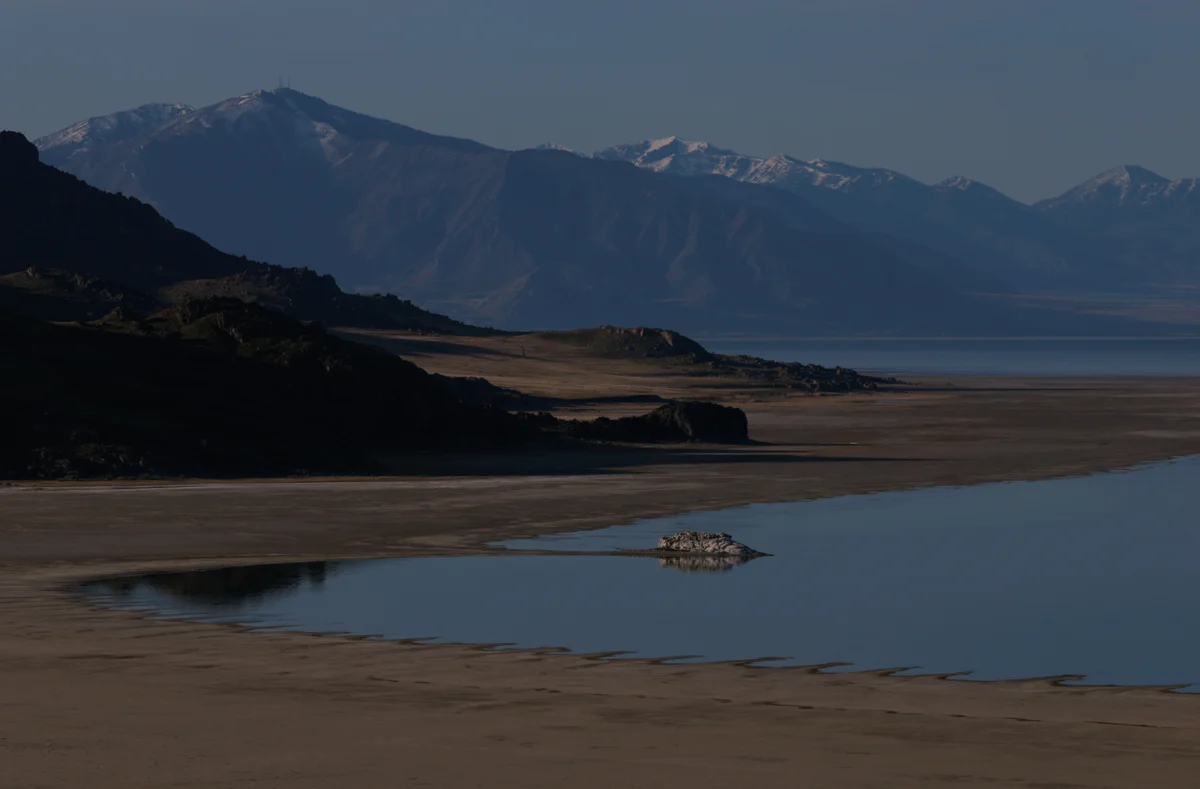
However, these assurances are met with skepticism from many Utahns. Otterstrom argues that the projected 2,000 permanent jobs are insufficient given the facility’s immense scale, and he questions the sincerity of saving the Great Salt Lake when such a water-intensive project is being prioritized. Curtis corroborates these concerns, pointing to the unprecedented dry winter and the critical role the snowpack plays in replenishing the state’s water resources. He emphasizes the multifaceted importance of the Great Salt Lake to Utah’s economy, climate, and even its ski industry, warning of the potential for toxic dust to affect the most populated areas of the state if the lake continues to shrink. The economic concentration in the Salt Lake Basin, with limited high-paying job opportunities elsewhere in the state, further complicates the issue, raising doubts about the governor’s commitment to preserving the lake.
In response to the widespread public outcry, O’Leary has attempted to discredit protesters as "proxies" for the Chinese government and dismiss their arguments as unsubstantiated. However, the backlash has demonstrably impacted Utah’s political landscape. State Senator Scott Sandall, initially a strong supporter of Stratos, has shifted to advocating for a legislative study on the environmental impacts of data centers, including potential harm to wildlife. Utah House Speaker Mike Schultz, whom O’Leary had identified as an early supporter, has also appeared to distance himself from the project, denying early briefings from O’Leary and calling for comprehensive environmental reviews, while also endorsing the now-defunct Box Elder Accountability Referendum. His ownership of land near the proposed site has also drawn scrutiny.
Those who continue to champion the project are facing significant public repercussions. J&J Nursery, owned by a state senator who facilitated the Stratos approval, is facing calls for a boycott. Jason Chaffetz, a former Republican representative vying for the governorship, is being criticized for his involvement with the consulting firm that brought the Wonder Valley project to Box Elder County. Senate President Stuart Adams, who chairs MIDA, is facing a surge of primary opponents, with some observers suggesting that the data center controversy has made him politically vulnerable, particularly given a prior scandal involving his family.
Governor Spencer Cox has partially retreated from his initial staunch defense, acknowledging that public pushback is valid and committing to a thorough environmental impact review. He has also issued an executive order establishing a "higher bar for data center development in Utah," mandating consideration of utility rates and environmental impacts. However, critics argue these measures may be too little, too late, and question the governor’s perceived lack of firm principles. The sentiment of "vote them all out" has become prevalent among both Democrats and Republicans, reflecting an unprecedented level of community engagement on this issue.
The resistance continues to manifest in various forms. Applications for water rights associated with Stratos have been met with formal objections from residents, and two such applications have already been withdrawn. Protests persist at the Utah Capitol, and there are ongoing plans for a lawsuit against MIDA, mirroring similar public opposition seen in other states like Virginia, Missouri, and Michigan. For Utahns, the battle is framed as a critical defense of their natural environment, quality of life, and the long-term viability of the Salt Lake Basin. Otterstrom highlights the underfunding of essential public services like education, attributing it not to a lack of resources but to a misallocation of priorities, suggesting that those with significant financial means often get their way. The fight over the Stratos data center may represent a tipping point for frustrated and concerned Utahns, potentially signaling a shift in political priorities and challenging the influence of powerful developers and the political figures who align with them. Kevin O’Leary’s ambitious venture may have inadvertently ignited a powerful grassroots movement in Utah, one that could ultimately hold accountable the very lawmakers who facilitated his latest endeavor.