Roger Danuarta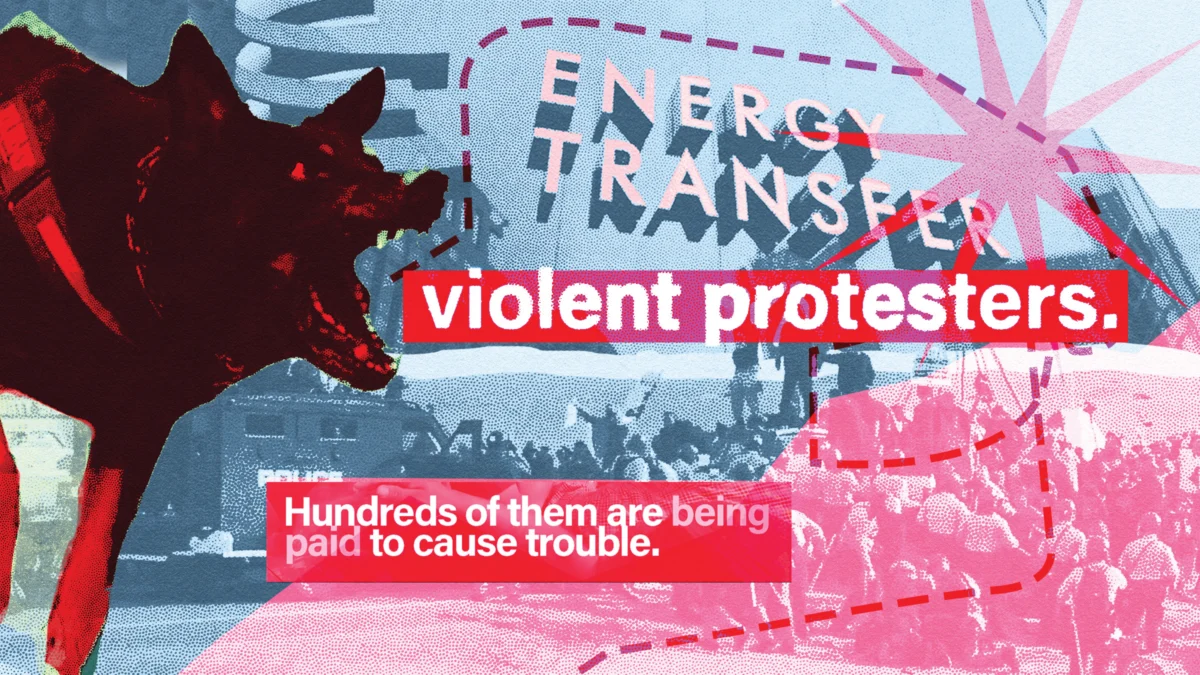
A decade after the fervent protests against the Dakota Access Pipeline (DAPL) galvanized global attention, the emotional scars in North Dakota’s quiet communities near Mandan and Bismarck run deep, fueled by a sophisticated, privately funded propaganda campaign that exploited existing societal fault lines. Conversations in local establishments—from dimly lit dive bars to rural taverns adorned with taxidermy—reveal a persistent, often vitriolic sentiment towards the "water protectors," as pipeline opponents prefer to be called. Some locals express extreme views, recalling the mass influx of thousands of activists as an invasion and advocating for violent retaliation, echoing historical atrocities like the Wounded Knee massacre. These visceral reactions are not merely organic expressions of local frustration; newly uncovered documents expose a calculated strategy by the pipeline’s parent company, Energy Transfer (formerly Energy Transfer Partners), to deliberately sow discord and manipulate public opinion.

The rural landscape of Morton County, North Dakota, a region accustomed to its insular nature where an unfamiliar vehicle draws notice, became the unlikely epicenter of a national and international environmental and Indigenous rights movement in 2016. The clash between the Standing Rock Sioux Tribe, who initiated the protests to protect their sacred lands and water supply from the pipeline, and the predominantly white surrounding communities, was a tinderbox. While a veneer of "North Dakota nice" typically prevails, underlying racial tensions and stereotypes against Native people have long simmered, making the area fertile ground for targeted influence operations.
Energy Transfer engaged TigerSwan, a private security firm founded by James Reese, a former Delta Force commander, to safeguard its project and, crucially, its public image. TigerSwan’s approach mirrored military counterinsurgency doctrines, prioritizing the "winning of hearts and minds" through information warfare. Rather than solely focusing on physical security, the company aimed to control the narrative, identify, and exacerbate divisions between the Standing Rock movement and local residents. Central to this strategy was a clandestine social media operation, a component of a larger, multi-faceted propaganda effort designed to shift public support away from the protests and towards the pipeline.

Robert Rice, a virtual reality evangelist with no apparent public relations background, led TigerSwan’s Facebook initiative. His operation, though not always subtle, was precisely calibrated for a community already feeling besieged, angry, and underserved by mainstream media. At the peak of the protests, Rice launched the Facebook page "Netizens for Progress and Justice." This page disseminated videos and text that depicted pipeline opponents as criminals, paid agitators, and outside forces with anti-American agendas. One video, presented in a broadcast news style, showed aerial images of the protest camp, labeling sites as "Abandoned cars," "Discarded tents," "Human Waste Pits," and "Huge trash pile," effectively painting a picture of environmental degradation caused by the very people claiming to protect the environment. Rice explicitly stated his objective in November 2016: "We are doing heavy targeting in the ND area mostly to focus on increasing the fracturing and creating doubt." His content reached hundreds of thousands, influencing public perception in a rapidly polarizing digital environment.
These documents offer a rare glimpse into the corporate "narrative ground war" fought contemporaneously with Donald Trump’s first presidential election, a period that saw an unprecedented surge in online misinformation. The violent fantasies articulated by some locals, while not representative of the majority, underscore a profound erosion of trust and relations between tribal members and their neighbors. Daily life shifted; some city residents now avoid the Standing Rock casino, while tribal members limit trips to Bismarck to essential errands. Critically for Energy Transfer, anti-protest and pro-oil sentiments have solidified, allowing the Dakota Access Pipeline to transport over half a million barrels of oil daily beneath the Missouri River, despite a track record of at least a dozen leaks along its span.

The lingering impact of this propaganda was starkly evident in a 2025 trial, where Energy Transfer sued three Greenpeace organizations, alleging they orchestrated the protests. Despite what many observers considered flimsy evidence, the jury, drawn from the very communities targeted by TigerSwan’s campaign, overwhelmingly sided with the pipeline company, awarding a staggering $345 million. Kandi White, a Mandan, Hidatsa, and Arikara Nation member deeply involved in the pipeline fight, lamented outside the courtroom, "People in Bismarck in general were lied to. There’s a misinformation campaign about what was really happening down there." This verdict, a significant public relations victory for Energy Transfer, jeopardized Greenpeace USA’s survival and demonstrated the enduring power of cultivated narratives.
The battle for public perception now extends to the emerging infrastructure surrounding artificial intelligence. Water protectors are confronting the construction of data centers, which demand vast amounts of water and energy—resources often drawn from rural areas already grappling with environmental stress. This new front echoes the DAPL conflict, placing rural communities at the heart of another pivotal national issue. The TigerSwan files suggest that future propaganda efforts will continue to target pre-existing societal fault lines, adapting to new technologies like AI to amplify their reach and impact.

Energy Transfer’s decision to hire TigerSwan in September 2016 followed a public relations crisis. Earlier that year, the Standing Rock Sioux Tribe established an encampment to protect sacred sites along the pipeline route. In August, during construction, bulldozers and security guards with dogs confronted protesters who were attempting to protect identified grave sites. Viral footage of security dogs lunging at people, some with bloody mouths, ignited global outrage. This incident significantly escalated the protests, drawing thousands from diverse backgrounds, including Indigenous leaders, environmental activists, and concerned citizens, to North Dakota.
TigerSwan’s founder, James Reese, a veteran of elite military units, understood that "Solutions to Uncertainty" extended beyond physical security to brand protection. Robert Rice, despite his background in virtual reality and video games, was tasked with this complex information operation. His early strategy focused on creating internal divisions within the protest movement and refuting the protesters’ claims. He researched other threats to the tribe’s water, sought to highlight dissent within tribal leadership, and looked for images of injured security dogs to portray protesters as violent. His goal was clear: "get the truth out first, and weaken the automatic support the Tribe is getting… The second is to reveal the deceptions, which will generate fractures between the Tribes and the third party activists that are interfering." Rice attempted a delicate balance, trying to undermine the movement without appearing to criticize Indigenous people directly.

TigerSwan was not alone in this propaganda ecosystem. The DCI Group, a notorious public relations firm, operated "Grow America’s Infrastructure Now" for Energy Transfer. MarketLeverage also contributed. As outrage mounted over law enforcement tactics, the National Sheriffs’ Association hired Off The Record Strategies, a firm led by a veteran of Iraq War PR, and Delve, an opposition research company with ties to the Republican National Committee. These entities disseminated pro-pipeline messages, often with sensational headlines questioning the funding sources of the protests, like "Is the Money Coming from the Rockefellers?"
Despite the overwhelming grassroots digital presence of water protectors—who utilized Facebook Live to broadcast real-time police violence in sub-freezing conditions, contributing to the camps swelling to an estimated 8,000 people—the pipeline propagandists found a crucial advantage in the broader political climate. Donald Trump, then campaigning for president, had financial investments in both Energy Transfer and Phillips 66, a DAPL co-owner. His combative rhetoric and dismissal of mainstream media as "fake news" were rewarded on social media, creating an environment where disinformation, much of it favorable to his agenda, flourished.

On November 9, 2016, the day Trump declared victory, having won North Dakota by a significant margin, TigerSwan launched "Netizens for Progress and Justice." Its inaugural video, garnering 1.8 million views, asserted that mainstream depictions of Standing Rock were false, claiming violent, paid protesters attacked police, construction avoided sacred land, and the pipeline posed no threat to water. These claims were, at best, misleading. While some protesters did engage in confrontational actions, police crowd-control tactics caused numerous injuries, and the inherent risks of pipeline leaks and fossil fuel infrastructure’s climate impact are undeniable. The narrative of "paid protesters" became a recurring theme, despite most crowdfunding supporting camp infrastructure or legal defense, and only a small fraction receiving payment for their time.
The timing was impeccable; Bismarck and Mandan residents were increasingly frustrated by protest-related disruptions. Professor James Forest, an expert on counterterrorism and propaganda at the University of Massachusetts Lowell, describes figures like Robert Rice as "digital influence mercenaries." These actors profit from fostering polarization by identifying and exploiting "seams" within a population, creating echo chambers that reinforce fear-based convictions and even provoking desired actions.

The Bismarck-Mandan area, historically a "border zone" between settled America and Indigenous lands, carries a legacy of conflict, including the 1890 Wounded Knee massacre. This history, combined with an insular community wary of outsiders, made it particularly susceptible to TigerSwan’s strategies. Kay LaCoe, who administered a local Facebook page for residents to voice protest grievances, observed an "anti-Native sentiment" amplify early in the demonstrations. Ranchers like Doug Hille reported feeling threatened by unfamiliar traffic and resorted to carrying weapons for self-protection. Pro-police sentiments in Bismarck and Mandan meant that widely shared videos of police actions often sparked anger on behalf of law enforcement, further fueling resentment towards protesters.
Incidents like a demonstrator carrying a pig’s head on Thanksgiving, interpreted as a threat to law enforcement, and a Black Friday prayer circle at a mall, were seized upon by local right-wing bloggers who declared a "war on the Bismarck/Mandan community." These events created a "supercharged moment," as LaCoe described it, where locals, feeling empowered by Trump’s election, were easily convinced that "outside detractors" were undermining their community. The "DefeND BisMan" Facebook group, created for locals to vent frustrations, rapidly grew to 4,000 members and became a prime target for Rice’s team.

TigerSwan brought on Nick Johnson, known for his "clickbait empire," to generate negative stories aimed at specific regions. Over several months, they unleashed a barrage of claims: missing children, rapes, STDs, drug dealing, assaults on LGBTQ+ individuals, and armed protesters in the camps. The term "eco-terrorist" became a routine accusation. This was bolstered by support from the National Sheriffs’ Association, which provided mug shots of arrested protesters directly to Rice for his videos. Netizens administrators consistently denied any ties to the oil industry.
The operation extended offline. TigerSwan infiltrators, posing as water protectors, gathered intelligence within the camps, which Rice then used to craft Facebook content. LaCoe communicated with another TigerSwan contractor for organizing tips and regularly with the police. Locals joined pro-police rallies and monitored protest social media. This two-way interaction had profound effects. LaCoe received death threats and was doxxed, while tribal members like Valerie Eagle Shield experienced increased surveillance and harassment in local towns.

A major blizzard in December 2016 dispersed many protesters. Netizens capitalized on the aftermath, framing the abandoned camp as an impending environmental disaster due to buried belongings that could be swept up in spring flooding. When police evicted the remaining campers, the mess left behind became a potent symbol in Netizens’ narrative.
After the camps closed, Rice and Johnson continued their efforts. Rice contacted LaCoe, recruiting her for a mini-documentary, "#NoDAPL: The Rise and Fall of Standing Rock," which featured police, locals, and a dissenting tribal member. LaCoe, reflecting on it later, recognized it as "propaganda" with a "message from President Snow" vibe, but admitted it "legitimized" locals’ anger. The community became not just targets, but unwitting mouthpieces for the propaganda.

The influence campaign extended to Iowa as the pipeline construction moved south. TigerSwan launched "DefendIowa" to counter a "water protectors" march. Darrin Ehret, an Iowa local who initially harassed the marchers, later apologized, stating he had been misled by Facebook videos depicting them as "degenerates." Rice celebrated this division in a WhatsApp chat, detailing his intent to "unravel" relationships. Infiltrators like Joel McCollough provided Rice with granular details of infighting and rumors within the Iowa camps, which Rice then used in his "amateurish newscaster" videos, sometimes under the alias "Allen." McCollough even suggested illegal activities like hacking emails and spreading rumors of extramarital affairs, though Rice declined the more extreme proposals. One plot that did materialize was offering bribes for information, aiming to sow distrust within the movement. Chris Truitt, a camp chef, confirmed being offered $100 for the "real story" of Little Creek Camp, illustrating the mercenary tactics.
The propagandists’ efforts eventually waned. Rice tried to encourage local North Dakotans to form a non-profit called "Moms Against Violent Activists," suggesting "anonymous donations from interested parties. Cough – oil – cough." Locals, however, were "over it." Johnson’s attempts were even sloppier, using the same actor to play different local residents in videos for Pennsylvania and Louisiana, a deception quickly exposed by Facebook users. Invoices revealed TigerSwan paid Johnson over $122,000 for "promotion and content creation, social media monitoring," including reimbursements for cat masks and payments to an "Iowa leaker."

Post-Standing Rock, Rice returned to virtual reality, developing "Omniscape," a "metaverse" he once hoped would allow users to "drop 3D poop emojis on their oppressors," a vision that ironically manifested in a 2025 Truth Social video by Donald Trump depicting himself dropping liquid poop on protesters. Johnson transitioned into a YouTube travel influencer, continuing to create polarizing content with titles like "These Homeless Camps in California are Beyond Belief" and "Immigrants are Taking Over Pennsylvania Now. Everyone Here is Freaking Out," aligning with MAGA narratives, though he declined to comment on campaign funding.
The long-term psychological impact on those targeted by the propaganda is significant. Sikowis Nobiss, who helped start Little Creek camp, noted "long-term mental health issues… making some of us more paranoid, causing division." Professor Forest emphasizes that such radicalization occurs when groups believe their survival depends on hostility towards others. LaCoe, while acknowledging that locals’ anger wasn’t solely TigerSwan’s creation, expressed deep concern: "What scares me, though, is, how do you use that power? Who are you going to manipulate next and to what end?"

Despite hopes for healing, Energy Transfer’s influence continues. Community donations, park rebuilds, library funding, and pro-pipeline commercials during the Greenpeace trial all demonstrate an ongoing, albeit more subtle, propaganda presence. As the pipeline company shifts investments towards supplying data centers with fuel, many former water protectors are already fighting these new infrastructure battles. Kandi White observes, "AI helps the propaganda machine. And so it’s, like, never-ending. We don’t have the ability or the convenience, the luxury, to sit back and take the time to reflect, because then we’re on to the next thing."
At a training session for future water protectors at Standing Rock’s Prairie Knights Casino, children and elders drew images of their sacred places, traditions, experiences with climate change, and hopes for the future—earnest armor for a new narrative war. Doug Crow Ghost, director of the Standing Rock Sioux Tribe’s Department of Water Resources, underscores the enduring environmental injustice. The 10-year anniversary is not a celebration, but a stark reminder that "We are in a movement, and we’re not even halfway anywhere. The narrative is still being spun."