Roger Danuarta
The serene tranquility of a summer morning jog on a local trail, often shared with a beloved canine companion, masks a complex dynamic in areas where human and wild animal habitats intersect. It’s a common, almost instinctive belief among outdoor enthusiasts that a dog acts as an early warning system or even a deterrent against potentially dangerous wildlife, particularly bears. This deeply ingrained assumption, however, is now being critically re-examined through rigorous scientific inquiry, suggesting that the presence of dogs in bear country might, in fact, elevate the risks for humans.
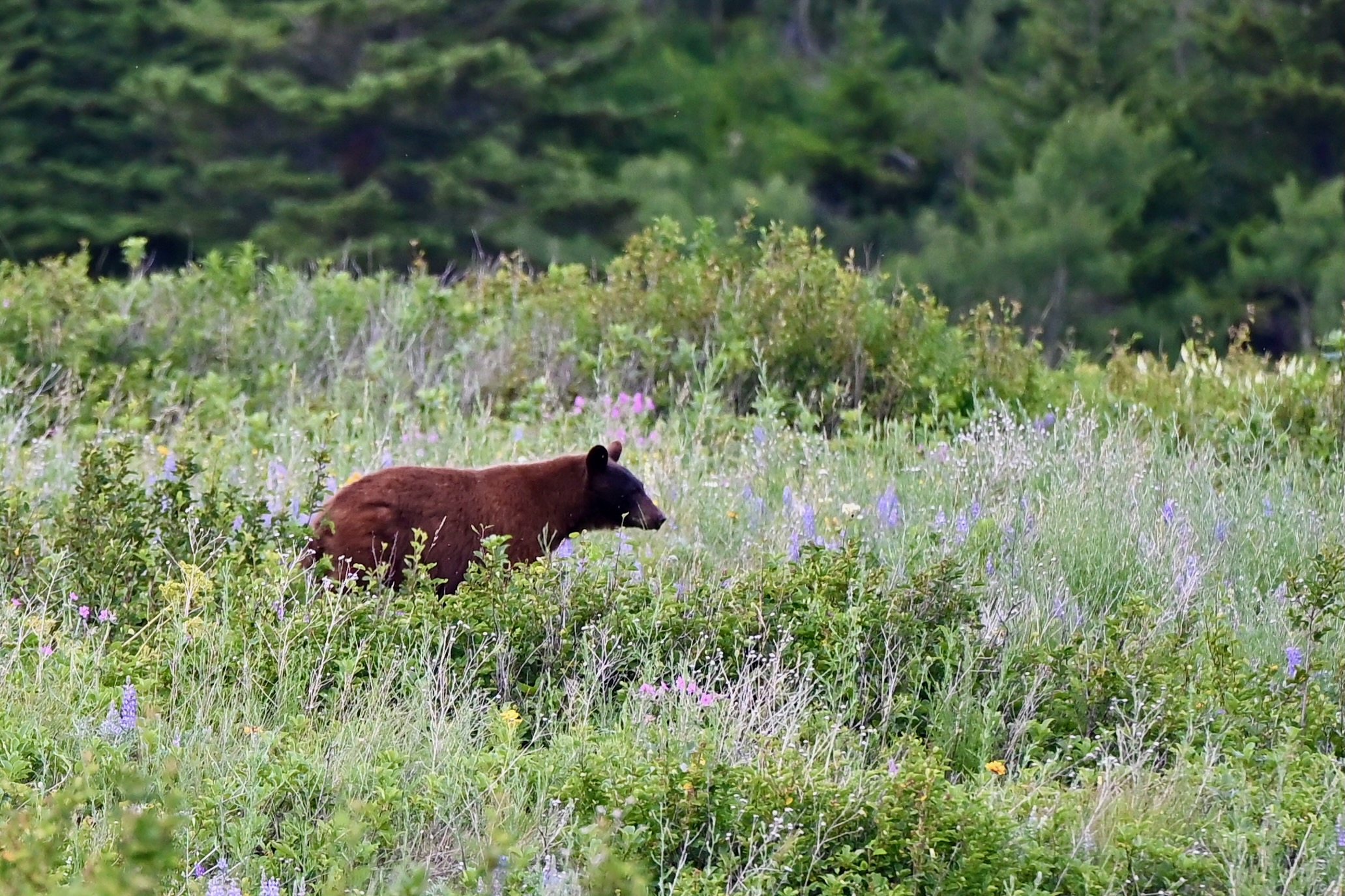
Consider a recent encounter on a shaded trail: a 7-year-old black lab mutt, Camas, suddenly froze, her hackles rising, before emitting a sharp, unfamiliar bark. The immediate, primal musk of a wild animal filled the air, prompting a hiker to instinctively reach for bear spray. Less than twenty yards away, a cinnamon-colored black bear sat halfway up a tree, its gaze fixed on the duo. The bear quickly retreated as Camas held her ground, growling, a display that initially felt like a protective act, affirming the human companion’s sense of security. Such anecdotal experiences have long fueled the pervasive narrative that dogs enhance safety in the wilderness, fostering a confidence that recent research indicates may be dangerously misplaced.
A groundbreaking study published in the Journal of Wildlife Management has meticulously analyzed a century of bear-dog interactions, spanning the diverse landscapes from Alaska’s rugged wilderness to Florida’s dense forests. This comprehensive research, led by Tom Smith, a distinguished research wildlife biologist at Brigham Young University in Utah, fundamentally challenges the conventional wisdom regarding canine companions and bear safety. Smith, with over three decades of experience working with bears, particularly in iconic locations like Alaska’s Katmai National Park, has emerged as one of the world’s foremost authorities on human-bear interactions, with influential research already shaping best practices for bear spray and firearms as deterrents. His latest work was born from a pressing need to provide empirically backed advice to a public increasingly venturing into bear habitats.
The urgency of this investigation was tragically underscored by recent high-profile incidents. In 2023, a fatal grizzly bear attack claimed the lives of two people and their dog while tenting in Canada’s Banff National Park. This past summer, a jogger and his dog suffered a mauling near Island Park, Idaho, while separate viral videos captured tense encounters involving dogs in both Banff and Alberta, highlighting a recurring pattern of conflict that demands deeper understanding and effective mitigation strategies. These events, far from isolated anomalies, reflect a growing interface between human recreation and expanding bear populations, making reliable safety information paramount.
Smith’s study, which meticulously compiled 326 bear-dog encounters from an extensive array of sources including newspaper archives, government reports, books, and specialized records, revealed a startling lack of preparedness among recreationists. Contrary to the assumption that dogs would suffice as a primary defense, a significant majority of individuals carried no effective deterrent. Bear spray was present in only about a tenth of the cases, and firearms in roughly a third. This oversight proved costly, with the study documenting five human fatalities and a staggering 56 dog deaths as a direct result of these encounters. The findings suggest a widespread and dangerous overestimation of dogs’ protective capabilities.

The research further dismantled the notion of dogs as reliable early warning systems. In only one out of eleven analyzed encounters did dogs alert their owners to a bear’s presence early enough to potentially avert conflict. More alarmingly, dogs were found to instigate the confrontation by provoking the bear in over half the cases. Once an encounter began, canine behavior rarely offered a decisive advantage: dogs tangled with bears approximately 40% of the time, fled in 20% of incidents, and remained disengaged in about 17% of cases. These statistics paint a sobering picture, challenging the romanticized image of the loyal canine protector bravely standing between its owner and a wild predator.
A critical factor influencing the severity of these interactions was the use of leashes. Unleashed dogs were involved in six times as many incidents as their leashed counterparts. Dogs roaming freely often dart ahead of their owners or crash through dense brush, surprising bears and triggering defensive reactions. The study also identified a dangerous phenomenon dubbed the "boomerang effect," where dogs, after provoking a bear, would retreat back to their owners, inadvertently leading the agitated animal directly to the human. This occurred in 27 encounters, resulting in owner injury in 70% of those instances. Furthermore, many owners, driven by instinct and affection, intervened physically to rescue their pets from scuffles with bears, often without any deterrent, leading to an alarming 85% injury rate for these individuals.
The study also reinforced a known principle in bear country safety: larger human groups generally face a lower risk of conflict. However, the presence of a dog dramatically altered this dynamic, roughly doubling the odds of a conflict compared to groups of the same size without canine companions. This suggests that the perceived safety in numbers can be negated by the unpredictable nature of domestic dogs when encountering apex predators.

From an evolutionary perspective, Smith posits that these conflicts are rooted in the ancient rivalry between bears and wolves. For millennia, wolves competed with bears for food, predated on cubs, and challenged bruins for carcasses. Modern domestic dogs, despite centuries of selective breeding, retain many ancestral instincts that can trigger similar aggressive responses from bears, which perceive them as a competitive threat rather than a harmless pet. This deep-seated biological antagonism often overrides any specific training a domestic dog might have received.
While the study offers invaluable insights, Smith also acknowledges its inherent limitations and nuances. The analysis primarily focused on domestic companion dogs, not highly trained guardian dogs specifically bred and conditioned to protect livestock from predators, which previous data has shown can effectively reduce bear presence on farms and ranches. Moreover, conflict data inherently highlights incidents where things went wrong, not the vast majority of instances where humans, dogs, and bears coexist without incident. Smith himself notes that, for the most part, people and their dogs pass through bear country without conflict, emphasizing that the study’s purpose is to illuminate risks and inform safer practices, not to prohibit dogs from wild spaces entirely.
The ultimate takeaway from this comprehensive research is not to ban dogs from bear country, but to empower recreationists with informed choices and best practices that significantly improve safety. Traveling in groups, meticulously managing food and scented items to avoid attracting bears, and making consistent noise to announce human presence are fundamental strategies. While bear bells are often ineffective, human voices and deliberate sounds are crucial. Above all, Smith unequivocally states, "You have no business being in bear country without a deterrent."

Dogs, the research demonstrates, simply do not fulfill this critical role. For the vast majority of recreationists, bear spray is identified as the most effective and safest option for fending off an aggressive bear. Its ease of use under stress, broad dispersal, and deterrent capabilities make it superior to firearms for many, though firearms can be effective for experienced and proficient users. Regardless of the chosen deterrent, it must be carried in an easily accessible location, ready for immediate deployment, as bear encounters can unfold in mere seconds. Practicing with a training canister is also highly recommended to ensure proficiency in a high-stress situation.
If bringing a dog into bear country, responsible pet ownership dictates keeping them leashed. This practice not only prevents dogs from provoking bears but also from disturbing other wildlife such as deer, elk, or ground-nesting birds, and from damaging sensitive ecosystems. The author’s own experience with Camas, who has both warned of bears and chased wildlife she shouldn’t, underscores the inherent unpredictability of even well-loved and seemingly well-behaved pets.
Ultimately, recreating in bear country is an odds game, and the data suggests that the presence of a domestic dog, while cherished, does not stack those odds in a human’s favor. As much as we adore and trust our canine companions, their instincts in the face of a wild predator are often unpredictable, potentially exacerbating a situation rather than de-escalating it. While the decision to bring a dog into wild spaces remains a personal one, informed by individual circumstances and risk tolerance, the collective statistical evidence provides a clear imperative for heightened awareness and preparedness. As Smith wisely concludes, "We work in statistics with a pool of instances. But you are not a pool of instances. You’re you." This highlights the critical balance between understanding population-level risks and applying those insights to personal safety in the vast and unpredictable wilderness.