

 Joko Susilo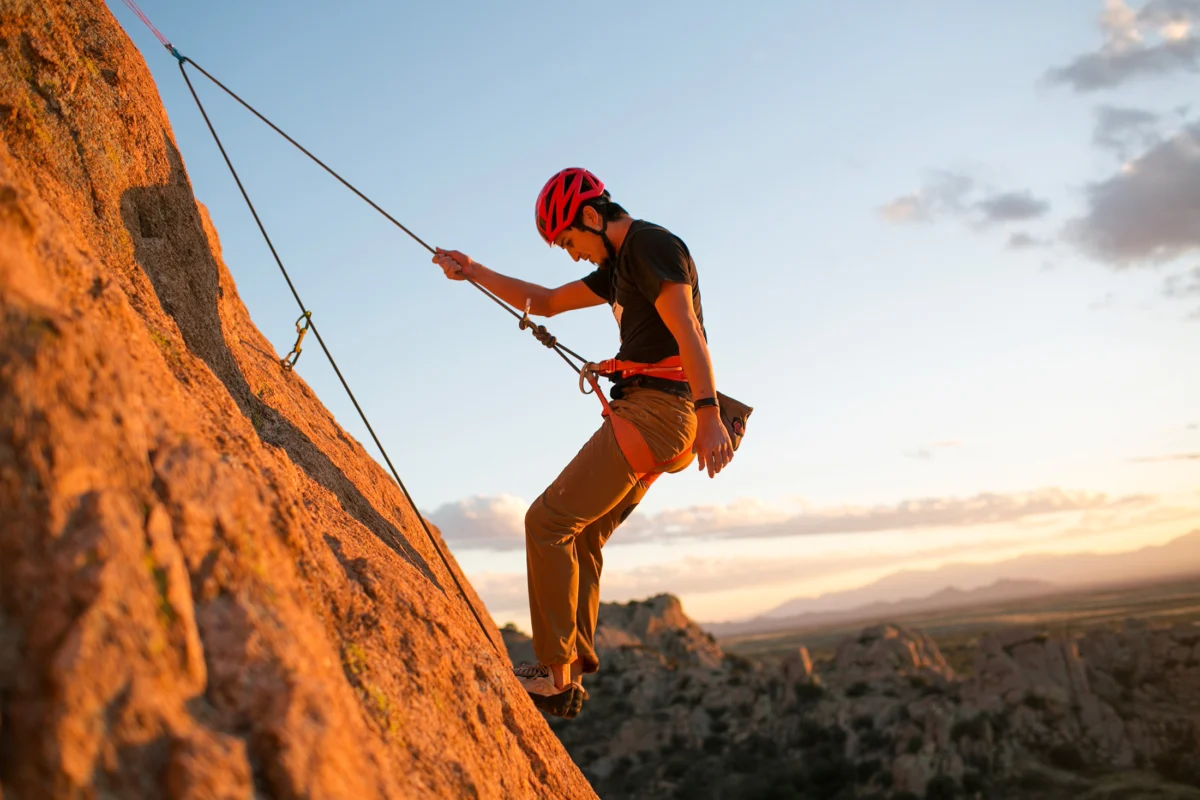
A decades-long contention concerning the appropriate management of rock climbing within designated wilderness areas appears to be nearing a resolution, as federal land-management agencies, including the U.S. Forest Service and various bureaus under the Department of Interior, recently unveiled draft guidance in mid-June concerning the deployment of permanent anchors. This pivotal development directly follows directives outlined in Congress’ 2025 Protecting America’s Rock Climbing (PARC) Act, aiming to codify climbing practices in these pristine landscapes. The controversy centers on the fundamental conflict between the Wilderness Act’s mandate to preserve areas "without permanent improvements or human habitation" and the practical, safety-critical use of fixed infrastructure by climbers.
Erik Murdock, deputy director of programs, policy, and government affairs at the Access Fund, a prominent nonprofit dedicated to both climbing access and environmental conservation, articulated the inherent tension: "A lot of people and user types are vying for the same piece of real estate, and climbers are part of that." He views the new guidance as a crucial step toward solidifying climbing’s legitimate presence within this complex recreational matrix. However, a contingent of wilderness preservation advocates expresses profound concern, arguing that the proposed regulations are excessively lenient and fundamentally compromise the core tenets and spirit of the Wilderness Act of 1964. This landmark legislation, enacted to safeguard some of the nation’s most untamed natural spaces, generally proscribes any form of permanent infrastructure, a prohibition that directly clashes with certain modern climbing techniques, particularly those involving fixed protection.
Climbing, an activity deeply embedded in the cultural fabric of outdoor recreation, often predates the very establishment of many designated wilderness areas. As climbers ascend towering rock faces, they strategically place protective devices into the rock to secure their ropes, ensuring safety in the event of a fall. These placements are also critical for establishing secure points from which to rappel safely back to the ground. The methods for achieving this protection vary significantly. "Traditional" climbing, often lauded for its minimal impact, utilizes removable gear such as spring-loaded camming devices (cams) or various nuts and hexes that can be wedged into natural cracks and subsequently retrieved. These methods leave no lasting trace on the rock face, aligning closely with the "leave no trace" ethos.

Conversely, "sport climbing" and certain aspects of multi-pitch traditional routes often necessitate "fixed" or permanent anchors. These include bolts, which are drilled directly into the rock face and fitted with metal hangers to clip ropes into, especially on long, featureless stretches devoid of natural cracks. Another form of fixed protection is the piton, a small metal spike hammered into a crack, often left behind due to the difficulty of removal or to facilitate future ascents. Furthermore, climbers may install slings or ropes around robust natural features like boulders or trees, leaving them in place to create safe, pre-rigged rappel stations for descent. These permanent fixtures, while enhancing safety and expanding access to challenging routes, constitute the crux of the debate, as their very permanence seemingly contravenes the wilderness ethic.
The recently proposed rules, reflecting the diverse mandates and operational realities of the various land-management agencies, exhibit significant variations in their approach to these permanent fixtures. The National Park Service (NPS), for example, is considering a framework that would mandate climbers to obtain special-use permits or broad administrative approval from a park superintendent before installing any new bolts. This stringent approach underscores the NPS’s emphasis on preserving natural conditions and controlling visitor impacts within its often iconic and ecologically sensitive domains. In stark contrast, the Bureau of Land Management (BLM), which oversees vast tracts of public land primarily in the western United States, proposes a more permissive stance, potentially allowing climbers to place a limited number of bolts without requiring prior authorization. This reflects the BLM’s multiple-use mandate, which often balances recreation with other activities like grazing and resource extraction.
The U.S. Forest Service, which manages approximately half of the nation’s public-land climbing opportunities, has outlined an approach that directs its local offices to collaborate directly with climbers and organized climbing groups. The aim is to jointly develop localized management plans tailored to both wilderness and non-wilderness climbing areas. This decentralized strategy acknowledges the unique characteristics of different climbing destinations and the importance of community engagement. While Erik Murdock and other climbing advocates express some reservations about the finer points of these diverse proposals, he largely characterizes them as "overall workable policies," signaling a cautious optimism within the climbing community. The ability of these varied guidelines to harmonize differing stakeholder interests, while maintaining the integrity of wilderness character, remains a critical challenge.
However, the prospect of a more permissive regulatory environment has ignited significant apprehension among wilderness preservationists. Dana Johnson, policy director for the Montana-based environmental nonprofit Wilderness Watch, voiced a grave concern that the new guidance could inadvertently trigger a "climbing free-for-all" across the nation’s most protected natural landscapes. Her worries are amplified by recent organizational shifts within federal agencies. Over the past 18 months, several Forest Service regional offices have experienced substantial reductions in their wilderness staff, attributed to deferred resignations and budget cuts enacted by the now-defunct Department of Government Efficiency (DOGE). Johnson argues that these staffing shortfalls severely impair the agencies’ capacity to effectively develop comprehensive management plans for climbing, let alone to adequately monitor the proliferation of new and existing routes containing permanent anchors. "We’re squeezing wildlife into smaller and smaller pockets of protected space," Johnson stated, emphasizing the cumulative pressure of human activity on delicate ecosystems, "and we have a lot of people waiting in line for more access."

Johnson’s concerns echo similar reservations previously articulated by some officials within the Biden administration. As recently as 2023, the administration had contemplated and proposed a national directive aimed at prohibiting all new fixed anchors in wilderness areas, concurrently requiring a comprehensive review of all existing climbing routes. This move reflected a growing apprehension about the potential for environmental damage from overcrowding and an excessive reliance on permanent bolts in protected areas. However, this administrative course was decisively reversed two years later with the passage of the PARC Act, which legally enshrined recreational climbing – encompassing the use, placement, and maintenance of fixed anchors – as an "appropriate use" within wilderness areas. This legislative intervention underscored a significant political victory for climbing advocacy groups, but it simultaneously intensified the philosophical divide with ardent wilderness proponents.
Zach Lentsch, owner of Wyoming Mountain Guides, a business that frequently guides clients into designated wilderness areas, suggests that the singular focus on permanent anchors may obscure a more fundamental and pervasive issue. Lentsch contends that the debate over fixed anchors, while important, often overshadows the broader environmental impacts stemming from all forms of quiet recreation. He points out that hikers, backpackers, and other wilderness users also contribute to overcrowding and ecological degradation. Lentsch cited the alarming example of Lonesome Lake near the iconic Cirque of the Towers in Wyoming’s Wind River Range, where environmental surveys have detected dangerous levels of E. coli bacteria, primarily attributable to improperly managed human waste. He argues that a narrow prohibition on fixed anchors would do little to address such systemic problems. Instead, Lentsch advocates for a holistic approach, urging land-management agencies to collaborate with all categories of wilderness users to implement comprehensive permit systems designed to regulate and limit usage where necessary, and to enforce requirements for campers to utilize specialized bags for containing and packing out human feces.
Lentsch also sought to demystify the climber’s perspective on fixed anchors. "If you’re not a climber, it might seem like climbers are going out there willy-nilly and putting ugly hardware into the walls," he acknowledged. "There are plenty of places in the wilderness where you don’t need a fixed anchor, and typically the ethic has been if you don’t need a fixed anchor, you don’t bring one." This highlights a nuanced understanding within the climbing community that fixed anchors are not indiscriminately placed but are utilized judiciously, primarily for safety in the absence of natural protection or for establishing essential rappel stations. The public comment period for the Forest Service’s proposal concluded on July 20, while the comment periods for the National Park Service, Bureau of Land Management, and Fish and Wildlife Service proposals remain open until August 14. These ongoing public consultations represent a critical juncture in shaping the future of outdoor recreation and wilderness preservation, as policymakers navigate the complex terrain of balancing human access, safety, and the imperative to protect the nation’s most cherished wild spaces for generations to come. The outcome will undoubtedly set precedents for how diverse recreational activities are managed in an era of increasing demand for access to public lands.







