Joko Susilo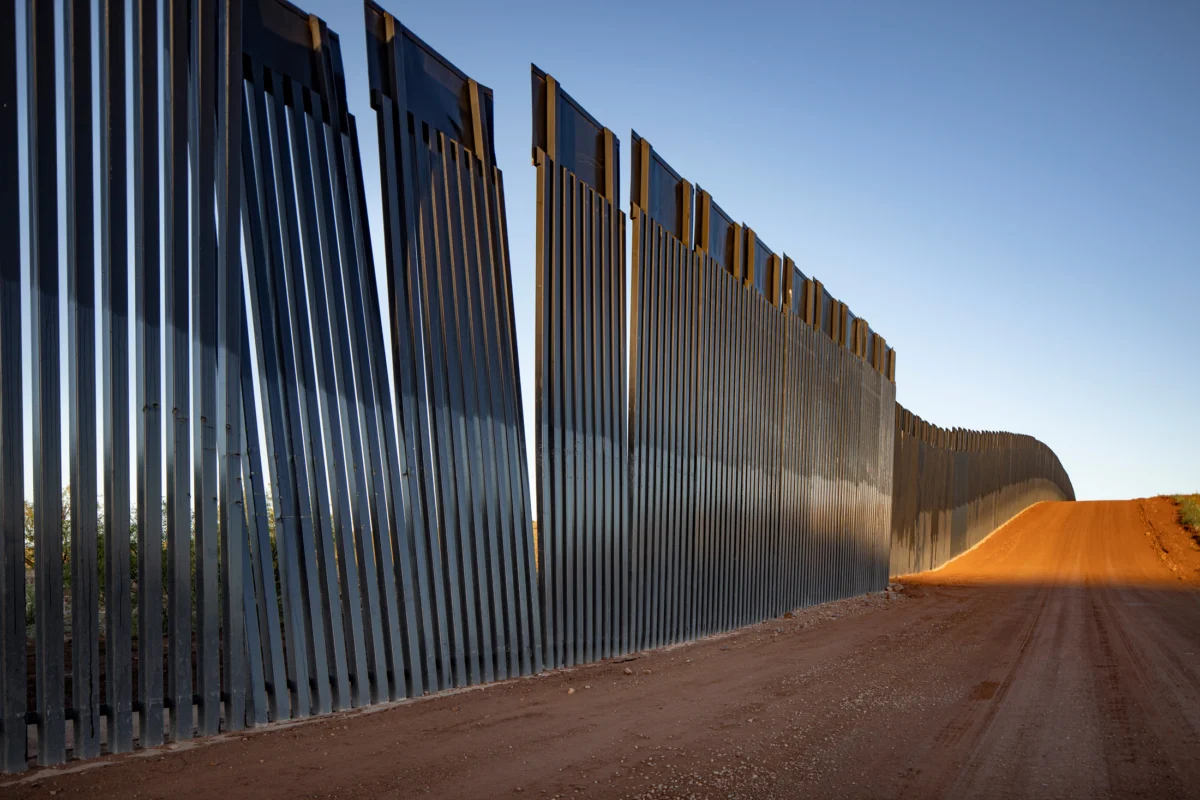
A recent discovery in southern Arizona’s remote San Rafael Valley has cast a harsh spotlight on the structural integrity and oversight of the U.S.-Mexico border wall, igniting renewed criticism over the expedited construction practices that have defined the controversial project. Documentary photographer Mikal Jakubal, while documenting the region’s unique flora in early May, stumbled upon a newly constructed section of the formidable barrier exhibiting significant damage: its concrete base was visibly cracked, and at least four massive metal planks were pushed forward at irregular angles, creating unmistakable gaps. Jakubal, initially speculating the damage might stem from heavy construction equipment, posted his observations online, wryly noting an "Oopsie on the new border wall" and questioning how individual panels, each estimated to weigh as much as 8,000 pounds, could become so severely mangled.
The perplexing state of the wall persisted for weeks, with subsequent photographs in early July confirming the damage remained unrepaired, save for a solitary orange construction cone placed conspicuously in front of the compromised section. The U.S. Customs and Border Protection (CBP) only confirmed repairs had been completed days later, following inquiries from a news outlet. While the agency stated no injuries occurred during the original construction, it notably declined to provide specific details regarding the cause of the damage, instead redirecting all questions to Fisher Sand & Gravel, the North Dakota-based firm responsible for the segment. Repeated attempts to reach Fisher Sand & Gravel and its representatives for comment proved unsuccessful, leaving a void of official explanation and deepening the mystery surrounding the incident.
This lack of transparency, critics argue, is not an isolated event but rather a troubling symptom of a systemic issue embedded in the very framework of border wall construction. Laiken Jordahl, a national public-lands advocate with the Center for Biological Diversity, contends that a 1996 statute, the Illegal Immigration Reform and Immigrant Responsibility Act (IIRIRA) Section 102, has fostered an environment where "construction is shoddy by default." This powerful statute, signed into law by President Bill Clinton and subsequently utilized by multiple administrations, grants the Secretary of the Department of Homeland Security (DHS) sweeping authority to waive dozens of federal laws to accelerate the construction of border barriers and related infrastructure. These waivers bypass critical environmental protections, cultural resource reviews, and even certain contracting regulations, ostensibly in the name of national security.

The Trump administration aggressively leveraged these provisions, particularly after President Donald Trump declared a national emergency at the border. Then-DHS Secretary Kristi Noem invoked the IIRIRA statute to "ensure the expeditious construction of the barriers and roads," thereby circumventing standard regulatory processes. This action paved the way for contractors like Fisher Sand & Gravel to secure lucrative contracts, including the $309 million award for 27 miles of wall in Arizona’s School Canyon, often through no-bid processes that are now the subject of ongoing legal challenges and intense scrutiny. Crucially, Noem also waived the National Environmental Policy Act (NEPA), which would have mandated thorough examinations of the wall’s potential impacts on local communities and the fragile desert ecosystem, effectively removing layers of crucial oversight.
Fisher Sand & Gravel, founded by Gene Fisher in 1952, has seen its fortunes soar, securing billions in government contracts during the Trump administrations. However, its involvement in border wall projects in both Texas and Arizona has been marred by persistent controversy and documented failures. In 2020, for instance, the company utilized private funds to construct a three-mile segment of the wall along the Rio Grande in Texas. This section was later deemed structurally vulnerable due to its proximity to the river, a critical environmental oversight. Only months after its completion, Hurricane Hanna struck the region, and floodwaters tragically carved out significant holes beneath the privately built structure. Years later, by 2023, parts of this same segment began to warp, further highlighting the dubious quality of its construction and the inherent risks of bypassing standard environmental and engineering assessments.
The damaged section in Arizona’s San Rafael Valley is far from an isolated case of structural deficiencies along the extensive U.S.-Mexico border. Across various stretches of this vast and diverse landscape, evidence of compromised construction persists. A government report, for instance, revealed that an "entire mountainside is in danger of collapse" in Arizona’s Pajarito Mountains because Southwest Valley Constructors, another prominent contractor, cleared vital vegetation that had previously prevented erosion. Elsewhere, powerful winds have nearly toppled sections of the border wall constructed by different firms in California and New Mexico. In one notable 2020 incident near Deming, New Mexico, strong gusts caused multiple wall panels to fall, prompting CBP to issue a statement attributing the collapse to panels "pending additional anchoring," a clear indication of incomplete or rushed work.
These repeated incidents of structural failure and the persistent lack of transparency fuel the argument that the border wall, despite its monumental cost and environmental devastation, functions more as "political theater" than an effective security measure. Laiken Jordahl, in a 2023 video posted on X (formerly Twitter), demonstrated this point by standing at the base of a wall section in Organ Pipe National Monument. He highlighted precisely where smugglers had effortlessly used an angle grinder to cut through the imposing bollards, even after repair crews had attempted to weld them shut. Jordahl emphasized the profound paradox: "This wall at Organ Pipe has destroyed desert wilderness & severed migration routes for endangered wildlife, but it will never stop people from crossing."

The ecological footprint of the border wall is immense and often irreversible. The construction process, particularly the clearing of vast swaths of land and the creation of access roads, has fragmented critical habitats for a diverse array of species, including iconic desert wildlife such as jaguars, ocelots, and Sonoran pronghorn, all of which depend on cross-border migration for survival and genetic diversity. The disruption of natural water flows, the increased erosion, and the introduction of artificial light and noise pollution further degrade sensitive ecosystems, threatening biodiversity across the arid landscape. The economic implications are equally staggering; beyond the initial multi-billion-dollar construction costs, taxpayers continue to shoulder the burden of ongoing repairs, maintenance, and the legal battles stemming from its contentious implementation.
Globally, border walls have become increasingly prevalent in the 21st century, with nations from Israel to Hungary erecting physical barriers in attempts to manage migration, combat smuggling, and enhance national security. However, the efficacy of these structures remains a contentious issue. Experts often point out that while walls may deter casual crossings, determined individuals and sophisticated smuggling operations frequently find ways to circumvent them, whether through tunnels, ladders, or increasingly advanced cutting tools, often pushing migrants into more perilous routes and exacerbating humanitarian crises. The damage observed in Arizona’s San Rafael Valley, therefore, serves as a microcosm of larger, persistent challenges: the tension between rapid infrastructure development and robust oversight, the environmental costs of prioritizing political rhetoric over ecological science, and the enduring question of whether such immense physical barriers truly achieve their stated objectives. The bent wall stands as a stark, physical manifestation of these complex and unresolved issues, raising profound questions about accountability, sustainability, and the true cost of border security in the modern era.