Roger Danuarta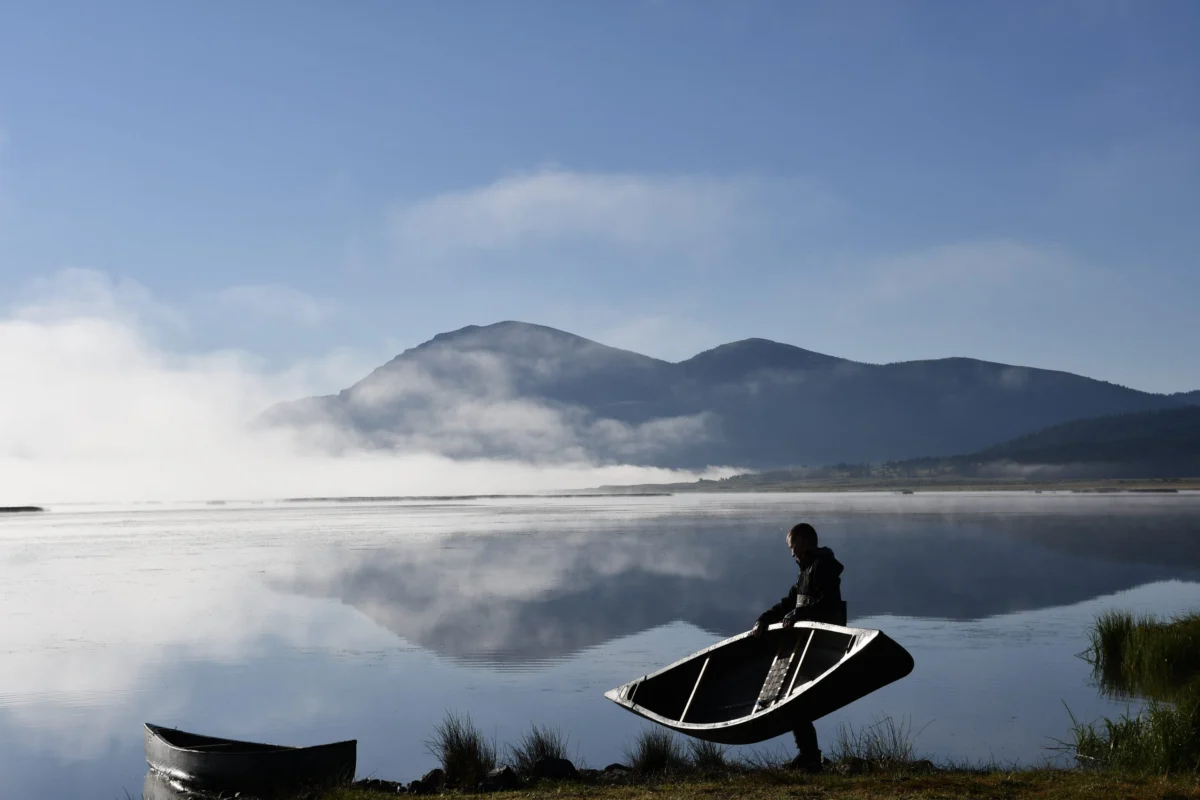
In the tranquil expanse of southwestern Montana’s Centennial Valley, the pre-dawn fog often carries a symphony of wetland life: the rhythmic beat of duck wings, the distinctive woody creak of white-faced ibis taking flight, and the incessant chatter of marsh wrens. It was into this vibrant soundscape, on a crisp mid-August morning, that a dedicated crew of 11 University of Montana researchers and Ducks Unlimited volunteers launched their canoes onto the waking waters of Lower Red Rock Lake. This marked the 22nd consecutive year for the Lesser Scaup Project, a monumental duck banding effort that has quietly built one of the world’s longest-running and most detailed datasets on breeding waterfowl, providing invaluable insights into the health of continental ecosystems.
The Red Rock Lakes National Wildlife Refuge, a cornerstone of this unique valley, cradles the largest wetland complex within the vast Greater Yellowstone Ecosystem. Established in 1935 with the primary mission of protecting the majestic trumpeter swan, the refuge has since become a critical sanctuary for thousands of migratory birds navigating the North American flyways. Beyond the celebrated swans, however, a more understated yet profoundly significant conservation narrative has unfolded here, centered on the lesser scaup. This common migratory duck, characterized by its distinctive black and white plumage, undertakes epic journeys, its habitat spanning from the expansive boreal forests of Alaska and Canada all the way to the diverse coasts of Mexico and Central America.
The urgency of this lesser scaup research became apparent in the 1990s, when Jeff Warren, then a range technician for the U.S. Fish and Wildlife Service at the Red Rock Lakes refuge, learned a sobering truth. Across North America, populations of lesser scaup had plummeted by more than 50% since the mid-1970s. This decline was particularly alarming because the species had historically been so abundant that it was often "taken for granted," as Warren recounted, highlighting a common pitfall in conservation where pervasive species are overlooked until their numbers reach critical lows. This precipitous drop signaled a widespread environmental issue, impacting a species that had once thrived across vast landscapes.
Despite the growing awareness among biologists of the lesser scaup’s decline, a crucial gap existed in their understanding: comprehensive data on what the species truly needed to survive, migrate, and reproduce effectively. The majority of North American lesser scaup traditionally nest in the remote and often inaccessible Canadian boreal forest, making extensive research costly and logistically challenging, often requiring helicopters and specialized equipment. Warren, however, recognized a unique opportunity in the Centennial Valley. Large numbers of scaup nested right in his operational backyard, offering an unprecedented chance to study the birds’ life history without the prohibitive expenses and difficulties associated with boreal fieldwork. This insight proved to be a pivotal moment for scaup conservation.
Seizing this opportunity, Warren transitioned into the role of the refuge’s wildlife biologist in 2004 and embarked on a long-term study focused on these resilient diving ducks. His approach was grounded in a fundamental ecological principle: "By understanding the biology and behaviors of a bird in your backyard, you can understand a larger picture of continental ecosystems and habitats," Warren articulated, emphasizing the interconnectedness of local and global ecological processes. He continued, "You have to start with where you are and what you know," underscoring the importance of place-based, sustained research in generating broader scientific understanding. This philosophy became the bedrock of the Lesser Scaup Project, transforming a local observation into a globally relevant scientific endeavor.

The meticulous work of duck banding is a testament to both scientific rigor and collaborative effort. As the sun climbed higher, the duck-banding team navigated their canoes through the shallow, reedy waters of Lower Lake, fanning out to form a wide semicircle. Their objective: to gently encircle groups of flightless ducklings and their watchful female companions. Lower Lake is an ideal breeding ground for scaup, boasting dense subaquatic vegetation for foraging, a rich muddy bottom, and an abundant surface layer of invertebrates—a perfect menu for the ducks. However, these very features make canoeing a challenging endeavor. Yet, Liv Lundin, a graduate student researcher leading the field operations, demonstrated practiced ease, her commands guiding volunteers as they skillfully corralled the birds into strategically placed, V-shaped nets. Once guided into the wide entrance of these nets, the ducks slowly funneled into a secure wire enclosure, where researchers then used long-handled dip nets to carefully extract the scaup, placing them into blue carrier crates for transport back to shore.
On shore, the babbling ducklings were carefully unloaded, their tiny forms entrusted to the kneeling researchers. Lundin, with a gentle touch, placed a scaup in her lap, swiftly snapping a lightweight, individually numbered metal tag above its ankle. This tag, a miniature identifier, would allow for future tracking and identification. Each duckling was then sexed, and passed to a colleague who meticulously recorded its weight and bill length – crucial metrics for assessing growth, health, and age. In years with optimal nesting conditions, the team aims to band as many as 2,000 birds, an astonishing feat representing approximately half of all lesser scaup banded across North America before the annual hunting season commences. This high volume of banded birds provides an unparalleled density of data, critical for robust population modeling.
Despite the intensive conservation efforts, the continental population trajectory of lesser scaup remains a concern. While numbers showed a hopeful increase between 2005 and 2015, they have since receded, returning to the concerning levels Warren first observed in the 1990s. This current standing represents a 15% drop below the long-term average and falls significantly short of the 4.9 million target established by the North American Waterfowl Management Plan (NAWMP). The NAWMP, a landmark international framework endorsed by Canada, the U.S., and Mexico, is designed to guide the conservation and management of waterfowl and their vital wetland habitats across the continent. The persistent shortfall underscores the complex and ongoing challenges facing the species and highlights the critical need for continued research and adaptive management strategies.
The meticulously collected data from the Centennial Valley’s well-studied duck population directly informs crucial harvest regulations and broader management strategies for scaup across the entire continent. The team’s robust estimates of female survival rates during the breeding season are particularly vital. These figures are directly utilized by the U.S. Fish and Wildlife Service to forecast how lesser scaup populations will respond to various pressures, including regulated hunting harvests and fluctuating breeding habitat conditions. This direct application of local scientific findings to continental policy demonstrates the profound impact of the Lesser Scaup Project, bridging localized research with large-scale conservation decision-making.
Over the past two decades, the Lesser Scaup Project has unveiled remarkable insights into the species’ success in this particular environment. Female scaup nesting at Lower Red Rock Lake exhibit exceptionally rapid weight gain, maintain consistently high breeding rates, and boast an above-average survival rate compared to those in other nesting areas across their range. These demographic markers are clear indicators of the profound productivity and inherent health of this expansive wetland system, which benefits from its designation within 30,000 acres of protected wilderness. "Simply put," Warren affirmed, "it’s a great place to be a lesser scaup during the breeding season." The project’s findings have also pinpointed specific management successes, revealing that nesting survival is significantly boosted by strategic water-management practices that involve slowly raising water levels throughout the breeding season, creating optimal conditions for nesting and chick rearing.
However, the nesting habitat at Red Rock Lakes represents only the initial chapter in the scaup’s remarkable life journey. The labor of banding, while critical, marks merely the beginning of the annual scientific endeavor. Soon after their banding, the ducks that hatch and fledge within the refuge will embark on their arduous migration south, driven by an innate quest for warmer wintering grounds. "You can hold a feathered duckling in your palms in August and know that within a few months they will begin migrating south, possibly to Mexico," Warren mused, capturing the profound connection these birds forge across vast geographical and ecological divides. He profoundly stated, "These birds tie the continent together," underscoring their role as living threads weaving together diverse North American ecosystems.

The adaptability of the scaup is striking; they can thrive in a remarkable array of environments, from man-made reservoirs and brackish estuaries to bustling urban bays and even the open ocean. While the majority of the population winters in Northern Mexico, along the Gulf Coast, and in Southern California, banded ducks from the Centennial Valley have been recovered from distant locales such as the San Francisco Bay Area, Washington state, and Missouri, illustrating their extensive migratory reach. Occasionally, lesser scaup from Red Rocks have even been observed flying north to molt in the rich wetlands of Alberta, Canada, further highlighting the breadth of their continental movements and the diverse habitats upon which they depend throughout their life cycle.
Yet, this very adaptability, while allowing the scaup to utilize a broad range of habitats, also presents a significant drawback: it exposes the species to an equally wide spectrum of environmental threats. Warren’s comprehensive studies on lipophilic contaminants—pollutants that readily dissolve in fats and accumulate in biological tissues—have revealed the presence of organochlorine compounds within the fat stores of female scaup. Organochlorines encompass a category of synthetic pesticides, such as DDT, which, despite being regulated or outright banned in many regions decades ago, regrettably persist in soil and water systems. These enduring toxins bioaccumulate through the food web, posing serious health risks to wildlife, including migratory birds like the scaup, and serving as a stark reminder of humanity’s lasting environmental footprint.
"This species is such an important conservation indicator," emphasized Lundin, articulating the broader ecological significance of the lesser scaup. "They have so many stopover sites when they migrate that they rely on the habitat health of multiple ecosystems." This makes their population trends a crucial barometer, reflecting the overall environmental quality and integrity of a vast network of wetlands, rivers, and coastal areas across North America. A decline in scaup numbers, therefore, signals not just a problem for one species, but a potential systemic issue impacting numerous interconnected habitats and the myriad other species that rely upon them.
At the close of another successful banding day, volunteers carefully returned the carrier boxes to the shoreline, releasing the resilient ducklings back into the water to rest and forage in preparation for their impending, arduous migrations. Later, as he sipped lemonade at his home overlooking the expansive Red Rock Lakes, Jeff Warren spoke of the species with the deep familiarity and quiet admiration of a longtime neighbor. "It’s amazing the kinds of questions you can ask when you have a life history of uniquely marked individuals," he reflected, highlighting the profound value of sustained, individual-level ecological research. At its core, the Lesser Scaup Project embodies the unwavering curiosity and persistent dedication essential to long-term ecological study, crucial for navigating the complexities of conservation in a rapidly changing world. It helps, he added with a smile, that "a duckling isn’t a tough sell. Everybody loves ducklings." This universal appeal, coupled with rigorous science, continues to drive the essential work of protecting these vital continental connectors.