Rocky Georgio
Cindy O’Neil, a resident of Carbon County, Utah, understands the volatile nature of industries tied to the region’s economic fortunes, having witnessed her husband’s years working in the now-defunct coal mines. For generations, energy production and the local economy in this central Utah pocket have been inextricably linked, often at a significant cost to the community’s health and environment, as O’Neil recounted with her mention of black lung disease, explosions, and fires. Now, a new wave of industrial development, centered around data centers and novel energy sources, is poised to reshape the landscape near her rural home, sparking even greater apprehension than the legacy of coal mining. "It’s all descending, these data centers," O’Neil observed, her concerns amplified by the rapid proliferation of new projects, some situated mere miles from residential areas.
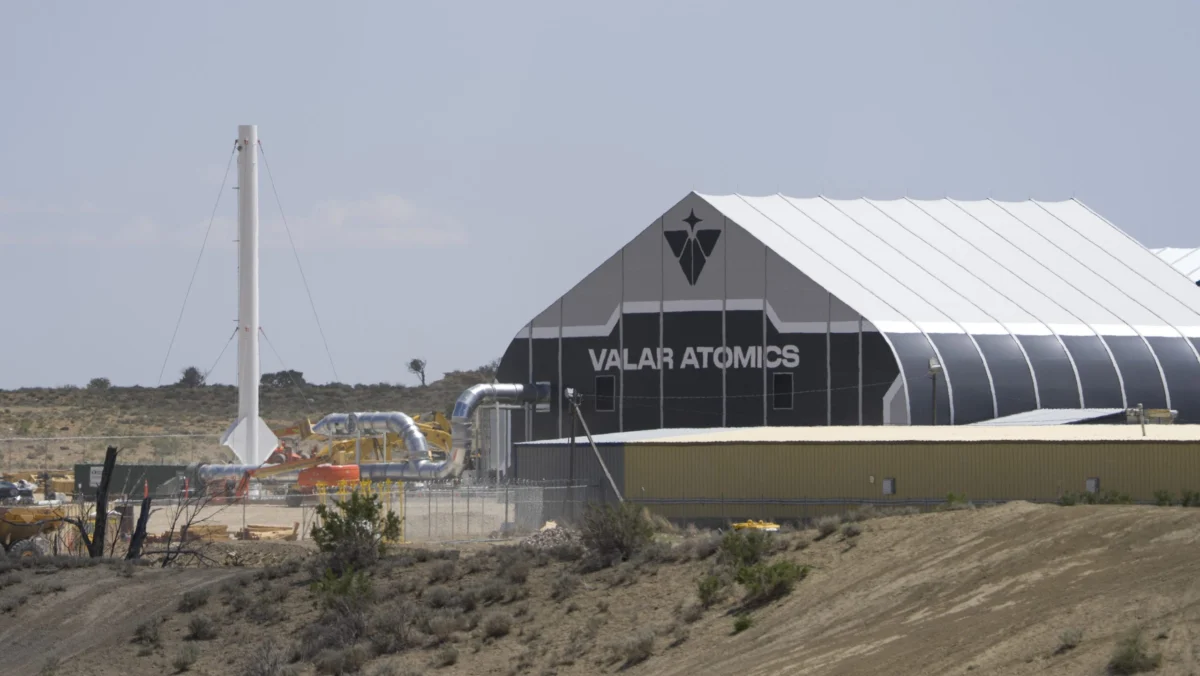
Her latest community updates revolve around Valar Atomics, a nuclear startup planning to construct a sprawling complex featuring 456 small modular reactors (SMRs) on Bureau of Land Management land. This ambitious project, dubbed "Project Beehive," aims to power an array of industrial activities, including data centers, and will involve the storage of radioactive waste. The initiative has garnered support from the state of Utah, which has agreed to lease a square mile of state-owned trust lands to Valar Atomics for up to a century. This lease is expected to generate substantial revenue for Utah’s schools, with projections estimating $35 million in lease rents over 50 years. During a recent Utah Trust Lands Administration board meeting, three Carbon County residents employed or anticipating employment with Valar, alongside all three county commissioners, expressed their strong backing for the project. Commissioner Larry Jensen acknowledged the controversy surrounding both data centers and nuclear power but emphasized the commissioners’ commitment to moving forward, believing they represent the "silent majority" of the community.

However, this sentiment is far from universal. Cheryl Lupo, a longtime county resident and candidate for county commissioner, vehemently disagrees with the notion of a silent majority, stating that her signature-gathering efforts for her unaffiliated candidacy revealed widespread opposition to data centers and nuclear facilities. "People are up in arms," Lupo declared, "Torches and pitchforks. Because they’re not being heard." The Valar Atomics project is not the sole large-scale development proposed for Carbon County; Altigen Energy’s "Jurassic Spark" project is also in the works. This separate data center complex, slated to cover hundreds of acres east of Wellington, plans to incorporate a massive natural gas plant, with initial capacity for 250 megawatts of power and potential for expansion to 3 gigawatts, a figure approaching the entire state of Utah’s current electricity consumption.
The proposed developments represent a stark economic pivot for Carbon County, which saw its coal mines produce nearly 10 million tons in 2006 but ceased all mining operations by 2023. This decline was driven by a shift towards cheaper energy sources like renewables and natural gas, coupled with the depletion of local coal seams. "They say everything’s left us, and if we don’t grab these table scraps we’re not going to get anything," O’Neil remarked, expressing her belief that the county deserves more than just residual opportunities.
Valar Atomics’ proposed complex extends beyond simply housing data centers. The company intends to leverage the leased state trust lands for several key operations: running its SMRs, processing uranium TRISO fuel for the reactors, establishing water desalination facilities, manufacturing steel, and refining critical minerals. The state’s Trust Lands Administration, while declining to comment directly on the Valar project, highlighted the revenue-generating potential for public education.

The advent of SMR technology for commercial use in the United States remains largely untested, a point acknowledged by Mike Nelson, chair of the Trust Lands Administration board. During the September meeting, Nelson admitted, "We weren’t always sure what to ask about, and probably still aren’t sure of everything to ask about because this is a first, right?" This admission underscores the inherent uncertainties surrounding the deployment of such novel energy technologies.
Utah has a complex and often fraught history with nuclear activities. Lupo shared a personal connection, believing that downwind effects from radioactive weapons testing in Nevada during the 1950s contributed to her mother’s premature death and her grandfather’s demise. This historical context fuels her strong opposition to nuclear development, declaring, "I will never, ever be a proponent of nuclear."
The "Jurassic Spark" project by Altigen Energy, which specializes in building natural gas power plants for data centers, also raises significant environmental concerns. While developers have asserted their intention to use closed-loop cooling systems with minimal water demands, the region is already water-scarce, with every drop accounted for. Aspen Westenskow, a lifelong resident of Carbon and Emery counties, voiced her anxieties about the potential for a "heat island" effect generated by the data centers, especially given the valley’s geography, which could exacerbate localized warming. Furthermore, the clearing of land for such large industrial complexes diminishes natural cooling elements like brush and trees. "The heat island that the data centers produce, that concerns me," Westenskow stated, adding, "They go clear all this land, the brush, the trees. What helps cool the planet down? Not flat dirt."

The increasing demand for energy to power advanced computing, particularly for artificial intelligence, has led data center developers to increasingly rely on natural gas, as traditional utility grids struggle to meet these intensive electricity needs. In response, the Utah Legislature passed SB 132, which allows private companies with substantial energy demands to construct their own power generation facilities. While intended to foster business development without overburdening existing infrastructure, this legislation has spurred a surge in plans for natural gas-fired power plants, despite natural gas being a potent greenhouse gas contributing to climate change and local air pollution.
In response to mounting resident concerns, Carbon County issued a statement on July 3rd acknowledging the difficult economic realities facing the region due to the coal industry’s decline, which has shifted property tax burdens onto homeowners and remaining businesses. The commissioners’ support for data centers is primarily driven by their potential to significantly boost tax revenues. The statement also addressed the use of non-disclosure agreements (NDAs), explaining that they are often necessary to encourage companies to explore projects in the county, preventing them from choosing other locations. While it remains unclear if NDAs were specifically involved with Altigen or Valar, their prevalence in Carbon County business dealings was confirmed by Oran Stainbrook, a former county planning commission and economic development board member. Stainbrook, who resigned to take a job in Colorado, believed the commissioners were acting in the county’s best interests to attract jobs and investment, though he was not privy to specific agreements related to the data center projects.
From her perspective along U.S. Highway 6, O’Neil remains skeptical of the process. "You shouldn’t be hiding what you and the company are going to bring to a community," she argued, "and not tell the community until it’s too late and a done deal." This sentiment highlights a broader community tension between the urgent need for economic revitalization and the deep-seated concerns about environmental impact, safety, and the right to transparent public discourse regarding transformative industrial projects.