Roger Danuarta
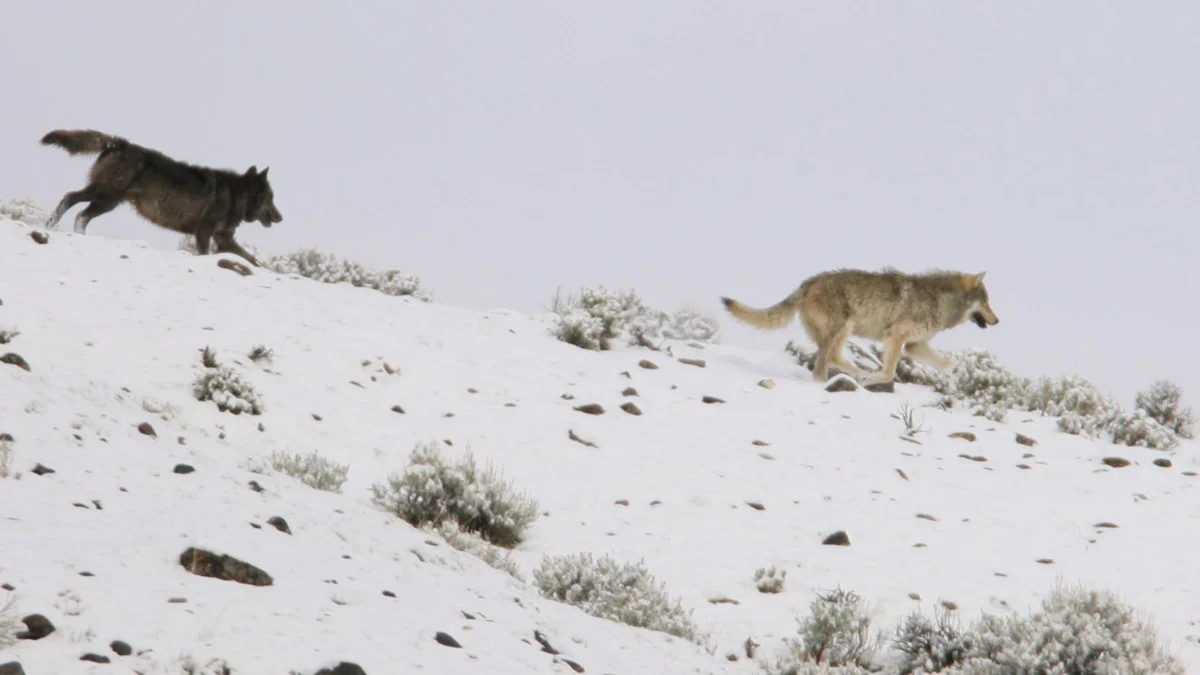
A pivotal hearing before the U.S. Court of Appeals for the Ninth Circuit in Missoula on Tuesday marked a critical juncture in the decadelong legal and scientific debate over gray wolf protections, with potential far-reaching implications for endangered species management across the Western United States. This ongoing legal saga, which pits federal agencies and state governments against a coalition of conservation groups, revisits fundamental questions about how wildlife recovery is defined, the role of federal versus state authority, and the application of scientific evidence under the landmark Endangered Species Act (ESA).
The current controversy has deep roots, tracing back to the successful reintroduction of gray wolves (Canis lupus) into Yellowstone National Park and central Idaho in the mid-1990s. This landmark conservation effort, which brought wolves back to their native ranges after decades of extirpation, led to a remarkable ecological recovery, restoring a crucial apex predator to Western ecosystems. However, the burgeoning wolf populations also ignited fierce debates among diverse stakeholders, including ranchers concerned about livestock depredation, hunters advocating for robust game populations, and conservationists dedicated to the species’ long-term survival. This complex interplay of ecological success and socio-economic tension ultimately led to congressional intervention in 2011. A specific rider attached to a federal budget bill controversially removed gray wolves from the Endangered Species List in Montana, Idaho, and portions of other states. This unprecedented legislative delisting shifted management authority from the federal government to state wildlife agencies, which subsequently implemented hunting and trapping seasons to control wolf populations.
For years, the federal delisting was intended to end the "lupine tug-of-war" that had entangled wolves in an endless cycle of litigation. However, the shift to state management did not quell the controversy. By 2021, concerns mounted among conservation organizations regarding the aggressive nature of state-sanctioned wolf hunting policies. Groups such as the Center for Biological Diversity and others filed an emergency petition with the federal government, advocating for the relisting of wolves in the Northern Rockies. Simultaneously, another significant petition urged the federal government to extend ESA protections to wolves across the entirety of the Western U.S., arguing that fragmented management strategies failed to address the species’ broader conservation needs.
These petitions ignited nearly half a decade of intensive agency analysis, scientific review, and legal challenges, culminating in the recent Ninth Circuit hearing. A key development in 2024 saw the U.S. Fish and Wildlife Service (FWS), the primary federal agency responsible for ESA implementation, assert that wolves in the Northern Rockies no longer constituted a "distinct population segment" (DPS). Under the ESA, a DPS is a discrete population that is significant to the species as a whole, allowing for localized listing or delisting. The FWS concluded that as wolf populations expanded and interconnected across the Western landscape, they now formed a single, resilient "metapopulation" spanning California, Idaho, Montana, Oregon, Washington, Wyoming, and even newly documented presences in Colorado. Based on this reclassification, the FWS determined that wolves across the entire Western U.S. did not face sufficient threats to warrant protection under the ESA, a decision that essentially maintained the delisted status for Northern Rockies wolves.

This FWS finding immediately triggered new legal action from conservation groups. In a significant victory for environmental advocates, a federal district court subsequently ruled that the FWS’s decision was "arbitrary and capricious," a legal standard indicating that an agency’s action lacked a rational basis or failed to consider relevant factors. This ruling effectively pushed the burden back to the FWS to re-evaluate its assessment. The federal government, joined by the states of Montana, Idaho, and Wyoming, and several hunting and livestock organizations, appealed this district court decision, bringing the case before the three-judge panel of the Ninth Circuit in Missoula.
During Tuesday’s arguments, Department of Justice attorney Emily Polachek, representing the federal government and its allies, contended that the lower court judge had erred by disregarding established legal precedent, selectively interpreting scientific data, and misconstruing several critical elements of the FWS’s comprehensive findings. Polachek urged the appellate panel to reverse the district court’s judgment, emphasizing the FWS’s expertise and the thoroughness of its analysis.
The core of the legal debate revolved around several complex questions central to modern wildlife conservation. Attorneys on both sides fiercely debated the appropriate role of a species’ historic range in its present-day recovery — whether recovery means returning wolves to every corner of their ancestral lands or simply establishing viable populations within a significant portion of that habitat. The definition and application of the "best available science" under the ESA also featured prominently, with conflicting interpretations of population estimates and threat assessments. Furthermore, the discussion delved into the critical impact of human-caused mortality, particularly from hunting, trapping, and poaching, on the future viability of wolf populations across the West.
Margie Robinson, a staff attorney for Humane World for Animals, argued vehemently for upholding the district court’s decision, asserting that the FWS had once again misinterpreted the law, sidestepped key scientific evidence, and inadequately evaluated the threats confronting wolves in the Western United States. She underscored that while conservationists were not advocating for wolves to return to "every square inch" of their former habitat, the FWS failed to account for their absence from "major geographical areas that are biologically important to the species."
Judge Richard C. Tallman, appointed by President Clinton, expressed skepticism regarding the plaintiffs’ arguments concerning the extent of historic range, questioning the practical boundaries of such a requirement. This philosophical query echoes broader conservation debates surrounding species like grizzly bears and wolverines, which historically occupied vast territories but were largely extirpated from much of their range. Determining what constitutes a "truly recovered range" for such wide-ranging species presents an enduring challenge for wildlife managers and policymakers alike.

Adding to the complexity, plaintiffs highlighted what they perceived as significant uncertainties in current wolf population estimates. Kate Chupka Schultz, senior attorney with the Center for a Humane Economy, specifically cited Montana’s recent downward revision of its estimated wolf population size by approximately 34%. She argued that "when populations of pretty much any species become smaller, uncertainty necessarily increases," suggesting that such fluctuations should trigger greater caution under the ESA. Robinson further posited that states like Montana and Idaho maintain an "active interest in maintaining the viability of these species" only to the extent necessary to avoid federal relisting, implying a strategic approach to population management that prioritizes state control over comprehensive recovery.
Globally, the management of large carnivores like wolves often involves similar tensions between conservation goals, human livelihoods, and local autonomy. From the re-emerging wolf populations in European countries like Germany and France to ongoing conflicts in Asia, striking a balance between protecting biodiversity and mitigating human-wildlife conflict remains a persistent challenge, reflecting the universal nature of the debates unfolding in the U.S. West.
The Ninth Circuit judges, including Trump-appointed Judge Daniel Bress, heard three separate wolf-related cases on Tuesday morning and did not provide a timeline for rendering a decision, acknowledging the substantial and intricate arguments presented. The outcome of this appeal carries significant weight. Should the federal government prevail, wolves in the Northern Rockies will remain off the endangered species list, aligning with the FWS’s 2024 findings. Conversely, if the lower court’s decision is affirmed and conservation groups emerge victorious, the FWS will be compelled to conduct a new, comprehensive analysis of whether wolves across the entire Western U.S. warrant federal protection under the ESA.
Meanwhile, the practical implications of this ongoing legal battle are already manifest on the ground. Wolf hunting seasons are currently underway in Montana, Idaho, and Wyoming. In Wyoming’s designated trophy game management area south of Yellowstone National Park, hunters have already harvested 17 of the maximum quota of 22 wolves, while the rest of the state operates without a harvest limit. Montana has seen 11 wolves harvested statewide, with one management unit north of Yellowstone closing in late September after meeting its quota of a single wolf. Up-to-date data for Idaho’s wolf hunt is not publicly available, highlighting the varying levels of transparency and management strategies among the states. The Ninth Circuit’s eventual ruling will not only determine the immediate fate of gray wolves in the American West but also set crucial precedents for how the Endangered Species Act is interpreted and enforced for other recovering species nationwide, shaping the future of wildlife conservation and federal-state environmental policy for decades to come.