Rocky Georgio
A significant legislative push is underway in the United States Senate, aiming to dramatically accelerate the approval process for major infrastructure and energy projects, a move hailed by proponents as crucial for national progress but decried by critics as a dangerous erosion of vital environmental safeguards. The Bipartisan American Affordability and Jobs Act, introduced by a bipartisan group of senators including Martin Heinrich (D-N.M.) and Mike Lee (R-Utah), seeks to streamline federal environmental reviews and permitting, a process that has historically been lengthy and complex, often taking years, if not decades, to complete. The debate intensified following the Biden administration’s May 2023 approval of the SunZia transmission line, a massive project designed to transport wind power from New Mexico to Arizona, which had languished for 17 years through various federal reviews and previous setbacks.
Clean energy advocates championed the SunZia approval as a critical step toward decarbonizing the nation’s power grid, enabling states in the Southwest to rely on renewable energy sources to meet demand even after sunset, thereby reducing dependence on fossil fuels like natural gas. However, the protracted review period for SunZia, which was previously stalled due to concerns over its potential impact on migratory birds, highlighted the perceived inefficiencies in the current permitting system. This prompted calls from various groups for legislative action to expedite the development of clean energy infrastructure, arguing that the urgency of the climate crisis demands faster deployment of such projects. The Bipartisan American Affordability and Jobs Act appears to be a direct response to these calls, seeking to cut through the "red tape" that many believe impedes national development goals.
The proposed legislation has garnered support from a wide array of organizations, ranging from Americans for a Clean Energy Grid and the American Petroleum Institute to climate hawks and the Breakthrough Institute, a think tank focused on technological solutions to environmental challenges. The Natural Resources Defense Council (NRDC) specifically praised the bill’s provisions related to transmission infrastructure, estimating that they could slash average permitting timelines by as much as 96 months, an "essential component" for achieving grid decarbonization. The bill also includes provisions that would require energy-intensive facilities like data centers to contribute to the costs of any necessary grid upgrades they necessitate.
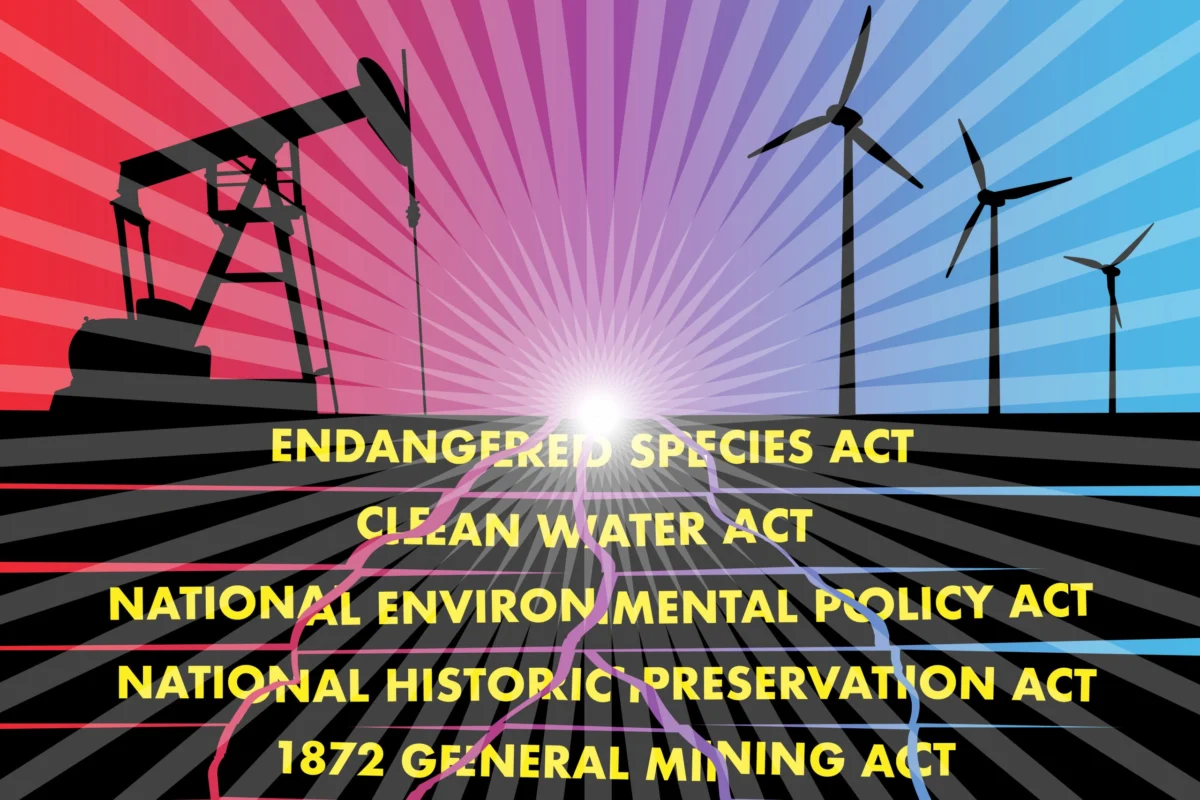
However, this pursuit of efficiency has ignited significant opposition from environmental organizations, tribal nations, and progressive lawmakers who argue that the bill’s mechanisms for accelerating project approvals come at the expense of fundamental environmental laws. These bedrock statutes, including the National Environmental Policy Act (NEPA), the Endangered Species Act (ESA), the Clean Water Act, and the National Historic Preservation Act, were enacted to protect public health, natural resources, and cultural heritage, while ensuring public participation in land and resource management decisions. The legislation’s expansion to include fossil fuel projects, a concession to secure Republican support, has further amplified concerns that it weakens protections for both the environment and communities.
Critics contend that the bill fundamentally alters these laws, potentially diminishing their effectiveness and leading to irreversible environmental damage. The Western Environmental Law Center has voiced strong opposition, with its director, Erik Schlenker-Goodrich, labeling the bill a "turd grenade" on social media. Even the NRDC, while supportive of some aspects, has labeled the provisions weakening environmental laws as "deeply flawed" and has pledged to work towards their amendment. The Senate Committee on Energy and Natural Resources is expected to review the bill shortly after Congress reconvenes, setting the stage for a contentious legislative battle.

At the heart of the debate are the proposed changes to several key environmental laws. The National Environmental Policy Act (NEPA), established in 1970, mandates that federal agencies assess the environmental impacts of major federal actions through environmental impact statements (EISes) or environmental assessments (EAs). While considered a cornerstone of environmental protection, NEPA has also been a frequent target of criticism for contributing to project delays. The proposed legislation aims to significantly accelerate NEPA reviews. While the Fiscal Responsibility Act of 2023 already capped the EIS portion at two years, the new bill would impose much stricter timelines for final agency decisions. For instance, the Bureau of Land Management would be required to issue a decision within 45 days of an EIS for projects like solar farms or data centers on its lands, drastically shortening the public comment period and overall review process.
Furthermore, the bill seeks to limit legal challenges to approved projects. It proposes shortening the statute of limitations for lawsuits and raising the threshold for who has legal "standing" to bring a suit. Crucially, even if a project faces legal scrutiny, courts would be prohibited from pausing or halting construction while the case is pending. This means projects could proceed, and potential environmental or cultural impacts could be realized, even while legal battles are ongoing. If a court finds an agency violated NEPA, the bill suggests it would merely return the EIS or EA for revisions rather than overturning the approval, a change that Michael B. Gerrard, an environmental law professor at Columbia Law School, argues would "pull NEPA’s principal teeth – the possibility of a court order blocking a project for violating NEPA." The legislation also introduces broad exemptions for certain energy storage projects and modifications to transmission and distribution lines, removing them from NEPA review altogether.
The Clean Water Act, which requires states and tribal nations to certify that projects affecting federal waters will not impair water quality, also faces significant alterations. Section 401 of the Act has been a powerful tool for states and tribes to influence project design, reroute infrastructure, or even block projects deemed harmful to water resources. The permitting reform bill aims to narrow the scope of water-quality impacts that can trigger a denial, shifting the burden of proof from developers to the certifying state or tribe. Additionally, the time frame for the Environmental Protection Agency to veto Army Corps of Engineers permits under the Clean Water Act would be curtailed, potentially limiting the ability of administrations to halt projects like the Pebble Mine in Alaska, which was blocked by the EPA in January 2023.

The Endangered Species Act (ESA) would also see changes affecting judicial review and consultation processes. Lawsuits challenging ESA violations would be fast-tracked to the D.C. Circuit Court of Appeals, bypassing district courts and potentially disadvantaging plaintiffs by reducing their time for evidence gathering and trial preparation. The Fish and Wildlife Service’s consultation period for assessing project impacts on endangered species would be reduced from 90 to 60 days. Moreover, certain projects could be exempted from federal ESA reviews entirely, with states assuming responsibility for the consultation process. Critics warn this could lead to inconsistent protections across states, particularly in those less inclined to enforce environmental regulations, thereby jeopardizing imperiled species.
Beyond energy and infrastructure, the bill includes provisions that could further benefit the mining industry by amending the General Mining Law of 1872. This century-old law has been criticized for allowing extensive mining on public lands. The proposed changes would reportedly loosen restrictions on the use of "mill site" claims, which are used for processing ore and storing waste. Currently, courts have used these provisions to limit the amount of public land that can be dedicated to waste disposal. The reform bill, however, could allow corporations to stake an unlimited number of mill sites, potentially enabling them to appropriate vast tracts of public land for waste management, a move environmental advocates fear will lead to widespread land degradation.
The SunZia project itself serves as a complex case study illustrating both the potential benefits and persistent shortcomings of the current permitting system. While the lengthy review process did allow for modifications that garnered endorsement from organizations like Audubon Southwest, it also revealed how regulatory bodies can prioritize development over environmental and cultural concerns. In Arizona, for instance, objections from Indigenous nations and conservation groups regarding the project’s route through the biodiverse San Pedro River Valley and its proximity to culturally significant sites were reportedly dismissed by state regulators, who are often perceived as more industry-friendly than their New Mexico counterparts. This led to the project’s preferred route remaining along the San Pedro River, despite significant opposition. A subsequent lawsuit, filed to protect the river valley, has so far failed to halt construction, even under the existing, more stringent permitting regime.

The San Pedro River Valley now faces another potential threat: the proposed Desert Southwest natural gas pipeline, which would transport methane from the Permian Basin to Arizona, also traversing the valley. Under current regulations, this project would undergo thorough NEPA and National Historic Preservation Act reviews, with states and tribes having a more substantial voice under the Clean Water Act. However, if the permitting reform legislation is enacted, such projects could be exempted from these critical reviews, raising alarms about the future protection of sensitive ecosystems and historically important areas. The outcome of this legislative debate will have profound implications for the pace of energy development, the protection of natural and cultural resources, and the balance of power between industry, government, and the public in managing America’s lands and waters.