Rocky Georgio
Cindy O’Neil, a resident of Carbon County, Utah, is intimately familiar with the boom-and-bust cycles that have defined her community’s economic landscape. Her husband’s long career in the county’s namesake coal mines left an indelible mark, mirroring the region’s deep-seated connection between energy production and its economic fortunes, often at a significant cost to local residents. "We’ve had the coal. We’ve dealt, the whole community, with black lung," O’Neil recounted, her voice tinged with the weight of shared experience. "The explosions, the fires, and all the things that came along with it." Now, a new wave of industry and energy generation is poised to arrive near her rural home, sparking anxieties that O’Neil suggests surpass even the dangers associated with their long history of coal mining.
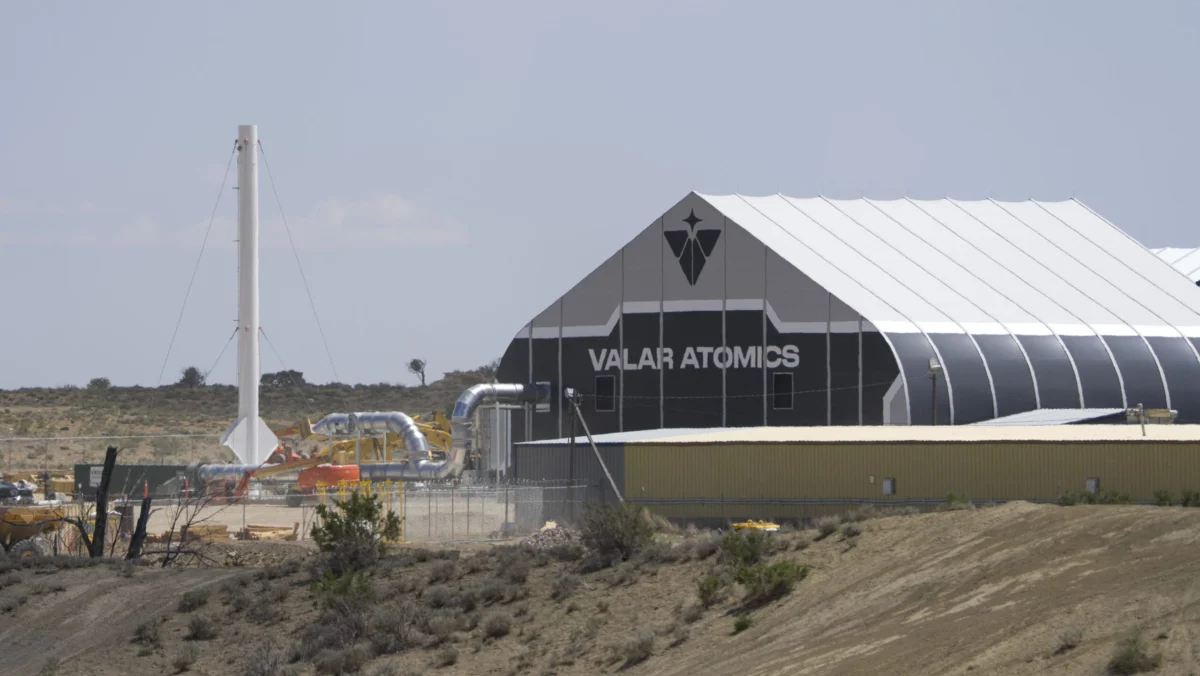
"It’s all descending, these data centers," O’Neil stated, her concern evident as she monitors the emergence of new, often secretive, industrial projects and shares updates through local social media groups. "They’re setting these things within a couple of miles of homes." Her most recent communications highlight significant local discussion surrounding Valar Atomics, a nuclear energy startup. The company has ambitious plans to construct a sprawling complex featuring 456 small modular reactors (SMRs) on extensive Bureau of Land Management land within the county. This technology, largely unproven and untested for commercial deployment in the United States, raises particular apprehension. According to reports, the project, dubbed "Project Beehive," intends to store radioactive waste and serve as a power source for various industrial operations, including data centers. The initiative has garnered support from the state of Utah, which has agreed to lease a full square mile of state-owned trust lands to Valar Atomics.
In parallel, another significant data center development is underway in the county: Altigen Energy’s "Jurassic Spark" project. This undertaking will span hundreds of acres and includes plans for a substantial natural gas power plant. This marks an abrupt and dramatic shift for Carbon County, which historically relied heavily on coal. In 2006, the county’s coal mines produced nearly 10 million tons of coal. However, a confluence of factors, including the increasing affordability of alternative energy sources like renewables and natural gas, coupled with the depletion of accessible coal seams, led to the rapid decline of the region’s primary economic engine within a few decades. By 2023, coal mining operations in Carbon County had ceased entirely.

"They say everything’s left us, and if we don’t grab these table scraps we’re not going to get anything," O’Neil commented, reflecting the sentiment of many in the community facing economic uncertainty. "I don’t think our county has to take the table scraps." The new data center proposals, however, represent a departure from coal-based energy, seeking power from different sources. The Utah Trust Lands Administration has entered into a lease agreement with Valar Atomics for a square mile of state-owned land, potentially extending up to 100 years. This lease will facilitate the operation of some of Valar’s SMRs, support uranium fuel processing for these reactors, enable water desalination, facilitate steel manufacturing, and contribute to the refining of critical minerals, all while powering data centers. Projections presented to the Trust Lands Administration board indicate that the Valar site could generate approximately $35 million in lease revenues over a 50-year period, with these funds earmarked to benefit Utah’s schools. The state agency, however, declined to provide specific comments on the Valar project.
During a board meeting in September, three Carbon County residents employed or anticipating employment with Valar spoke in favor of the project, and all three Carbon County commissioners also voiced their support. Commissioner Larry Jensen acknowledged the contentious nature of the proposals, stating, "It’s important that you understand that the Carbon County commissioners are committed to allowing these things to move forward." He added, "Even with the pushback – we realize that there are a few in our community who will push back – but the silent majority are the ones that we really represent."
Cheryl Lupo, a long-time county resident and candidate for the county commission, strongly disputes Jensen’s assertion. She explains that her campaign, which required collecting 300 signatures to qualify for the ballot, revealed an overwhelming opposition to both data centers and nuclear plants among the residents she encountered. "People are up in arms," Lupo declared, describing the sentiment as "torches and pitchforks" because they feel their voices are not being heard.
The embrace of nuclear technology by Valar Atomics has drawn considerable attention, particularly given the company’s recent advancements. Earlier this year, Governor Spencer Cox, U.S. Senator John Curtis, and other high-ranking Utah officials welcomed Valar to the state, enabling the company to test its "Ward250" microreactor at the San Rafael Energy Lab in neighboring Emery County. In June, Valar announced it had achieved "self-sustaining criticality" with the reactor, a milestone indicating a stable, self-perpetuating nuclear fission chain reaction. The company also has plans to power a 30-megawatt nuclear-powered AI data center in Emery County, in collaboration with the prominent computer chip manufacturer Nvidia.

The deployment of small modular reactors for commercial use in the United States remains an emerging frontier. At a recent Trust Lands Administration meeting, board chair Mike Nelson candidly admitted the uncertainties associated with the Valar agreement, stating, "We weren’t always sure what to ask about, and probably still aren’t sure of everything to ask about because this is a first, right?" This acknowledgment underscores the novel nature of the technology and the regulatory challenges it presents.
Utah’s history with nuclear activities carries a somber legacy that resonates with residents like Lupo. She attributes her mother’s premature death at age 38 to the downwind effects of radioactive weapons testing conducted in Nevada during the 1950s, noting that her mother lived in Carbon County at the time. Lupo believes that fallout from these tests also contributed to her grandfather’s death, fueling her deep-seated opposition to nuclear power. "I will never, ever be a proponent of nuclear," she stated firmly.
Even before Valar’s proposals gained significant traction, rumors circulated regarding another potential data center campus in Carbon County. Altigen, a company specializing in constructing natural gas power plants for data centers, has identified a site east of Wellington for its "Jurassic Spark" project, which is projected to encompass 1,200 acres – nearly double the size of the Valar campus, according to local Community Economic Development Board minutes. Initial plans involve a 250-megawatt natural gas plant to power the complex, with the potential to expand to 3 gigawatts of electricity generation, a capacity that approaches the total electricity consumption of the entire state of Utah. Altigen did not respond to requests for comment.
The increasing reliance on natural gas for powering data centers is a growing trend, as utility providers grapple with the immense electricity demands of artificial intelligence servers. Last year, the Utah Legislature enacted Senate Bill 132, which empowers private companies with energy requirements of 100 megawatts or more to establish their own self-contained generating stations. This legislation aimed to foster business development, including the burgeoning data center sector, without unduly burdening the existing power grid. The consequence has been a surge in permit applications and development plans for natural gas-fired power plants. However, natural gas, primarily composed of methane, is a potent greenhouse gas that contributes to climate change and pollutes local air quality. Furthermore, natural gas plants release significant amounts of heat.

The thermal impact of data centers is another growing concern, particularly in geographically sensitive areas. Robert Davies, a physics professor at Utah State University, explains that nuclear plants, due to their inherent inefficiency, can generate even more heat than natural gas plants. "If you’re in a contained valley, it concentrates the problem," he noted. The Wellington area, where Altigen plans to develop its project, is situated within a valley, bordered by the Wasatch Range to the west and the Book Cliffs to the north and east, potentially exacerbating localized heat island effects.
Aspen Westenskow, a lifelong resident of Carbon and Emery counties, expressed her worries about the environmental consequences. "The heat island that the data centers produce, that concerns me," she said. "They go clear all this land, the brush, the trees. What helps cool the planet down? Not flat dirt." Water scarcity is another major concern for Westenskow, as the region already faces significant water constraints, with existing resources fully allocated. Both Valar, citing its reactors’ closed-loop helium cooling systems, and data center developers, asserting their use of low-water-demand closed-loop cooling, claim minimal water impact.
In response to resident concerns, Carbon County issued a statement on July 3rd, acknowledging the difficult economic realities stemming from the decline of the coal industry, which has shifted a greater portion of the county’s property tax burden onto homeowners and remaining businesses. The statement explained that the commissioners’ support for data centers stems from their potential to infuse much-needed revenue into tax rolls. The statement also addressed questions regarding non-disclosure agreements (NDAs), stating that "Without these agreements, some companies would choose not to explore projects in Carbon County." It remains unclear whether Altigen or Valar have entered into NDAs with the county. However, such agreements are reportedly common for companies considering business ventures in Carbon County. Oran Stainbrook, a former county planning commission and economic development board member, confirmed awareness of multiple NDAs during his tenure, though he was not privy to specific agreements related to the data center projects. He believes the commissioners are acting in the county’s best interests by seeking jobs and investment.
From her home along U.S. Highway 6, O’Neil maintains a different perspective, emphasizing transparency. "You shouldn’t be hiding what you and the company are going to bring to a community, and not tell the community until it’s too late and a done deal," she asserted, articulating a sentiment shared by many who feel their concerns are being overlooked in the pursuit of economic development.