Rocky Gerung
The escalating cost of living, particularly in the American West, has pushed the dream of homeownership beyond the reach of many, forcing a reevaluation of traditional living arrangements. In Rocky Mountain resort towns, the proliferation of short-term vacation rentals has supplanted affordable housing options, while the Bay Area in California grapples with soaring prices driven by high-paying technology companies. This trend, coupled with a wealthy elite’s demand for wilderness properties, has made it increasingly difficult for low-wage workers in states like Montana and Wyoming to secure stable housing. The stark reality is that seven of the ten states experiencing the most significant housing shortages are located in the Western United States, creating an environment that can foster feelings of hopelessness. In response to this pervasive challenge, Samantha Paige Rosen’s new book, Living, Together: Reimagining Community in the Age of Disconnection, offers a compelling exploration of communal living as a time-tested and relevant solution.

Rosen’s collection of essays and interviews argues persuasively that communal living should not be viewed solely as a pragmatic necessity for those facing financial hardship, but rather as a beneficial arrangement that fosters vital support networks and deeper human connection. The pervasive cultural narrative in America often elevates independent living as a paramount achievement, a goal that remains elusive for a growing segment of the population. Rosen contends that "Shaping our homes to better address physical, social, emotional and financial needs is essential for our survival," highlighting the fundamental role of our living spaces in our overall well-being.
Rosen’s personal journey provided the impetus for this exploration. In her late twenties, while navigating personal struggles with mental health, her sexuality, and chronic pain, she experienced a significant rent increase. This led her to move back in with her parents, an arrangement that unexpectedly provided her with comprehensive relief and support. The five years she spent living with her parents, who actively contributed to household management, proved to be a stabilizing force, even after she had regained her footing. This experience prompted Rosen to pose a crucial question: "How might we live together in order to have happier, healthier, and more connected lives?"

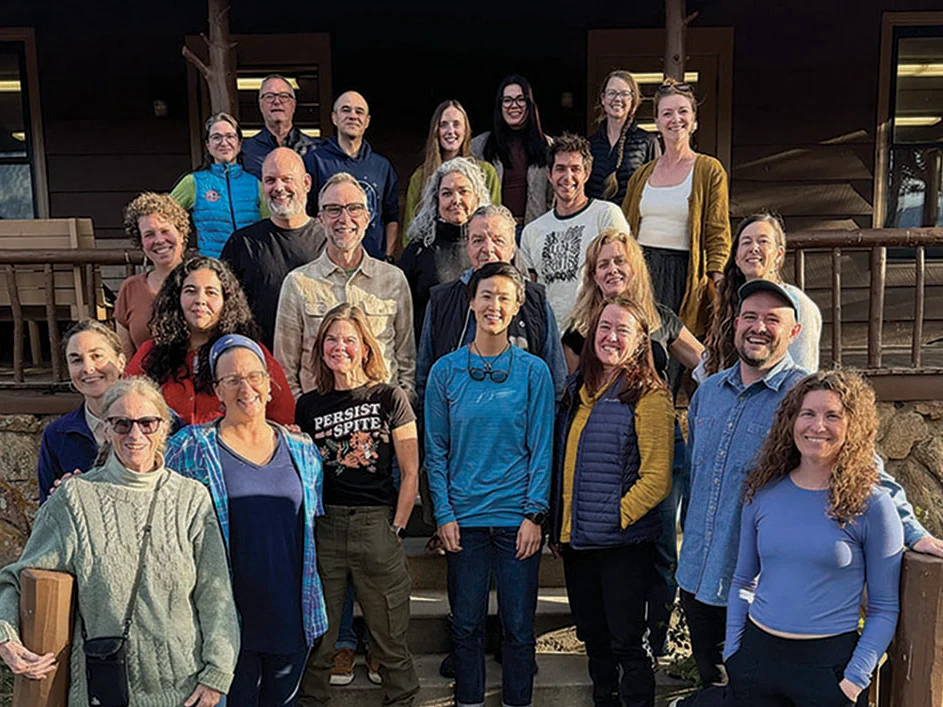
Collaborating with twenty-one contributors, ranging in age from their early twenties to their nineties, all residing within the United States, Rosen delves into the diverse motivations behind communal living. Adam Vitcavage, founder of the literary platform Debutiful, shares a poignant essay about mending a fractured family relationship in Arizona. In this state, where rents surged by 72% between 2010 and 2022 and median home prices rose by 57%, his sister moved in following a divorce. Their renewed proximity allowed them to heal a relationship that had become nearly estranged, with Vitcavage noting they were able to "stop wearing masks… maybe for the first time."
The profound impact of housing shortages is vividly illustrated in Jake Montano’s essay, which recounts his experience finding a sense of belonging within the queer community in San Francisco. This city, notorious for its housing crisis, has seen families displaced, commutes lengthened, and seniors struggling to cope. Montano reflects on his past as a drag performer, Imelda Glucose, and his subsequent integration into a chosen family formed by individuals often estranged from their biological relatives. This chosen family, Montano writes, "plays a critical role in addressing and remedying experiences of homophobia," underscoring the vital social and emotional support that communal living can provide.

In Los Angeles County, despite a population decrease of over 500,000 in the past decade, housing demand has surged, partly due to an increase in single-person households. Author Gabrielle Korn, facing financial pressures, began renting out her home office on Airbnb. She discovered an unexpected sense of emotional connection with her guests and subsequently founded The Pink Door Artist and Writer Residency, offering opportunities to creatives who might otherwise be priced out of such an environment.
The stark economic disparities are particularly evident in Jackson Hole, Wyoming, recognized as the nation’s wealthiest county. Here, housing prices have skyrocketed, fueled by the exorbitant demands of celebrities and affluent individuals. In response, Adam Meyer hosts popular monthly dinner parties, bringing together friends and strangers who have been priced out of homeownership. This practice, which originated during his college days when he envisioned all his friends living together in a large apartment building, reflects a deep-seated longing for the casual connections of dorm life, where "walking by your neighbor’s room, seeing their door open, and chatting for thirty minutes" was a common occurrence.

Living, Together serves as a powerful reminder of our collective capacity to reimagine and reshape our world. The book highlights communities that have already embraced innovative solutions. Boulder, Colorado, recently repealed occupancy limits that had historically curtailed the existence of co-ops, signaling a shift towards more inclusive housing models. In Durango, residents of a mobile home park collaborated with a land trust to purchase their community, safeguarding it from corporate acquisition. The anthology also journeys to intergenerational neighborhoods across the country, showcasing how co-housing arrangements benefit both seniors and families adopting children through the foster system, fostering a rich exchange of wisdom and support.
In an era dominated by private equity and astronomical housing costs, with numerous second homes standing vacant in popular resort towns, individuals are increasingly turning to communal living to address pressing social and economic challenges. Rosen, in her heartfelt introduction, references fellow anthology editor Margot Kahn, who aptly describes such collections as "the town hall bound in pages." Like town halls, anthologies are designed to foster dialogue and present diverse perspectives. In a contemporary landscape where even public forums can be sites of intense polarization, this collection of voices harmonizing on the theme of community building offers a welcome and hopeful vision for the future.