Roger Danuarta
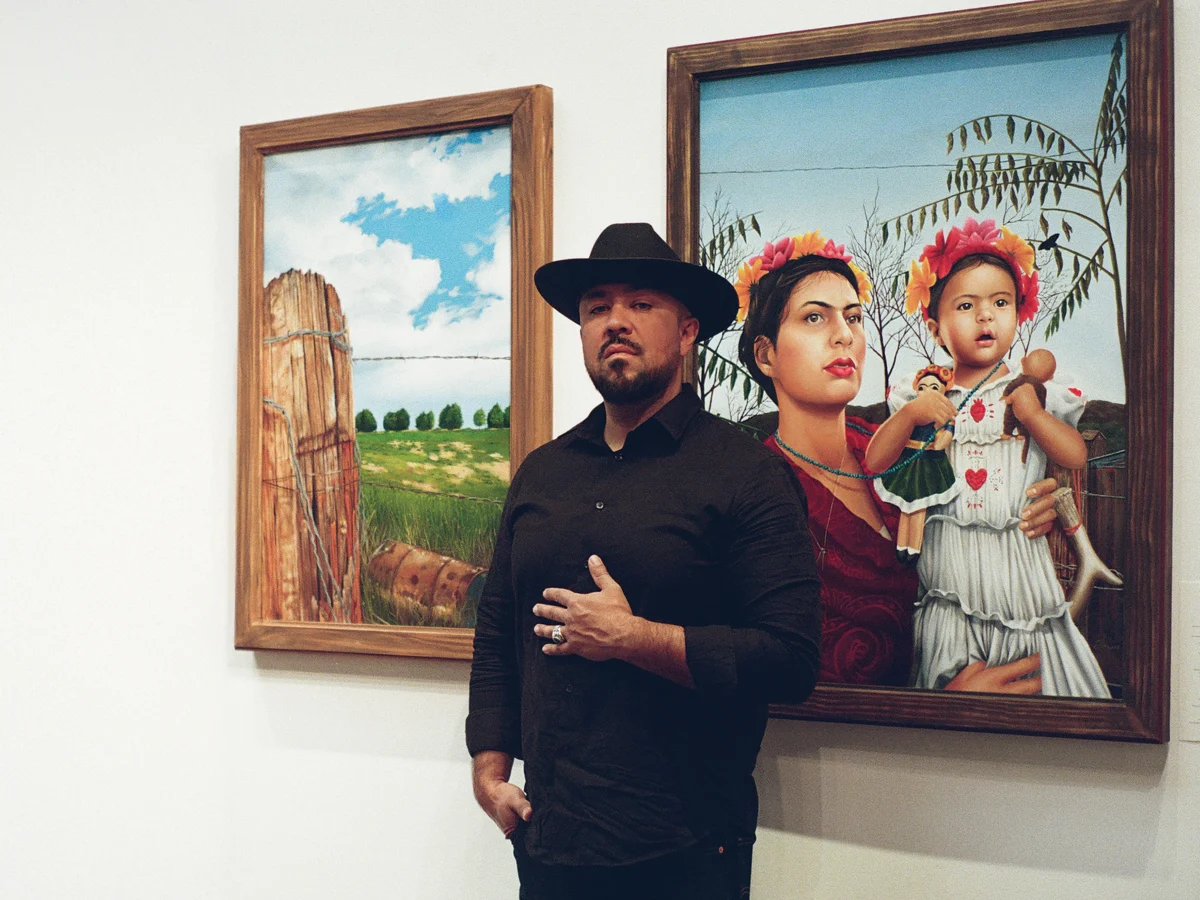
In the sun-drenched landscapes of Santa Fe, New Mexico, artist Eric Romero finds profound meaning not in grand monuments or fleeting trends, but in the humble, weathered fence that once marked the boundaries of his grandfather’s farm. What a boy once perceived as merely a physical demarcation—wood buried in the earth, wire holding the horizon—has, through the lens of fatherhood and artistic reflection, transformed into a potent symbol of intergenerational legacy, the silent transfer of wisdom, and the enduring connection between humanity and the land. This personal revelation by Romero echoes a universal truth about the invisible threads that bind us to our past and shape our future, particularly within regions like the American West, where history is etched into every furrow and fence post.
Romero, an artist deeply rooted in the cultural tapestry of Santa Fe, a city renowned for its rich blend of Indigenous, Hispanic, and Anglo influences, speaks of a childhood spent traversing these familiar lines without grasping their deeper significance. The fences were simply part of the landscape, a backdrop to youthful adventures. Yet, as time unfurled and personal milestones accumulated, especially the profound experience of becoming a father himself, the seemingly ordinary barrier began to speak a forgotten language. It is a testament to the power of memory and the enduring presence of ancestors, even when their voices have faded from recollection. "My grandfather is gone. I don’t remember his voice, but the farm remembers," Romero reflects, encapsulating a spiritual connection to the earth and the labor embedded within it. His grandfather’s "hands are still here, buried beneath the posts," a powerful metaphor for the indelible mark left by those who shaped the land before us, their efforts forming the very foundation upon which subsequent generations stand.
The fence, in Romero’s evolving understanding, transcends its utilitarian function to become a repository of history and a conduit for ancestral knowledge. Historically, fences in the American West represented more than just property lines; they were manifestations of changing philosophies regarding land use, resource management, and social organization. The advent of barbed wire in the late 19th century, for instance, dramatically altered the landscape, ending the era of the open range and igniting conflicts between cattle barons, homesteaders, and Indigenous communities. Each post driven into the ground, each strand of wire stretched taut, signified a claim, a boundary, a vision for the future, often at odds with traditional communal land practices. Romero’s observation of the "old world leaning against the new" captures this historical tension, a perpetual dialogue between tradition and progress that continues to define the region.
For many families in the West, particularly those with deep agricultural roots, the construction and maintenance of fences embodied a specific ethos: hard work, self-reliance, and a profound respect for the land. It was a language spoken not through words, but through sweat and calloused hands. This "old language" — identified by Romero as "work, patience, repair" — is precisely the wisdom he rediscovered upon becoming a father. This is not merely about physical tasks, but about a philosophy of life: the diligence required to build and sustain, the foresight to endure challenges, and the commitment to mend what is broken, whether it be a fence, a relationship, or the delicate balance of an ecosystem. These are virtues that resonate far beyond the confines of a rural farm, offering guiding principles for navigating an increasingly complex and interconnected world.

The global implications of Romero’s personal narrative are significant. Across continents, from the ancient terraced fields of Asia to the ancestral lands of Indigenous communities in the Amazon, the struggle to preserve traditional knowledge and sustainable practices in the face of rapid modernization is a shared human experience. The "old language" of working with the land, understanding its rhythms, and practicing patient stewardship is often overlooked or dismissed in an age that prioritizes instant gratification and technological solutions. Yet, as environmental challenges escalate, there is a growing recognition of the invaluable insights offered by intergenerational wisdom and practices honed over centuries. Romero’s reflection serves as a poignant reminder that true progress often lies not in abandoning the past, but in understanding and adapting its enduring lessons.
The farm, in Romero’s memory, becomes a living entity, a sentient keeper of stories and efforts. It is a powerful symbol of how place itself can embody history and character. For countless generations, farms and ancestral lands have served as anchors for cultural identity, sites where traditions are passed down, and where the cycle of life, death, and renewal is intimately understood. The act of repairing a fence, therefore, is not just a chore; it is a ritual, a participation in a continuous lineage of care and commitment. It connects the individual to a broader narrative, reminding them that they are part of something larger and more enduring than themselves.
In his artistic practice, Romero likely translates these deep meditations into forms that communicate the layered meanings of land, memory, and heritage. Artists often serve as vital interpreters of cultural shifts, prompting audiences to reconsider the overlooked elements of their environment. By drawing attention to a simple fence, Romero invites us to look closer at the ordinary objects that surround us, to uncover the hidden histories and personal narratives they hold. His work contributes to a broader dialogue about cultural preservation, the importance of tangible connections in an increasingly digital world, and the inherent value of rural life and its foundational ethics.
Ultimately, Romero’s journey from a boy’s casual disregard to a father’s profound understanding culminates in a powerful vision of legacy. A father, he observes, does not always leave his name as the primary inheritance. Instead, he might leave "a place strong enough for his children to lean against." This "place" is multifaceted: it is the physical land, stewarded and cared for; it is the enduring values of hard work, patience, and repair; and it is the cultural identity forged through generations of connection to a specific environment. It is a foundation of resilience and belonging, a testament to the enduring power of ancestral ties that continue to shape the present and guide the future. In an era marked by rapid change and often disorienting shifts, the quiet strength found in an old fence, imbued with the spirit of those who built and maintained it, offers a timeless lesson in what truly endures.