Joko Susilo
In a pivotal moment for the nation’s clean energy transition, the Biden administration’s Bureau of Land Management granted final approval in May 2023 for Pattern Energy’s ambitious SunZia transmission line. This monumental project aims to harness the abundant wind power of eastern New Mexico and deliver it to a crucial grid hub near Phoenix, Arizona, from where it can then be distributed across the vast American Southwest. The decision was heralded by clean energy advocates as a significant stride towards decarbonizing the power grid, enabling Southwestern states to bridge the evening power gap with renewable sources rather than relying on carbon-intensive natural gas, thus substantially reducing the region’s overall carbon footprint.
However, the path to this approval was anything but swift, stretching over 17 arduous years of review by various federal agencies. The project had previously received BLM approval in 2015, only to be sent back to the drawing board after New Mexico regulators voiced serious concerns about its potential adverse impacts on critical migratory bird pathways. This prolonged regulatory odyssey underscored a growing frustration among proponents of renewable energy infrastructure: the urgency of the global climate crisis demands immediate action, yet essential clean energy projects often become ensnared in bureaucratic complexities for decades, only to face potential post-approval legal challenges. SunZia quickly became a prime example in the clamor for comprehensive permitting reform, with advocates pressing Congress to establish a more streamlined process, cutting through what they perceived as excessive "red tape."
The call for expedited federal environmental reviews finally materialized in September 2026, when a bipartisan coalition of senators, including New Mexico Democrat Martin Heinrich, a known champion of public lands, and Utah Republican Mike Lee, a prominent conservative voice, introduced the Bipartisan American Affordability and Jobs Act. This landmark legislation proposes to accelerate federal environmental reviews and permitting procedures for major infrastructure projects, aiming to address the perceived bottlenecks hindering both energy development and economic growth.
The proposed bill garnered an unusual breadth of support from diverse organizations, reflecting the complex, multifaceted nature of the energy debate. Groups like Americans for a Clean Energy Grid and the Breakthrough Institute, which champions technological solutions to environmental challenges, lauded the initiative. Even the American Petroleum Institute, representing fossil fuel interests, expressed support, as the bill’s scope was strategically expanded to encompass traditional energy projects alongside renewables, a crucial concession to secure Republican backing. Climate hawks, generally keen on accelerating renewable deployment, also found aspects to endorse. The Natural Resources Defense Council (NRDC), a leading environmental advocacy group, specifically praised the bill’s provisions related to transmission infrastructure, which the Columbia Center on Global Energy Policy estimated could slash the average permitting timeline by an astounding 96 months. Such an acceleration, the NRDC noted, is deemed an "essential component" for achieving a decarbonized power grid, while also imposing financial responsibility on energy-intensive data centers for any necessary grid upgrades.
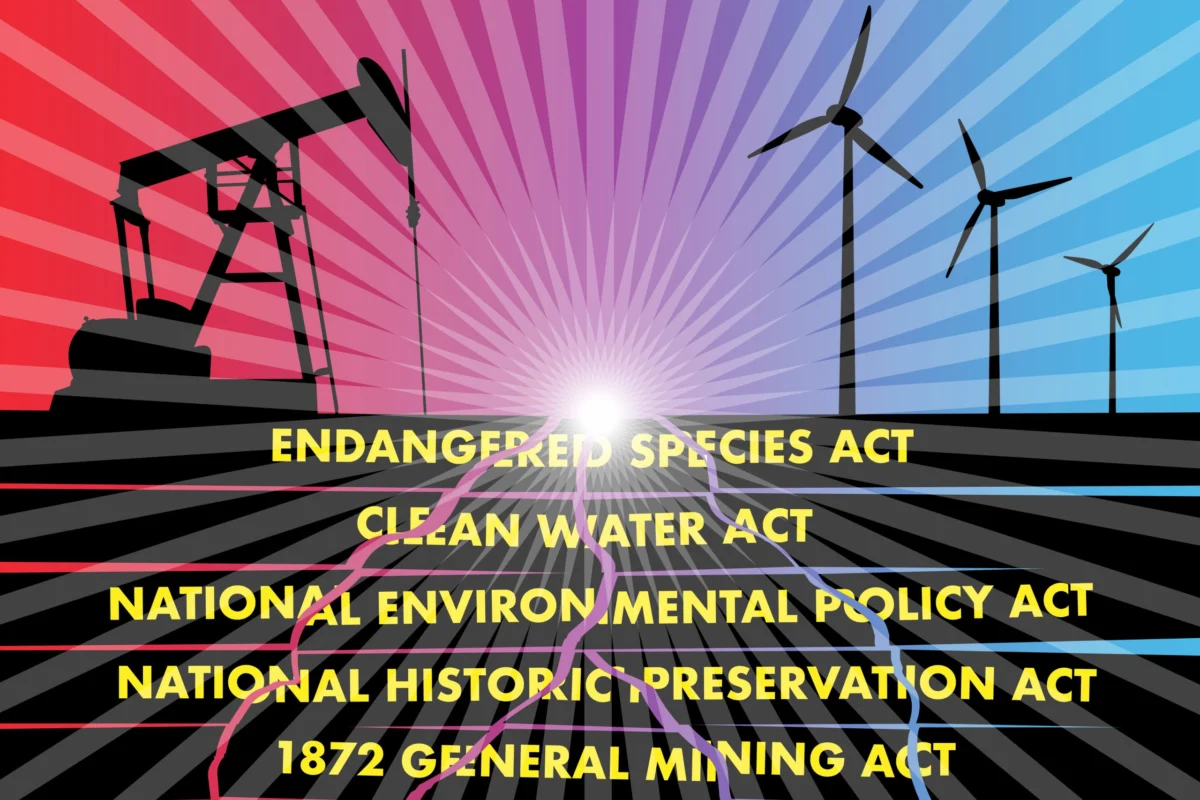
Yet, the legislation immediately ignited a firestorm of opposition from a different spectrum of stakeholders. For many, one person’s "red tape" is another’s indispensable environmental safeguard. Ecology-minded green groups, the broader conservation community, numerous tribal nations, and progressive federal lawmakers issued stark warnings that significantly weakening bedrock environmental laws could inflict severe and irreversible damage on vulnerable communities, pristine landscapes, and irreplaceable cultural sites. These foundational statutes, including the National Environmental Policy Act (NEPA), the Endangered Species Act (ESA), the Clean Water Act (CWA), and the National Historic Preservation Act (NHPA), were meticulously crafted to protect human health and the environment, while also ensuring public participation and oversight in the management of shared lands and resources. Erik Schlenker-Goodrich of the Western Environmental Law Center sharply denounced the bill as a "turd grenade" on social media, encapsulating the intense disapproval felt by many. Even the NRDC, while supporting some transmission provisions, publicly declared that the aspects weakening environmental laws were "deeply flawed" and vowed to actively seek their amendment. The Senate Committee on Energy and Natural Resources is poised to consider the bill shortly after Congress reconvenes on November 9, setting the stage for a contentious legislative battle that will shape the future of environmental protection and energy development in the United States.
A closer examination of the Bipartisan American Affordability and Jobs Act reveals several significant proposed alterations to these critical environmental laws, each carrying profound implications for infrastructure development, public participation, and ecological integrity.
The National Environmental Policy Act (NEPA), enacted in 1970, stands as the cornerstone of federal environmental review, requiring agencies to assess the potential environmental impacts of major federal actions through Environmental Impact Statements (EISes) or Environmental Analyses (EAs). While crucial for informed decision-making, NEPA is frequently cited as a primary driver of project delays. Currently, the median time for completing an EIS and issuing a final decision hovers around 4.5 years. Although the 2023 Fiscal Responsibility Act imposed a two-year limit on the EIS portion, it left the final decision timeline unchecked. The BAAJA bill seeks to drastically accelerate federal authorization from all participating agencies, including the lead agency, mandating, for instance, that the Bureau of Land Management issue a decision within a mere 45 days following an EIS for projects like solar farms or data centers on public lands. This compressed timeline would severely curtail the post-EIS public-input period, fundamentally altering the nature of public engagement in federal decision-making processes.

Beyond accelerated reviews, the proposed legislation also significantly restricts judicial review, a vital mechanism for accountability. It shortens the statute of limitations for lawsuits challenging agency decisions and imposes a higher bar for who has "standing" to bring a suit, potentially excluding many affected parties from legal recourse. Critically, even if a project were to navigate these narrower conditions and proceed to court, the legislation would prohibit a court from pausing or halting construction. This means that development could continue, and any associated environmental, human health, or cultural impacts could materialize, even while a lawsuit alleging NEPA violations remains pending. Furthermore, if a court ultimately rules against an agency, finding a NEPA violation, the bill dictates that the court would merely remand the EIS or EA back to the agency for fixes, rather than vacating the approval entirely. This provision ensures that development could persist, effectively "pulling NEPA’s principal teeth – the possibility of a court order blocking a project for violating NEPA," as environmental law professor Michael B. Gerrard of Columbia Law School aptly noted. Moreover, numerous projects currently subject to NEPA review, including energy storage facilities "at or near" transmission lines and the replacement or modification of existing transmission or distribution lines, would be entirely exempted from federal scrutiny.
The Clean Water Act (CWA) also faces substantial revisions. Section 401 of the CWA empowers states and tribal nations to certify that projects crossing or affecting federally jurisdictional waters meet water quality standards. This authority has historically allowed states and tribes to block controversial projects, such as the proposed Millennium coal export terminal in Washington, or compel developers to reroute or redesign infrastructure to mitigate environmental harm. The BAAJA bill, however, would narrowly define the types of water-quality impacts that could trigger a state or tribal nation’s denial, shifting the burden of proof from the developer to the state or tribe. The legislation further curtails the Environmental Protection Agency’s (EPA) timeframe to veto Army Corps of Engineers CWA permits for major projects. This EPA power was notably exercised in January 2023 to halt the controversial Pebble Mine in Alaska, a decision widely praised by environmental groups and tribal communities. Shortening this timeframe could prevent future administrations from blocking projects approved under previous ones, diminishing a critical federal check on environmentally damaging development.
Changes to the Endangered Species Act (ESA) present another area of concern for conservationists. The permitting reform bill would hamper judicial review for ESA violations by imposing tighter timelines for lawsuits and directing them straight to the D.C. Circuit Court of Appeals, bypassing district courts. This fast-tracking could disadvantage plaintiffs by significantly reducing the time available to gather evidence and prepare their cases. Furthermore, the Fish and Wildlife Service’s ESA consultation period, a crucial phase for analyzing a project’s potential impact on imperiled species, would be cut from 90 to 60 days. Alarmingly, some projects would be completely exempted from federal ESA reviews, with states assuming responsibility for the consultation process. This devolution of authority risks creating inconsistent protections across state lines, potentially jeopardizing endangered species in states less committed to robust environmental safeguards.
Finally, the General Mining Law of 1872, a relic from the frontier era that has long been criticized for allowing mining companies extensive privileges on public lands, would become even more industry-friendly under the proposed legislation. In recent years, courts have successfully challenged major mining projects by leveraging a provision related to mill site mining claims, which limits the amount of public land that can be appropriated for waste storage. The BAAJA bill, however, would eliminate these restrictions, allowing corporations to stake an unlimited number of mill sites. This change could open the door for mining companies to appropriate hundreds or even thousands of acres of public land for waste disposal and storage, potentially leading to widespread environmental degradation, especially given the surging global demand for critical minerals essential for the very clean energy technologies the bill aims to expedite.

The ongoing saga of the SunZia project itself serves as a stark illustration of both the current system’s protracted nature and its inherent flaws, even without the proposed legislative changes. While the existing NEPA process certainly extended the project’s timeline, it also facilitated crucial improvements. In New Mexico, for example, conservationists and state officials successfully leveraged the review process to push developers to reroute the transmission line, effectively avoiding harm to vital migratory bird flyways. This outcome garnered an endorsement from Audubon Southwest, highlighting the potential for current permitting mechanisms to enhance project design and mitigate environmental impacts.
However, the process proved less effective in Arizona. Despite strenuous objections from Indigenous nations and conservation groups advocating for a reroute away from the ecologically fragile and biodiverse San Pedro River Valley – an area teeming with wildlife and rich in culturally significant sites – Arizona regulators largely dismissed these concerns. Not surprisingly, given their typically more development-friendly stance compared to their New Mexican counterparts, Arizona regulators unanimously approved the project in November 2022, maintaining the Bureau of Land Management’s preferred route directly alongside the San Pedro River. An ensuing lawsuit continues its slow progress through the courts, yet it has failed to halt or even pause construction, even under the current, theoretically more rigorous permitting regime. This demonstrates that even existing safeguards can be insufficient when faced with strong political and economic pressures, a reality that the proposed reforms could exacerbate.
The San Pedro River Valley now faces another imminent threat: the proposed Desert Southwest natural gas pipeline, which would transport methane from the Permian Basin directly through this sensitive ecosystem north of Tucson, Arizona. Under the current permitting regime, such a project would be subjected to rigorous NEPA and National Historic Preservation Act reviews, and tribal nations and states would retain significant authority under the Clean Water Act to protect their water resources. However, if the Bipartisan American Affordability and Jobs Act becomes law, this critical project could be entirely exempted from these vital environmental and cultural reviews, leaving people and places vulnerable to potentially devastating impacts without adequate oversight or recourse.
The legislative push for permitting reform embodies a profound and urgent dilemma: how to accelerate the development of critical energy infrastructure needed to combat the climate crisis while simultaneously upholding the fundamental environmental protections and public participation rights that are cornerstones of a healthy, just society. The outcome of this debate will undoubtedly shape the trajectory of the nation’s energy future, its natural landscapes, and the well-being of its diverse communities for generations to come.