Joko Susilo
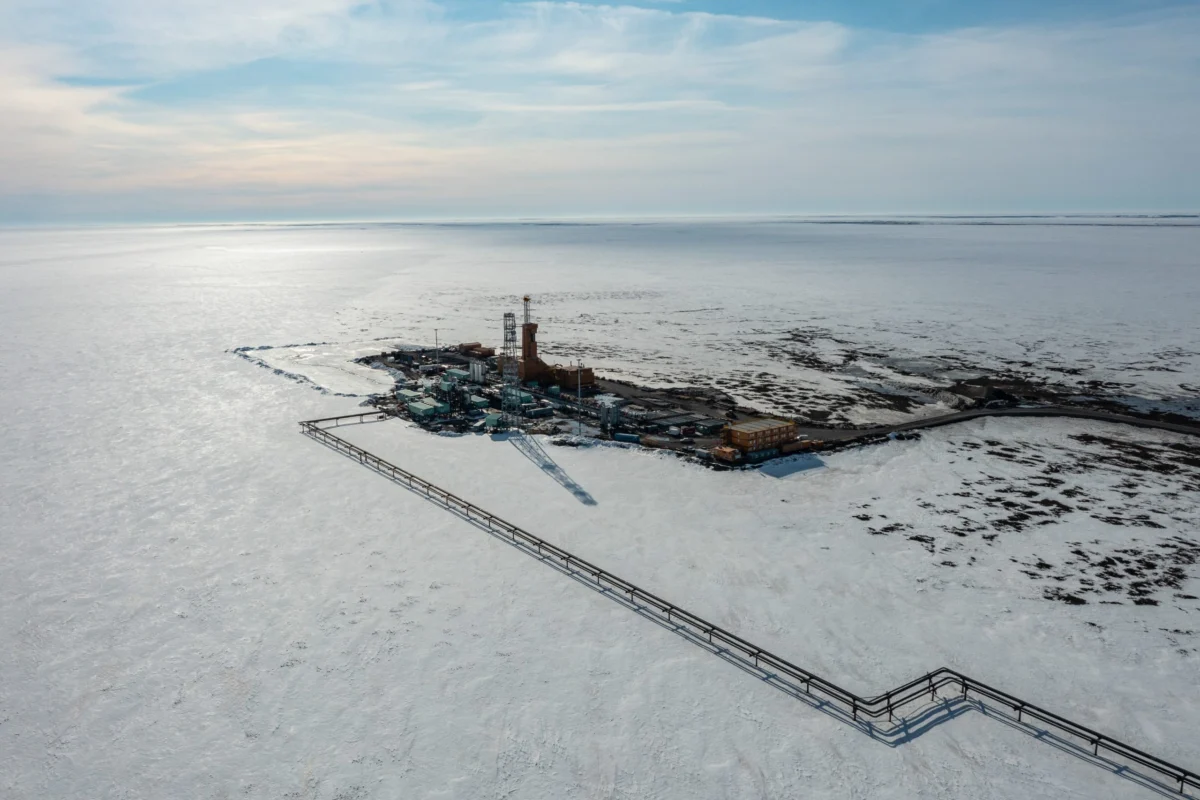
On his inaugural day in office, President Donald Trump signed a sweeping executive order titled "Unleashing Alaska’s Extraordinary Resource Potential," signaling an immediate and aggressive pivot towards expanding fossil fuel and mineral extraction across the state’s vast, resource-rich territories. This directive specifically targeted Alaska’s North Slope, encompassing some of North America’s largest tracts of federally managed land, including the ecologically sensitive coastal plain of the Arctic National Wildlife Refuge (ANWR) and the expansive National Petroleum Reserve-Alaska (NPRA). The administration’s stated aim was to dismantle what it characterized as "punitive restrictions" imposed by previous administrations, thereby streamlining the permitting and environmental review processes for new energy projects. This move aligns with a broader "America First" energy strategy, prioritizing domestic resource development and perceived energy independence over environmental conservation.
Sources familiar with the ongoing policy shifts, coupled with internal documents, reveal that the Trump administration is now actively executing its pledge to expedite drilling within the NPRA. A critical component of this acceleration involves bypassing standard environmental assessments for new winter exploration and drilling activities. The Department of the Interior is poised to issue a "categorical exclusion" under the National Environmental Policy Act (NEPA), a pivotal federal law that mandates environmental reviews for major federal actions. This exclusion, tentatively named "NPR-A Wintertime Oil and Gas Exploration Operations," would significantly ease the path for the oil and gas industry to conduct seismic surveys, secure rights-of-way, and drill new exploratory wells in the NPRA, an area that has garnered increasing industry interest due to significant untapped reserves.
The implications of such a categorical exclusion are profound for the delicate Arctic ecosystem. Seismic surveys, typically conducted using massive vibroseis trucks weighing over 15 tons, are known to leave lasting scars on the fragile tundra and cause substantial disturbance to wildlife. This includes critically important populations such as female polar bears, which establish dens along the North Slope’s coastal region during winter, a period when their numbers have already witnessed a notable decline over the past two decades. Furthermore, the construction of drilling pads, associated infrastructure, and access roads is highly intrusive, with recent U.S. Geological Survey studies indicating alterations in caribou behavior and traditional Arctic migration patterns. These impacts are compounded by the rapid warming observed across the Arctic, which is experiencing climate change at a rate significantly faster than the global average. Thawing permafrost, for instance, presents considerable operational challenges, affecting the stability of infrastructure and roads, while also releasing potent greenhouse gases, creating a dangerous feedback loop.
Critics argue that stripping away these environmental protections for nearly all stages of development represents a grave risk. Earthjustice senior attorney Jeremy Lieb emphasized that exploratory drilling and seismic testing are large-scale industrial activities with well-documented, significant, and lasting negative impacts. He contends that these activities are precisely the kind that demand rigorous scrutiny under NEPA, not an exemption. The legal foundation for a categorical exclusion hinges on the premise that the proposed activities will have "no significant impact" on the environment – a standard typically applied to minor, routine actions. Lieb views the new rules as effectively a "rubber-stamp" for industry operations in a remote and exceptionally sensitive ecosystem, arguing that the administration cannot use a categorical exclusion to obscure projects from public view and circumvent vital environmental impact evaluations.
The 23-million-acre National Petroleum Reserve-Alaska, managed by the Interior Department, serves as a vital habitat for dozens of migratory bird species, denning polar bears, and three distinct caribou herds, two of which have experienced dramatic declines over the last decade. Under the preceding Biden administration, a substantial portion of the reserve was designated for conservation, including the proposed creation of a roughly 1 million-acre caribou conservation area. This initiative, spearheaded by the Native Village of Nuiqsut, a community located just east of the reserve that relies heavily on the Teshekpuk Caribou herd for subsistence, would have imposed additional restrictions on drilling activities within the herd’s critical calving grounds. This agreement, finalized shortly before President Biden left office, represented a significant victory for Indigenous rights and environmental protection.
However, since the change in administration, the Interior Department has systematically dismantled these Biden-era regulations and canceled the caribou conservation initiative, unequivocally prioritizing oil and gas development. Rosemary Ahtuangaruak, former Nuiqsut Mayor and head of an environmental nonprofit, reported that the area surrounding her village has been inundated with new drilling activity, observing direct evidence of altered migration patterns for the Teshekpuk herd. She articulated the community’s profound sense of betrayal, stating, "All of the contractual agreements that were supposed to guide how development is going to occur have been ripped out of the books. We feel that it doesn’t matter that we have a unique DNA, a small community of 500 people, that are just being totally disregarded and sacrificed for the greed of development."
In a direct challenge to these reversals, Nuiqsut sued the Interior Department over the cancellation of the conservation program, successfully securing a preliminary injunction in March, which temporarily reinstated the protections. Yet, in May, following a petition from the Alaska Oil and Gas Association (AOGA), a powerful trade group advocating for drilling interests in the state, the federal agency announced its intention to "streamline permitting for oil and gas infrastructure" in the NPRA. This move further highlights the significant influence wielded by industry lobbyists, exemplified by the revolving door between government and industry; Kara Moriarty, AOGA’s former CEO, now serves as a senior advisor at Interior, while Steve Wackowski, a former senior advisor for Alaska during Trump’s first term, now leads AOGA.

The proposed categorical exclusion for winter exploration activities appears to complement a broader rulemaking effort. This larger initiative, effectively drafted in response to AOGA’s petition, aims to establish a blanket environmental impact statement that would cover all oil and gas production sites within the NPRA. Such a comprehensive statement would simplify the approval process for essential infrastructure, including pipelines, gravel mines, and access roads. The recent guidance from the Council on Environmental Quality (CEQ) has underscored the importance of categorical exclusions as a core feature of NEPA, yet paradoxically, the CEQ last April relinquished its government-wide responsibility to oversee and implement NEPA. This change now allows federal agencies to bypass the traditional 30-day public comment period when developing new categorical exclusions, a practice that was once legally required.
Ted Boling, a partner at Ashurst Perkins Coie and a former member of the White House Council on Environmental Quality, cautioned that this represents largely uncharted legal territory for federal agencies. Given the immense size and ecological complexity of the NPRA, he suggested that the forthcoming provision could be highly vulnerable to legal challenges, particularly due to the absence of public input. "These (categorical exclusions) historically have been done if there’s a rulemaking procedure," Boling noted, raising concerns about the reliability of such exclusions without public comment.
The elimination of standard environmental reviews coincides with a significant surge in industry interest and acquisition of new leases within the NPRA. During a lease sale held in March, oil and gas giants including ExxonMobil, ConocoPhillips, and Shell secured nearly 200 parcels, totaling over 1.3 million acres – an area roughly the size of the state of Indiana. Much of this newly leased land lies in close proximity to ConocoPhillips’ controversial Willow Project, which, despite significant environmental opposition, received approval during the Biden administration and includes infrastructure designed to facilitate future development across the region. Disturbingly, ExxonMobil’s new leases, situated just south of Teshekpuk Lake – the largest freshwater body in Arctic Alaska – fall directly within the boundaries of the established caribou conservation area, further exacerbating concerns about habitat fragmentation and wildlife disturbance. Matt Jackson, Alaska senior manager for The Wilderness Society, currently engaged in litigation against the Interior Department over its NPRA development plans, asserted that public lands in the Arctic are being "sacrificed for oil company profits."
Historically, the NPRA, initially designated as a naval petroleum reserve in the early 1920s, saw remarkably limited development for decades, with most North Slope drilling concentrated on state-owned lands around Prudhoe Bay. However, the last two decades have witnessed ConocoPhillips gradually expanding its operations westward into the reserve. A significant discovery by wildcatter Bill Armstrong in 2013, particularly in and around the Willow Project formation, reignited interest in the area, sparking talk of a "North Slope renaissance." In the most recent NPRA lease sale, Armstrong’s company, North Slope Exploration LLC, acquired the highest number of tracts, indicating an aggressive push to develop these leases with significantly reduced environmental oversight.

The proposed acceleration of development poses an increased and acute risk to an already fragile and rapidly changing environment. The Arctic’s accelerated warming leads to widespread permafrost thaw, intensifying coastal erosion, and creating highly unpredictable winter weather patterns – precisely the conditions under which most of the new drilling activity is slated to occur. A stark reminder of these inherent dangers occurred this past January when one of ConocoPhillips’ drilling rigs, known as "the beast" for its immense size, toppled over and caught fire while being moved along an ice road towards the Willow project after an unusually warm week. The incident resulted in several employee injuries and the spill of thousands of gallons of oil onto the surrounding tundra, requiring four months for the operator to remove the rig and complete the clean-up. This event, as Earthjustice attorney Lieb highlighted, serves as a potent reminder of the sheer scale of these industrial projects and the significant potential for catastrophic incidents in such an unforgiving and rapidly changing environment. The ongoing push for expedited drilling in Alaska’s Arctic represents a critical juncture, balancing the pursuit of domestic energy resources against the irreversible impacts on a globally significant and rapidly deteriorating ecosystem.