Rocky Gerung
Dry mud tracks often mar the vibrant red and green carpets of the Amargosa Hotel and Opera House lobby, a testament to the constant battle against the elements faced by the staff. Hotel manager Emilee Brown, who has overseen operations since 2022, describes a daily reality of unpredictable challenges, from plumbing failures and flooding to the slow decay of the century-old adobe structure. Despite these persistent issues, Brown finds deep fulfillment in the stories shared by the hotel’s guests, a connection to the human element that thrives amidst the arid landscape of Death Valley Junction, California. The hotel, now 103 years old, grapples with ancient plumbing, a finicky heating system, and frequent roof leaks, all exacerbated by the extreme climate of Death Valley.
Adorning the brick fireplace mantel, a touching display of pink satin ballet slipper stockings hangs beneath a framed portrait of Marta Becket, the visionary performer and proprietor whose enduring legacy the dedicated staff and board members are resolutely committed to preserving. Becket’s remarkable story began in 1967 when, during a road trip with her husband Tom, a flat tire brought them to Death Valley Junction. At the time, the area was little more than a ghost town, its services reduced to a solitary auto shop and gas station. This remote crossroads held a profound historical significance for the federally recognized Timbisha Shoshone Tribe, who had long inhabited the desert year-round until their forced displacement in the late 19th and early 20th centuries, driven out by expanding mining operations and the establishment of Death Valley National Monument in 1933.
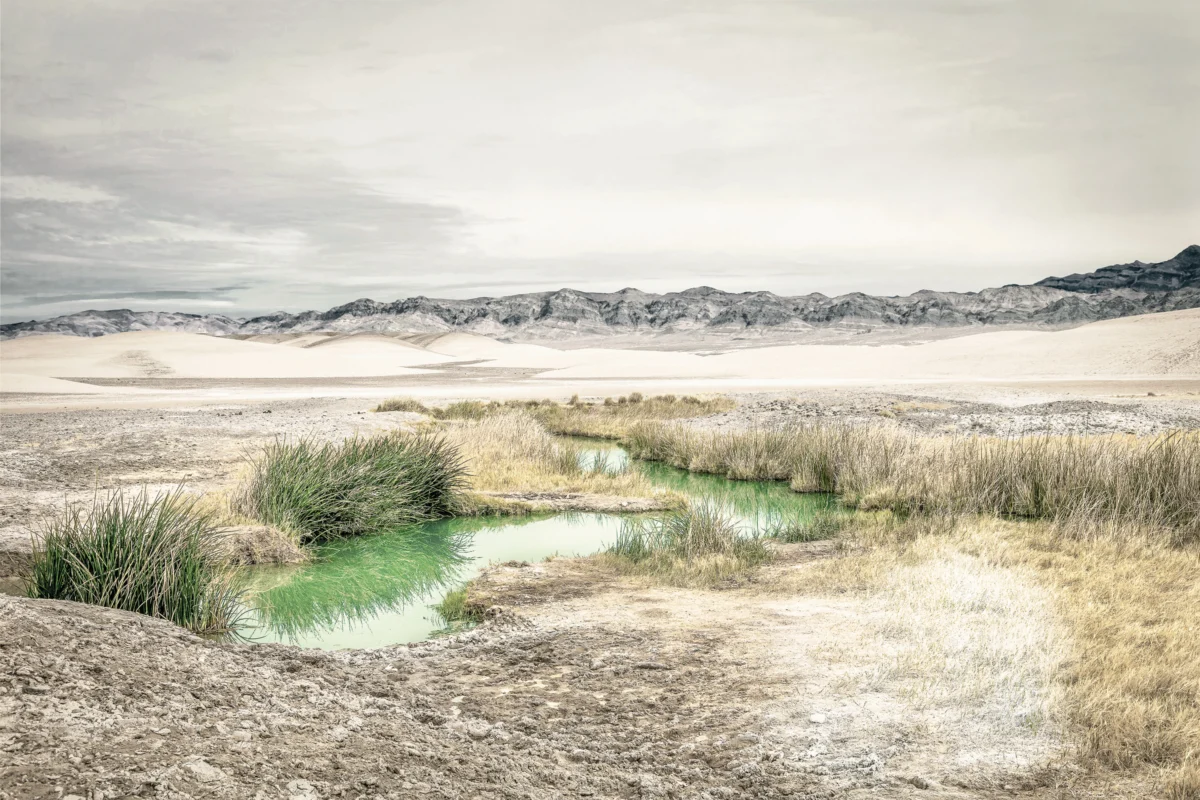
By the mid-20th century, Death Valley Junction was largely deserted. The lucrative borax mill had relocated to Boron, the Tonopah-Tidewater railroad was dismantled for wartime scrap in the 1940s, and Corkhill Hall, the Spanish Colonial-style complex that housed the hotel, workers’ camp, garage, and a theater, had fallen into significant disrepair. The hotel itself was situated on the edge of the Amargosa Desert, a basin historically vulnerable to monsoons that continue to lash the region with increasing ferocity.

Marta Becket, an accomplished touring ballerina seeking a respite, stumbled upon the derelict adobe theater at the end of the colonnade during an Easter weekend break. Peeking through its locked doors, she was instantly captivated by the stage and the potential it held. A spontaneous decision to contact the owner and lease the entire complex for a nominal fee and a handshake agreement would irrevocably alter the fate of the ghost town and Becket’s own life. Over the ensuing five decades, she transformed the abandoned theater into a vibrant opera house and breathed new life into the aging hotel.
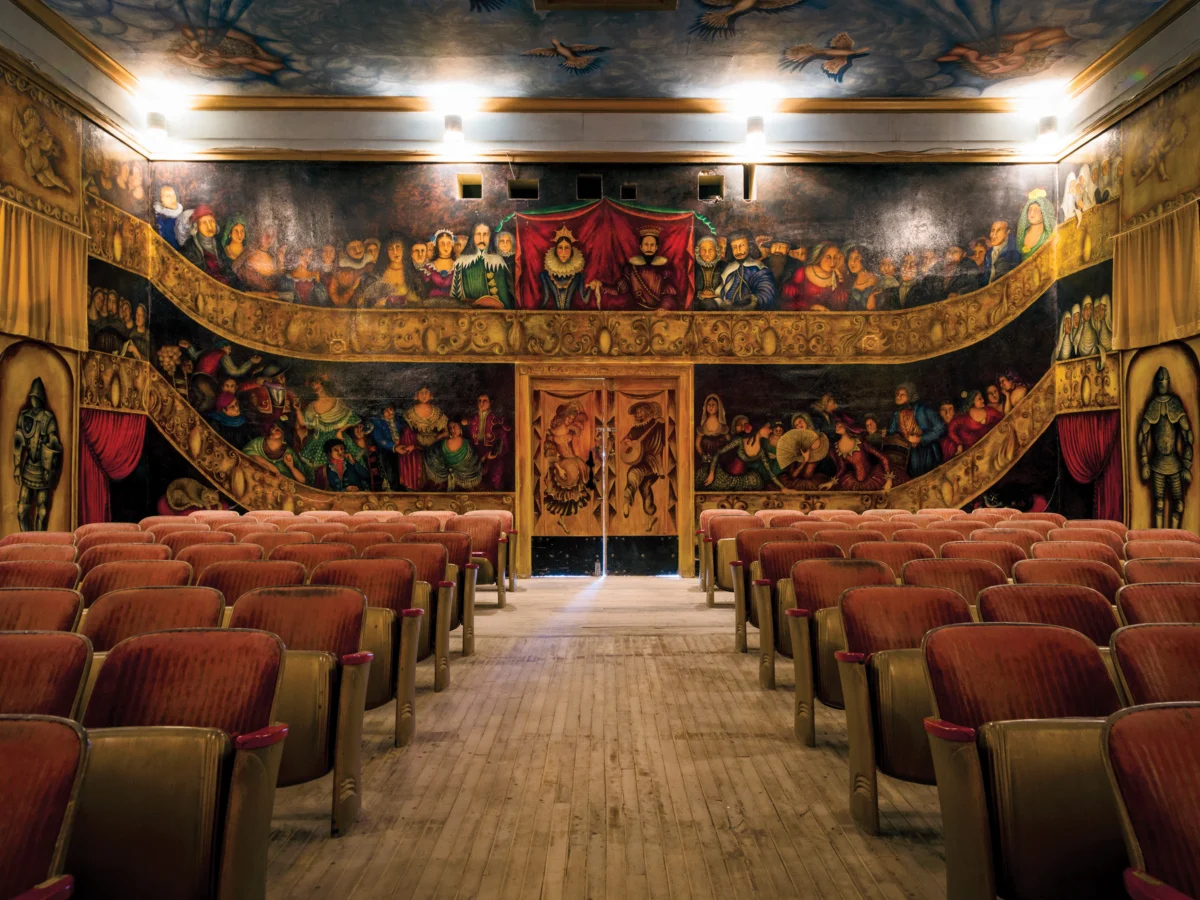
"I longed to find a place where I could dance and dance – creating a new repertoire of beauty," Becket shared in a 1972 interview with Desert magazine. Between 1968 and 1972, Becket meticulously renovated the hotel and hand-painted the theater’s interior. She employed a masterful trompe l’oeil technique to render the stage walls as if draped in rich red velvet and adorned with intricately carved and gilded Rococo woodwork. A sprawling mural enveloped the theater’s adobe exterior, depicting balconies populated by life-size figures reminiscent of 16th-century Spain. Her beloved cats, one orange and one black, are immortalized nestled beneath painted seats, while cherubic figures and fluffy clouds drift across a cerulean sky on the ceiling. In 1968, Becket held her inaugural performance in the transformed space for an audience of just twelve.
From its reopening in 1972 until 2012, the Amargosa Opera House, as it became known, was the stage for Becket’s unwavering dedication. She performed en pointe every Friday, Saturday, and Monday night, regardless of the weather or audience size, sometimes with only her cats as spectators. The theater’s primary purpose was to be a venue for her artistic expression, culminating in her final performance on February 12, 2012. On that memorable night, all 113 seats of the theater were filled, with attendees standing in the aisles to witness the 84-year-old dancer in "The Sitting Down Show," a poignant title reflecting her inability to perform on her feet.
"The theater interior looks just the way it did when Marta painted it," affirmed Fred Conboy, a board director of Amargosa Opera House Inc., the nonprofit organization Becket established in 1974 to safeguard her artistic legacy. Even the stage lighting, ingeniously crafted from repurposed Folgers coffee cans, continues to illuminate the performance space. "Conservation of the murals is tied to the conservation of the structure," Conboy emphasized, highlighting the inseparable nature of the building’s preservation and its artistic treasures. Becket, who passed away in 2017, single-handedly created an unparalleled destination in Death Valley, a region where the permanent population has, at times, dwindled to fewer than four individuals.

Since Becket’s passing, the nonprofit has continued to host a modest schedule of events, including occasional lectures and concerts. Conboy fondly recalls a performance by a tribal blues band, noting, "the vibrations nearly peeled the paint off the walls." In February, the Opera House celebrated a sold-out Valentine’s Day and 57th-anniversary event, featuring a variety show by local community groups like the Desert Players, whose performance drew inspiration from Becket’s artistic vision. Across the street, the original stucco garage where the Beckets encountered their flat tire nearly sixty years ago still stands. Adjacent to it, a single-room storefront, once an art gallery, now displays Becket’s captivating costumes in its windows – elegant velvet bodices embellished with metallic braiding and ethereal bell-shaped skirts of layered tulle.
However, maintaining an arts complex in the remote and demanding environment of Death Valley presents formidable challenges. The 1972 Desert magazine article already hinted at the area’s precarious weather, particularly the seasonal rains that posed a threat to the century-old adobe. In recent years, these challenges have intensified dramatically. The region has experienced at least four "1,000-year rain events" annually since 2022, and the summer monsoons of the previous year caused significant flooding within the theater. November 2025 marked the wettest month in California in 115 years, with rainfall approaching a full year’s average falling within that single month. Consequently, Becket’s artistic legacy is now in jeopardy; without substantial repairs, the Opera House and Hotel face the grim prospect of closure or, more alarmingly, structural collapse.
Following the 2025 flooding, the hotel staff and board members, a dedicated team of approximately five individuals, launched "Campaign Amargosa" to secure vital funding for repairs and preservation. According to Conboy, the most urgent priorities involve addressing the building’s critical infrastructure, including the plumbing, electrical systems, and the persistently leaky roof, which has been dislodged by storms on multiple occasions. Private donations and contributions channeled through Campaign Amargosa form the foundation’s secondary revenue stream. The hotel itself, which operates on a razor-thin margin, remains the primary source of operating income. It serves as one of the few available lodging options for visitors to Death Valley, especially during the spring wildflower season and in the late fall, when bookings are consistently at capacity as the holidays approach.
Patricia Fernández Carcedo, an artist based in Los Angeles who has been visiting the hotel since her teenage years, credits Becket’s ambitious project with profoundly influencing her own creative journey. She recounts a Thanksgiving gathering where she brought friends to camp and prepare a meal, sharing an anecdote: "A couple of bikers came through, and they knew about Amargosa; there was this sense of magic in knowing that someone could love this strange and quiet and beautiful place as much as I did." Carcedo added that she has intentionally avoided returning for a few years, "as a way of preserving my own dreams and memories of this place." She reflects, "Standing at a junction, the site of Marta’s Opera House will always be part of the desert’s very layered and complex historical landscape. It feels very important to remember Marta as an artist and visionary whose life was unpredictable in many ways."

The current situation at the Amargosa Opera House and Hotel serves as a poignant metaphor for the struggles of arts funding in contemporary America, particularly in rural areas. Here stands a crumbling yet exquisitely appointed adobe arts complex, slowly succumbing to the relentless forces of nature while a passionate team works tirelessly to prevent its dissolution into the surrounding landscape. Even Marta Becket recognized the ongoing challenge of preserving her ambitious endeavor, stating in the 2000 documentary Amargosa, with a characteristic gleam in her eyes, "Even if it’s torn down tomorrow, no one can take away the hours of joy I spent painting it. It’s the experience that matters."
A prescient mural in the hotel lobby, painted by Becket herself, depicts the town’s eventual fate. It portrays a sun-drenched desert framed by a painted archway, as if the wall itself opens onto the expansive landscape beyond. Sparse desert shrubs dot the sandy floor of the Death Valley basin, while the two low, colonnaded ruins of the complex recede inward from either side, their repeating arches casting long, rhythmic shadows. Soft brown swirls evoke the powerful winds that sweep across the valley. In the distance, above the Black Mountain range to the west, a ghostly silhouette of Becket, resplendent in her tulle ballet skirt, spirals skyward, a timeless image of artistry and resilience.