Johny Prima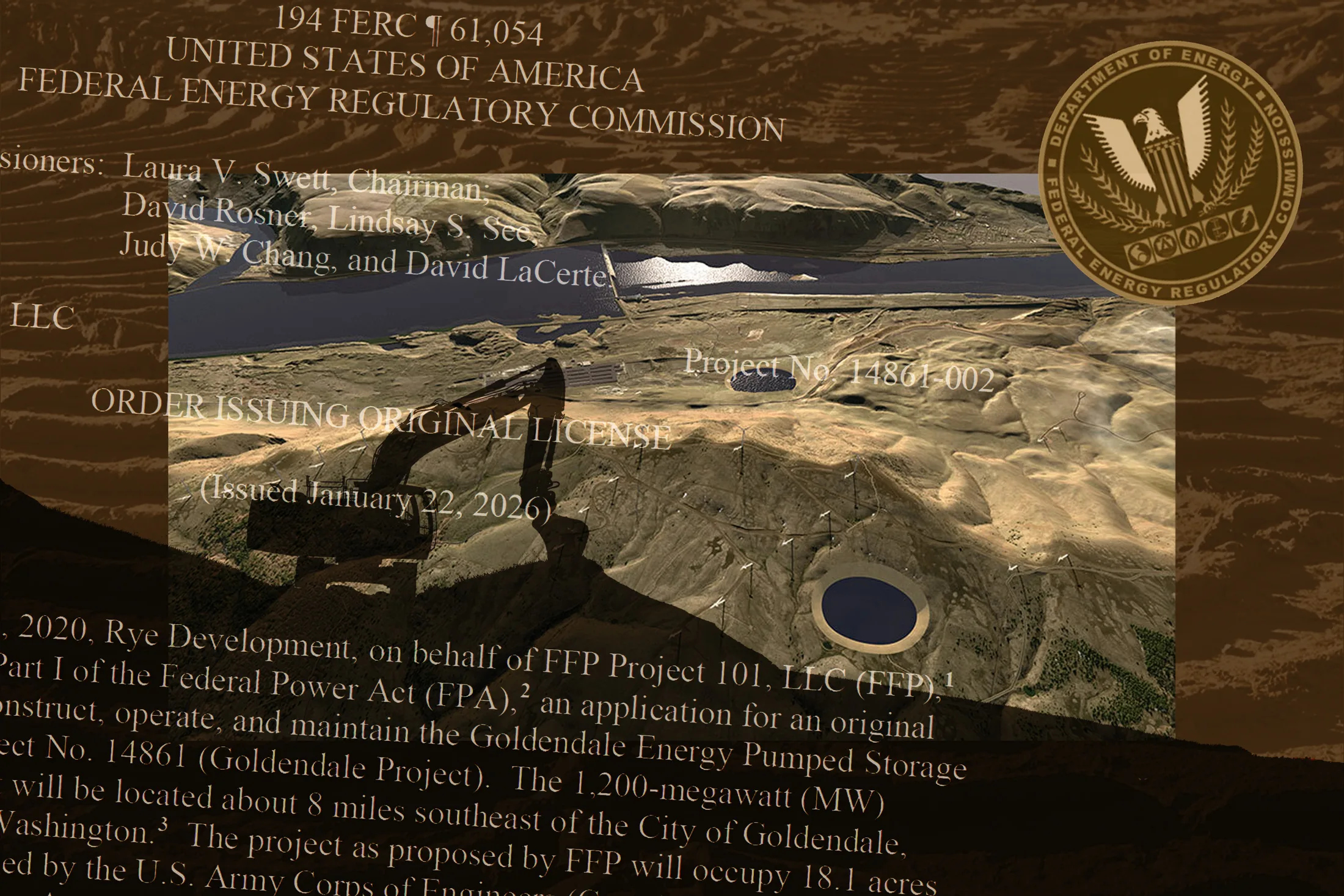
The Federal Energy Regulatory Commission (FERC) granted the crucial license in January for the multi-billion-dollar project, proposed by Rye Development, despite years of fervent opposition centered on the irreversible damage it is projected to inflict upon Pushpum, a site revered by the átámíyám Band, also known as the "River People," of the Confederated Tribes and Bands of the Yakama Nation. Pushpum, meaning "Mother of All Roots," is far more than just a landscape; it represents a living connection to the past, present, and future of the Yakama people. It is one of the last remaining seasonal gathering grounds where the átámíyám harvest endemic heirloom root vegetables, a practice intrinsically linked to their food sovereignty, traditional ecological knowledge, and spiritual well-being. The peak also offers a panoramic view of the mid-Columbia River and the vast sagebrush steppe, a vantage point critical for the oral tradition of propagating stories that form the very architecture of regional Indigenous thought and identity.
The proposed 1,200-megawatt pumped hydro facility, an ambitious infrastructure undertaking estimated to cost between $2 billion and $3 billion, involves the construction of two reservoirs and a tunnel driven directly through Pushpum. This design is intended to store surplus energy, typically generated by intermittent renewable sources like wind and solar, by pumping water uphill to a higher reservoir when power is abundant and cheap, then releasing it downhill through turbines to generate electricity when demand is high. Such projects are increasingly seen as essential for stabilizing modern energy grids transitioning to renewables, offering a flexible and large-scale storage solution. However, the environmental and cultural costs of such development are frequently borne by landscapes and communities that hold deep historical significance.
Elaine Harvey, a prominent representative of the átámíyám Band, has unequivocally condemned the project, labeling Pushpum "irreplaceable" and the proposed development a "total desecration" of the sacred mountain. Her sentiments underscore a profound clash between industrial ambition for green energy infrastructure and the fundamental rights of Indigenous peoples to cultural preservation, self-determination, and the protection of their ancestral lands. The fight to protect Pushpum has galvanized a broad coalition of supporters, including the Confederated Tribes and Bands of the Yakama Nation, the National Congress of American Indians, the Affiliated Tribes of Northwest Indians, Columbia Riverkeeper, the Sierra Club, American Rivers, and over a dozen individual tribal governments, all advocating for the safeguarding of this culturally and ecologically vital area.
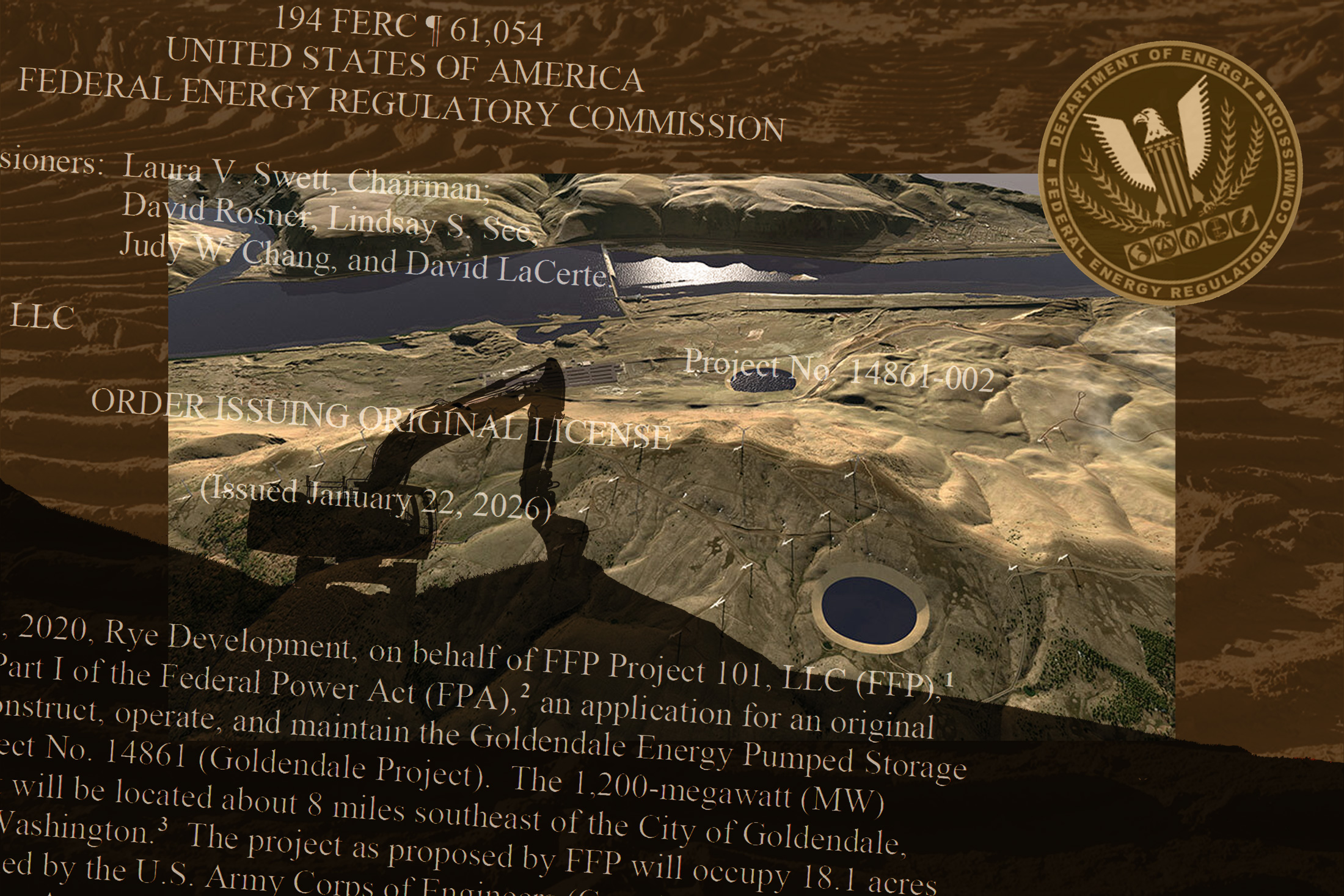
FERC, the independent federal agency responsible for regulating interstate energy transmission and hydroelectric projects, typically operates outside the public spotlight. However, it has increasingly faced intense scrutiny and broad criticism for its handling of sensitive tribal sovereignty issues, particularly in cases where energy development intersects with Indigenous land rights. While the agency had previously implemented a policy stating it would not permit hydro projects on reservations without the explicit consent of the tribal government – a recognition that in many instances, such projects could constitute a treaty violation – reports indicate that this crucial acknowledgment of tribal sovereignty was later pressured to be rescinded by the previous administration. This vacillation highlights the persistent tension between federal energy policy and Indigenous rights.
During the January 22 FERC meeting where Rye Development’s license was formally announced, Commissioner David Rosner expressed a clear mandate for accelerating development. "My hope is that we can, moving forward, spend less time with the lawsuits and more time with the electricians, more time figuring out how do we unlock the hundreds of gigawatts of new generation capacity," Rosner stated, signaling a preference for expedited project timelines over prolonged legal disputes. He further emphasized his desire to "get those queues moving faster so that they can serve the needs of all the developers." FERC Chair Laura Swett, appointed by President Donald Trump in October, echoed this enthusiasm, expressing her excitement to vote on the license and noting that it was the first original license for a project of this magnitude in 12 years, referencing the 1,300-megawatt Eagle Mountain Pumped Storage project in California. She lauded Goldendale for "rising to the occasion," granting a license valid for four decades.
Rosner identified lengthy permitting timelines, which necessarily include comprehensive environmental reviews and government-to-government tribal consultation, as a significant obstacle to rapid energy development. He claimed that FERC had completed "six years of historic preservation and consultation with states and tribes," yet critics argue this process was deeply flawed and inadequate. The requirement for government-to-government consultation with tribal nations is mandated by federal law, recognizing tribes as sovereign entities. However, during the permitting process for Pushpum, FERC controversially cited ex parte rules – regulations designed to prevent improper influence on decision-makers – as its reason for not meeting privately with the Yakama Nation. Further exacerbating the issue, in 2021, the agency attempted to delegate its federal consultation responsibility to the project developer, a move the Yakama Nation unequivocally rejected, asserting that a corporation cannot represent the federal government in its trust responsibility to sovereign tribes.
Simone Anter, an attorney with Columbia Riverkeeper, sharply criticized FERC’s public statements, calling them "divorced from the facts on the ground." Anter asserted that "FERC’s decision was made without adequate tribal government consultation and based on an incomplete environmental analysis and review of the development," adding that it was "appalling to see nothing but excitement and praise as FERC approves a license to destroy an irreplaceable sacred site." These sentiments reflect widespread frustration among Indigenous communities and environmental advocates who feel that federal agencies often prioritize economic and energy development goals over their legal and ethical obligations to protect cultural heritage and conduct meaningful consultation.

The concerns raised by the Yakama Nation are firmly supported by multiple environmental impact assessments. Two separate environmental impact statements, along with a detailed tribal resource analysis conducted in 2022 by the Washington State Department of Ecology, consistently determined that the proposed project "is likely to result in significant adverse impacts to natural resources and cultural resources that are considered Tribal Resources." Specifically, these reports forecast "significant and unavoidable" damage to crucial plant and wildlife populations integral to tribal cultures, as well as to invaluable tribal archaeological and historic sites. These impacts go beyond mere physical destruction; they represent a severe blow to the Yakama Nation’s ability to practice traditional land stewardship, maintain spiritual connections, and transmit ancestral knowledge across generations.
Despite the widespread opposition, Rye Development’s Chief Development Officer, Eric Steimle, stated in an email that the company "respect[s] the vital role of tribal consultation in the FERC licensing process, which is among the most rigorous for all energy projects." Steimle affirmed Rye’s commitment "to working with affected tribes to finalize a Historic Properties Management Plan that safeguards cultural and historic resources." The company, in partnership with Copenhagen Infrastructure Partners, is now moving into the final detailed design and construction planning phase, with a groundbreaking targeted for late 2027, within 24 months of the license issuance.
Yakama Nation Tribal Council Chairman Gerald Lewis articulated the profound sense of injustice felt by his people, stating, "Federal agencies are rewarding bad actors who have spent years finding loop-holes to target a new wave of industrial development on top of Indigenous sites that have religious and legendary significance to the Yakama People and many others who don’t have political connections or deep pockets." Chairman Lewis powerfully highlighted what he perceives as a systemic double standard in how sacred sites are protected, suggesting that "If a small Christian shrine sat on this site the decision-makers would understand what ‘sacred’ means." This observation speaks to a broader national and global challenge where the spiritual and cultural values of Indigenous communities are often marginalized or dismissed in the face of perceived national interest or economic opportunity. The struggle over Pushpum thus becomes a pivotal case study in the ongoing global dialogue about Indigenous rights, environmental justice, and the true cost of the transition to a greener energy future.