Johny Prima
The seemingly innocuous phrase "time immemorial," frequently encountered in journalism pertaining to Indigenous affairs, carries a profound weight, serving not merely as a literary flourish but as a powerful assertion against long-held Western scientific and colonial narratives regarding human presence in the Americas. While some critics might dismiss its overuse as a journalistic cliché or even a progressive "dog whistle," its enduring power lies in its capacity to succinctly articulate a vast and contested history, signaling a deep past that defies arbitrary chronological constraints and challenges the very foundations of settler colonial thought. For generations, Indigenous peoples have maintained histories that speak to an ancient and continuous presence on these lands, directly contradicting the dominant academic narrative that posited human migration into North America around 12,000 years ago. The phrase "time immemorial" acts as a vital counterpoint, communicating this profound longevity without succumbing to the limitations or debates of precise dates, thereby affirming Indigenous sovereignty and cultural resilience.
This prevailing Western scientific paradigm, often termed the "Clovis-first" theory, emerged from archaeological discoveries near Clovis, New Mexico, in the 1920s. It meticulously constructed a narrative suggesting that the first humans arrived in the Western Hemisphere approximately 12,000 to 13,000 years ago, crossing the Bering Strait land bridge — a now-submerged landmass connecting Asia and North America — towards the end of the last Ice Age. This theory linked the distinctive Clovis spearpoints to the subsequent melting glaciers and the extinction of numerous Pleistocene megafauna, painting a seemingly coherent picture of rapid human expansion. For decades, this narrative became entrenched in educational curricula and popular thought, effectively serving a socio-political function: it subtly undermined the legitimacy of Indigenous land claims by portraying Native peoples as merely "another batch of recent arrivals," no different in their migratory patterns or impact than the European colonizers who followed. Harvard history professor Philip J. Deloria (Yankton Dakota descent) highlights this insidious utility, noting that it was a "very anti-Indian way of seeing things" that conveniently justified settler colonialism by flattening the unique and ancient relationship Indigenous peoples held with the land.

However, the elegant simplicity of the Clovis-first story harbored a critical vulnerability: its entire premise hinged on the absence of any human presence predating the Clovis culture. As Deloria aptly observes, "if you found anything that was earlier than that, the theory was screwed." And indeed, cracks in this foundational narrative began to appear decades ago, largely met with vigorous resistance from within the academic establishment. One of the earliest and most contentious challenges came in 1963 from the Calico Early Man Site in California’s Mojave Desert. There, world-renowned archaeologist Louis Leakey, celebrated for his groundbreaking work on human origins in Africa, unearthed what appeared to be stone tools and flintknapping debris, dating them potentially to over 20,000 years ago, and possibly even hundreds of thousands of years earlier. Far from being celebrated, Leakey’s findings were met with professional scorn, undermining his reputation and illustrating the profound academic inertia and implicit bias against evidence that contradicted the established timeline.
Paulette Steeves (Cree-Métis), an archaeology professor at Algoma University and author of The Indigenous Paleolithic of the Western Hemisphere, argues compellingly that for over a century, academia not only ignored but actively suppressed archaeological evidence of pre-Clovis human habitation in the Americas. This suppression, she contends, stems from "embedded racism" and a colonial mindset that sought to control the historical narrative. The Calico site was not an anomaly; numerous other sites across the Americas presented similar challenges to the Clovis-first dogma, often at great personal and professional cost to the archaeologists involved. These include the Monte Verde site in Chile, yielding evidence of human occupation dating back at least 18,500 years; the Cactus Hill site in Virginia, with artifacts from roughly 15,000 to 18,000 years ago; the Gault site in Texas, showing continuous occupation for over 16,000 years; and the Meadowcroft Rockshelter in Pennsylvania, where evidence points to human activity stretching back beyond 16,000 years. More recently, discoveries like the Chiquihuite cave in Mexico and the Hueyatlaco site, potentially hundreds of thousands of years old, continue to push the boundaries of established timelines, infuriating those who cling to colonial-minded historical frameworks. Steeves starkly describes the act of publishing on an older site as "career suicide" for archaeologists, highlighting the systemic pressure to conform to the dominant narrative. Many genuine scientific findings were dismissed as pseudoscience, echoing historical patterns of discrediting Indigenous knowledge.
However, the rigid academic barrier is finally showing signs of collapse. A watershed moment arrived in 2021 when Science magazine published a report on 20,000-year-old human footprints discovered near White Sands, New Mexico. This publication signaled a critical shift, indicating institutional recognition and support for pre-Clovis human habitation. The report’s authors unequivocally stated, "These findings confirm the presence of humans in North America during the Last Glacial Maximum." The academy can no longer credibly deny that human populations were present in the Americas long before the makers of the Clovis spearpoints, forcing a fundamental re-evaluation of early American history. This scientific validation powerfully reinforces what Indigenous peoples have asserted for generations.

Beyond archaeology, other disciplines lend substantial scholarly support to the concept of deep time for Indigenous presence. Linguists, studying the immense diversity and complexity of the continent’s language families, estimate that such linguistic divergence would require at least 30,000 years to develop, far exceeding the Clovis timeline. Similarly, DNA researchers have uncovered genetic links between Indigenous South Americans and Austronesian populations, suggesting ancient trans-oceanic migrations that predate the Bering land bridge model and point to a much more intricate and ancient peopling of the Americas. These multidisciplinary insights collectively paint a picture of deep human history that aligns more closely with Indigenous oral traditions than with the previously dominant Western scientific views.
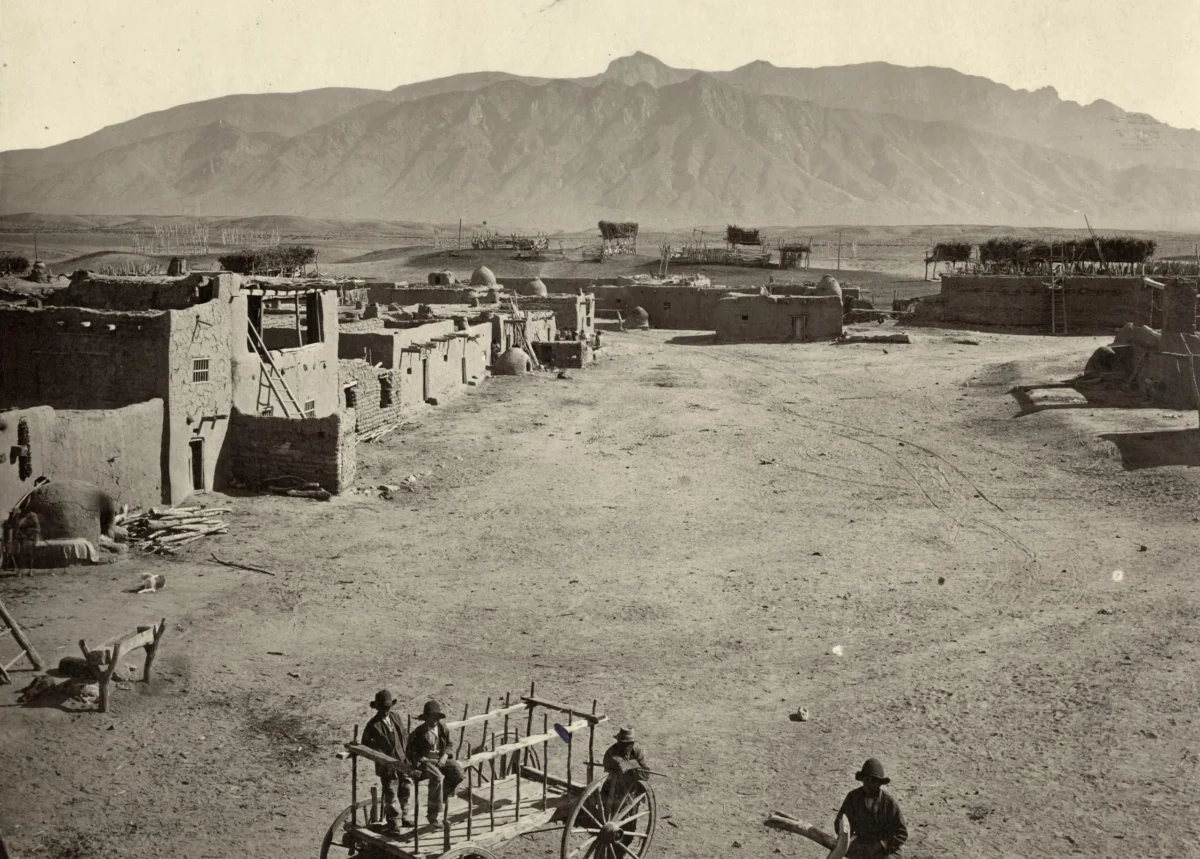
Indigenous knowledge systems, often dismissed as mere legends by Western science due to their lack of "written records," represent sophisticated methods of historical preservation. As Deloria explains, oral histories are not casual anecdotes but are meticulously memorized under the guidance of elders, passed down with a profound sense of communal responsibility. These living histories are further buttressed by the monumental physical evidence of ancient North American civilizations, whose scale and complexity challenge the notion of a "New World" awaiting discovery. The weathered earthworks of Cahokia, near present-day St. Louis, once a sprawling urban center with a population rivalling London in its heyday, featured massive tamped-earth step-pyramids that supported elaborate wooden temples. Similarly, Poverty Point in Louisiana, another monumental earthwork complex, demonstrates advanced engineering and societal organization thousands of years ago. In Arizona, the Hohokam people engineered hundreds of miles of technologically sophisticated agricultural irrigation canals along the Salt River, a system Popular Archaeology has noted "rivaled the ancient Roman aqueducts." The Hopewell Ceremonial Earthworks in Ohio, a series of precisely aligned earthen constructions, showcase sophisticated astronomical knowledge, charting solar and lunar cycles. Deloria refers to these as "North American Classical civilizations," arguing that the omission of such achievements from mainstream curricula and the popular imagination is a deliberate act of colonial erasure. Just as Europeans lionize their Greek and Roman predecessors, Indigenous North Americans have a rich classical heritage that demands recognition.
The re-emergence and validation of these deep histories carry profound implications beyond academic debates. Challenging the entrenched narratives of Clovis-first and the Bering land bridge fundamentally erodes the legitimacy of colonial empires and the ideologies they propagate, such as white supremacy, American exceptionalism, and the very concept of a "New World." These historical revisions underscore that Indigenous cultures were not only present long before the arrival of European colonizers, enduring relentless oppression disguised as progress, but they will continue to thrive long after these transient colonial structures have faded. Engaging in endless debates over exact dates with those clinging to outdated paradigms becomes a futile exercise. Instead, "time immemorial" powerfully sweeps aside such arguments, allowing the silent gravitas of ancestors to speak, prophesying a future that transcends the limits of the colonized imagination. As Steeves emphasizes, embracing "time immemorial" is crucial for "decolonizing settler minds, decolonizing education, and decolonizing ourselves." It serves as a potent reminder that, rather than limiting their histories to specific, potentially understated numbers, Indigenous peoples affirm a boundless connection to their ancestral lands, a connection that has always been, and always will be, since time immemorial.