Roger Danuarta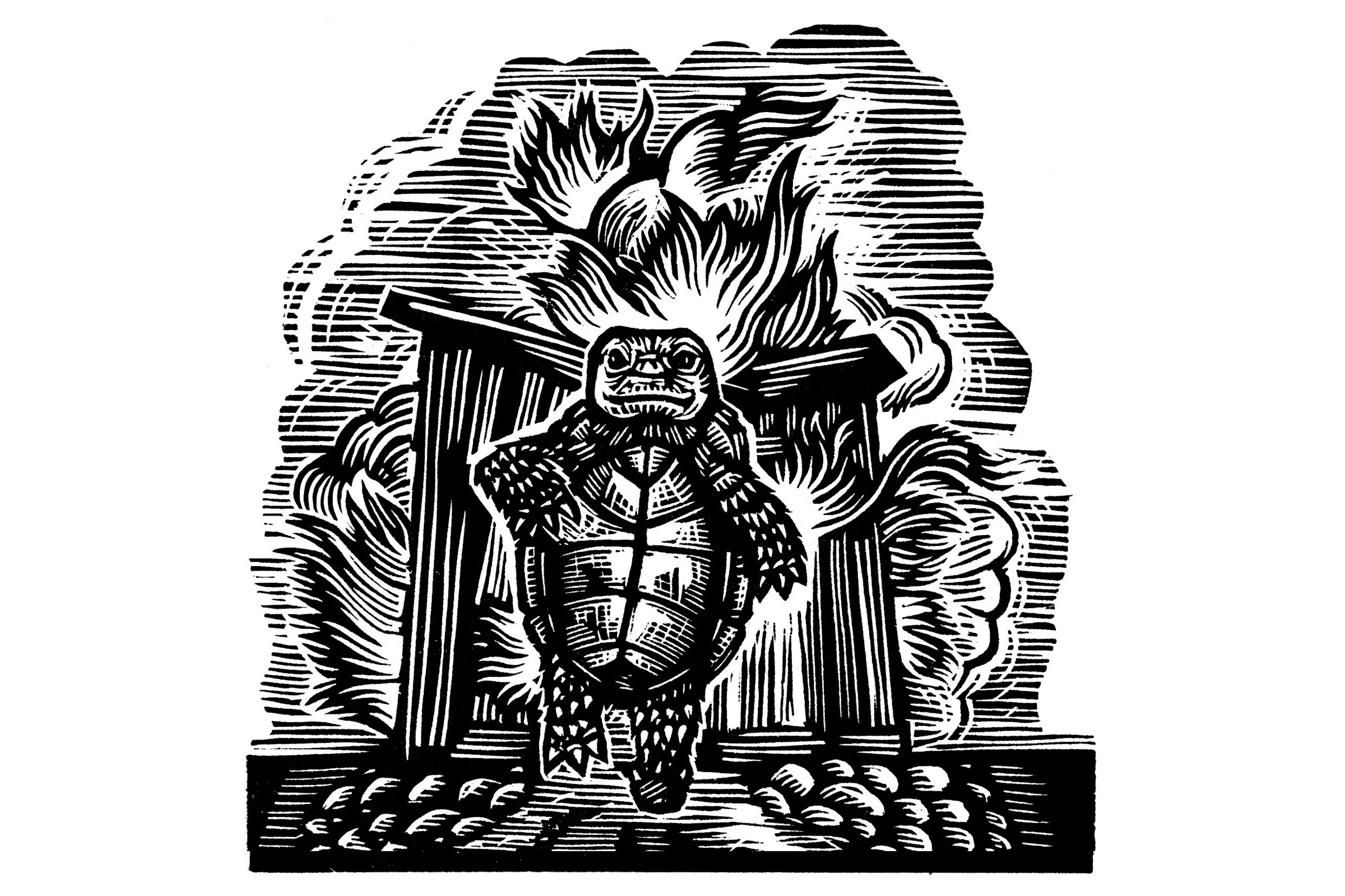
In a remarkable display of survival instinct, Leo, a three-year-old female Sulcata tortoise, transformed from a docile pet into an internet sensation after miraculously escaping a devastating house fire in Fullerton, California. The harrowing incident unfolded on February 8, when Leo’s owner, Hyeri Tom, was attending a Super Bowl party, leaving the reptile tucked away in her backyard enclosure. A seemingly innocuous heat lamp, crucial for maintaining the warm environment these desert-dwelling creatures require, tragically tipped over, igniting the shed in a furious blaze. Surveillance footage captured Leo’s astonishing agility, as the usually ponderous tortoise, described by her owner as “kicking into sports mode,” trundled herself away from the inferno with uncharacteristic speed. This extraordinary escape quickly propelled Leo to TikTok stardom, with millions viewing the dramatic video on her dedicated account, @leothehomelesstort. While recovering from smoke inhalation, Leo has inadvertently become an unofficial advocate for heat lamp safety, a critical reminder for the growing number of reptile enthusiasts. Sulcata tortoises, native to the arid Sahel region of Africa, can live for 70 years or more and grow to significant sizes, often requiring specialized care, including consistent warmth, making heat lamps an essential but potentially hazardous component of their habitats. This incident underscores the importance of proper installation and monitoring of all heat sources in pet enclosures, mirroring broader home fire safety concerns where electrical malfunctions remain a leading cause of residential blazes globally. Leo’s story resonates deeply, highlighting both the resilience of the animal kingdom and the emotional bond between humans and their extraordinary companions, prompting a global conversation on responsible pet ownership and emergency preparedness.
Far from the immediate peril of a burning home, human antics also captured public attention, albeit with a deliberate flair for the dramatic. In Commerce City, Colorado, motorists experienced an unprecedented spectacle near the bustling intersection of U.S. 85 and 60th Avenue. Police drone footage revealed an individual, unidentifiable but undeniably audacious, juggling flaming torches while precariously balancing on a unicycle, effectively impeding the flow of traffic. The Commerce City Police Department, accustomed to routine calls, found themselves in uncharted territory, noting on Facebook, "We don’t often get reports like this anymore… well to be fair… we have NEVER gotten a report like this one." The department humorously questioned if the intersection had momentarily transformed into "the Las Vegas Strip," reflecting the sheer disbelief of bewildered commuters. While acknowledging the performer’s undeniable talent, authorities ultimately opted for discretion, letting the unicyclist off with a polite warning and a firm request to refrain from such dangerous public displays. This incident highlights the complex interplay between individual expression and public safety in urban environments. While street performance and busking are celebrated art forms in many cities worldwide, from the vibrant squares of Barcelona to the bustling markets of Marrakech, acts involving open flames and traffic obstruction pose significant risks, not only to the performer but also to motorists and pedestrians. Local ordinances universally prohibit activities that endanger the public or disrupt essential infrastructure, underscoring the delicate balance law enforcement must strike between preserving public order and tolerating unconventional forms of entertainment. The Commerce City episode serves as a quirky, localized example of the global challenge of managing public spaces where spontaneous acts of daring can quickly cross the line into hazardous disruptions.

Venturing into the realm of truly unconventional endeavors, two Oregon-based entities have redefined the boundaries of culinary innovation and marketing. Columbia Sportswear, a renowned outdoor apparel brand, collaborated with Breakside Brewery, a celebrated craft beer maker in Portland, to concoct a limited-edition lager aptly named "Nature Calls." Its distinguishing feature? An infusion of Ursi cacas, more commonly known as bear poop. This audacious brew forms a central pillar of Columbia’s "Engineered for Whatever" brand campaign, which aims to prepare consumers for "absolutely anything – even ‘nature’s most unexpected ingredient.’" While the concept might initially evoke skepticism, the creators emphatically assure consumers of its 100% safety. They emphasize that "Nature Calls" is brewed under the same rigorous standards as any other Breakside beer, utilizing premium malted grains sourced from the Pacific Northwest, complemented by notes of honey and huckleberry. The "wild ingredients" themselves are meticulously collected separately from free-range black bears roaming the expansive wilderness of Montana, ensuring both ethical sourcing and controlled integration into the brewing process. Joe Boyle, Columbia Sportswear’s brand president, succinctly captured the essence of the venture: "From the inside of a bear to your mouth, we’re making nature’s crap easier to swallow." This bold marketing strategy taps into a global trend of novelty food and beverage products, where unique or even bizarre ingredients are employed to generate buzz and differentiate brands in a saturated market. From coffee made with civet cat droppings (kopi luwak) to beers brewed with yeast recovered from ancient artifacts, the culinary world constantly pushes the envelope, often relying on scientific processes like pasteurization, filtration, and fermentation to render otherwise unpalatable or unsafe ingredients into consumer-ready products. "Nature Calls" not only serves as a testament to creative branding but also challenges perceptions of what constitutes an acceptable ingredient, inviting curiosity and a touch of daring from adventurous palates worldwide.
Shifting from contemporary curiosities to profound historical revelations, central Oregon continues to yield invaluable insights into the earliest chapters of human presence in North America. A treasure trove of artifacts, originally excavated in 1958 by amateur archaeologist John Cowles from Cougar Mountain Cave and Paisley Caves, has recently come under meticulous analysis, shedding new light on the ingenuity of Late Pleistocene inhabitants. Following Cowles’ passing, these vital relics were carefully preserved at the Favell Museum in Klamath Falls, only becoming available for in-depth study in recent years. Anthropologist Richie Rosencrance, a Ph.D. candidate at the University of Nevada, Reno, and a research affiliate with the University of Oregon Museum of Natural and Cultural History, leads the dedicated team unraveling their secrets. Radiocarbon dating has confirmed the materials to be approximately 12,000 years old, placing them firmly near the end of the last ice age. The collection includes braided cords, bone needles, projectile points, and various wooden artifacts, collectively offering unprecedented glimpses into the traditional ecological knowledge and sophisticated craftsmanship of this ancient era. Most significantly, two fragments of elk hide, skillfully sewn together with cordage fashioned from plant fiber and animal hair, represent the world’s oldest known evidence of sewing. While their original function remains undetermined, researchers postulate they could have been components of clothing, moccasins, bags, or even rudimentary shelters. This discovery dramatically underscores the advanced technological capabilities of the earliest human populations in the Americas, challenging previous assumptions about their material culture and survival strategies during a challenging climatic period. The ability to sew was a fundamental innovation, crucial for creating protective clothing and robust shelters essential for surviving the harsh glacial conditions, reflecting a deep understanding of available resources and sophisticated tool-making. Rosencrance eloquently articulated the broader significance of these findings, stating, "It really underscores what Native people have been telling scientists forever, which is that they have always been here." This powerful statement highlights the profound connection between scientific discovery and the enduring oral traditions and historical claims of Indigenous communities, affirming their continuous presence and deep ancestral roots in these lands, predating many commonly accepted narratives of human settlement in the Western Hemisphere. These ancient threads from Oregon not only reconstruct a detailed picture of prehistoric life but also powerfully reinforce the enduring legacy of Indigenous peoples.