Roger Danuarta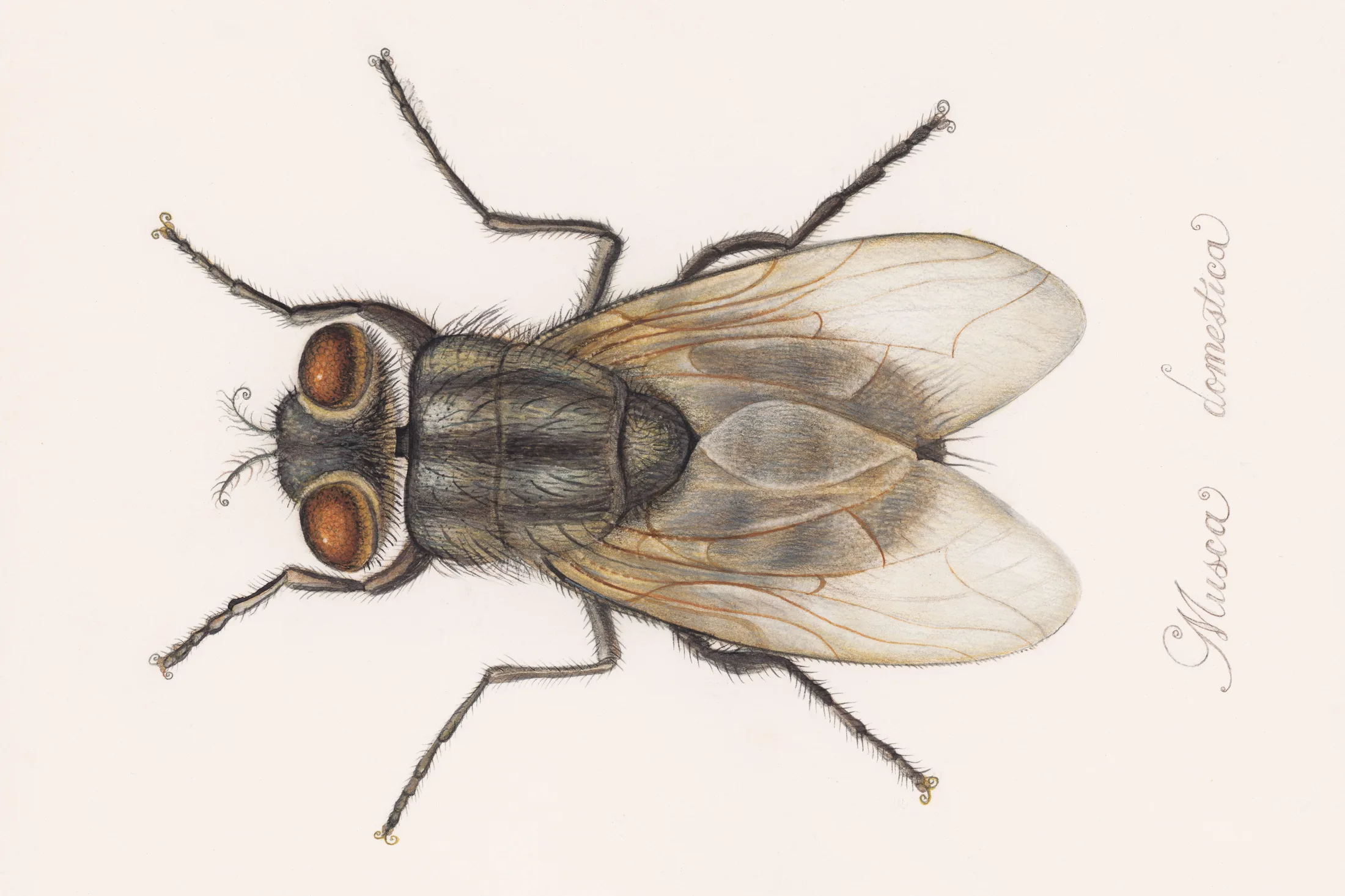
The ubiquitous housefly, often dismissed as a mere nuisance, can unexpectedly trigger profound introspection, revealing not only the intricate complexity of the natural world but also the depths of human perception. For many, the persistent buzz and landing of a fly ignite an immediate, visceral irritation, a primal urge to swat away the perceived pest. Yet, it is precisely in this universal experience of annoyance that an unlikely teacher emerges, prompting a re-evaluation of these often-maligned insects and our place within a shared ecosystem.
Years ago, on a hot summer afternoon, an individual recounted a familiar scenario: a housefly repeatedly landing on an arm, leg, face, and knee while relaxing on a front porch. The initial mild agitation escalated into a simmering rage, culminating in a decisive, fatal slap. The immediate aftermath, however, brought not satisfaction but horror. Lying on the floor, its delicate gossamer wings flattened and filament legs upturned, the fly became, for the first time, a living being. This small creature, like humans, possessed the capacity to see, sense, breathe, and, on some fundamental level, desire to live. The sheer force of the rage capable of extinguishing such a life proved deeply appalling, sparking a genuine curiosity about these pervasive insects beyond the usual human disdain. This pivotal moment initiated a journey of closer observation and a re-examination of humanity’s often-antagonistic relationship with the natural world.
From the confines of a home to expansive backyards and beyond, closer scrutiny revealed an unexpected beauty in flies. Their transparent wings, slender legs, and shimmering bodies began to transform their image. Belonging to the order Diptera, meaning "two-winged," flies are an incredibly diverse group, with approximately 125,000 species already described globally, though many more undoubtedly await discovery. This vast biodiversity encompasses an astonishing range of forms and functions. Some species undertake remarkable long-distance migrations, traversing continents and even venturing far out to sea, demonstrating incredible endurance and navigational prowess. Many species serve as vital pollinators for numerous crops and wild flowers, a service often overshadowed by the more charismatic bees and butterflies. The intricate courtship rituals of certain male fly species involve complex serenades, crafted by the rapid vibration of their wings, showcasing a level of behavioral sophistication rarely attributed to them.

Insights from leading entomologists further illuminate the extraordinary capabilities of flies. Michael Dickinson, a fly biologist at Caltech, has dedicated his research to understanding their almost miraculous nature, particularly their movement patterns. According to Dickinson, flies possess arguably the most sophisticated flight of any creature on the planet. Their wings can beat at an astonishing rate, sometimes as fast as 1,000 times per second, powered by some of the most powerful muscle tissue, ounce for ounce, found in any organism on Earth. This unparalleled strength and speed enable their famed acrobatic prowess. Central to their aerial mastery are the halteres, unique, lollipop-like structures sprouting from their backs. These evolved from a second set of wings and function as highly advanced gyroscopes and metronomes. Halteres provide crucial sensory feedback, helping flies maintain balance, keep time with their wing flaps, and accurately perceive their orientation in three-dimensional space. This sophisticated bio-engineering allows a fly to change direction by 90 or even 120 degrees in mere milliseconds – a feat faster than a human eyeblink. Furthermore, their vision is at least 10 times faster than ours, perceiving the world in a rapid succession of images that would make a human-viewed movie resemble a slow slideshow. These extraordinary powers—flight, rapid maneuverability, and hyper-perceptive vision—are often associated with fictional superheroes, begging the question of why these real-life marvels command so little human respect.
Humanity’s relationship with these buzzy insects has historically been deeply conflicted, shaped by both biological realities and cultural narratives. Flies are notorious vectors for disease, contaminating food, and some species inflict painful bites. The incessant buzzing at frequencies often found irritating further contributes to their negative perception. Across many cultures, flies have symbolized death, decay, and corruption. European Renaissance artists frequently incorporated them into paintings as unsettling memento mori, stark reminders of life’s transience and the inevitability of decay. However, this universal revulsion is not absolute. Ancient Egyptians, for instance, associated flies with courage and perseverance, awarding soldiers necklaces depicting flies as a distinguished recognition for valor in battle. Similarly, within some Diné (Navajo) storytelling traditions, Big Fly, or Do’tsoh, serves as a revered mentor to supernatural beings and mortals alike, acting as a benevolent messenger between worlds and a symbol of swift communication and protection. These contrasting perspectives highlight the subjective nature of human interpretation and the rich tapestry of meaning ascribed to creatures within different cultural frameworks.
As understanding of flies deepens, a more empathetic, live-and-let-live attitude naturally emerges. While vigilance against disease transmission and food contamination remains prudent, the general approach shifts towards peaceful coexistence. Gently brushing them away replaces aggressive swatting, acknowledging their vital role in the intricate web of life. Flies are indispensable contributors to ecosystem health, offering critical services in the form of pollination, pest control, and decomposition. While the latter—the breakdown of organic matter—may be unpleasant to human sensibilities, it is an absolutely essential process without which ecosystems would collapse under accumulating waste. Maggots, the larval stage of many flies, are nature’s most efficient decomposers, recycling nutrients back into the soil, a process critical for plant growth and overall ecosystem functionality. Beyond decomposition, predatory flies, such as hoverflies and robber flies, actively hunt and consume other insects, providing natural pest control in agricultural and natural environments.
Over time, this re-evaluation can lead to an even more unexpected shift in thinking, prompting reflections on the inner workings of the human mind itself. Spending extended periods in natural environments, particularly through practices like meditation, can profoundly alter one’s perception. When one sits still for long durations in the wilderness, the human presence gradually dissolves into the landscape, becoming just another element—a rock, a tree. Deer approach to graze, mice forage nearby, birds lose their fear, and insects, including flies, land with abandon. During one particularly warm meditation session in northern New Mexico, an individual observed eight flies crawling simultaneously, a relentless presence. The futility of swatting became apparent; they simply returned. Without the immediate concern of bites or disease, the tickling sensations, though almost unbearable in the windless heat, gradually revealed a deeper truth: the irritation was merely a perspective, a construct of the human mind. To the flies, a human was simply another patch of earth, no different from a rock or a tree that does not flinch or complain. Surrendering to this reality fostered a sense of dissolving into the land itself, an effortless belonging that arose from ceasing to push away any part of the natural world—the beautiful and the ugly, the pleasant and the unpleasant, the flies, flowers, sun, and breeze. This practice cultivates patience, demonstrating that raging against these small creatures accomplishes nothing but internal disturbance.

This personal and philosophical journey takes on a critical global dimension when viewed against the backdrop of alarming ecological trends. A recent study documented a devastating 72.4% decline in insect populations between 2004 and 2024 in a meadow not far from the observer’s home, mirroring a global "insect apocalypse." This precipitous decline, driven by habitat loss, pesticide use, climate change, and pollution, poses an existential threat to ecosystems worldwide. Insects, including flies, form the foundation of countless food webs, provide essential pollination services, and regulate nutrient cycles. Their loss has cascading effects, impacting birds, mammals, and ultimately human food security and well-being. In this context, it becomes more imperative than ever to understand, appreciate, and protect all components of the natural world, even those traditionally deemed unpleasant. Vilifying any part of nature not only perpetuates a skewed understanding of ecological interconnectedness but also blinds us to the critical functions these organisms perform.
The profound truth emerging from this deepened understanding is that there is an immense amount humanity does not yet comprehend about the natural world, and equally, about itself. Observing a single fly crawl up a windowpane in a bustling coffeeshop, devoid of disgust or irritation, but rather with a sense of peaceful coexistence and wonder, underscores this transformation. It reveals that dwelling in respect and curiosity, rather than succumbing to rage and aversion, is a far more enriching and enjoyable way to navigate life – not just for the individual, but for all living beings, including these extraordinary masters of decay and flight who silently perform indispensable services to our planet.