Rocky Georgio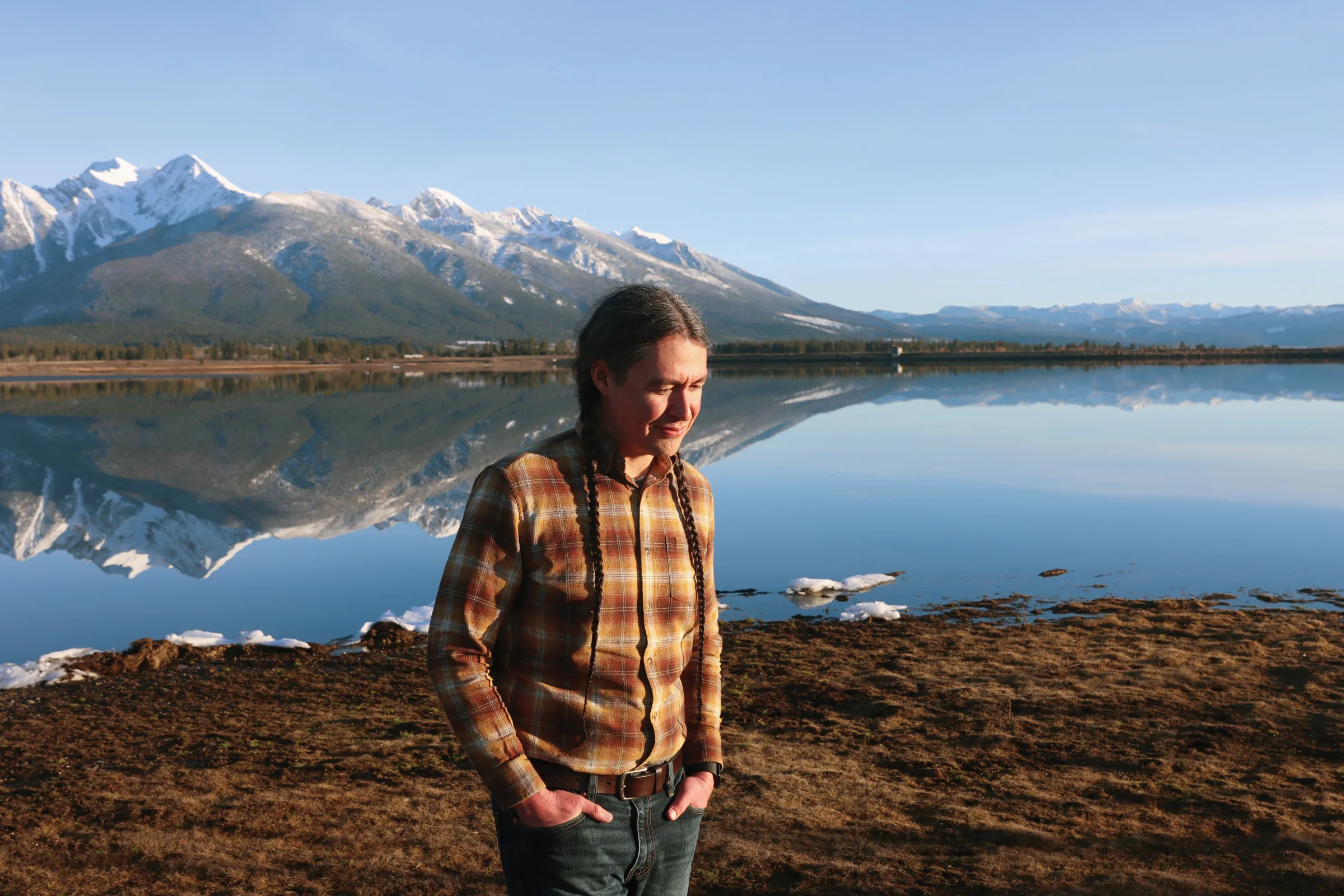
Under the subdued gray light of a winter sun, Germaine White, an enrolled member of the Confederated Salish and Kootenai Tribes (CSKT), reminisced about the Jocko River, once a vital artery of life in Northwestern Montana, slowly meandering in the shadow of the Mission Mountains. In the Séliš-Ql̓ispé language, the river, nisísutetk̓w ntx̣e, was once teeming with bull trout, and its abundant tributaries provided a generous flow of cold, fresh water each spring. "We live at the backbone of the world, where the water begins," White stated, contrasting the scientific term "resource" with the tribal understanding of water as the "source." The Jocko River is not merely a body of water; it is fundamental to CSKT existence, yet over the past century, its watershed became severed from its floodplain, straightened, and channelized as agriculture expanded across the Flathead Indian Reservation. After more than a decade of intricate negotiations, a monumental tribal settlement, one of the most significant in U.S. history, culminated in the 2015 Confederated Salish and Kootenai-Montana Compact Water Rights Compact. This agreement, enacted in 2021, revalidates the tribal water rights originally guaranteed by the 1855 Hellgate Treaty, while simultaneously safeguarding existing water users through a collaborative state-tribal water management system. This confluence of Indigenous-led restoration, shared governance, and focused financial investment offers a promising pathway for the tribes to reclaim their rivers and the lifeways intrinsically bound to them.

The ancestral homeland of the Selis, Ksanka, and Qlispe tribes encompassed a vast 22 million acres across western Montana, extending into Canada, Idaho, and Wyoming. These three tribes thrived in a landscape rich with natural bounty, crisscrossed by over 980 miles of rivers and streams, a testament to their historical "wealth from the water," as Salish elder Mitch Smallsalmon so eloquently described. However, this abundance was diminished with the signing of the 1855 Hellgate Treaty. Further disruption followed in 1887 with the Dawes Act, an assimilationist policy designed to dissolve tribal landholdings and open reservation parcels to homesteaders. Even though the reservation represented only a fraction of the tribes’ original territory, the act fragmented the landscape into a complex mosaic of private and tribal lands. Many of the original place names, deeply connected to the land and its stories, were supplanted by those of the settlers. "Place names are so profoundly important; they’re the oldest words in our language," White emphasized. "They came from our creation stories and the making of this place. In recent times, the land has been altered so dramatically that it no longer resembles the place names."
The legal framework governing water rights in the American West is largely based on the doctrine of "prior appropriation," commonly known as "first in time, first in right." This principle dictates that the individual who first claims water and applies it to a "beneficial use" holds precedence over subsequent users. During the era of westward expansion, settlers operated under the assumption of an inexhaustible water supply, freely distributing water rights and consuming water without restraint. This commodification of water, however, led to the gradual estrangement of tribes from their traditional lifeways. Sadie Peone-Stops, a CSKT member and director of the Séliš-Ql̓ispé Culture Committee, articulated this perspective: "We look at the waterways—the veins of our Mother Earth—as a way of life. Water gives all life. If people can understand that, they can understand what wealth means to the tribe."

Throughout the 20th century, tribal rights, including those related to fishing and hunting, frequently clashed with the prior appropriation rights granted to white settlers on the reservation, creating a complex web of conflicting claims. This led to a prolonged period of legal battles as stakeholders sought to solidify their water rights before their claims were superseded by others. Recognizing the urgent need for a comprehensive system to adjudicate all outstanding water rights, the Montana Legislature established the Montana Water Court. This specialized judicial branch is tasked with resolving over 219,000 water rights claims filed in Montana prior to 1973, working through a unitary system and adjudication process to determine rights across every river basin in the state. The court also reviews and rules on objections to negotiated compacts involving the state’s tribes and federal agencies, a system unique to Montana, Colorado, and Idaho among Western states.
The genesis of the current Water Compact can be traced back to a series of legal cases initiated on behalf of the CSKT by the federal government approximately three decades ago. These cases propelled the tribes’ pursuit of quantifiable water rights, ultimately leading to the Water Compact. This agreement meticulously quantifies the tribes’ reserved and aboriginal water rights, acknowledging their existing cultural and religious uses while ensuring the protection of all other existing water rights, irrespective of their legal basis. However, by the time the compact was finalized, over a century of industrial activity had left a significant imprint on the watersheds within and surrounding the reservation. Montana’s history of mining and milling had poisoned rivers, and development had fragmented vital watersheds and depleted aquifers. The final decree of the compact is still pending before Montana’s Water Court, but its provisions definitively recognize the tribes’ reserved and aboriginal water rights, as well as their established cultural and religious uses. Furthermore, the compact guarantees protection for tribal instream flows, existing uses, and historic deliveries to irrigators. Its co-management plan integrates both Western scientific methodologies and Indigenous traditional knowledge to facilitate the recovery and strategic management of these vital waterways.

The implementation phase of the compact is largely overseen by the CSKT’s Division of Engineering and Water Resources, which underwent expansion in 2020 to accommodate the compact’s extensive requirements. Over a dozen specific activities were outlined to reauthorize tribal water rights while simultaneously ensuring the fulfillment of the reservation’s water needs as provided by the Flathead Indian Irrigation Project (FIIP). The FIIP, established in 1908 as part of the Dawes Act, was designed to facilitate agricultural water distribution across the reservation. This massive project comprises more than 1,000 miles of canals, irrigates close to 130,000 acres, and is supported by 14 major reservoirs that feed its intricate network of channels. "The FIIP was ostensibly for the benefit of the Indian," explained Casey Ryan, a tribal member and manager of the tribe’s Natural Resource Department’s Division of Engineering and Water Resources. "There were so many changes that our tribe was trying to navigate… and despite all that, we were highly successful at incorporating agriculture."
Despite its initial intentions, the FIIP profoundly altered the Mission Valley’s watersheds, and its aging infrastructure became increasingly inefficient. Consequently, federal legislation stemming from the Water Compact prioritized the rehabilitation of the FIIP’s infrastructure and the remediation of the environmental damage it had caused. The 20th-century concept of "beneficial use" of water was so dominant that any water left in the FIIP’s irrigation canals was considered "waste." The Jocko River, the second-largest river on the reservation, suffered significant degradation, confined to a unnaturally straight channel severed from its natural meanders, floodplain, and side channels that once supported a vibrant ecosystem. According to Ryan, as early as the 1930s, water surveys indicated that the FIIP was a deficit irrigation project, meaning its water supply was often insufficient to meet potential crop demands in most years. "There are over 34 creeks that come out onto the valley floor, and of those, most die in the canal that runs along the base of the Mission Mountains," Ryan stated. "We even have staff that can remember when the Jocko would run dry during the irrigation season."

Restoration efforts on the Jocko River commenced even before the compact was finalized, thanks to funds secured by the CSKT from a pivotal lawsuit in the 1980s against ARCO. Mining and milling operations in the Upper Clark Fork River Basin had rendered the river—once a crucial hunting and fishing ground for the tribes—so severely polluted that it became one of the nation’s largest Superfund sites. The $187 million ARCO settlement was instrumental in funding cleanup initiatives undertaken by the tribes and the state. Moreover, this lawsuit powerfully demonstrated the legal weight of the rights enshrined in the CSKT’s treaty and the tribes’ capacity to leverage legal mechanisms for environmental reclamation. Driven by a commitment to preserving the bull trout, a fish of immense cultural significance, the tribes focused their restoration efforts on the South Fork of the Jocko, recognizing its similar hydrological profile to the Clark Fork.
The bull trout, listed under the Endangered Species Act in 1998, finds its last stronghold in the Jocko River, home to its final migratory population. Germaine White, who managed the educational and informational aspects of the Jocko River Restoration Project, explained that the bull trout historically served as a vital food source for the tribes, particularly during times of scarcity and when game was limited, sustaining the CSKT and preventing the starvation that afflicted other tribes during harsh winters. "We always had that incredible gift of the water, and with it, the gift of the bull trout," White reflected. The Restoration Project aimed to halt further environmental degradation by acquiring private land and relocating structures from the floodplain, while simultaneously assembling an interdisciplinary team to conduct comprehensive environmental restoration. Today, the CSKT owns over 70% of its reservation, exercising tribal sovereignty to protect its lands, including the nation’s first tribally designated wilderness area. The tribe also designated the South Fork as a primitive area, accessible only to tribal members, to preserve its cultural and recreational integrity. However, the funding from the ARCO case eventually concluded, leaving the lower reaches of the Jocko still channelized and constrained against the Bison Range. "When we got the Water Compact, the last block clicked into place," White remarked.

The compact’s implementation phase has effectively continued the work initiated by the Jocko River Restoration Project, employing "adaptive management" as a core principle. By reconnecting the river to its floodplain, allowing water to slow, spread, and naturally seep back into the land, tribal crews are diligently monitoring and assessing the river’s recovery process. Indigenous traditional ecological knowledge has been seamlessly integrated into this recovery strategy. In low-lying areas, tribal crews have constructed natural filtration zones utilizing cattails and other wetland vegetation, creating living buffers that effectively capture agricultural runoff before it can enter the river. The project’s overarching objective is to harmonize agricultural needs with ecological sustainability. Implementing more efficient water delivery systems not only reduces water losses but also ensures sufficient water remains for instream flows, leading, according to Ryan, to a noticeable increase in bull trout returning to their native streams. Healthier rivers, in turn, bolster soil health, replenish groundwater reserves, and stabilize the broader watershed essential for successful farming. "One of the beautiful things about the compact is it recognizes that water is a unitary resource, and that it needs to be managed as such," Ryan stated. "FIIP’s rehabilitation has been good for fish and farmers."
The compact’s fundamental measures—including the rehabilitation of the FIIP’s infrastructure, the restoration of environmental damage, and the enhancement of water management practices—are critically important, but the preservation of cultural heritage is equally paramount. "The restoration’s importance cannot be overstated," asserted Peone-Stops. "It’s going to bring back life, and with plant and animal life, it could bring life back to the culture in new ways." The CSKT’s Séliš-Ql̓ispé Culture Committee, guided by the profound wisdom of a board of tribal elders, has been at the forefront of the tribes’ cultural preservation efforts for half a century, playing a vital role in shaping the implementation of every project. Beyond restoring the landscape, the compact is fostering job creation and reconnecting tribal members with their ancestral lifeways. Peone-Stops noted that this renewed connection helps the tribe reinforce its deeply held belief that every natural resource is intrinsically a cultural resource. "The Water Compact is helping us to continue our mission: to preserve, protect and perpetuate the Selis and Qlispe culture, language and history," she explained. "It’s not a one-and-done thing. It will help us continue to serve our membership into the future." In 2021, the CSKT further solidified its commitment to cultural preservation by establishing the Lower Flathead River as a cultural waterway through its "Cultural Waterway Ordinance," which mirrors the protective provisions of the Wild and Scenic Rivers Act, safeguarding the river’s free-flowing nature from development. Peone-Stops indicated that the tribe intends to extend these protections to other waterways in the future. "When I think about this compact, it’s not about control or greediness. It’s so that the water—and everything connected to it—is protected," Peone-Stops concluded. "We adapt with what we have to, but our tribal practices, caring for the land in the way we know how, has always been the same."