Rocky Gerung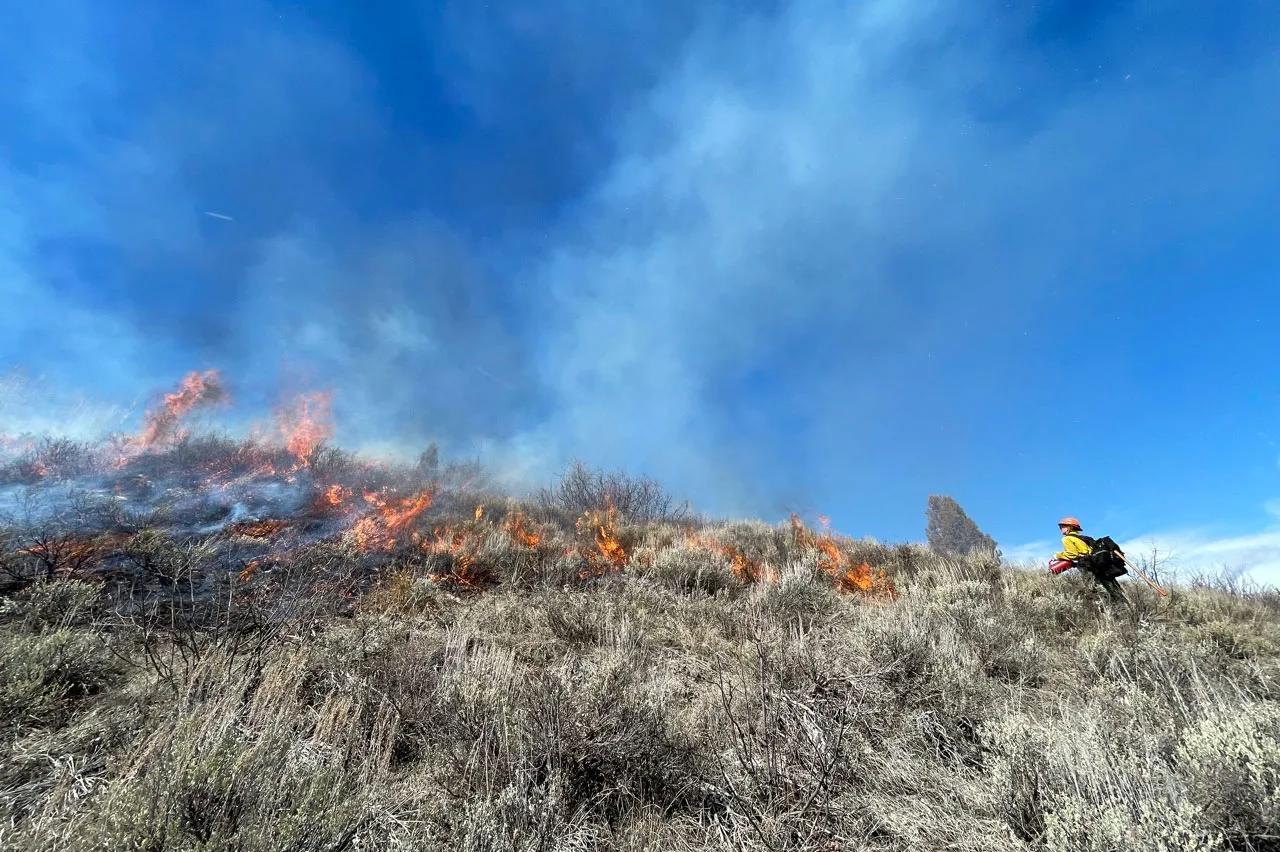
As winter’s grip loosens across the American West, a familiar, yet often misunderstood, sign of the changing seasons emerges: plumes of smoke dotting the horizon. This imagery, often associated with destructive wildfires, is in fact a crucial component of land management, with agencies and tribes strategically employing controlled burns during late winter and early spring. These intentional fires serve a multitude of purposes, from reducing hazardous fuel loads that could feed catastrophic wildfires to restoring ecosystems that have evolved with, and depend on, periodic fire. Land managers, including federal agencies, tribal nations, and conservation organizations, leverage windows of moist, cooler weather to conduct these burns across vast tracts of forests and grasslands, aiming to enhance ecological health and mitigate future fire risk.
Despite a notably dry start to the year across much of the region, these vital land management efforts are continuing. Colorado Governor Jared Polis activated the state’s drought task force in mid-March, highlighting that the state was experiencing its warmest year on record and one of its driest. This challenging climate backdrop has unfortunately coincided with several early-season wildfires, including a significant 7,300-acre blaze south of Colorado Springs and smaller incidents in Montana, Wyoming, and New Mexico, underscoring the escalating fire danger.

Even amidst these dry conditions, prescribed fire operations are not entirely halted in Colorado, according to Parker Titus, fire program manager for The Nature Conservancy in the state. The decision to proceed with a prescribed burn is a complex calculation involving numerous factors. Land managers meticulously assess conditions, considering elements like elevation and aspect of the burn area. A high-elevation or north-facing slope, for instance, may retain moisture and remain cool enough for a safe burn even when lower elevations are parched. "Conditions can vary widely across a relatively small geography," Titus explained, emphasizing the nuanced approach required. Furthermore, the history of fire on a landscape plays a role; areas that have experienced recent fires may have reduced fuel loads, making a new burn less intense and easier to control, while the presence of natural or constructed firebreaks can also aid in containment.
"Prescribed fires are all about the right place and the right time," Titus stated, a mantra that encapsulates the strategic thinking of fire practitioners. They are adept at weighing a complex interplay of variables, including not only current weather but also broader climate fluctuations, to determine the opportune moments for ignition.
In the Klamath Watershed, which straddles the Oregon-California border, the late winter season proved wetter than usual, according to Bill Tripp, a Karuk tribal member, cultural fire practitioner, and director of natural resources and environmental policy for the Karuk Tribe. While a typical February might offer two weeks of sunshine, this year’s persistent rain delayed larger prescribed burns the tribe had planned, although some smaller areas were successfully treated. The Klamath National Forest has consequently increased its prescribed burn operations, a visible sign of proactive land management. The Karuk Tribe, however, has temporarily paused its burning activities, adopting a philosophy of "cultural burning" that avoids igniting fires during critical plant reproductive cycles. As of March 20th, Tripp indicated that their burning season was nearing its end, with the landscape showing clear signs of new growth and leaf development signaling the transition away from fire-friendly conditions.

Coinciding with these localized burn decisions, California and much of the Western U.S. experienced an exceptional heatwave in late March, with temperatures soaring up to 30 degrees Fahrenheit above average—a phenomenon increasingly linked to climate change. Despite this intensification of heat, public land management agencies in Montana, Oregon, and Idaho have announced plans to conduct additional prescribed burns, contingent on favorable weather conditions.
The Bureau of Land Management, for example, is planning burns across approximately 1,000 acres near Missoula, Montana. Smoke management is a paramount concern in these operations, with agencies carefully monitoring wind patterns to prevent smoke from impacting densely populated areas. If wind conditions are unfavorable, or if the atmosphere is stagnant, managers may scale back operations or postpone them altogether to avoid air quality issues.
Near Bend, Oregon, the Forest Service is preparing to implement burns on an ambitious 11,600 acres, anticipating that smoke will be most noticeable during nighttime and early morning hours. In Idaho, the Caribou-Targhee National Forest recently utilized drones to conduct a small prescribed fire near Swan Valley and has more burns planned through May, weather permitting. The Payette National Forest anticipates its prescribed burning activities could extend into July. These agencies prioritize transparent communication with local communities, providing advance notice about planned burns and potential smoke impacts, as well as any temporary closures of trailheads or access points.

Looking ahead to the summer months, land managers express growing concern about the potential wildfire season. The diminished snowpack across the West is a significant factor. Historically, deep and widespread snow cover provides sustained hydration to soils and vegetation, delaying the drying-out process that transforms plant life into tinder. However, states like Utah, Oregon, and Colorado have reported their lowest annual statewide snowpack levels since the 1980s. Research consistently shows that a low snowpack not only shortens the period of snowmelt but also extends the wildfire season and elevates the severity of blazes.
The National Interagency Fire Center’s fire outlook indicates normal potential for significant wildfires across the West in April, with an anticipated increase to above-normal conditions in parts of New Mexico and Arizona in May, and extending to Utah and Colorado by June. Drought conditions are projected to persist or intensify across the Western United States from April through June, exacerbating the wildfire risk. While the spring precipitation season is not yet over, and the ultimate dryness remains uncertain, the outlook suggests a potentially active and challenging wildfire season ahead. As Bill Tripp aptly observed, "Every year, we have a big fire year these days," a somber reflection on the evolving reality of wildfire management in a changing climate.