Rocky Gerung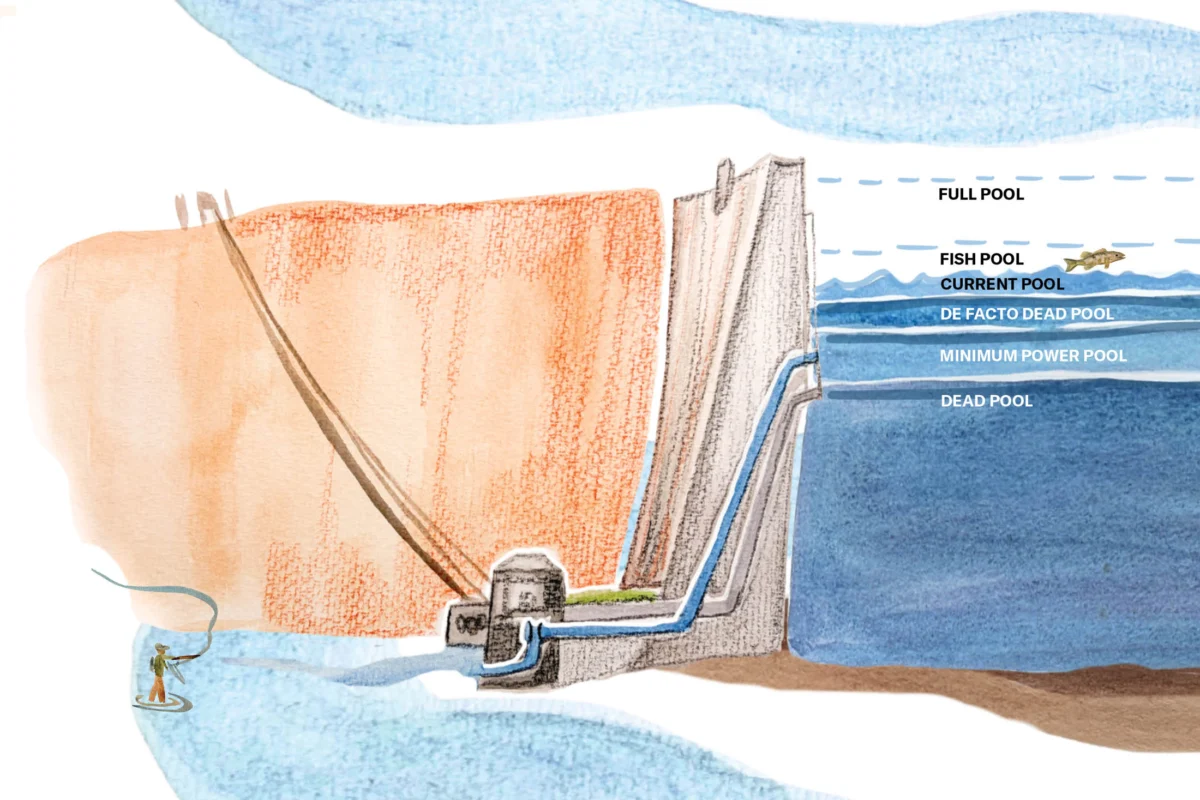
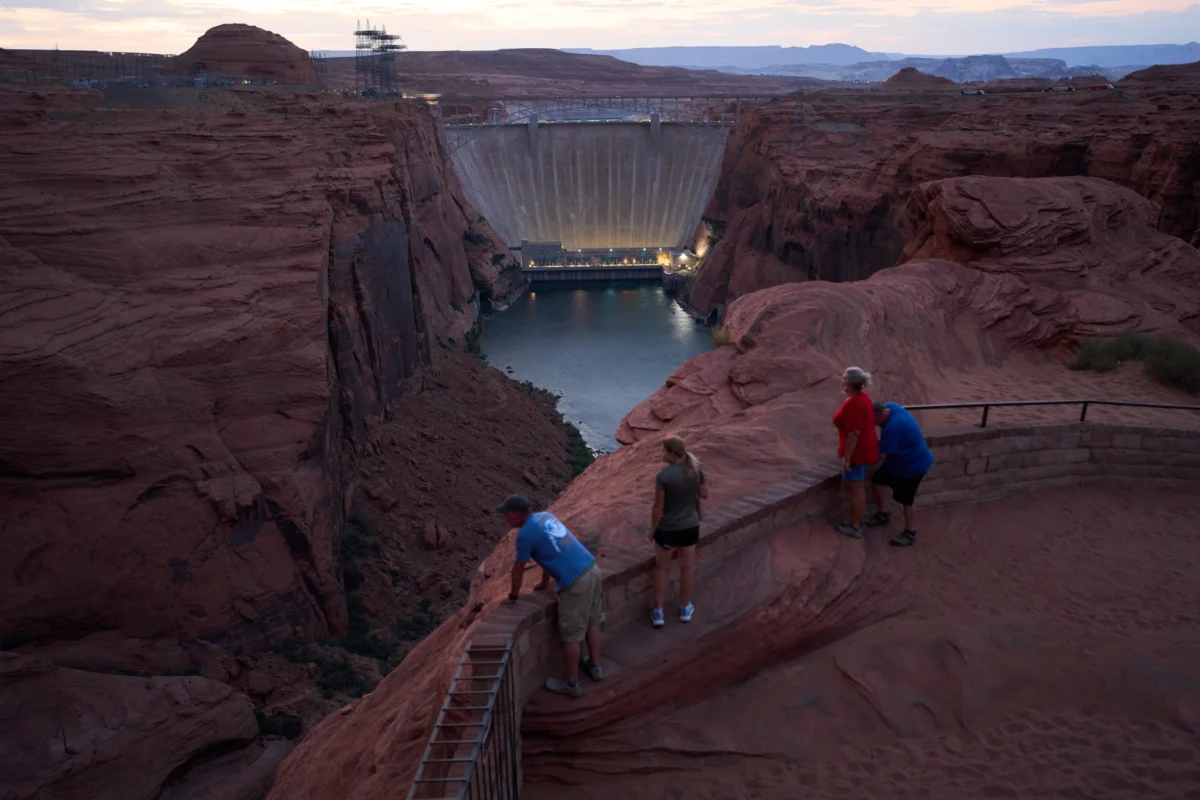
The ambitious construction of Glen Canyon Dam, initiated in 1956, was envisioned as a monumental solution to manage the volatile Colorado River. Its primary objectives were multifaceted: to generate vital hydroelectric power, foster burgeoning recreational opportunities, and critically, to trap sediment that threatened to choke the life out of Lake Mead. However, the dam’s most significant purpose was the creation of Lake Powell, a vast reservoir designed to function as a crucial water savings account, smoothing out the river’s erratic flows and ensuring a reliable water supply for the arid American West. By storing surplus water from wetter years, the dam aimed to enable the Upper Basin states to meet their obligations under the Colorado River Compact, guaranteeing a minimum flow of 75 million acre-feet over any ten-year period at Lees Ferry, thereby preventing depletion of this vital water source.
Decades later, the very functions that defined Glen Canyon Dam’s existence are now in jeopardy, with its ability to provide hydropower, sustain recreation, and serve as a critical water storage facility severely compromised, ironically, by the dam itself. The prolonged and intensifying drought, now spanning more than two decades, has drastically depleted Lake Powell’s reserves, transforming its once-abundant waters into a stark reminder of the region’s changing climate. This past winter’s insufficient snowfall has exacerbated the crisis, compelling federal dam operators to implement extraordinary measures to prevent the reservoir from plummeting below critically low levels during the upcoming summer months. These actions are essential not only to maintain hydropower generation, a significant source of electricity for millions, but also to preserve the dam’s integrity as a functional water storage facility. Yet, these very conservation efforts, which involve reducing downstream releases, paradoxically risk pushing the Upper Basin states into a violation of the Colorado River Compact’s non-depletion clause, a cornerstone of water management in the region for nearly a century.
Both the Colorado River Compact, signed in 1922, and the colossal infrastructure of Glen Canyon Dam were conceived and constructed during an era of significantly greater water abundance in the Colorado River basin. The river’s historical flows, upon which these foundational agreements and engineering marvels were based, are now proving to be an unreliable benchmark in the face of a rapidly warming planet. As increasingly arid conditions persist and intensify, the foundational assumptions underpinning both the compact and the dam’s operational capacity are being challenged, raising serious questions about their long-term viability and the future of water security for the more than 40 million people who depend on the Colorado River. The current crisis at Glen Canyon Dam serves as a stark illustration of how climate change is not a distant threat but a present reality, demanding immediate and innovative solutions to adapt to a fundamentally altered hydrological landscape.
The Colorado River, a lifeline for seven U.S. states and Mexico, has long been the subject of intricate water management agreements, none more significant than the Colorado River Compact of 1922. This agreement, a product of intense negotiation among the basin states, divided the river’s water into an Upper Basin and a Lower Basin, with each allocated 7.5 million acre-feet of water annually. The Upper Basin states—Colorado, Wyoming, Utah, New Mexico, and Wyoming—agreed not to deplete the river’s flow below Lee Ferry, Arizona, in such a way that the aggregate delivery over any ten consecutive years would be less than 75 million acre-feet. This provision was intended to ensure a consistent water supply for downstream users, even during periods of natural variability. The construction of Glen Canyon Dam and the creation of Lake Powell were instrumental in fulfilling this commitment, providing the necessary storage capacity to buffer against droughts and maintain the required outflows.
Glen Canyon Dam, a concrete arch dam spanning the Colorado River in northern Arizona, stands as one of the largest dams in the United States. Completed in 1966, it impounds the Colorado River to form Lake Powell, the second-largest man-made reservoir in the United States by volume. The dam’s power plant, with a capacity of 1,320 megawatts, is a significant source of electricity for the Western United States, powering homes and businesses across Arizona, Nevada, Utah, Colorado, New Mexico, Wyoming, and California. Beyond power generation, Lake Powell has become a premier destination for water-based recreation, drawing millions of visitors annually for boating, fishing, and camping, contributing significantly to the regional economy. However, the dam’s ecological impact has also been a subject of debate, with concerns raised about altered sediment transport, downstream riparian habitats, and the disruption of natural river processes.

The current predicament stems from a confluence of factors, most notably the persistent drought conditions that have gripped the Colorado River basin for over two decades. This period of below-average precipitation, compounded by rising temperatures that increase evaporation and reduce snowpack, has led to a substantial and sustained decline in the river’s flow. Lake Powell, designed to hold approximately 25 million acre-feet of water when full, has seen its water levels drop precipitously, reaching historic lows in recent years. The reservoir’s current elevation is far below the operational levels required to generate power efficiently and to continue providing the necessary water releases to meet downstream obligations, including those stipulated by the Law of the River, a complex web of interstate compacts, court decrees, and federal laws that govern water allocation in the basin.
The federal agency responsible for managing the dam and reservoir, the Bureau of Reclamation, faces an unenviable task. Faced with critically low water levels, they are compelled to reduce the amount of water released downstream from Glen Canyon Dam to protect the dam’s power-generating capabilities and the structural integrity of the reservoir. These releases are essential for meeting the water demands of states like Arizona and California, which rely heavily on Colorado River water for agriculture, municipal use, and industrial purposes. The Central Arizona Project (CAP), a massive aqueduct system, transports Colorado River water from Lake Havasu to central and southern Arizona, serving millions of people and irrigating vast agricultural lands. A significant reduction in releases from Lake Powell would directly impact the CAP’s ability to deliver water, potentially leading to severe water rationing for agricultural and even urban users.
The implications of these reduced releases extend beyond the immediate water supply concerns. The Colorado River Compact’s mandate to ensure a minimum flow at Lees Ferry is under direct threat. If the average flow over a ten-year period falls below the 75 million acre-feet threshold, the Upper Basin states will be in breach of the compact. This scenario could trigger a cascade of legal and political challenges, potentially leading to a renegotiation of water rights and allocations that have been in place for nearly a century. The delicate balance of water management in the West, carefully constructed over decades, could unravel, leading to increased conflict and uncertainty among the basin states.
The situation highlights the profound impact of climate change on water resources in arid and semi-arid regions worldwide. The Colorado River basin is not unique in experiencing the effects of a warming climate; many river systems globally are facing similar challenges of reduced flows, increased evaporation, and greater demand. The lessons learned from the current crisis at Glen Canyon Dam and Lake Powell will be crucial for informing water management strategies in other vulnerable regions. The need for proactive adaptation measures, including water conservation, efficiency improvements, water reuse technologies, and the development of drought-resilient agricultural practices, has never been more apparent.
Furthermore, the economic consequences of diminishing water supplies are substantial. Agriculture, the largest water user in the Colorado River basin, faces significant challenges, potentially leading to reduced crop yields, increased food prices, and economic hardship for farming communities. The recreational industry, heavily dependent on the availability of water in Lake Powell, also faces a bleak outlook, impacting local economies that rely on tourism. The energy sector, too, is affected, as reduced water levels diminish the capacity of hydropower facilities, potentially leading to increased reliance on other, perhaps more carbon-intensive, energy sources.
The future of the Colorado River and its management hinges on a delicate balance between existing legal frameworks, the realities of a changing climate, and the growing demands of a burgeoning population. The current crisis at Glen Canyon Dam serves as a critical wake-up call, underscoring the urgent need for innovative solutions and collaborative efforts among all stakeholders. The possibility of a future where the river’s flows are permanently altered necessitates a fundamental re-evaluation of how water is managed, allocated, and conserved. The legacy of Glen Canyon Dam, once a symbol of human ingenuity in taming a wild river, is now being tested by the very environmental forces it was designed to control, forcing a reckoning with the long-term sustainability of water resources in the American West and beyond. The ongoing challenges demand a forward-looking approach, one that prioritizes resilience, adaptation, and equitable water management in the face of an uncertain hydrological future.