Roger Danuarta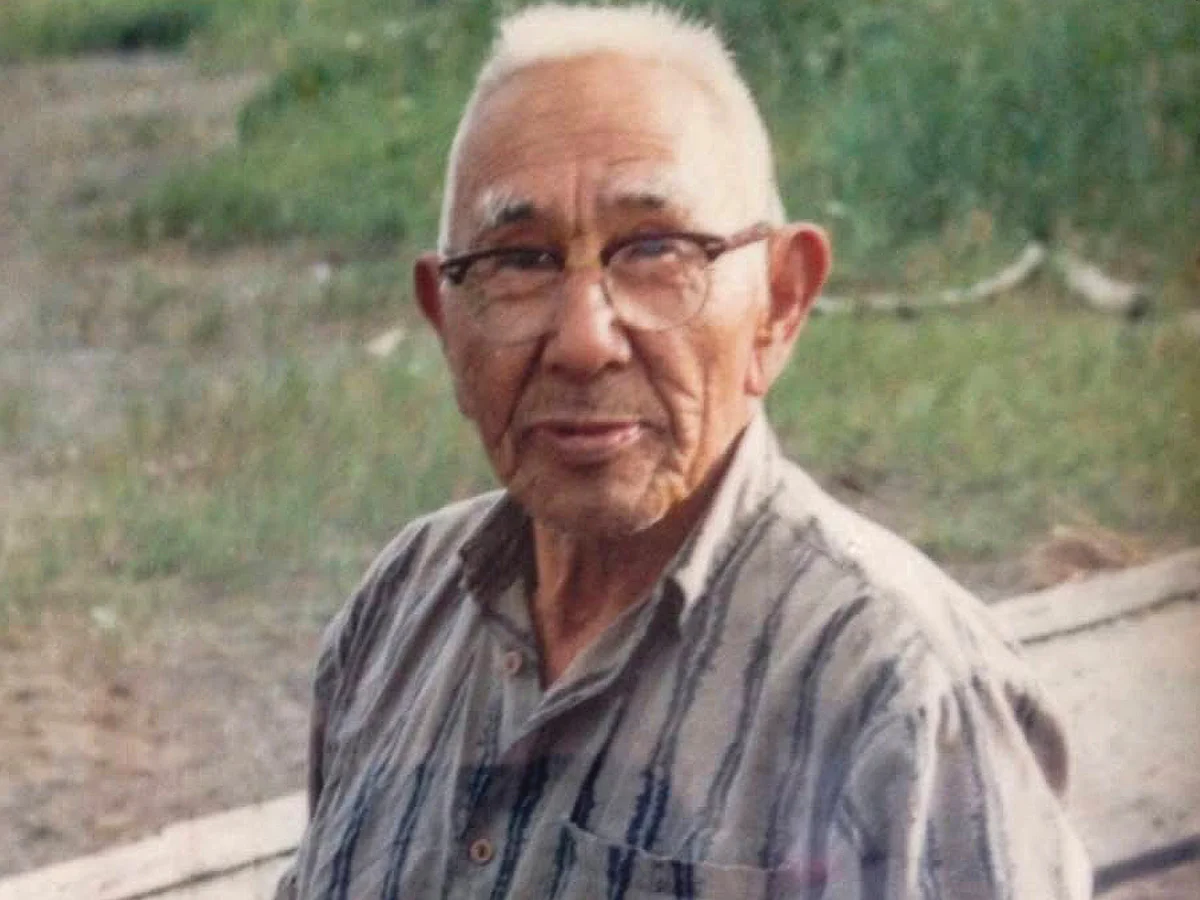
In the stark, often unforgiving winters of coastal Alaska, Papa would habitually stand at the north-facing window of his home, his gaze fixed upon the open sky and the dormant garden of his neighbor, a landscape blanketed in snow and silence. "Alapaa," he would pronounce, the Inupiaq word resonating with a profound understanding: "It likes to be cold." He spoke of Sila, a concept far more encompassing than the mere English translation of "weather," representing a living, conscious entity that governs the natural world. This ancient wisdom, deeply embedded in Inupiaq culture, viewed Sila not as an impersonal force, but as an active participant in life, an ultimate authority to be observed, respected, and understood.
During the deep January days of my childhood, when our extended family gathered for supper, the very foundations of the house would sometimes tremble under the assault of relentless coastal storms. Snow berms, testament to Sila’s power, would accumulate steadily throughout the season, growing into formidable white ramparts around town. In these moments, Papa would turn to my Gram, my mother, my aunties, and uncles, uttering phrases like "Piqsiqłuktuq." Though the string of sounds felt familiar and comforting, its full meaning remained elusive to me then. "Piqsiq" translates to "stormy," "łuk" denotes "likes to," and "tuq" signifies "it or they." Thus, the seemingly simple utterance conveyed a deeper truth: "It likes to be stormy." This wasn’t merely a description; it was an acknowledgement of Sila’s inherent nature, a recognition that the weather, in its every manifestation, held its own will and preference.
The generational gap in understanding these profound linguistic nuances stemmed from a painful legacy. Papa and Gram, like countless Indigenous children across Alaska and North America, endured severe physical and psychological punishment for speaking Inupiaq in the classrooms of their youth. This traumatic experience, part of a broader, systemic effort to eradicate Indigenous languages and cultures, instilled in them a deep-seated fear and shame. Consequently, they deliberately chose not to teach my mother and her siblings Inupiaq, hoping to shield them from similar suffering. While my mother and her generation could often comprehend the language, they never achieved fluency. This linguistic rupture extended to me; I grew up without speaking or truly understanding Inupiaq. As a child with braids and bobbles, I lacked the crucial knowledge that our ancestral language was imbued with the Indigenous worldview that Sila is a living entity, an integral part of our existence, and, unequivocally, the boss.

Papa, however, was born into and lived by this understanding. His grasp of Sila was so exceptional that he functioned as a traditional weather forecaster for his community. This wasn’t a skill learned from books, but a profound connection passed down through an unbroken lineage. He likely inherited this intricate knowledge from his father, who learned it from his own father, and so on, through generations who made Uŋalaqłiq – the southernmost Inupiaq settlement, later Anglicized to Unalakleet by settlers – their ancestral homelands. Papa would stand on the beach, his eyes scanning the expansive ocean, discerning the subtle shifts in currents, the formations and movements of clouds, the nuanced colors of the water, and the very breath of the wind. Through these intricate observations, he would allow Sila to dictate the rhythm of their days, and even the week ahead. If the signals indicated an approaching strong wind, the vital hunt for ugruk (bearded seal) would be postponed. If Sila promised "rain," the community would defer fishing for humpies (pink salmon) until a sustained period of clear skies arrived, essential for days of hanging and drying the catch. Sila, in effect, provided the blueprint for their existence, guiding every significant activity, a practice that continued long after Papa’s time.
He was a man of quiet strength, slight, slender, and sinewy, his full head of gray hair and browline glasses giving him an air of sagacity. Papa moved with deliberate purpose, comfortable in long silences, never uttering a complaint, and always seeming to possess an innate ability to look ahead. His attire was consistently practical: scratchy wool plaid button-up shirts. He chewed snuff, and his presence carried the earthy scent of soil, fresh air, and an unwavering pragmatism. His face, etched with countless wrinkles, told stories of a life lived close to the land, under the expansive Arctic sky. With a crewcut and prominent ears, he was the kind of man whose words, when he chose to speak, commanded immediate and respectful attention.
Our family often gathered for supper at Papa and Gram’s house, a cherished tradition. The sheer number of us – aunts, uncles, and a multitude of cousins – often meant there weren’t enough chairs. Papa or Dad would retrieve an array of white five-gallon buckets from the back porch, strategically placing them around the kitchen table to accommodate everyone. I remember dreading those buckets; my legs were too short to reach the floor, and the raised rims of the lids would dig uncomfortably into my thighs.
On those cold, stormy winter evenings, Gram would preside over the oven, stirring a pot of rich caribou soup. The comforting, yeasty aroma of baking bread would permeate their small home, softening the murmur of adult conversations, a promise of warm, fresh bread slathered with Crisco soon to come. The heat from the oven, combined with the collective warmth of our bodies, transformed the room into a cozy haven against the elements. Some of us younger cousins would steal away to the back bedroom, a space usually reserved for the grandchildren who lived with them, seeking refuge from what we perceived as boring adult talk and the stuffiness of the crowded kitchen. Unbeknownst to me then, those seemingly passive conversations, overheard while my young mind drifted, were subtly shaping the values and mindset that define me today, imbuing me with an unspoken understanding of community, resilience, and respect for the natural world.

Today, as fall approaches, communities across coastal Western and Northern Alaska are consumed by thoughts of, and preparations for, the inevitable coming storms. My childhood memories include experiencing fall storms, yet they pale in comparison to the ferocity and frequency witnessed today. I grew up hearing accounts of a significant flood in the 1960s, an event so powerful that my dad’s father’s house was lifted from its foundation and deposited in a new location, where it still stands, now home to my uncle and auntie. Papa, with his characteristic good humor, had jovially asked the man across the road, "Can I be your neighbor?" a testament to the community’s spirit even in the face of natural disaster.
However, the nature of these events has profoundly shifted. Last fall, Typhoon Halong, a storm that began thousands of miles away in the central Pacific Ocean, southeast of Japan, embarked on a destructive journey northward. It ultimately slammed into Alaska’s entire western coastline, unleashing a torrent of flooding and widespread damage across 45 communities. The devastation was so severe that residents of Kipnuk and Kwigillingok were forced into total relocation, effectively becoming climate refugees, a stark and increasingly common reality in a warming world. In response to this unprecedented catastrophe, the governor of Alaska declared a state disaster emergency, a move swiftly followed by the president’s approval of a federal disaster declaration, mobilizing national resources to aid the ravaged region.
Historically, floods of such magnitude were once considered "once-in-a-century" events. Now, the fall storms that bring catastrophic high water pose an annual threat, a relentless reminder of a rapidly changing climate. In a conversation with Alaska’s leading climatologist, Rick Thoman, he explained the alarming increase in storm frequency and intensity. "The oceans are warming," Thoman stated unequivocally, outlining the interconnected factors driving this crisis. "Glaciers and ice sheets are melting. They combined to produce a double whammy driving sea-level rise." This accelerated rise in sea levels means that even moderate storm surges can now inundate coastal areas that were previously safe. Furthermore, the extended sea-ice-free season, a direct consequence of Arctic warming, leaves coastlines exposed to the full, destructive force of ocean waves for longer periods, significantly aggravating coastal erosion. Warmer oceans also hold more energy, which can dramatically increase the intensity of storms, a factor that likely contributed to the unprecedented ferocity of the Halong flooding. Thoman also highlighted the insidious threat of permafrost thaw, noting that in many coastal areas, the ground, which has been frozen for millennia, is now thawing only a few feet above sea level. This thawing causes the land to sink and settle, turning what might have been minor flooding events into catastrophic inundations.
As communities brace for whatever Sila may bring this fall, a profound sense of uncertainty looms. I often find myself wondering what Papa would say today, peering out from his window at a world transformed. What would he think when rain falls relentlessly for days on end, preventing us from drying our fish outdoors on the traditional racks, a practice deeply ingrained in our culture? How would he react to the necessity of drying our precious catch inside empty bedrooms, garages, or hallways, using electric fans, a modern adaptation born of environmental desperation? I wonder what he would say about the relentless ocean, steadily devouring the very coastline where he and Gram once camped during fishing season, where generations harvested their sustenance. Could he, standing on the sandy beach, looking west to the horizon, still decipher the messages in the signals, still predict the weather with the accuracy of old? I wonder what kind of conversations I would passively hear now, sitting at the kitchen table, about these unprecedented changes. Most importantly, I wonder what Sila, in its newly turbulent and unpredictable manifestations, would communicate to him. The ancient wisdom, passed down through generations, now grapples with a Sila that behaves in ways never before witnessed, challenging the very foundations of traditional ecological knowledge and the resilience of a people intimately connected to their land and its governing spirit.