Joko Susilo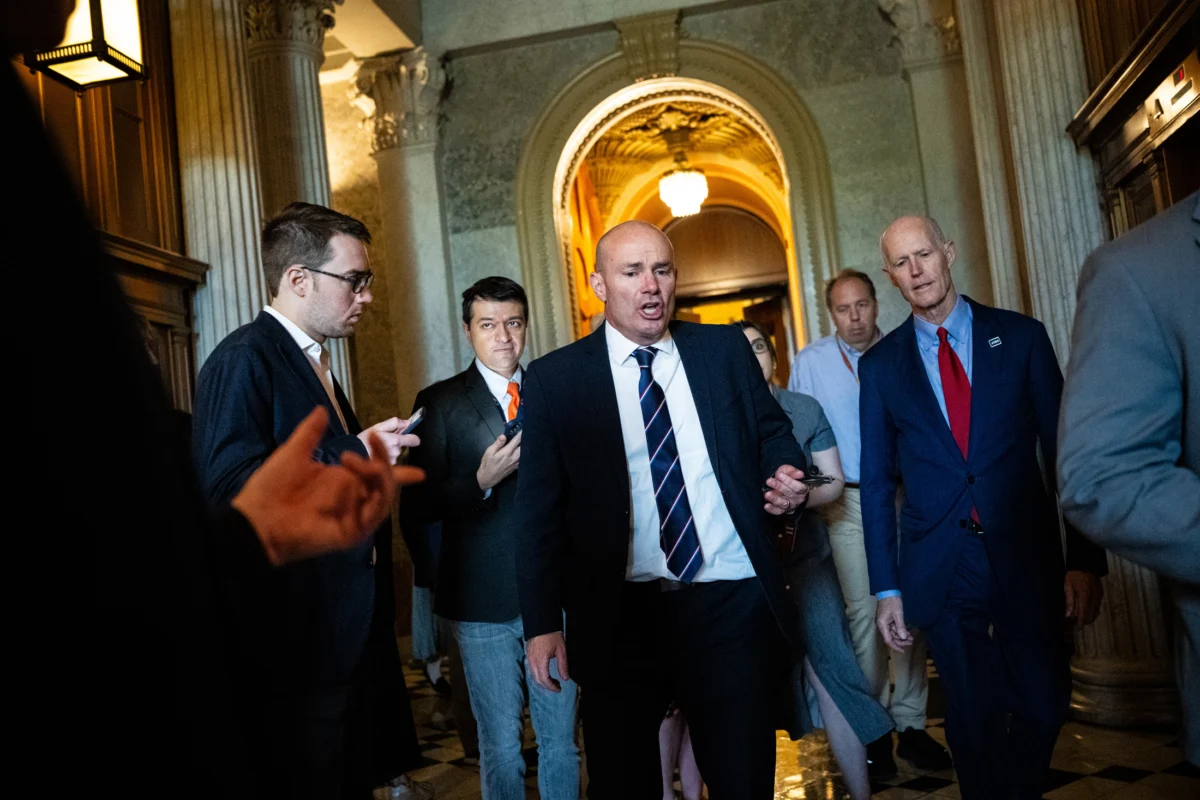
As the Western United States grappled with an intensifying wildfire season in early June, marked by pervasive drought and scorching heat, a seemingly straightforward legislative proposal aimed at mitigating these escalating crises began its journey through Congress. Wyoming Republican Senator John Barrasso’s Wildfire Prevention Act, designed to empower federal land agencies to escalate thinning and prescribed burning operations on public lands and streamline vegetation management for utilities near critical power infrastructure, initially garnered significant bipartisan support. The urgency of the wildfire threat appeared to pave a clear path for its approval, with prominent Western Democrats offering their backing and environmental organizations presenting no immediate, serious objections.
However, the bill’s initial bipartisan consensus masked underlying complexities and long-standing debates surrounding forest management practices. Questions frequently arise about the fundamental necessity of "managing" forests, the ecological impacts of high-intensity wildfires, and whether "thinning" initiatives might sometimes serve as a pretext for increased commercial logging. One particularly contentious provision within Barrasso’s legislation proposed expanding public-land grazing as a wildfire mitigation tool, a tactic that often draws scrutiny for its potential ecological consequences and varied effectiveness. Despite these nuanced concerns, the perceived imperative to address the immediate wildfire crisis seemed to outweigh deeper ideological divisions, allowing the bill to advance with considerable momentum.
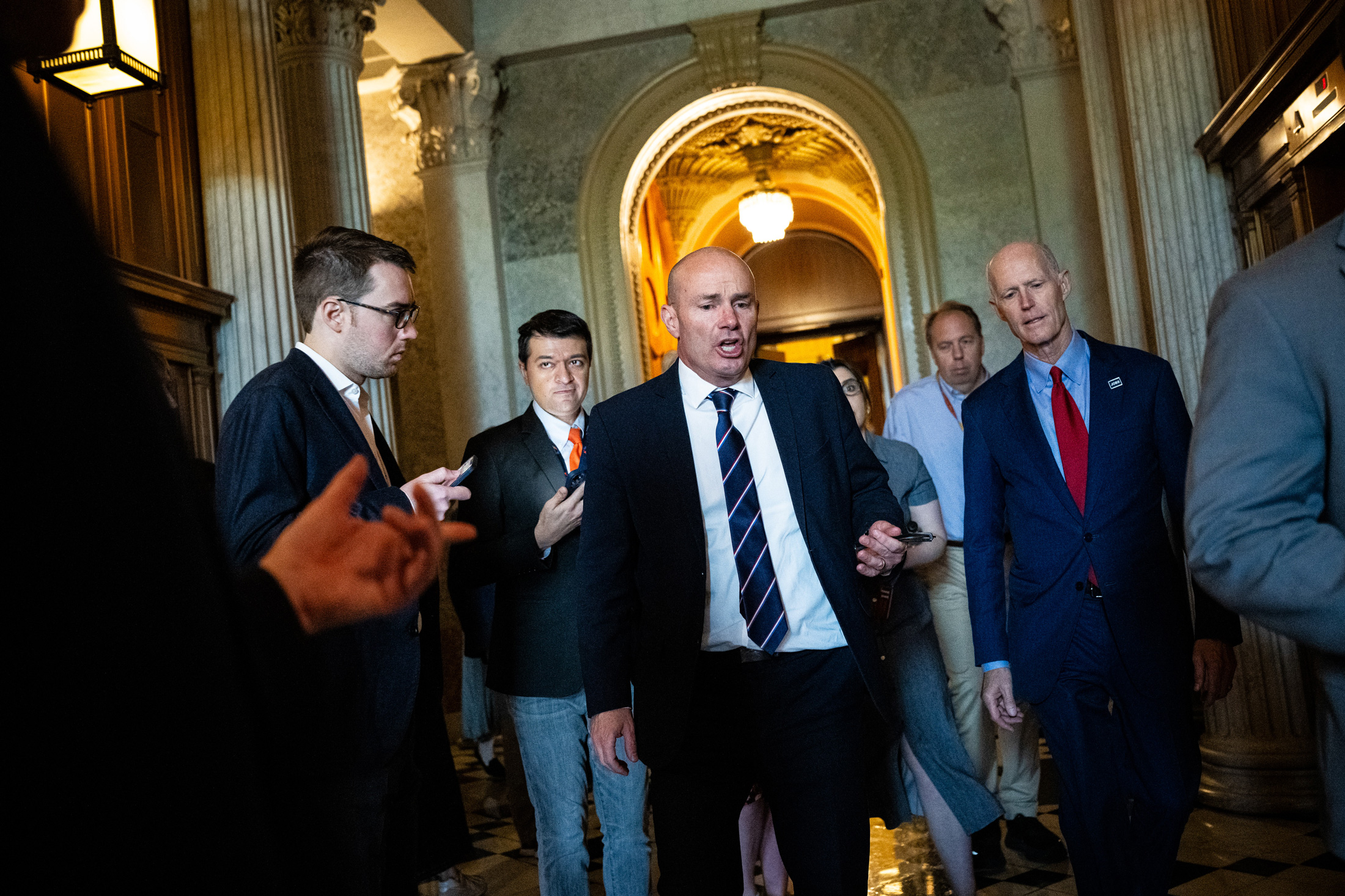
This fragile coalition, however, dramatically fractured when Senator Mike Lee, a Republican from Utah, introduced a last-minute amendment. This amendment sought to entirely eliminate the 2001 Roadless Area Conservation Rule, a landmark federal regulation that protects approximately 45 million acres of U.S. Forest Service land from new roadbuilding and logging activities. Furthermore, Lee’s proposal aimed to prevent the implementation of any similar protective rules in the future, signaling a profound shift in public land policy. The sudden introduction of such a far-reaching measure fundamentally altered the nature of the bill, transforming it from a broadly supported wildfire prevention effort into a highly contentious partisan battleground. "We had a very bipartisan-focused wildfire bill here, and now we have a very partisan bill," remarked a visibly disappointed Senator Martin Heinrich, a Democrat from New Mexico, during a Senate committee hearing, characterizing the wildfire legislation as having become a "Trojan Horse" for dismantling the Roadless Rule.
The 2001 Roadless Area Conservation Rule represents the culmination of decades of advocacy and effort to identify and safeguard undisturbed forest lands, preserving their natural character and potential for future wilderness designation. Before its implementation, individual Forest Service offices inconsistently managed inventories of roadless areas. The rule standardized protection across the nation, prohibiting timber harvesting, road construction, and road reconstruction within designated roadless areas, albeit with specific exceptions designed to maintain operational flexibility. Beyond its ecological benefits, the rule offered significant fiscal advantages. By 2001, the existing Forest Service road network already stretched over 386,000 miles, burdened by an estimated $8.4 billion in deferred maintenance and reconstruction costs. Expanding this network further would only exacerbate an already substantial financial deficit, making the rule a cost-effective conservation measure.
The rule initially covered nearly 60 million acres but has endured a tumultuous history, frequently becoming a political football volleyed between presidential administrations and challenged in the courts. In 2005, the George W. Bush administration revoked the original rule, replacing it with an alternative that allowed states to petition the Forest Service to develop their own distinct standards; Colorado and Idaho subsequently opted to create their own bespoke regulations. However, the 10th Circuit Court of Appeals later reinstated the 2001 rule, effectively nullifying the 2005 replacement nationwide, though the state-specific rules for Idaho and Colorado remained in effect. Consequently, any legislative or administrative action to rescind the federal Roadless Rule would not impact the existing protections within these two states, highlighting the complex, layered nature of public land governance.

Crucially, while inventoried roadless areas share many ecological characteristics with designated wilderness areas, the Roadless Rule does not impose wilderness-level protections. It expressly permits various activities, including motorized uses on existing roads, off-highway motorized vehicle use in specified areas, livestock grazing, and energy and mineral development. These allowances directly contradict Senator Lee’s central argument that the Roadless Rule significantly impedes firefighting efforts and wildfire prevention. In reality, the rule explicitly permits road-building for the express purpose of fighting fires. It also allows for the cutting, removal, and sale of "generally small diameter timber" under specific conditions, including "reducing the likelihood of uncharacteristic wildfire."
This factual disconnect was underscored by Senator Alex Padilla, a Democrat from California, who pointed out during a hearing that 240,000 acres of inventoried roadless areas in his state alone had already undergone treatment for wildfire hazard mitigation. Furthermore, recent analyses suggest that the actual impediment to effective vegetation management lies not in federal regulations but in resource allocation. A Center for Western Priorities analysis revealed that the Forest Service treated 35% less acreage for wildfire risk in 2025 compared to 2024, a period coinciding with significant staffing and budget reductions under the Trump administration. This trend indicates that a lack of funding and personnel, rather than regulatory constraints, primarily hinders large-scale forest thinning and wildfire prevention initiatives.
In fact, mounting evidence suggests that the Roadless Rule may actively contribute to wildfire deterrence. A 2007 study by the Pacific Biodiversity Institute found that human activities ignite a staggering 88% of the nation’s wildfires, with 95% of those blazes occurring within a half-mile of a road. Roads act as conduits, extending human presence and associated fire risks—such as discarded cigarette butts, unattended campfires, sparks from machinery, and hot catalytic converters—deeper into the backcountry than would otherwise be possible. From this perspective, strengthening the Roadless Rule’s protections, rather than dismantling them, could serve as a more effective strategy for preventing future human-caused conflagrations.

Senator Lee’s amendment, therefore, appears to align with a broader, recurring pattern of politically motivated efforts to weaken public land protections, often echoing previous attempts by the Trump administration. Last June, for instance, then-U.S. Agriculture Secretary Brooke Rollins administratively moved to repeal the Roadless Rule, an action that triggered intense backlash not only from environmental advocacy groups but also from the more conservative "hook-and-bullet" community of hunters and anglers, and the general public, who inundated the department with comments overwhelmingly supporting the rule. It is noteworthy that even Project 2025, an extensive blueprint for a potential future Trump administration, recommended repealing only the portion of the Roadless Rule pertaining to Alaska’s Tongass National Forest, suggesting Lee’s amendment represents an even more expansive and aggressive assault on federal land protections.
Lee’s ability to champion such deeply unpopular schemes may stem from his unique political position. His strong conservative stance often shields him from significant opposition during primary elections, and the political landscape of Utah makes it exceptionally challenging for a Democrat to win statewide office. This relative political invulnerability allows him to pursue agendas that might otherwise be deemed too risky for colleagues in more competitive electoral environments. However, this does not hold true for all his peers. Representative Harriet Hageman, a Wyoming Republican who has introduced a House bill to nullify the Roadless Rule, is currently vying for a Senate seat.
Hageman faces a notable challenger in the primary: Sam Mead, a fifth-generation Wyoming rancher and nephew of former Governor Matt Mead. Mead, while possessing strong conservative credentials on issues such as gun rights, energy development, and fiscal policy, distinguishes himself from his GOP rivals through his staunch advocacy for protecting public lands and ensuring they remain in public hands. At a recent campaign event, Mead expressed a "sense of helplessness" over Hageman’s past support for Mike Lee’s unsuccessful proposal to sell public lands for housing development.

The outcome of this primary election remains uncertain, but Mead’s prominent challenge highlights a critical divergence within the conservative movement. It underscores that while some political figures may push for the privatization or deregulation of public lands, a significant segment of the rural Western conservative base cherishes America’s vast public landscapes, often prioritizing their conservation over partisan ideology. This ongoing debate about the future of federal lands, set against the backdrop of an intensifying climate crisis, reveals a fundamental struggle over the values and priorities that will define the American West for generations to come.