Roger Danuarta
The professional landscape for dedicated public servants has faced increasing volatility, a trend exemplified by recent directives that have prompted profound concern among those who have committed decades to the nation’s natural resources. While retired, Mike, a veteran of 41 years with the U.S. Forest Service, felt the sting of a widely reported “fork in the road” email, a communication demanding current employees either relinquish their positions or face dismissal. This abrupt mandate, perceived as emanating from influential figures prioritizing rapid restructuring over long-term public good, struck at the core of his lifelong dedication. It underscored a concerning disregard for institutional memory and the invaluable contributions of countless individuals, particularly those whose scientific studies—years, even decades, in the making—now face abandonment, their data potentially lost, and their critical findings rendered moot. Such actions not only erode the morale of a workforce vital to ecological stewardship but also carry significant implications for the nation’s ability to address pressing environmental challenges, from climate change resilience to biodiversity conservation. The U.S. Forest Service, a cornerstone of American land management, oversees 193 million acres of national forests and grasslands, performing essential work in timber management, recreation, wildfire suppression, and critical ecological research that informs sustainable practices. The unilateral dismissal of such efforts, often deemed "expendable" by those outside the direct scientific community, represents a profound loss for public knowledge and environmental strategy.
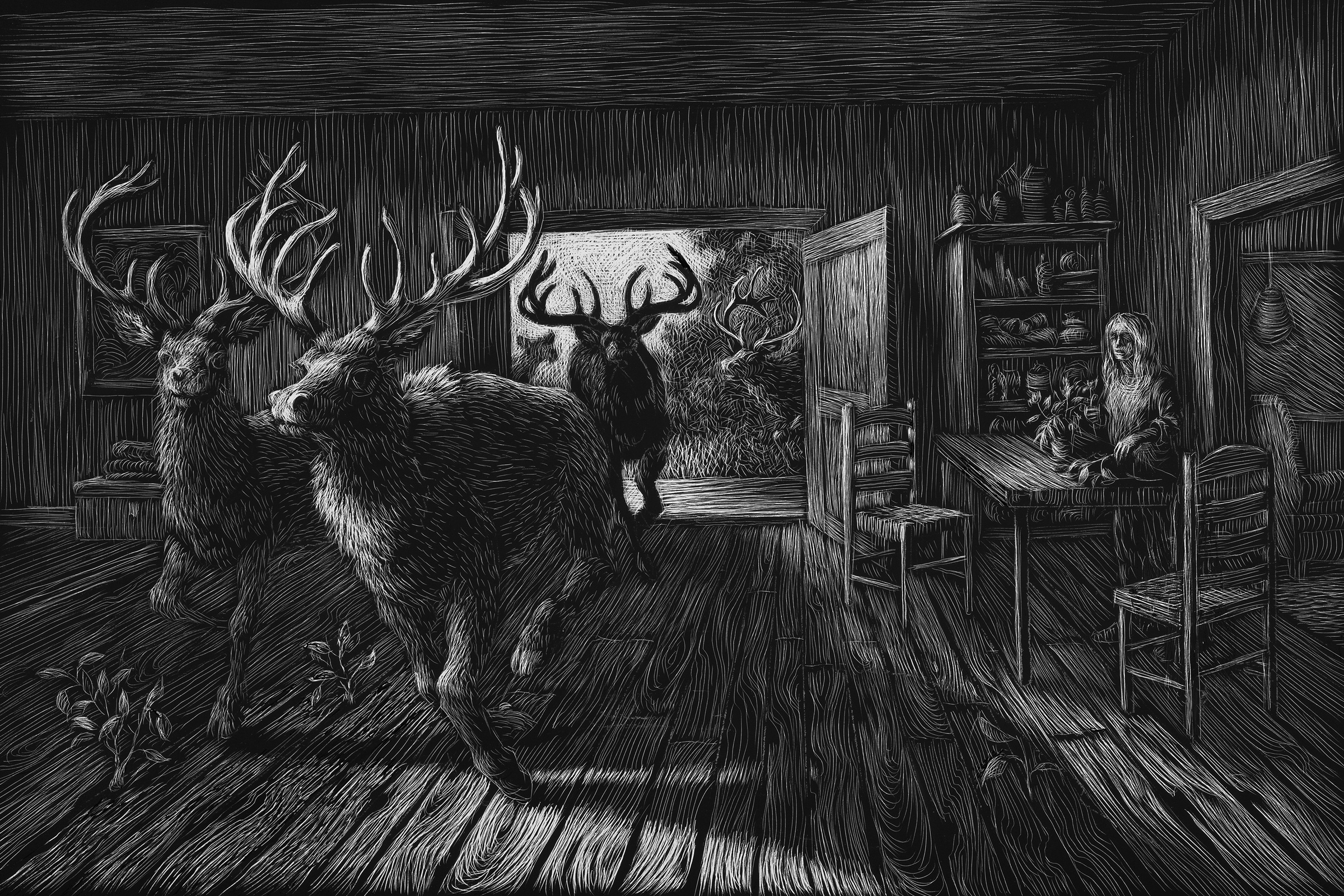
The personal connection to this mission runs deep for many, including Mike and his family, who reside within the expansive embrace of the Rio Grande National Forest, a vast and ecologically rich area in southern Colorado. This forest, spanning nearly two million acres, is a critical watershed, providing vital resources and habitat for diverse wildlife, including its iconic elk herds. On a recent birthday, as Mike reflected on his service, a remarkable scene unfolded: 150 elk descended from the forest slopes, congregating in his horse pasture. This powerful visitation, interpreted by his spouse as a profound affirmation of his life’s work and a silent birthday tribute, serves as a poignant reminder of the intrinsic value of conservation efforts and the enduring connection between humans and the wild landscapes they strive to protect. It highlights the often-unseen reciprocal relationship, suggesting that nature itself acknowledges and responds to the dedicated stewardship of individuals.
Beyond the specific impacts on environmental agencies, a pervasive sense of despair has settled upon many citizens grappling with contemporary societal challenges. The increasing polarization in political discourse, particularly concerning the rights and safety of marginalized communities such as BIPOC individuals and transgender youth, fuels a deep-seated anxiety. Policies and rhetoric perceived as discriminatory or actively hostile against these groups contribute to a climate of fear and division, raising fundamental questions about civil liberties and social justice. Concerns about the potential for state-sanctioned violence against its own populace, driven by an escalating rhetoric of control and repression, further compound this unease. In these moments of profound distress, seeking solace and perspective often leads individuals back to fundamental connections. For the author, this path leads to the quiet wisdom of horses in the corral. The gentle, intuitive interactions with rescued horses like Raj and Ben—a forehead-to-forehead communion, a subtle exchange of presence—offer a unique form of therapy. This non-verbal communication, a "mind meld" as described, allows for a palpable release of anxieties, replaced by a grounding in the present moment, a connection to the simple, profound joys of existence: the warmth of the sun, the expanse of the sky, the quality of sustenance, and the protective embrace of a kindred spirit. This profound human-animal bond underscores the therapeutic power of nature, offering a refuge from the complexities and cruelties of the human world.

This inherent connection to the natural world often manifests in unconventional ways, challenging conventional human perceptions. Years ago, during a hike in Arizona, an encounter with a rattlesnake, coiled peacefully beside the trail, elicited vastly different reactions. While one companion recoiled in fear, the author instinctively offered a greeting, acknowledging the creature’s beauty. This seemingly innocuous interaction, a simple act of respect toward a misunderstood creature, unexpectedly dissolved a friendship, revealing deep-seated differences in how individuals perceive and relate to the wild. The incident illuminated a broader truth: the act of acknowledging another being, whether human or animal, can bridge divides and alleviate fear. From hummingbirds to grizzlies, the practice of speaking aloud to animals, born of delight or fear, serves as an acknowledgment of their existence, a shared moment of presence that often elicits a reciprocal, albeit non-verbal, response. A chuff from a bear, a snort from a moose, a beaver’s tail slap, an eagle’s cry—these are not just animal sounds but often interpreted as forms of communication, asserting their right to exist and interact within their shared environment.
This deep engagement with the natural world extends to a belief in an almost symbiotic relationship, a capacity to "call" wild animals. Whether it’s the opportune appearance of a bull moose in seemingly ideal territory, an eagle soaring overhead after a quiet wish, or a harbor seal emerging from the waves, these recurrent coincidences suggest a deeper, more resonant connection than mere chance. This perceived reciprocity gained particular poignancy during the initial phases of the COVID-19 pandemic. The global lockdown, which temporarily reclaimed public spaces and thoroughfares for wildlife, fostered a unique period of ecological observation. The quiet return of animals to human-dominated areas created a novel opportunity for reflection, leading to a sense that the animals, in turn, were observing humanity, curious about its post-lockdown re-emergence.

The COVID-19 pandemic, with its forced introspection and confrontation with humanity’s own biological vulnerability, served as a potent reminder of our "creaturely selves." The sudden fragility of human systems, the scramble for basic necessities, and the overwhelming imperative to breathe clean air brought a visceral understanding of the constant struggles faced by wild creatures whose habitats are relentlessly encroached upon. The pandemic’s disruption of human movement offered a rare glimpse into the incessant loss of habitat that animals endure and illuminated their continuous imperative to adapt to human presence. For many, this period represented a critical inflection point, a moment when humanity collectively could have chosen a path prioritizing clean air, pristine water, and ecological health over short-term gains or extractive practices. While the broader societal shift did not fully materialize, many individuals experienced a personal transformation. For the author, it solidified a lifelong dedication to "listening to the animals," a commitment to understanding their perspectives and integrating their wisdom into a framework for a more sustainable and empathetic future.
The day after the 2024 election, another symbolic encounter unfolded, offering a timely lesson in adaptability and stealth. A vibrant red fox, navigating newly installed chicken-wire fencing, found itself momentarily trapped between human, domestic animals, and a newly blocked escape route. The simple, calming words, "You’re OK," diffused the tension, allowing the fox to make a swift, decisive move, darting between the author’s legs to safety. This close encounter prompted a deep dive into the rich lore surrounding foxes across various cultures, often symbolizing cunning, wisdom, and the ability to navigate difficult circumstances with agility. The visitation, in this context, served as a powerful reminder of the importance of stealth—not in a clandestine sense, but as a metaphor for strategic thinking, resilience, and finding innovative pathways through complex and often hostile environments. It suggests that in times of societal and environmental challenge, adapting and moving with quiet purpose can be as effective as direct confrontation.

From the majestic elk to the intuitive horses, the ancient rattlesnake to the cunning fox, these animal encounters collectively underscore a profound truth: the animal kingdom, particularly in these tumultuous times, possesses an innate awareness of human anxieties regarding the escalating destruction of our shared planet. They understand, perhaps more acutely than humans themselves, the deep-rooted kinship that binds all living beings. Their presence, their silent communications, and their resilience are interpreted as efforts to guide and support humanity through an existential crisis. The familiar call of an owl, the playful peek of an ermine, the steadfast demand of an aging wolfhound for its afternoon treat, or the effortless circles of an osprey overhead—each interaction serves as a testament to the brief, beautiful, and inherently valuable lives that populate our world. In a climate where even human lives can be deemed "expendable" by powerful forces, the lives of these creatures are equally vulnerable. Therefore, a profound responsibility rests upon humanity to bear witness to their existence, just as they bear witness to ours. This shared journey, this intricate web of life, demands mutual respect and a collective commitment. Recognizing our interconnectedness, honoring each other’s right to exist, and fighting for the freedom and flourishing of all creatures—human and animal alike—becomes not just an ethical imperative but a fundamental pathway to a sustainable and just future for the entire planetary community.