Rocky Georgio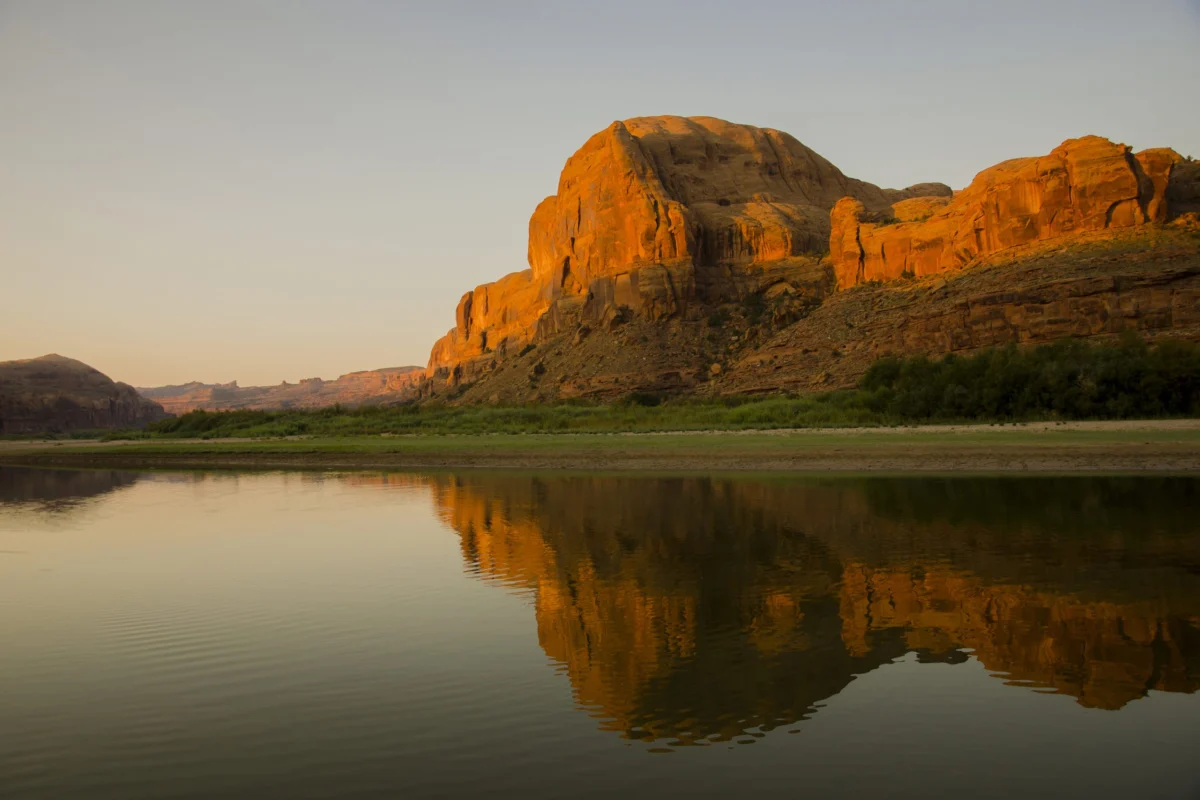
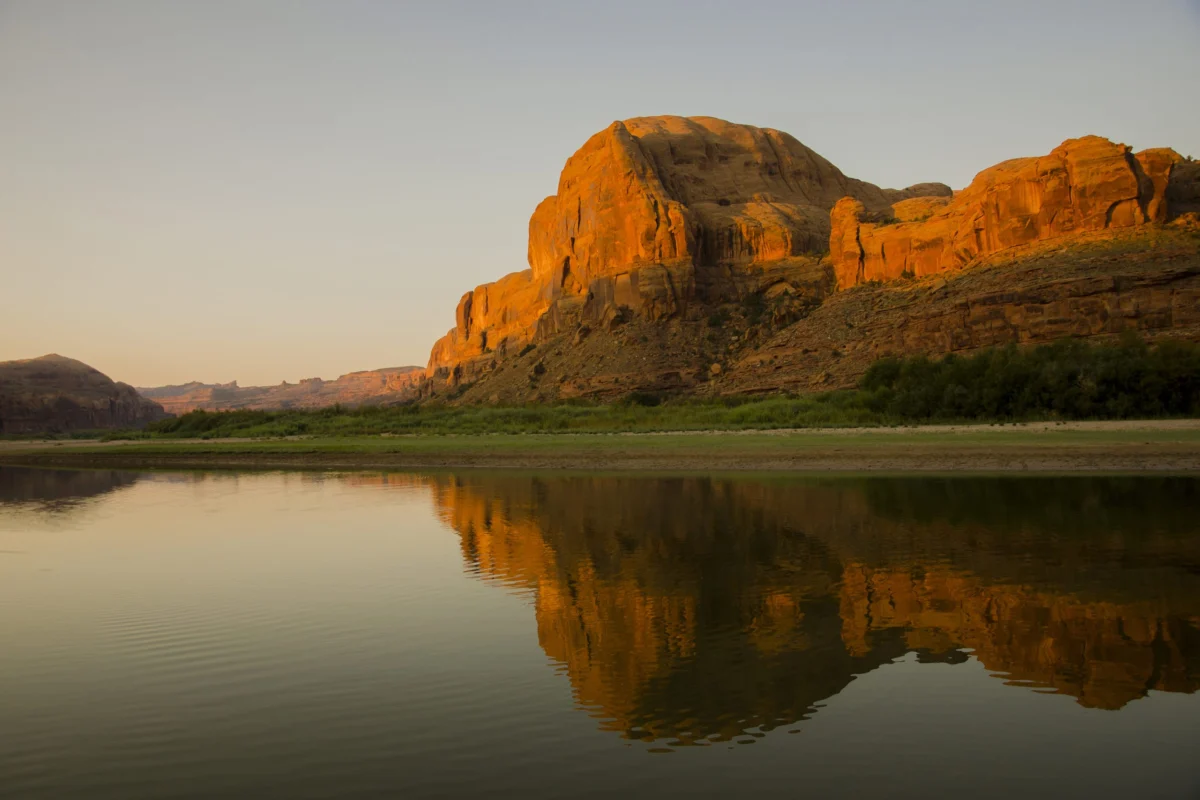
In the heart of Utah’s majestic red rock canyons, along the life-giving Colorado River, two young Diné citizens, Aniston Hanks, 20, and Shauna Belone, 21, found a moment of profound connection. Hanks stood knee-deep in the flowing water, while Belone sat by its edge, both participants in The Nature Conservancy’s NATURE Program (Native American Tribes Upholding Restoration and Education). This immersive experience allowed them to deepen their understanding of water, land, plants, and conservation across the vast Colorado Plateau. For Hanks, the water evoked a powerful sense of kinship with the Little Colorado River near her home in Cameron, Arizona, a waterway held sacred by her family. "We think of it as a relative," Hanks explained, her voice echoing the deep reverence many Indigenous peoples hold for water, including the vital tributaries of the Colorado River. "We’re born for water."
Despite their shared Diné heritage and a profound connection to the same river system, Hanks and Belone inhabit different legal realities within the Colorado River’s basin. Hanks resides in the Lower Basin state of Arizona, while Belone, hailing from Naschitti, New Mexico, is part of the Upper Basin. Their ancestral homeland, the Navajo Nation, a sprawling 27,000-square-mile territory, gracefully extends across both these distinct hydrological regions. These basin boundaries, established over a century ago, have become increasingly significant as federal authorities navigate the complex challenges of managing the Colorado River’s two largest reservoirs, Lake Powell and Lake Mead, during an unprecedented 26-year megadrought.
The U.S. Department of the Interior’s recent decisions, formalized through a two-step process culminating in Interior Secretary Doug Burgum’s record of decision on August 21, introduce new operating guidelines for the reservoirs, effective October 1. These guidelines, initially set for 2027 and 2028, represent a crucial phase in adapting to the river’s dwindling flow. The Bureau of Reclamation’s comprehensive environmental review, completed on July 31, laid the groundwork for these adjustments. However, the decision primarily addresses operational procedures, not the fundamental dispute among the seven Colorado River Basin states—Arizona, California, Colorado, Nevada, New Mexico, Utah, and Wyoming—who have yet to reach a consensus on a long-term water-sharing formula during periods of scarcity. The Interior Department has therefore established a flexible framework extending through 2036, allowing for periodic reassessments of reservoir operations based on fluctuating water levels, snowpack runoff, and ongoing negotiations.
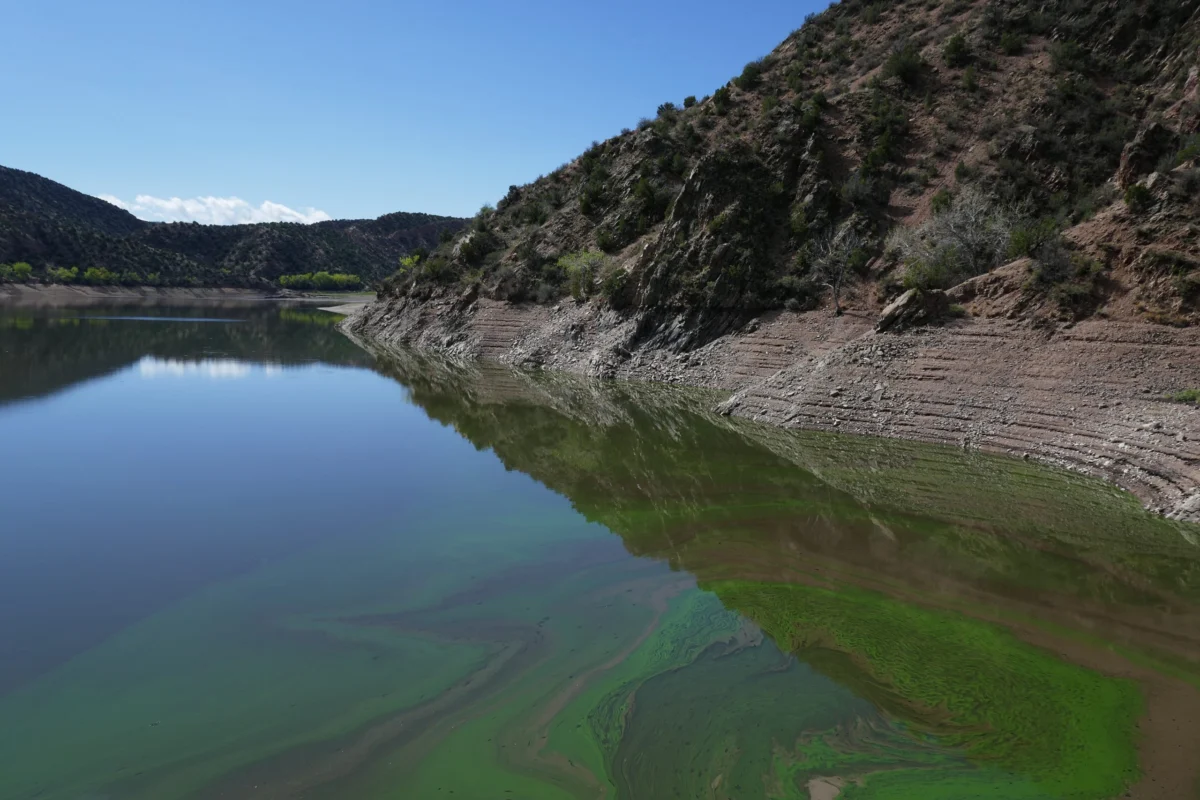
Celene Hawkins, Colorado River Program Director for The Nature Conservancy, characterized the Bureau of Reclamation’s environmental review as a vital planning analysis that charts a course for future decisions. "They’ve essentially developed a 10-year framework for the basin," Hawkins noted, explaining that operating plans will be revisited every two years unless the basin states achieve a negotiated agreement. This adaptive approach is already being tested by the dire reality of the drought. After 26 years, Lake Powell and Lake Mead collectively hold less water than at any point since Lake Powell began filling in 1963. In response, the initial operating interval will see adjustments to water releases from Glen Canyon Dam, aimed at maintaining Lake Powell at or above 3,510 feet, an elevation deemed critical for the dam’s operational reliability.
The immediate impact of these new rules requires significant reductions in water diversions from the river for Arizona, California, and Nevada, who must collectively take 1.25 million acre-feet less water over the next two years. The proposed distribution of this burden, pending the states’ agreement, would see Arizona reduce its diversions by 760,000 acre-feet, California by 440,000 acre-feet, and Nevada by 50,000 acre-feet. Furthermore, the Lower Basin plan encourages water users to voluntarily conserve and store an additional 700,000 acre-feet during this period. The Upper Basin, while not facing a comparable fixed reduction, is expected to engage in coordinated operations at Flaming Gorge, Aspinall, and Navajo reservoirs, in consultation with Lower Basin states and tribes, should additional water be needed to protect Glen Canyon Dam’s operational integrity.

A less conspicuous yet significant element of the Interior Department’s decision involves a federally controlled water pool. This reserve is designated for fulfilling federal delivery and firming obligations stipulated in congressionally approved Indian water-rights settlements, providing partial offsets for certain tribal shortages, and safeguarding federal infrastructure. The record of decision specifically delineates that this tribal-firming provision applies to a select group of Lower Basin tribes whose settlements include federal firming commitments, such as the Gila River Indian Community. Notably, the Navajo Nation is not currently included in this specific provision. Hawkins emphasized that the ramifications of the post-2026 framework will vary significantly among tribal nations due to their unique settlement agreements, legal standings, and water resource availability across the basin. "I don’t think there’s an easy or a single answer because I think different tribal nations in the basin are going to be affected differently," she stated, highlighting the diverse reliance on Central Arizona Project supplies versus direct Colorado River main stem diversions, and the differing legal frameworks and settlement terms.
The distinction between quantified senior water rights directly from the Colorado River, water delivered through federal infrastructure via settlement agreements, and unquantified rights for which infrastructure is lacking, is central to understanding the framework’s disparate impacts. While the Interior’s record of decision establishes initial operating rules, it does not resolve the complex legal, infrastructural, and water-access challenges that tribal officials have consistently raised throughout the federal environmental review process.
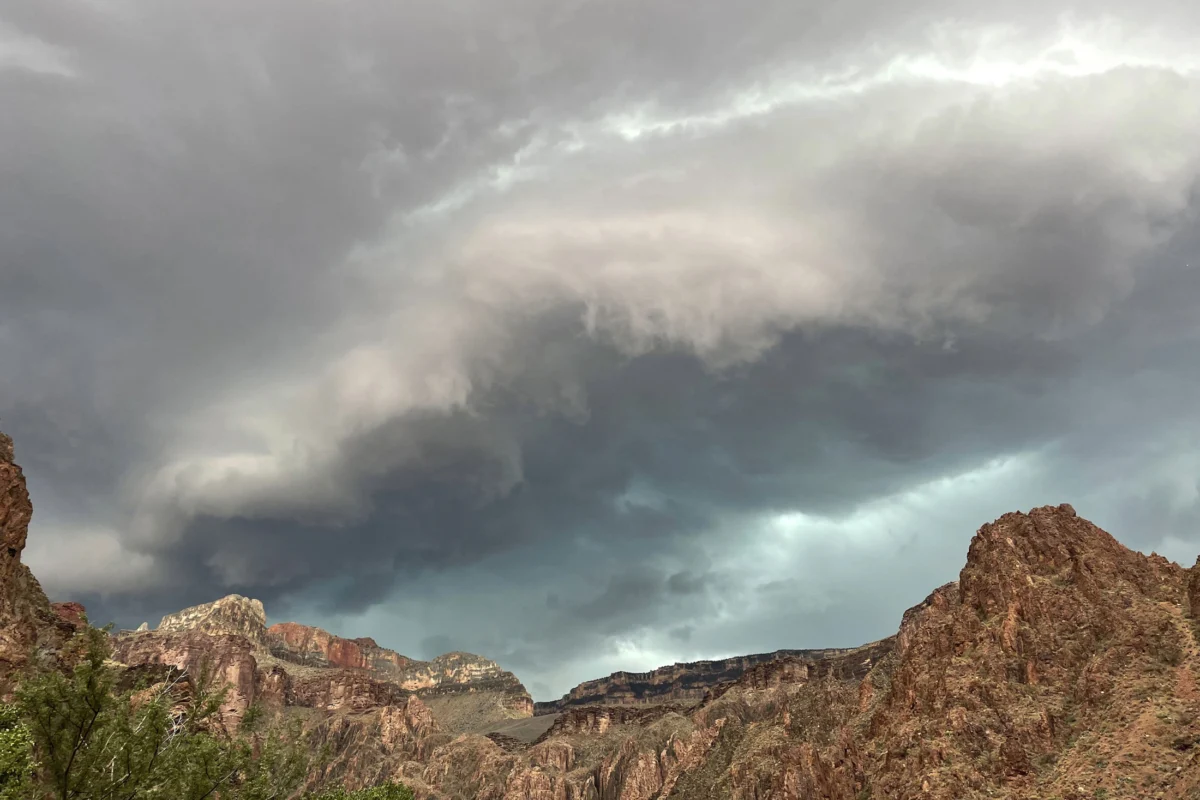
For Crystal Tulley-Cordova, a principal hydrologist with the Navajo Nation Department of Water Resources and a Diné citizen, the core issue lies in the disparity between "paper water" – the allocated water rights on paper – and "wet water" – the actual water available and accessible. The consequences of this imbalance are already palpable across the Navajo Nation. Declining snowpack and reduced snowmelt runoff have diminished local creek flows, impacting the growth of plants like green thread, a wild tea harvested by community members. Monsoon rainfall patterns have also become more erratic, leading to fewer consistent summer showers and, at times, intense downpours that cause flooding. Bidtah Becker, chief legal counsel for the Navajo Nation Office of the President and Vice President and a member of the Navajo Nation Water Rights Commission, succinctly stated, "Ultimately, Mother Nature is in charge here."

The Navajo Nation Water Rights Commission is actively engaged in resolving the Nation’s water rights claims across its vast territories, including efforts towards the proposed Northeastern Arizona Indian Water Rights Settlement Act of 2025, which addresses claims in the Lower Basin. Yet, the human endeavor to regulate and divide nature’s provisions has a long history, dating back to the 1922 Colorado River Compact. This foundational agreement, which divided the river into Upper and Lower Basins, became a cornerstone of the "Law of the River" – a complex web of laws, agreements, and court decisions. Critically, tribal nations were not sovereignly consulted or represented during the creation of this compact. "The Indians were not at the table 100 years ago," observed Peter Ortego, president of Acadian Desert Consulting and a former general counsel for the Ute Mountain Ute Tribe. "They weren’t invited."
The Navajo Nation’s situation exemplifies the enduring complexities of these century-old boundaries under the new post-2026 rules. Under the proposed Northeastern Arizona Indian Water Rights Settlement, the Navajo Nation is slated to receive approximately 47,000 acre-feet of Upper Basin Colorado River water for its communities in Arizona. However, some of these communities lie south of the legal demarcation line separating the basins. "We didn’t draw those lines," Becker added, emphasizing the imposed nature of the system. Furthermore, the distinction between quantified and unquantified water rights significantly impacts tribal access and management. The post-2026 framework does not inherently alter the Navajo Nation’s water rights under the proposed settlement, as the Arizona settlement remains subject to congressional approval. Until then, the 47,000 acre-feet remains a plan rather than actual, usable water. Tulley-Cordova clarified that quantified and decreed rights are accounted for within a state’s Colorado River allocation, whereas unquantified rights are "not really included into the management framework." The post-2026 framework does not resolve these claims nor dictate the construction progress of vital projects like the Navajo-Gallup Water Supply Project, which aims to provide a sustainable water source for over 250,000 people in New Mexico using San Juan River water secured through the Navajo Nation San Juan River Basin Water Rights Settlement. Tulley-Cordova reiterated that the framework’s focus is on the operational dynamics of the reservoir system, specifically water storage and release.
The experience of tribal nations concerning the Colorado River is far from uniform. "We are not a monolith," Becker asserted, underscoring that the impact of Colorado River management decisions varies widely based on the quantification of water rights and their specific usage. For the Ute Mountain Ute Tribe, the current situation highlights the critical gap between possessing a water right and having the necessary infrastructure to fully utilize it. The tribe has successfully settled its water rights in Colorado, and water stored in Lake Nighthorse near Durango, Colorado, flows through New Mexico before reaching only a limited portion of the reservation. Approximately 16,000 acre-feet of water, which the tribe currently cannot access, bypasses the reservation annually. This presents a critical dilemma during times of scarcity: developing this water would allow the tribe to exercise its rights, while leaving it in the system could offer a small benefit to the stressed Colorado River. Ortego proposed that the tribe should either receive the infrastructure needed for utilization or compensation for deferring its development. "None of us is in the exact same situation," Ortego commented regarding the varied circumstances of tribes in the Upper Basin.

The Colorado River Indian Tribes (CRIT), a federally recognized tribe whose reservation spans the Colorado River in Arizona and California, operates under a different legal framework, governed by a 1963 U.S. Supreme Court decree in Arizona v. California. CRIT Chairwoman Amelia Flores described these as the most senior tribal water rights in the Lower Basin, dating back to 1865. CRIT had previously voiced strong opposition to language in earlier federal proposals that tribal leaders believed could have imposed unlawful reductions on its allocation. In a statement released on August 21, CRIT confirmed that the Bureau of Reclamation had affirmed its commitment to adhere to the court decree, thereby avoiding such reductions. "The efforts of CRIT have made a difference," Flores stated, acknowledging the impact of numerous meetings and discussions between CRIT’s Tribal Council and the Bureau of Reclamation.
The record of decision also mandates the formal inclusion of tribal nations, including CRIT, in a basin-wide consultation structure. CRIT leaders welcomed this commitment but stressed their continued engagement as Reclamation develops subsequent two-year operating guidelines, particularly if escalating reservoir conditions lead to further reductions in water supplies for central Arizona. "Given the critical status of the river, tribal consultation is mandatory in every discussion and decision regarding the Colorado River," CRIT Councilmember Raeanne Patch emphasized in their statement. Celene Hawkins of The Nature Conservancy noted that while tribal nations are contributing innovative solutions to discussions about the river’s future, they often lack the same level of access to decision-making tables as their state and federal counterparts. Peter Ortego believes that enhanced tribal participation in the post-2026 framework could bolster tribal sovereignty and empower tribes with greater influence over future operational decisions. "When the tribes have the power and the ability to put their perspective on the table, and other people actually listen to it and actually respond to it in a positive way, that’s the best way tribes can exercise their sovereignty," he articulated.
Returning to the banks of the Colorado River near Moab, far upstream from Lee Ferry, Arizona, the legal dividing line between the Upper and Lower Basins seemed to vanish. For Aniston Hanks, the pressing question of how humanity coexists with a diminishing river led back to a fundamental principle. "There has to be a balance," she reflected, standing in the cool embrace of the river, a vital resource for over 40 million people. "You walk with beauty, with nature, not against it."