Johny Prima
The nascent state of California, barely a day old in the Union in September 1850, witnessed a swift and calculated move by U.S. Senator John C. Frémont, a figure synonymous with American expansionism and Manifest Destiny. Just 24 hours after California’s admission, Frémont, a former military officer and presidential candidate, tabled 10 legislative proposals in the U.S. Senate, seeking to transfer millions of acres of Indigenous lands directly to the newly formed state. This aggressive legislative push, particularly one bill aimed at "providing for the extinction of their territorial claims in the gold mining districts," laid the groundwork for a systematic dispossession that would forever alter the landscape and legacy of California’s Indigenous peoples.
Frémont’s actions were not taken in ignorance of existing legal precedents. As historian Benjamin Madley details in his seminal work, An American Genocide: The United States and the California Indian Catastrophe, the senator explicitly acknowledged that California Indians held legitimate title to their ancestral lands under the established laws of Spain, the region’s first European colonizer. Frémont informed his Senate colleagues, "The Spanish law clearly and absolutely secured to Indians fixed rights of property in the lands they occupy, beyond what is admitted by this Government in its relations with its own domestic tribes." This striking admission underscores a deliberate decision by the U.S. government to override recognized Indigenous property rights, setting a dangerous precedent for future land grabs. Madley further notes that during this era, legislators under U.S. rule were acutely aware of the legal ramifications of such disavowal, yet proceeded nonetheless, prioritizing expansion and resource extraction over justice and existing law.

The burgeoning Gold Rush fueled an insatiable demand for land and resources, driving a brutal period of violence and displacement against California’s Indigenous inhabitants. The solution devised by the U.S. government to legitimize its territorial ambitions was a series of treaty negotiations. Between 1851 and 1852, 119 representatives from various tribes across California entered into 18 treaties with the U.S. government. These agreements promised the creation of 19 reservations, encompassing approximately 7.488 million acres—roughly 7.5% of California’s total landmass—intended to secure a future for Native communities amidst the encroaching tide of settlers. However, in a profound act of betrayal, the U.S. Senate refused to ratify a single one of these treaties. Consequently, Congress authorized only seven temporary military reservations, totaling a mere 125,000 acres, none exceeding 25,000 acres. By the late 1860s, all but two of these already meager reservations had been abandoned, leaving California’s Indigenous populations largely landless and vulnerable to ongoing violence and exploitation.
For decades, the unratified treaties represented a stark injustice. It wasn’t until nearly 80 years later, in 1928, that Congress passed the California Indians Jurisdictional Act. This landmark, albeit flawed, legislation authorized California’s attorney general to initiate a lawsuit against the federal government in the U.S. Court of Claims, seeking compensation on behalf of California Indian people for their stolen lands. Critically, however, the act denied Indigenous communities control over the litigation process or the right to select their own legal representation, undermining their autonomy in seeking redress.
The legal battle stretched on, with prominent figures like Earl Warren, who would later become a transformative Chief Justice of the Supreme Court, arguing on behalf of California Indian people in 1941 and 1942. The initial settlement in 1953 proved to be a meager offering, reportedly paying approximately $150 each to some 33,000 individuals. This sum was drastically diminished by a radical undervaluation of the land, coupled with deductions for legal fees and "offsets"—expenses the state of California claimed it had incurred to "care for the Indians." This pattern was mirrored nationwide by the Indian Claims Commission Act of 1946, which allowed tribal nations to pursue monetary compensation for land taken, but strictly prohibited the return of land itself, limiting awards to the land’s market value at the time of its original seizure, often decades or even centuries prior.

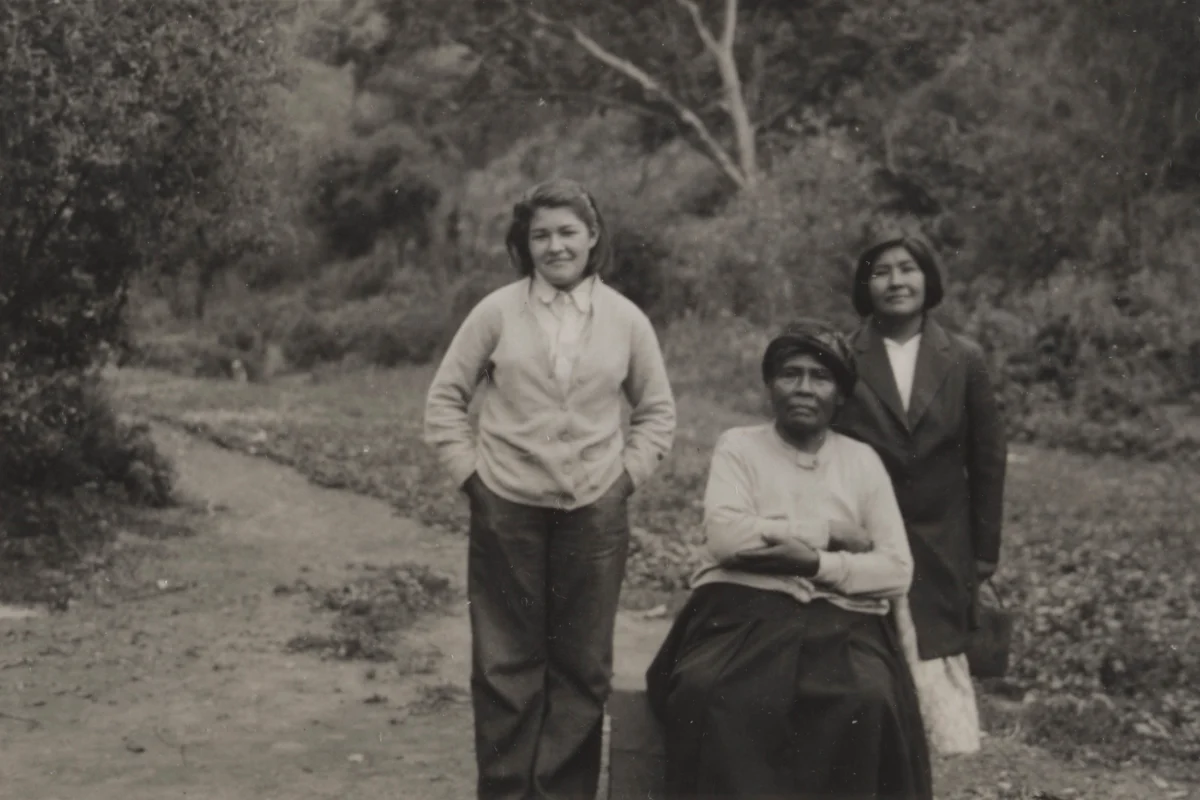
The court case, known by its docket number K-344, dragged on for almost 30 years, culminating in subsequent payments ranging from $600 to $700 per family. The personal toll of this protracted injustice is palpable across generations. Anna Herrera (née Forsting), a Salinan Indian born in 1921, three years before Indigenous people were recognized as U.S. citizens, remembered her family’s village at Toro Creek on the central California coast. Her family, like countless others, was forcibly evicted by entities such as the Marre Land and Cattle Company, a common experience of displacement that resonated throughout California. A letter discovered among her belongings, addressed "TO ALL CALIFORNIA INDIANS" and dated September 1972, highlighted the profound inadequacy of the federal government’s proposed $29.1 million settlement for land taken in 1853, which amounted to a mere 47 cents an acre. The letter pointed out that some of this land, rich in gold, was valued at $20 an acre, with timber and mineral rights adding even more value. "What do you think California Indian land is worth?" it provocatively asked. This stark disparity fueled the nascent Indigenous LandBack movement in California, which has recently gained significant global attention under the hashtag #LandBack, pushing for the restoration of ancestral lands to tribal stewardship.
The K-344 lawsuit exposed the deep cynicism underlying the government’s approach. A 1937 Government Accounting Office report meticulously itemized every dollar the state claimed to have spent "for the benefit of" California Indians between 1852 and 1932. These "offsets" included expenditures for schools, hospitals, and even the surveying of reservations that were never established. Shockingly, the state also sought to deduct costs for prosecuting kidnappers—even though California had a documented Indian child-kidnapping and indenture trade in the 1850s and 60s—and for the salaries of Indian Commissioners. The proposed settlement of $17,816,624.48 was thus reduced by $12,650,761.02 in offsets, leaving a paltry $5,165,863.46 for the original claimants. The report pointedly omitted any mention of the money the U.S. reimbursed California for "suppressing and repelling Indian hostilities"—a euphemism for the state militias paid to hunt and kill Native people, underscoring the horrific irony of the deductions.
The final hearings in San Francisco in 1955 devolved into a battle over the very definition of a people’s relationship to land. Government expert witnesses championed the "ecological theory," a pseudoscientific argument that sought to mathematically calculate a tribe’s "true territory" based on where most of its food was sourced, deeming other areas "secondary" and less deserving of compensation. This theory, which aimed to drastically shrink the land base and thus the payout, was dismantled by anthropologists Alfred Kroeber and Robert Heizer. When asked about the extent of Indigenous land ownership in California, Kroeber famously replied, "All of it." In 1959, the three commissioners unanimously rejected the ecological theory, affirming the holistic Indigenous understanding of land. However, it would take another 13 years, until 1972, for the letters like the one received by the author’s grandmother to circulate, asking Native individuals to accept a settlement that valued their ancestral lands at just 47 cents an acre.

Throughout the 1960s, the Washington D.C.-based law firm Wilkinson, Cragun and Barker held meetings across California, pressuring tribal leaders and citizens to accept the settlement, warning of further litigation and dwindling payouts. Despite widespread complaints about the paltry sum, most California Indians eventually capitulated. At a 1964 meeting in Eureka, Michael Rogers of the Witchback Hoopa Valley Reservation eloquently contested the offer: "The real issue today is that these attorneys are here to ask you to sell the rest of the state of California for 47 cents. Now they state that 47 cents comes from the price of 1853… in 1853, if land was selling for 47 cents an acre, at that time gold was only worth $16 an ounce. Today, the price of gold is $35, and that 47 cents would be equal to $1 and a quarter, which Congress said that the Indians could sue for would be the limit." Ultimately, the settlement stood, and the author’s grandmother received approximately $688. Tragically, her mother, Felista Forsting, her grandmother Maria Severiana Bailon, and her uncles Jose Bailon and Ramon Roses—all named in the 1928 lawsuit—passed away without receiving a single penny of the compensation.
Half a century later, California has shifted its rhetoric from "settlement" to "stewardship." A March 2026 press release from the California Natural Resources Agency heralded a new Tribal Stewardship Policy, aiming to bring 7.5 million acres—the same acreage promised in the unratified treaties—back under the care of tribal nations. The announcement declared the policy "establishes statewide framework for tribal access, collaboration, and ancestral land return." Over the past two years, this LandBack pledge has seen some significant returns, including land reclaimed by the Yurok Tribe in Northern California, the Washoe Tribe, and the Southern Sierra Miwuk, bordering Yosemite National Park. While these instances of land return, including those by the Yurok, Washoe, and Klamath, are vital steps within the growing LandBack movement in Indigenous communities across the globe, the underlying power dynamic remains largely unchanged: California dictates what is returned, when, and to whom. This mirrors the same governmental authority that decided what to take in 1852. Estimates suggest Indigenous peoples lost more than 75 million acres in California. No amount of initiatives, apologies, or even stewardship, however well-intentioned, can fully compensate for the generational trauma and profound loss experienced by families like the author’s, or truly rectify the enduring historical injustices woven into the fabric of California’s very foundation.