Rocky Gerung
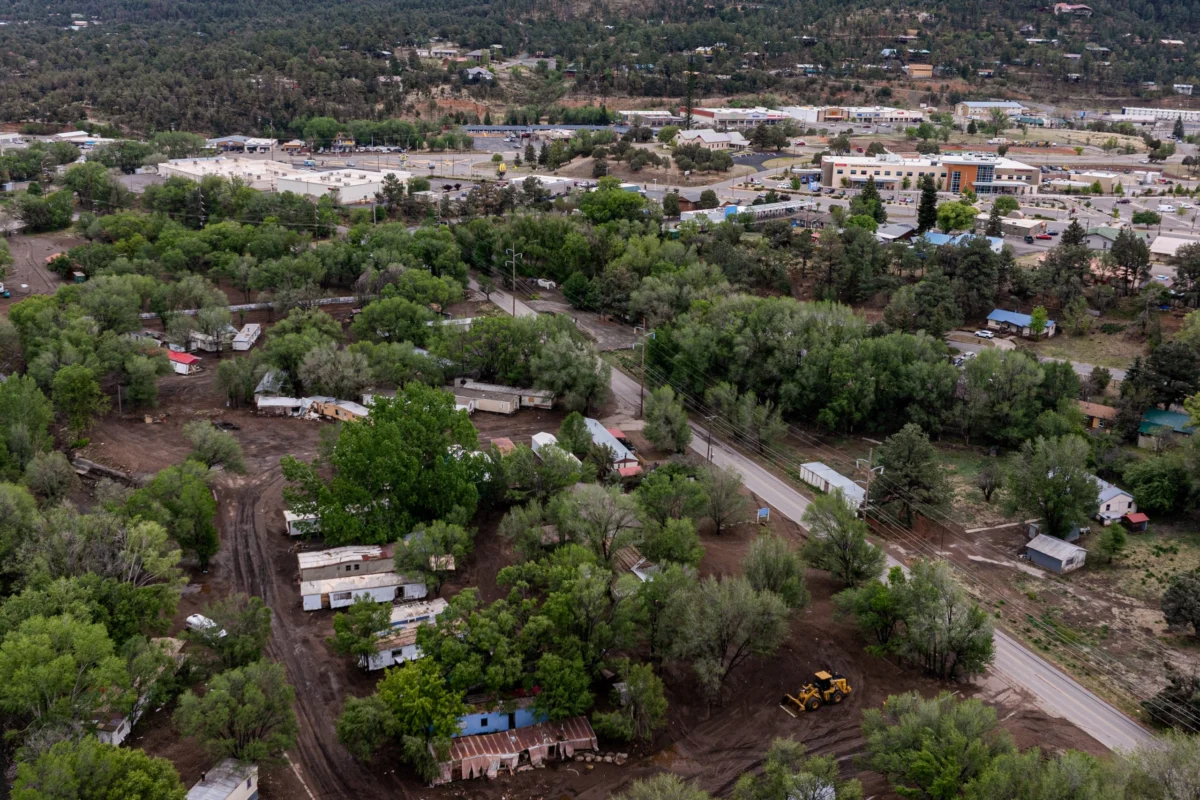
Jennifer Brewer, a retired teacher, found herself in a state of perpetual anxiety in late September, the sounds of the Rio Ruidoso a constant, unsettling presence. Living in a cabin on the riverbanks of Ruidoso, New Mexico, a town that once represented tranquility and the promise of a peaceful retirement, had transformed into a source of profound stress. The very creek that had drawn her to this mountain community in 2017 had become a literal nightmare following twin wildfires that ravaged the surrounding pine forests in the summer of 2024. Subsequent monsoon rains unleashed torrents of mud and debris down the burn-scarred mountainsides, forcing Brewer to evacuate her home as thick, silty water inundated her patio. The following year, the situation escalated dramatically, with the Rio swelling into a terrifying 20-foot wall of brown water that tore entire houses from their foundations and claimed three lives.
Though Brewer’s own cabin miraculously survived, the structure across from hers was swept away and lodged precariously in a tree. The aftermath plunged her into months of bureaucratic entanglement with disaster aid agencies, while she tirelessly worked to salvage her property – shoveling mud, combating mold with bleach, and constructing a six-foot flood wall, only to witness her efforts undone by subsequent floodwaters. This cycle of devastation and arduous recovery is projected to persist for years, until the scorched earth can regenerate and new vegetation takes root to stabilize the hillsides. Consequently, any rainfall now triggers a sleepless night for Brewer, her attention fixated on the rising river. "This morning, I heard it at 3:30," she recounted, her voice laced with exhaustion. "I laid there listening and thought, you know what? You’re not going back to sleep." Her nights have become a routine of alternating between monitoring news on television and nervously checking the river’s status, snatching brief moments of sleep only when the immediate threat subsides. "That’s not a way to live," she lamented, the words heavy with the burden of constant fear. "That’s just crazy."
However, a glimmer of hope has emerged, suggesting that Brewer might soon experience her last sleepless night due to flood concerns. Just a week prior to her interview, she became one of the initial beneficiaries of a groundbreaking program designed to offer a pathway out of these perilous situations. In the spring of 2026, with crucial support from the U.S. Department of Agriculture, Lincoln County initiated an emergency buyout program. This voluntary initiative aims to purchase hundreds of properties identified as being at high risk of flooding in the wake of the devastating wildfires. Administered by the USDA’s Natural Resources Conservation Service (NRCS), the program offers homeowners pre-fire market values for their properties. Once acquired, the structures are either demolished or relocated, and the land is permanently converted into open space, effectively restoring natural flood mitigation capabilities. Lincoln County has secured approval for up to $220 million in buyout funds, with the NRCS covering a substantial 75% of the costs.
"What we’re kind of betting on is that as we get some of these bought, we can manage this floodway and prevent further damage," explained Lincoln County Manager Jason Burns in March. "My hope is that as these floods continue, as we know they’re going to, that it’s not a dire emergency." Brewer, recognizing the potential for a permanent solution, promptly applied for the program upon learning of its existence. Following an appraisal and a series of environmental and cultural assessments, she received an offer in September that significantly exceeded her expectations for her property’s market value in the post-flooding landscape. With the sale finalized and her move-out date rapidly approaching, Brewer expressed a profound sense of "overwhelming relief." She stated unequivocally, "Climate change is here. I’m just tired of being worried."
Brewer considers herself exceptionally fortunate, as county officials identified over 1,000 properties at risk in and around Ruidoso in the spring of 2026. Public meetings concerning the buyout program were exceptionally well-attended, with more than 350 homeowners submitting applications, of which over 260 were deemed eligible. However, the county’s ability to fully leverage the federal grant is contingent upon receiving matching funds from the state. To date, only the initial tranche of approximately $100 million has been disbursed, which Burns estimates will be sufficient to cover roughly 130 properties. As of mid-September, the county had extended four offers. While Burns remains optimistic that the upcoming legislative session will secure the remaining funding, he cautioned state lawmakers in June that the county would need to make "strategic decisions on which properties will be of the most benefit."
Across the Western United States, communities are increasingly confronting the escalating threat of climate-related disasters, and voluntary buyouts are emerging as a rare and valuable tool for safeguarding both human lives and natural landscapes. For rural communities, which often grapple with limited resources to navigate complex bureaucratic processes, achieving approval for a buyout program represents a significant triumph. "Around the country, there’s a waiting list of people who want to be bought out, and there just isn’t funding," observed A.R. Siders, a researcher specializing in buyouts at the University of Delaware’s Disaster Research Center. Nevertheless, once a community overcomes this initial hurdle, a new set of challenges arises, particularly in determining how to equitably assist a population of survivors and ensure the fairness of the process.
The federal buyout system, while offering a lifeline, contains several inherent limitations that can inadvertently exclude some of the most vulnerable populations. The NRCS mandates that buyout recipients must be U.S. citizens and hold clear titles to their properties, with guaranteed permanent access. This eligibility criterion automatically disqualifies many individuals who are disproportionately affected by disasters, such as renters, who cannot apply, and non-citizens, including legal residents. Furthermore, the process can become complex for multigenerational or multi-family households. In contrast, other federal buyout programs, like those administered by the Federal Emergency Management Agency (FEMA), often employ cost-benefit analyses that can inadvertently prioritize the acquisition of low-value homes. This can result in wealthier homeowners receiving assistance to remain in place while lower-income neighborhoods are targeted for clearance.
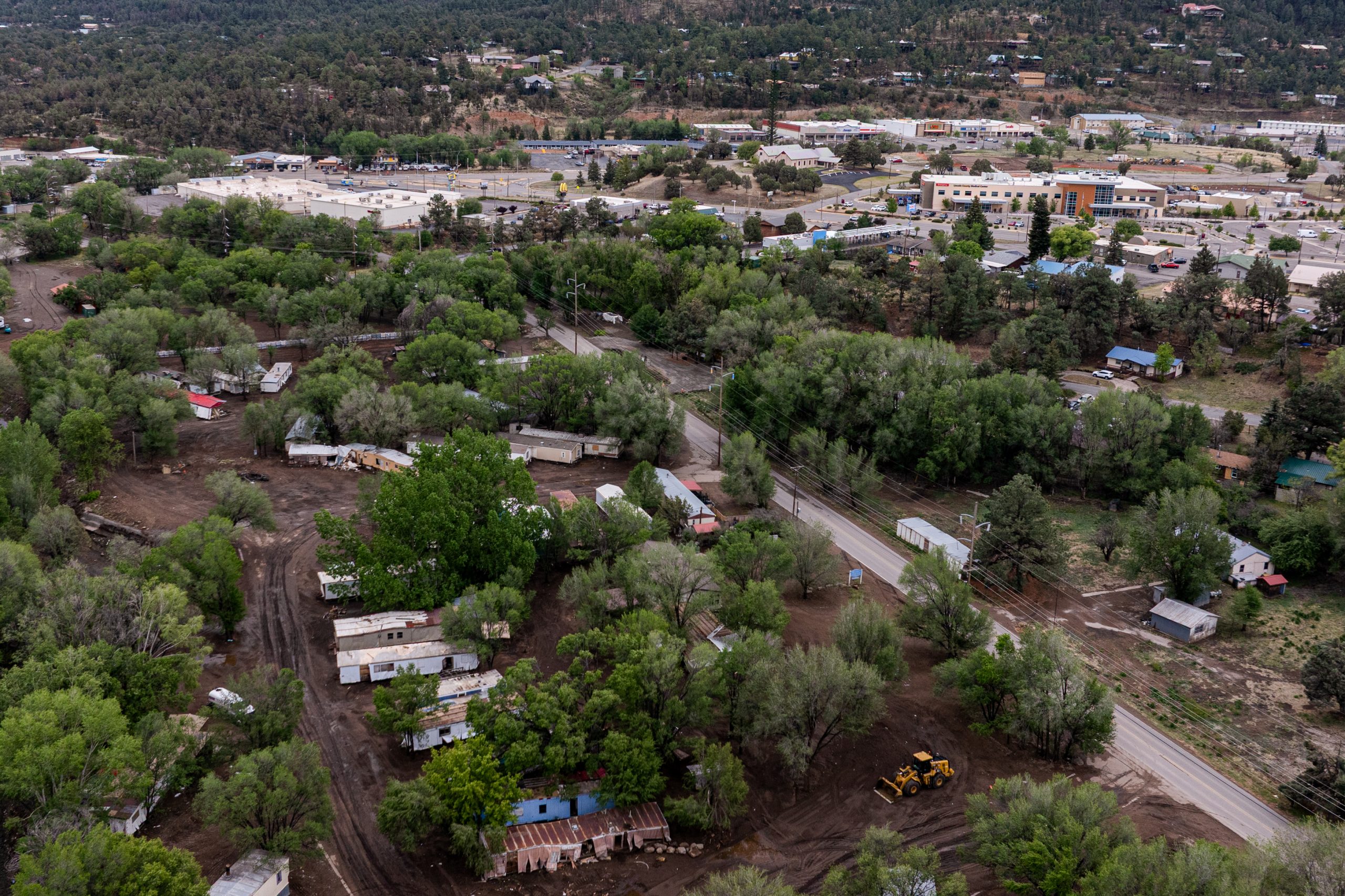
In Lincoln County, however, County Manager Jason Burns stated that his team would not be factoring home values into their decision-making process. Their buyout program operates on a first-come, first-served basis, with a deliberate prioritization of homes that have sustained significant damage. "What we’re going to do is try to take the highest risk first," Burns affirmed. Among the properties most severely impacted by the flooding in Ruidoso are several mobile home and RV parks. Tragically, the three individuals who lost their lives in the July 2025 flood—two children and an adult—were camping at an RV park when the floodwaters surged. The following week, swiftwater rescue teams successfully saved multiple residents from a nearby mobile home park as the river inundated the area once more. A spokesperson for the Village of Ruidoso confirmed that the state has since declared both of these parks uninhabitable, with dozens of trailers red-tagged and residents given deadlines to relocate. However, residents in other affected parks continue to reside in flood-damaged trailers. Burns indicated that several park owners have applied for buyouts, though as of mid-September, no offers had been extended to them.
Despite the well-documented reality that mobile homes across the nation face a disproportionately high flood risk, the federal buyout system was not originally designed with their unique circumstances in mind. While residents typically own their mobile homes, they rent the land on which these homes are situated. This arrangement means that only park owners are eligible to receive a buyout offer. Consequently, residents are placed in a precarious position: they face potential displacement or are left stranded without a viable exit strategy, particularly given the inherent difficulties in relocating many mobile homes. "Mobile home owners are really kind of disadvantaged within the decision-making process," noted Andrew Rumbach, who researches housing and disaster recovery at the Urban Institute. "They’re kind of left in between."
This dilemma is acutely familiar to Cristina Obregón. In 2024, flooding compromised the cinder blocks supporting her trailer at Cherokee Mobile Village in Ruidoso. She spent six months residing in a hotel before returning home, only to face approximately 15 evacuations in the subsequent year. "Every single time it rained from that point forward, I had anxiety to the point where I was physically shaking," she confessed. During a meeting concerning the buyout program, Obregón learned that she was ineligible to apply. While she could potentially receive relocation assistance if her park’s owners accept a buyout, such assistance would be contingent on affording the costs of moving her trailer. However, Obregón has no control over her park owners’ decision-making. "Unless they say yes," she stated, her voice tinged with resignation, "there’s really nothing the buyout can do."
Buyouts can present a significant challenge for mobile home park owners. Federal programs typically do not compensate for lost rental income or the overall value of the business, focusing solely on the land itself. Furthermore, these programs often classify mobile home parks as commercial properties rather than residential ones, which in some instances results in owners receiving offers based on post-disaster property values. A spokesperson for Endeavor Communities, the company that owns Cherokee Mobile Village, declined to comment on the buyout program. Burns acknowledged that New Mexico offers state disaster aid programs that are better suited to support mobile home residents in Ruidoso. Elsewhere in the country, communities impacted by flooding have demonstrated remarkable creativity in their efforts to prioritize park residents during buyouts, actively seeking out less restrictive funding sources to facilitate their relocation to newer, safer housing.
According to Rumbach, establishing a more equitable buyout system necessitates viewing mobile home parks primarily as housing rather than as commercial enterprises. Mobile homes constitute 15% of New Mexico’s housing stock and represent the nation’s largest source of affordable housing. A successful buyout, he contends, hinges on "recognizing that residents need to have a voice."
If Obregón were able to participate directly in the buyout, she expressed uncertainty about her next destination. "I love my little trailer. If there were land, I would move it in a heartbeat," she declared. However, "unless you own land where it’s cleared and you can put it, there’s no options." Obregón has recently moved in with her mother on the outskirts of town and is in the process of selling her trailer to a friend who is more willing to assume the stress associated with flood risk. Both Obregón’s son and her ex-partner, Ralph Gonzales, continue to reside at the park. Gonzales voiced his desire to relocate as well, but he has encountered significant difficulties in finding affordable housing elsewhere in Ruidoso. Many homes in the area have been converted into vacation rentals catering to visitors from Las Cruces and West Texas. "If you work here, you really can’t afford to own a home – a big, nice house like these retired people have," Gonzales observed. "You gotta live where you can."

Disasters such as wildfires and floods frequently exacerbate existing housing shortages. Without careful planning, a buyout program can inadvertently worsen this issue, according to Kris Smith, who studies flood adaptation and rural communities at Headwaters Economics. "When you’re talking about a buyout, that is bringing up two fundamentally massive and complex challenges: Both how do we live with flood risk, and also, how do we maintain affordability in our communities?" Smith stated. "Sometimes that solution can solve both of those, but often those two problems are in tension with each other." This inherent tension has been a persistent concern for Jason Burns. "Unfortunately, Ruidoso and Lincoln County is not a cheap place to live," he acknowledged in March. "That’s another nuance to the buyout: trying to make people as whole as possible, to keep them here." He indicated that the decision to offer pre-disaster home values was partly motivated by a desire to help homeowners remain in the local area. Furthermore, multiple new affordable housing developments are currently underway in Ruidoso, encompassing both workforce housing and mobile homes that were initially constructed for families displaced by the 2022 McBride Fire.
Local officials have compelling reasons to prioritize affordability initiatives. When hundreds of property owners relocate, it can significantly impact the local tax base. "For rural communities in particular, it doesn’t take many people to leave to have an impact," Smith pointed out. Many of the most successful buyout programs have proactively invested in assisting homeowners with their post-relocation planning. In Texas and New Jersey, long-standing programs have employed counselors who work closely with buyout participants to address various challenges, such as securing debt forgiveness or identifying suitable housing options that allow them to remain close to their work or schools. Unfortunately, support for such comprehensive wrap-around assistance is not an integrated component of most federal buyout programs. "We don’t have a lot of support systems about how to keep people and social fabrics together," Smith noted. In most locales, local officials possess limited institutional knowledge to draw upon, often finding themselves guiding their communities through unprecedented transformations.
In 2021, a consortium of researchers established the Better Buyouts Working Group, a collaborative initiative that connects communities that have already navigated buyout processes with those currently implementing them for the first time. This group comprises local officials, academics, and residents who have themselves participated in buyouts. "They want to pay it forward, so that their neighbors and whoever comes next don’t have to learn the same things that they had to from scratch," Anna Weber, a co-convener of the group, told High Country News. She expressed hope that this collaborative approach can empower communities nationwide to navigate the aftermath of disasters with greater equity. A key objective is to foster a mindset where buyouts are viewed as an integral component of long-term climate adaptation strategies. The critical questions raised regarding people’s relationships to land and to one another, she suggested, are ones that "a lot of us around the country are going to need to grapple with more and more."
For buyouts to achieve lasting success, A.R. Siders emphasized that they must be forward-looking, focusing as much on the future as on rectifying past damages. "If the plan is all about leaving, then that’s harder to build community around," she stated. "If it’s about where are we going next, what do we do with the land, what kind of community do we want to be in 50 years? That’s different."
In late September, Jennifer Brewer was making preparations to leave her cabin in Ruidoso, with plans to relocate to Santa Fe to reside in her family home. "I’m finally to a point where I don’t cry like every day," she shared, her voice softened by nostalgia, "because I love it here." She will undoubtedly miss the serene mornings graced by elk and wild horses and the festive spirit of Ruidoso’s December Festival of Lights, a cherished annual event held nearby. The sense of security in a small town where she felt comfortable leaving her door unlocked will also be deeply missed. Nevertheless, Brewer feels a profound sense of contentment with her decision. "The purpose of the whole buyout is to make a healthy riverbed," she explained, her tone resolute, "so I’m more grateful to have the opportunity to move and have gotten paid a fair amount than I am regretful." Brewer envisions the land being managed responsibly, adorned with numerous signs to caution visitors about its potential dangers. She finds solace in the idea that wildflowers might bloom where her house once stood. "It doesn’t bother me a bit for it to be all grass and trees and open," she concluded, a peaceful acceptance in her words.