Johny Prima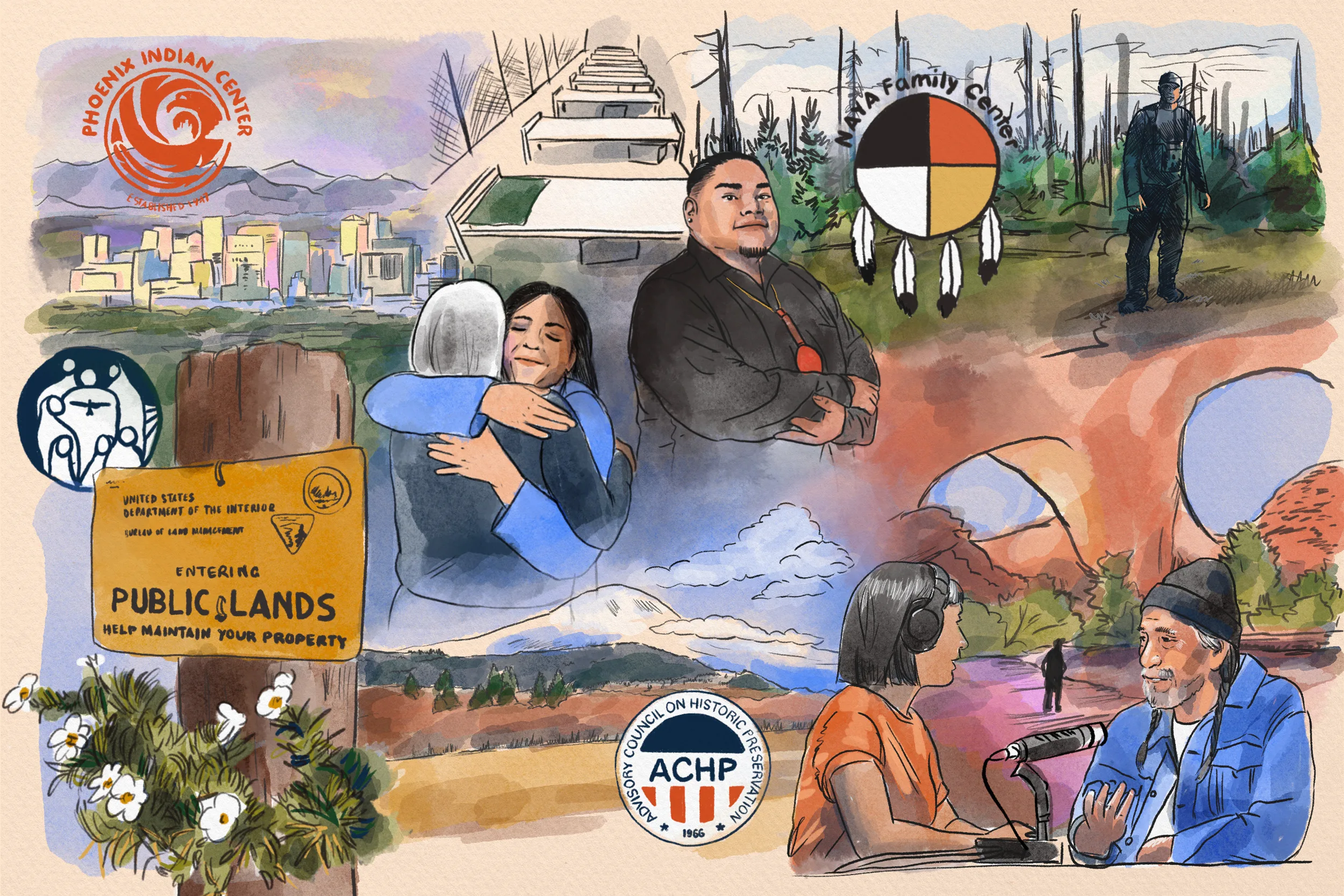
Over a year into the second Trump administration, Indigenous communities across the Western United States have faced a cascade of profound and often disruptive changes, significantly impacting their autonomy, cultural preservation, and socio-economic well-being. From the systematic rescission of land-management policies designed to integrate Indigenous knowledge to a substantial reduction of $1.5 billion in climate funding earmarked for tribal initiatives, the administration’s actions have consistently bypassed established tribal consultation protocols or actively dismantled partnerships forged in previous years. These policy reversals and administrative shifts, which include the controversial removal of tribal flags from Veterans Affairs hospitals, have created an atmosphere of profound uncertainty, compelling tribal leaders and community organizations to grapple with haphazard changes affecting critical funding, staffing, and programmatic stability. Yet, amidst this disruption, a discernible thread of resilience and strategic adaptation emerges, with many leaders finding renewed purpose in reflection, ancestral wisdom, and forward-looking decisions for generations to come.

The Grand Staircase-Escalante National Monument, a vast and ecologically rich expanse in Utah, serves as a poignant example of the political tug-of-war over public lands and Indigenous heritage. Following the first Trump administration’s controversial decision to dramatically shrink the monument by half, the Biden administration had moved to restore its original boundaries and, critically, approved a new resource management plan in January 2025 that for the first time meaningfully incorporated Indigenous perspectives and traditional ecological knowledge (TEK). Autumn Gillard, a Southern Paiute and Coordinator for the Grand Staircase Escalante Intertribal Coalition, which represents five tribes with deep ancestral ties to the monument, articulated the profound concern over recent Republican congressional efforts to repeal this meticulously crafted plan. Gillard emphasized that the groundwork for the coalition began in 2019, driven by a clear need for Indigenous voices to be central to the monument’s management. Repealing the new plan, she explained, would not only severely impact the process of integrating TEK but could also prohibit any future resource management plan, effectively diminishing years of painstaking consultation and the invaluable cultural knowledge contributed by elders, some of whom are no longer living. This ongoing battle highlights the precarious nature of land protections and the constant struggle for Indigenous sovereignty over ancestral territories.

Wildfire management, a critical issue for the arid Western landscapes, has also seen significant federal restructuring under the current administration, raising alarms among tribal nations. Cody Desautel, a Colville tribal member and President of the Intertribal Timber Council, an organization representing some 50 tribal nations focused on forest, fire, and natural resource management, expressed apprehension regarding the Department of Interior’s fire reorganization. The new structure and leadership, he noted, present many unknowns concerning their understanding of Indian Country, their responsibilities for protecting tribal trust resources, and their ability to navigate contracting with tribal governments. This uncertainty looms large over the upcoming fire season, especially given the increasing frequency and intensity of wildfires exacerbated by climate change, a phenomenon Indigenous communities have long anticipated and managed through traditional practices. Despite these concerns, Desautel observed a paradoxical opportunity arising from the reduction of the U.S. Forest Service workforce, which seems to have spurred a renewed objective to partner with tribes. Several bills in Congress aim to expand tribal co-management authorities on adjacent federal lands, signaling a potential shift towards recognizing tribes as capable and essential partners in land stewardship. Desautel underscored the inherent adaptability of tribes, stating that they "always tend to pivot, recognizing where we’ve got opportunities," and are well-positioned to step into roles as federal agencies downsize.

The realm of cultural and historic preservation has also experienced direct administrative intervention. Amelia Marchand, a Colville tribal member who served as the former chair of the Tribes and Indigenous People’s Committee on the Advisory Council on Historic Preservation (ACHP), was abruptly terminated from her position by the Trump administration. Marchand’s appointment in 2024 marked a historic moment as the first woman to hold the seat designated for an Indigenous person, making her responsible for representing the interests of 575 federally recognized tribal governments. Her dismissal came swiftly after advocating for crucial changes to the council’s four-year strategic plan, specifically ensuring the inclusion of "rights holders" instead of merely "stakeholders" when referring to tribal nations. This seemingly semantic distinction is, in fact, fundamental to upholding tribal sovereignty and treaty rights, recognizing tribes as distinct governmental entities with inherent rights, not merely interest groups. Her termination left tribes without a dedicated advocate on the ACHP, particularly at a time when issues like the Federal Energy Regulatory Commission’s (FERC) refusal to consult privately with the Yakama Nation on sacred site development highlighted the urgent need for such representation. The subsequent appointment of John Tahsuda III, a lobbyist and former Principal Deputy Assistant Secretary for Indian Affairs in the first Trump administration, to the seat in January of this year, signals a different approach to Indigenous advocacy within federal agencies, one viewed with skepticism by many tribal leaders.

Beyond federal policy, local Indigenous community organizations are confronting immediate, tangible impacts. Oscar Arana, a Chichimeca tribal member and CEO of the Native American Youth and Family Center (NAYA) in Portland, Oregon, painted a stark picture of increased community hardship. NAYA, a vital hub providing comprehensive services from food distribution and education to housing and cultural programs for urban Indigenous residents, faces significant challenges due to reduced federal funding and a constrained economy. Arana highlighted a surge in housing insecurity and food requests, noting that stagnant funding levels, amidst rising costs, effectively constitute a cut, straining the organization’s capacity. Furthermore, the intensified presence of Immigration and Customs Enforcement (ICE) has instilled fear within the community, necessitating "know your rights" trainings and enhanced building security measures. These pressures, Arana warns, are merely the beginning, with further cuts to social safety nets like SNAP benefits and healthcare access anticipated to compound the struggles of vulnerable populations.

The administration’s immigration policies have disproportionately impacted Indigenous people who have immigrated to the U.S. from Central and South America. Mincho Jacob, a Q’eqchi’ interpreter for the International Mayan League based in Houston, Texas, a city she describes as a "border city" due to its proximity to the coast, highlighted the pervasive fear and confusion among Indigenous immigrants. She recounted the heartbreaking decision of a community leader, after 18 years in the U.S., to self-deport to Guatemala rather than face potential forced removal. Jacob’s role often involves culturally and linguistically interpreting complex legal proceedings for individuals navigating a system vastly different from their realities in rural Guatemala. She explained the severe consequences of "expedited removal," a policy that drastically reduces due process for those who have been in the U.S. for less than two years, often leading to rapid deportation even after cases are dismissed by judges. This legal ambiguity, coupled with aggressive ICE tactics that, while appearing illegal to the public, are often legally permissible in border zones, creates an environment where, as Jacob states, "the law is only as good as what gets enforced."

The pursuit of historical justice and healing has also been undermined. Samuel Torres, a Mexica/Nahua tribal member and Deputy Chief Executive Officer of the National Native American Boarding School Healing Coalition (NABS), described the severe blow dealt by the Trump administration’s order to cancel over $1.5 million in funding from the National Endowment for Humanities. This funding was critical for archival research and interviewing survivors of government-run boarding schools, institutions that inflicted profound intergenerational trauma through forced assimilation. Torres emphasized that this issue, concerning truth and accountability for past atrocities, should transcend partisan politics. The cut, he argued, "inflicted a wound in the progress" of NABS’s vital work, directly affecting survivors, their descendants, and their nations. Despite such setbacks, Torres affirmed the enduring Indigenous worldview: "As Indigenous people, we have always looked beyond the every four years approach. We have always endeavored to think intergenerationally." This perspective allows communities to view conflicts not as derailments, but as moments for discernment, creative problem-solving, and a reaffirmation of sovereignty, recognizing that no single administration can dictate the meaning of their self-determination.

The establishment of Chuckwalla National Monument in California, a Biden-era initiative that garnered broad, bipartisan support, now faces potential threats. Zion White, a Quechan tribal commissioner on the Chuckwalla Intertribal Commission, articulated the unwavering opposition from tribes to any action that would reduce or rescind the monument. The commission, formed last October, aims to advocate for the monument and ensure Indigenous voices are central to its future. White underscored the deep, living connection of the Quechan Tribe to the desert Southwest, which extends far beyond their reservation boundaries, evidenced by their sacred "urav lightning songs" that speak of places within the monument. This connection is not a relic of the past but a vibrant, continuous cultural truth. The future, White admitted, remains uncertain, requiring constant preparedness to defend the monument’s existence and to push for a co-stewardship plan with federal agencies like the Bureau of Land Management and the Department of the Interior. For the Quechan, having a say in how the land is cared for is a matter of justice to both the landscape and their ancestors, a commitment to future generations.

Federal funding freezes and budget cuts have also directly impacted Tribal Historic Preservation Officers (THPOs), essential stewards of Indigenous cultural heritage. Ira Matt, a citizen of the Confederated Salish and Kootenai Tribes and Executive Director for Indigenous Diplomacy and Federal Relations at the National Association of Tribal Historic Preservation Officers (NATHPO), described the period in early 2025 when federal funding for THPOs was frozen during the Trump administration’s review of diversity, equity, and inclusion (DEI) initiatives. Although governmental departments later clarified that federal obligations to tribes are distinct from DEI initiatives, budget cuts still impacted THPOs, who were already underfunded. Matt highlighted the severe consequences: "There was no communication. Staff started leaving positions in tribes. Programs suffered." THPOs work under tight regulatory deadlines, often in isolated areas with limited resources and low job security, yet bear immense emotional investment in protecting cultural sites. Without their participation, federal agencies or other applicants risk damaging or destroying irreplaceable cultural locations, leading to "intangible impacts the preservation field is going to feel for years to come."

The symbolic weight of federal actions also reverberates deeply within Indigenous communities. Jolyana Begay-Kroupa, a Navajo tribal member and Chief Executive Officer at the Phoenix Indian Center, recounted the administration’s initiative to remove tribal flags from Veterans Affairs hospitals, a move she characterized as "disrespectful" and deeply upsetting to Indigenous veterans and their families. Furthermore, the Phoenix Indian Center, a foundational nonprofit supporting urban Indigenous people with job training, cultural programs, and community engagement, faced directives to remove "diversity and inclusion" language from federal grant narratives. This mandate, which even listed "Native American" as a term to be avoided, forced organizations to strategically rephrase their applications to secure vital funding, blurring the visibility of Indigenous-specific needs. Despite these challenges, Begay-Kroupa shared a guiding principle drawn from her Navajo grandmother: to find positivity and adapt. The Center focuses on sustainability and remains committed to its core mission, "pivoting if we need to," always serving its relatives.

In Alaska, the rescission of the Public Lands Rule, established under the Biden administration to elevate conservation as an official land "use" and provide clearer pathways for tribes to protect cultural sites, has ignited strong opposition. Ray Watson, a member of the Orutsararmiut Native Council and an Executive Board member of the Bering Sea Interior Tribal Commission, unequivocally stated, "Our position is that we strongly oppose (the rescission of the Public Lands Rule) and encourage the agency to retain the rule, to meet its trust responsibility with tribes." The tribe’s multi-generational responsibility to protect the land, from the ocean to the tundra, is inextricably linked to their subsistence lifestyle and cultural survival. Watson lamented that the Trump administration has "pretty much expedited any regulatory rulings that have to do with things like mines or mineral extraction," often bypassing tribal consultation. This aggressive push for resource development, including oil projects in the north and the world’s largest proposed gold mine, threatens to further divide communities and erode traditional cultures. Despite the rapid pace of these developments, Watson affirmed the unwavering commitment to "fighting every step of the way," emphasizing the urgent need to protect what remains.

These collective experiences illustrate a period of intense pressure and policy shifts for Indigenous communities, yet they also reveal a deep wellspring of resilience, self-determination, and an enduring commitment to ancestral lands and future generations. Faced with political headwinds, tribal nations and their advocates continue to assert their sovereignty, adapt their strategies, and draw strength from their rich cultural heritage, reminding the broader world that their struggle for justice and recognition is a continuous, intergenerational endeavor.